Building a Workplace Centred on the Kitchen
This project involves constructing a new workplace across three floors – B1, 1F and 2F – of an existing office building in Ikejiri-Ōhashi, coinciding with Cookpad’s office relocation.
In moving from their previous Yokohama offices, the company prioritised not merely a refresh of the working environment, but creating a space centred around an ‘office space including the kitchen’ – a place where events naturally arise from daily operations.
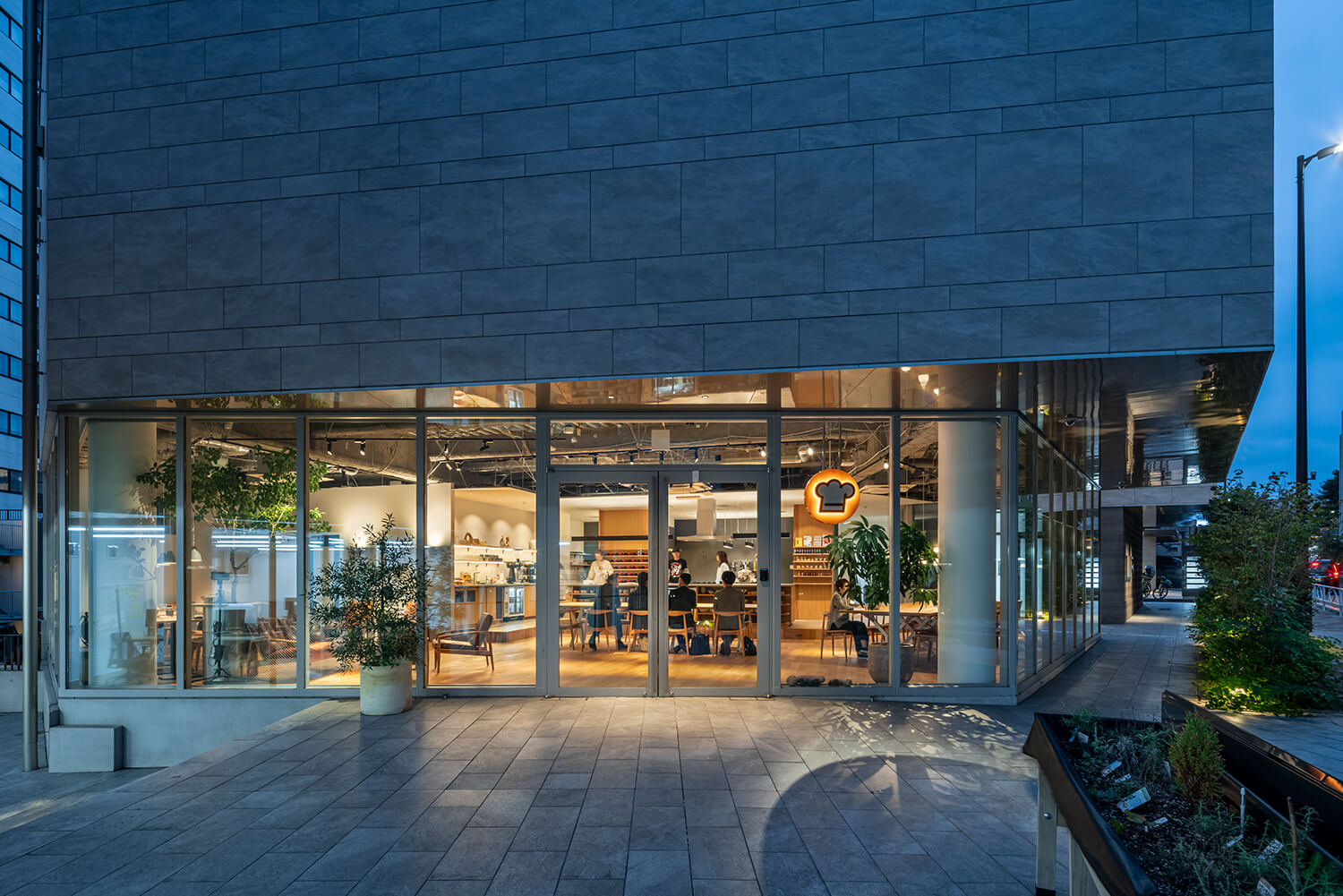
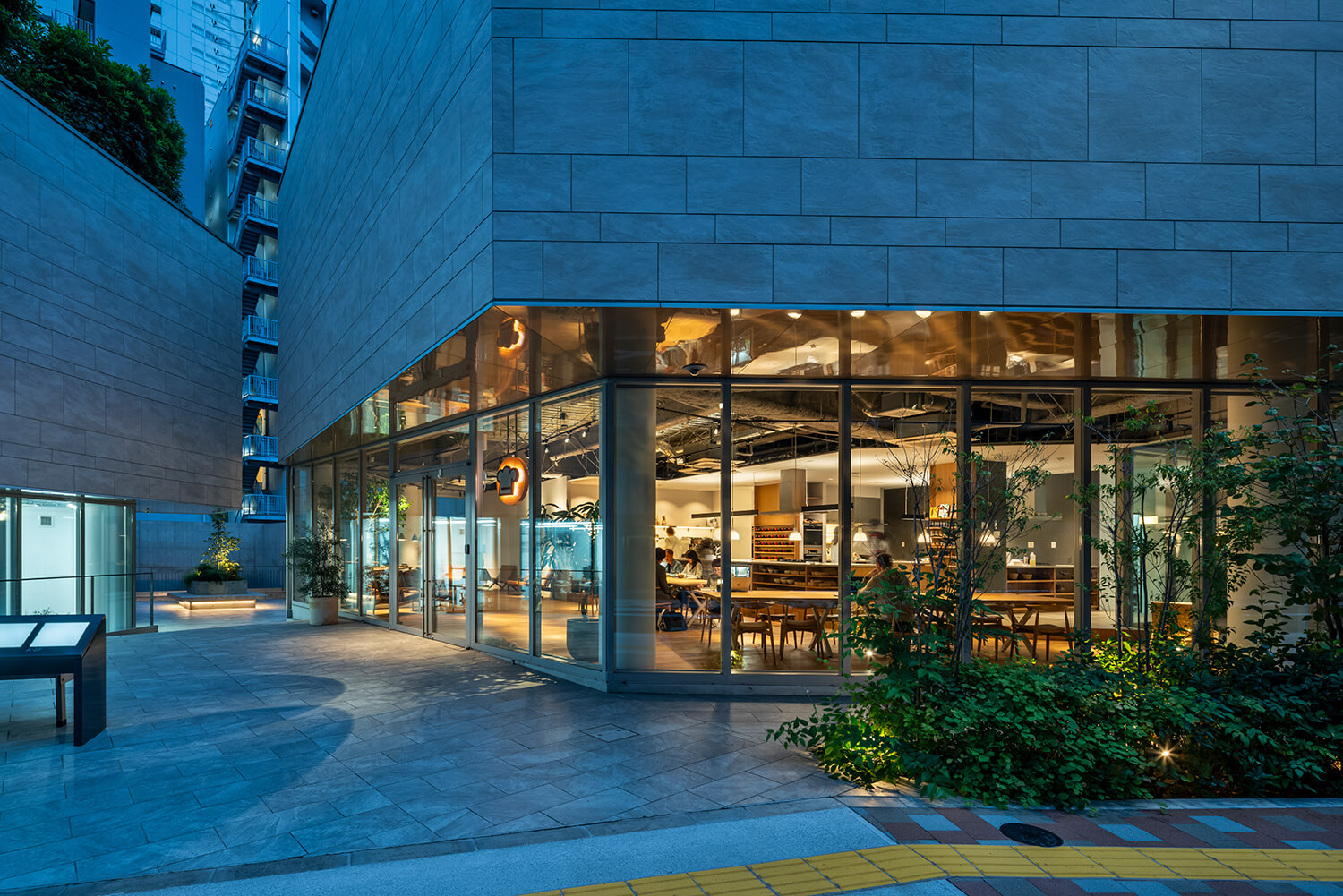
The site is located near Ikejiri-Ōhashi Station on the Tokyu Den-en-toshi Line, offering urban convenience while situated in a tranquil environment surrounded by residential areas. The existing building featured a fully glazed first floor offering high openness to the street, while in contrast, the basement and second floors were designed to prevent direct external visibility into the interior. This project actively reinterpreted these building characteristics, establishing zoning that clearly differentiates between floors open to the exterior and those self-contained towards the interior as the core principle of the overall composition.
1F|Kitchen and Dining Area Open to the Street
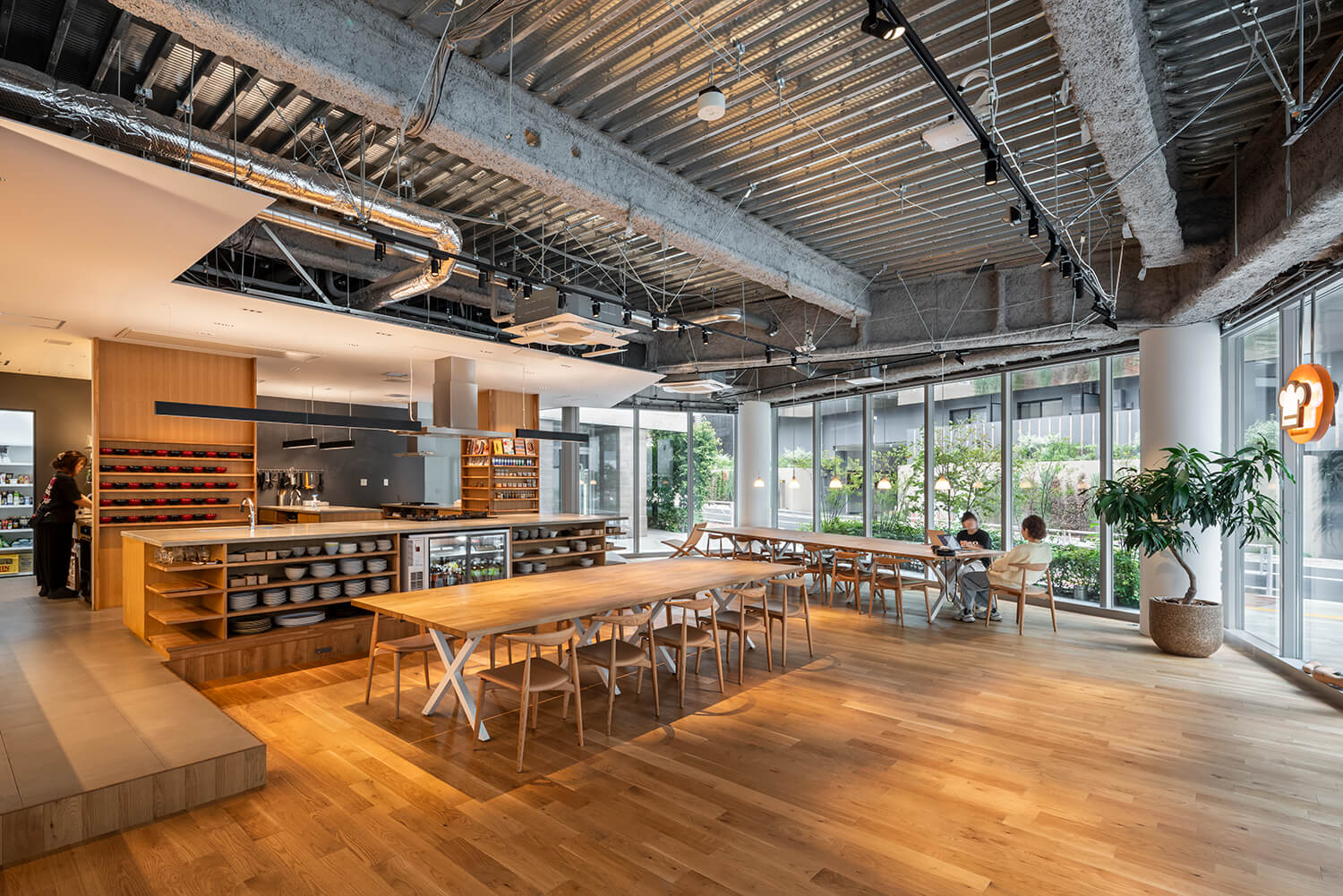
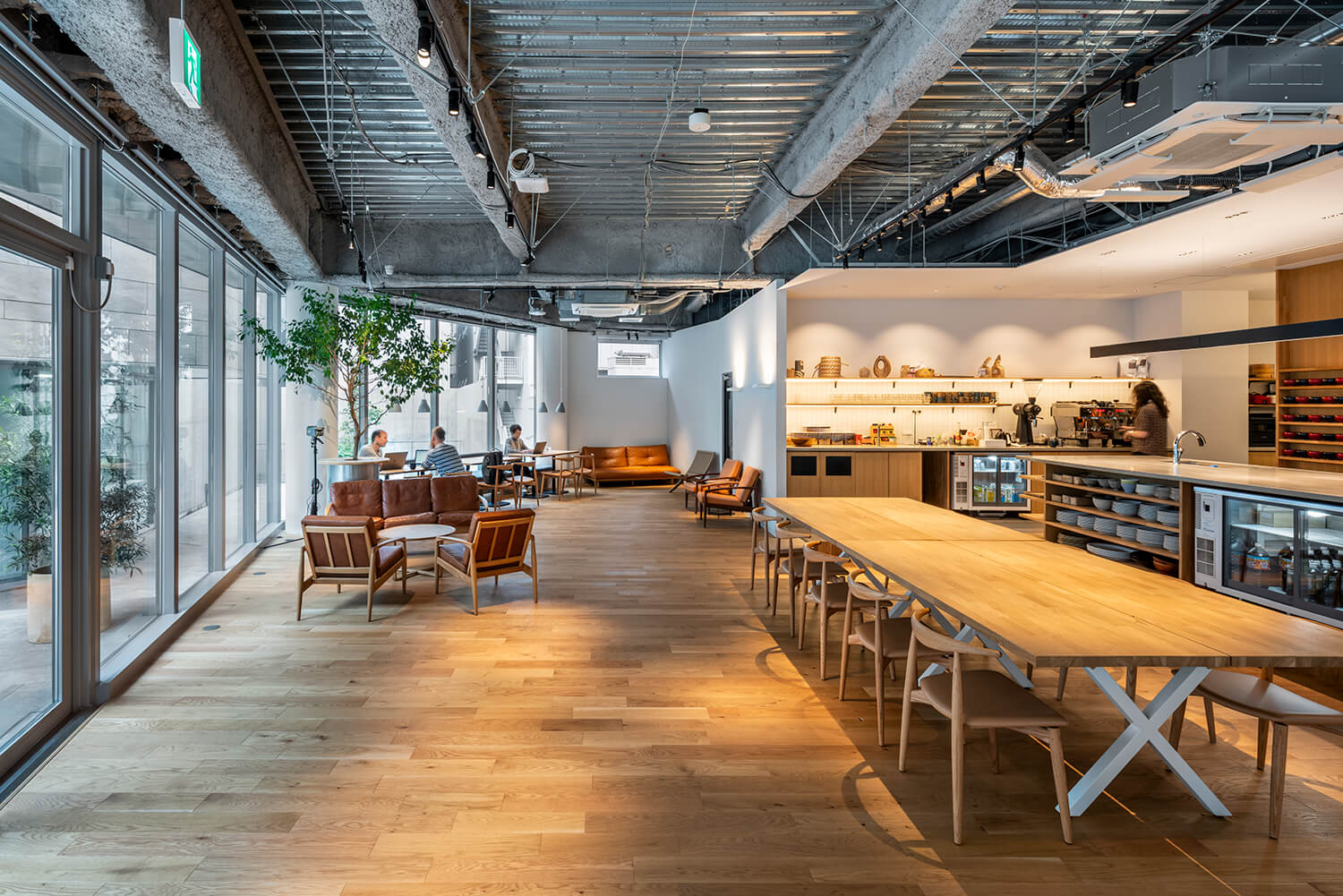
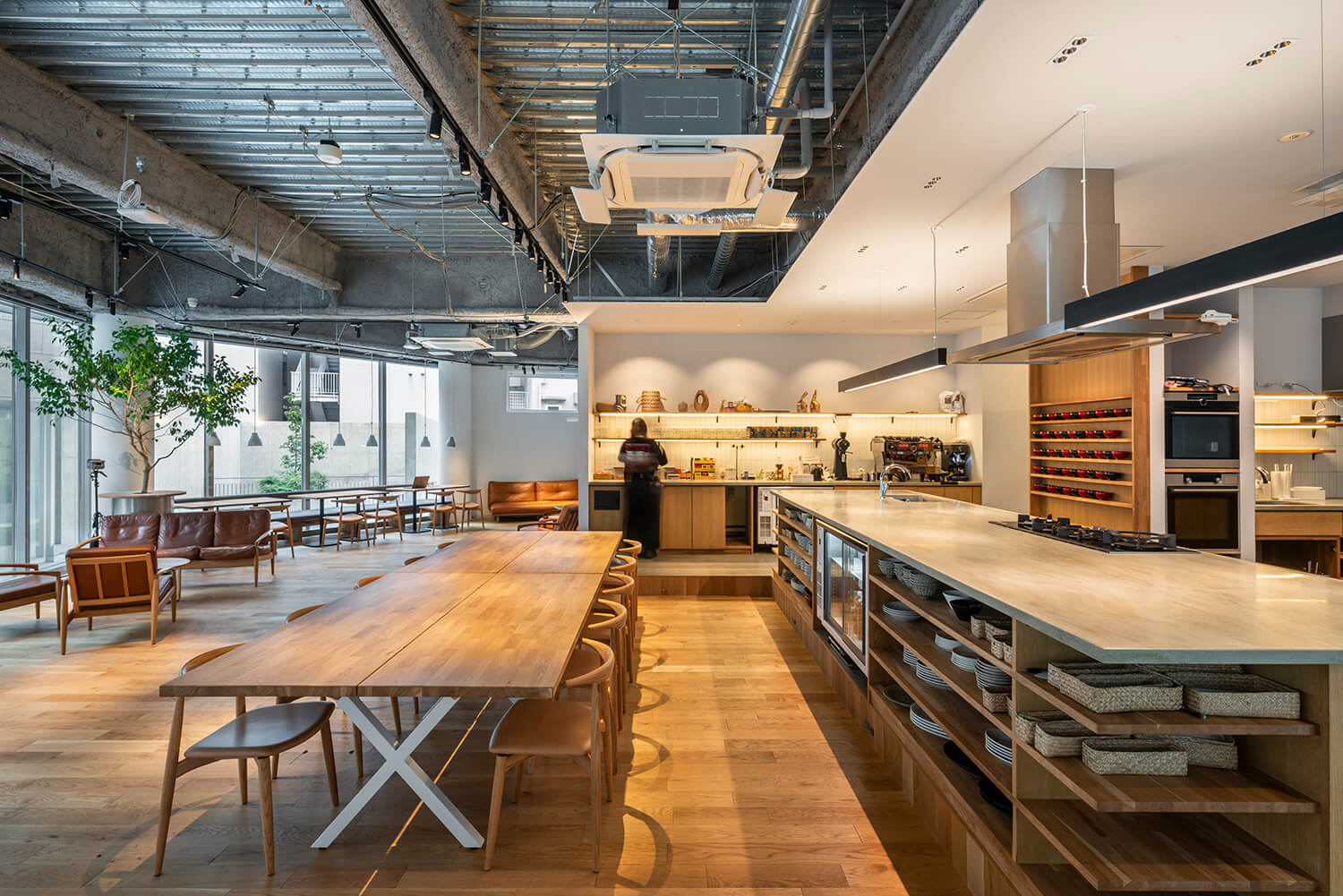
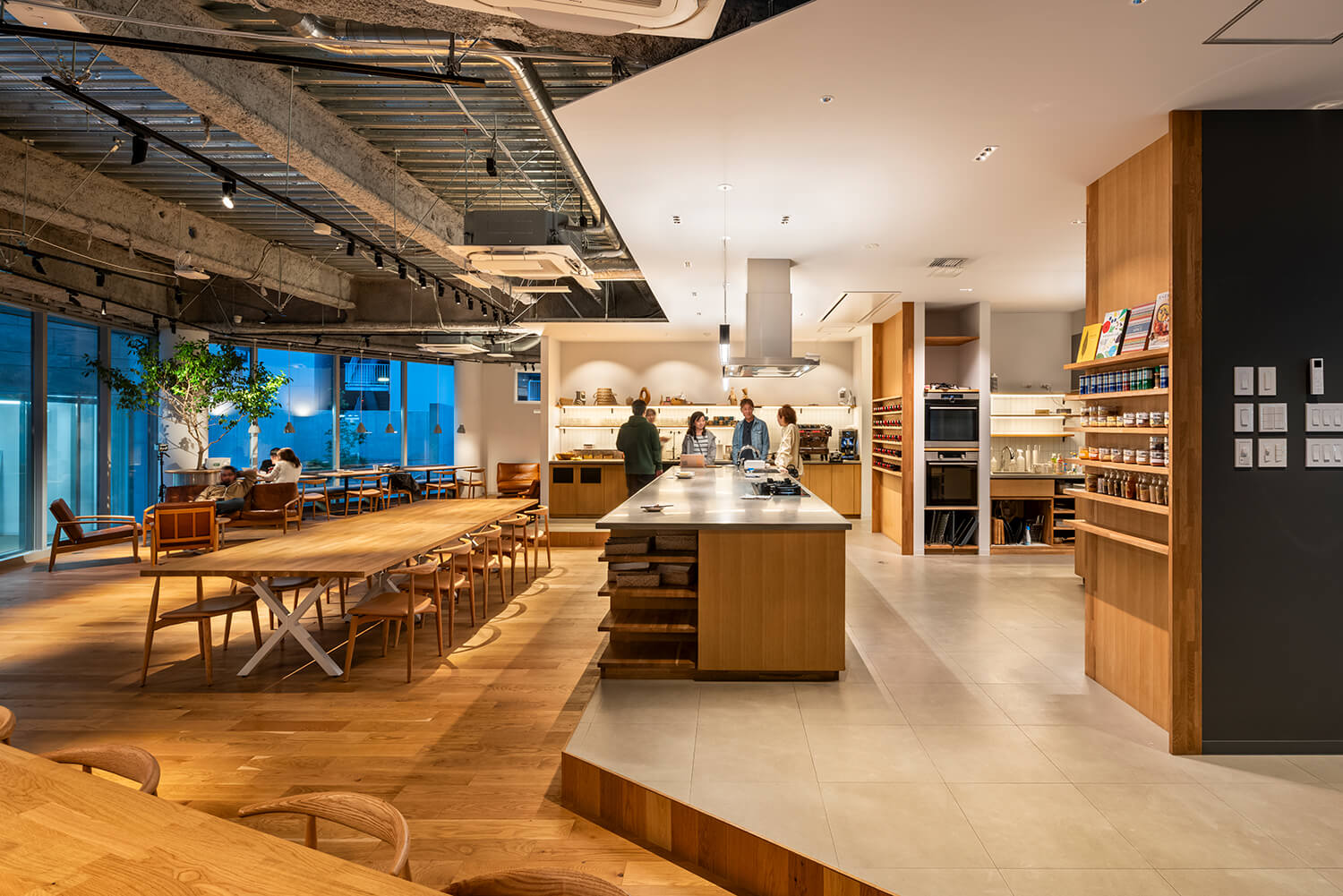
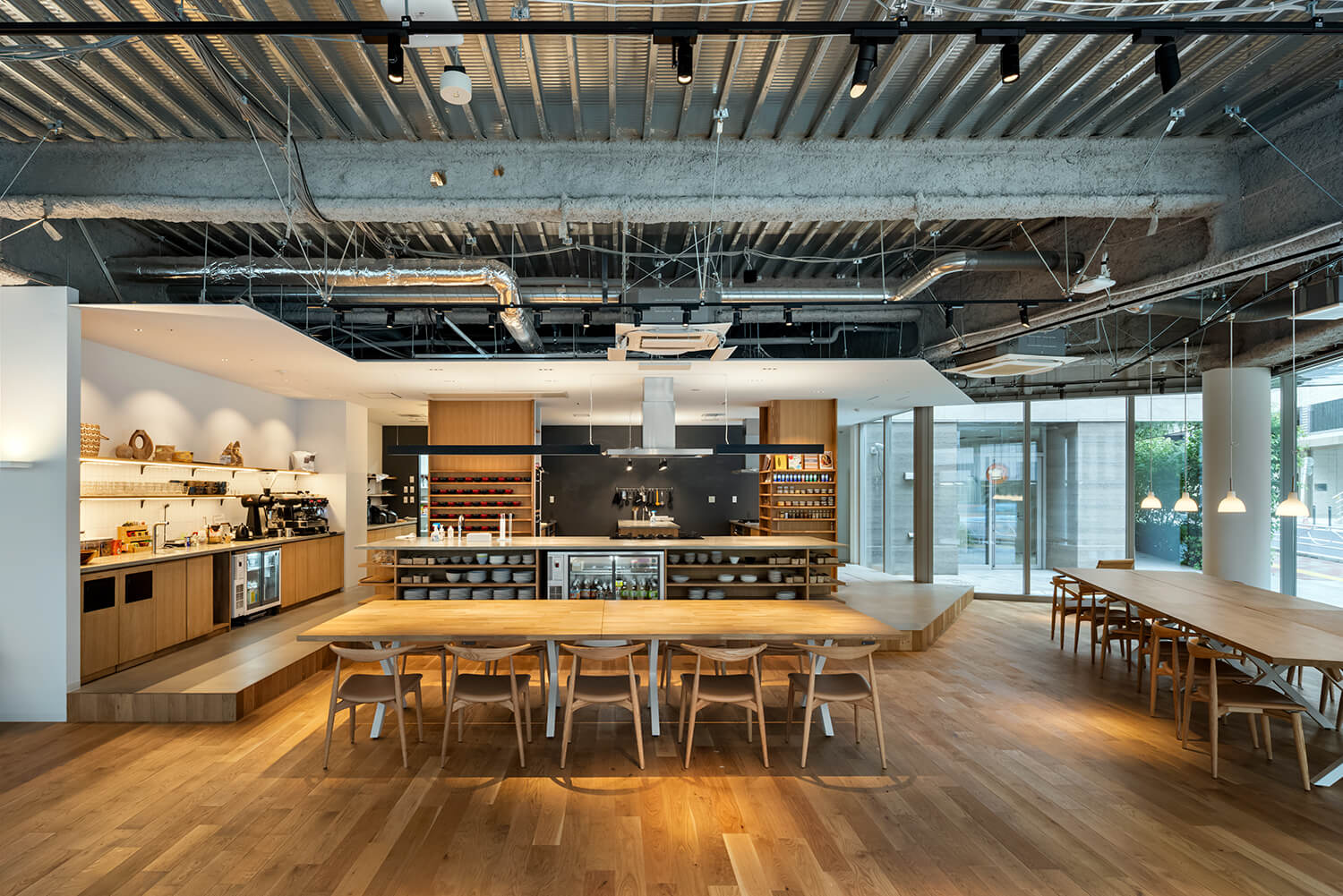
The first floor centres around the main kitchen and dining area, the office’s iconic space. Through its glass façade facing the street, activities within this floor permeate into the neighbourhood. Positioned as an office space, it nevertheless carries a semi-public character.
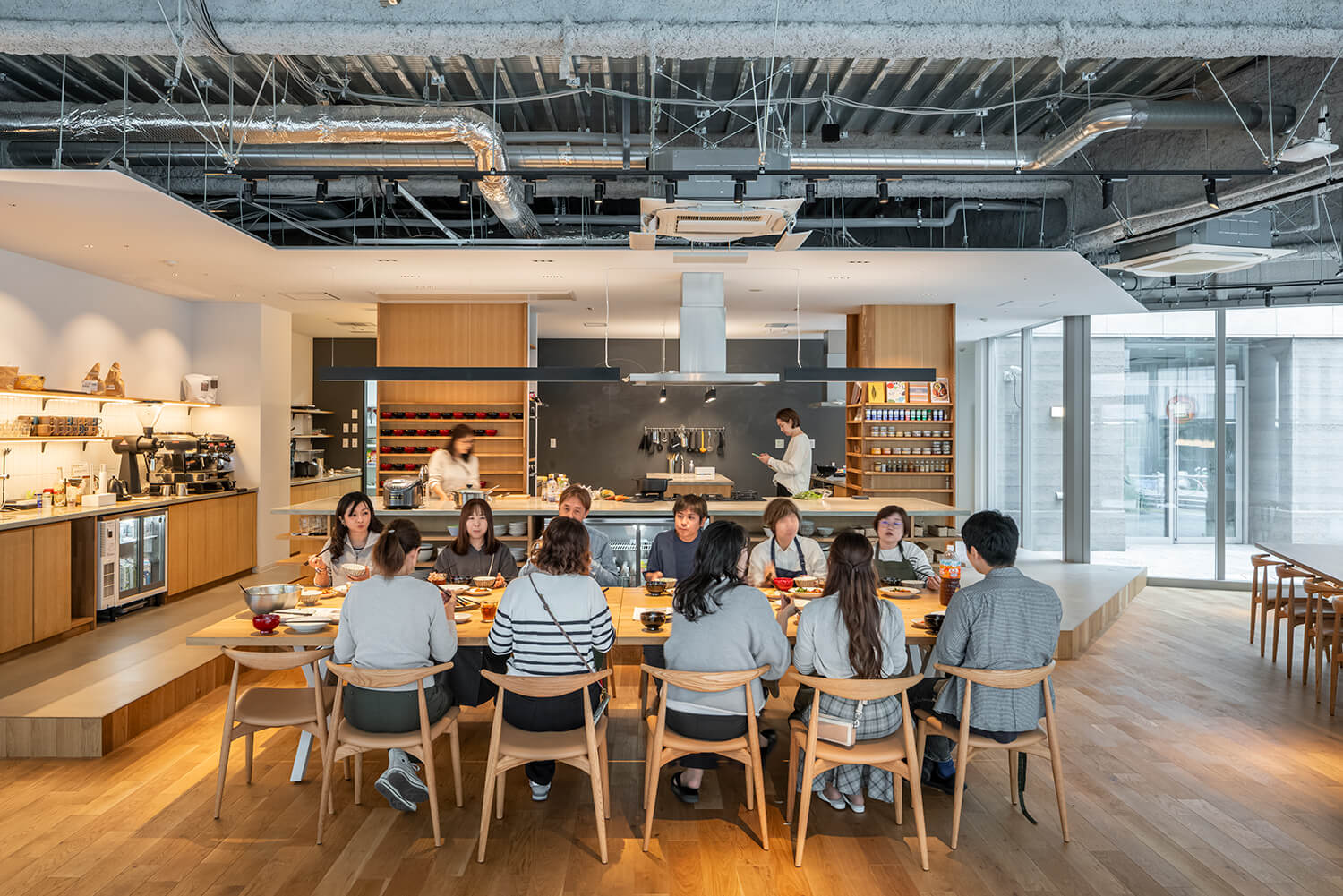
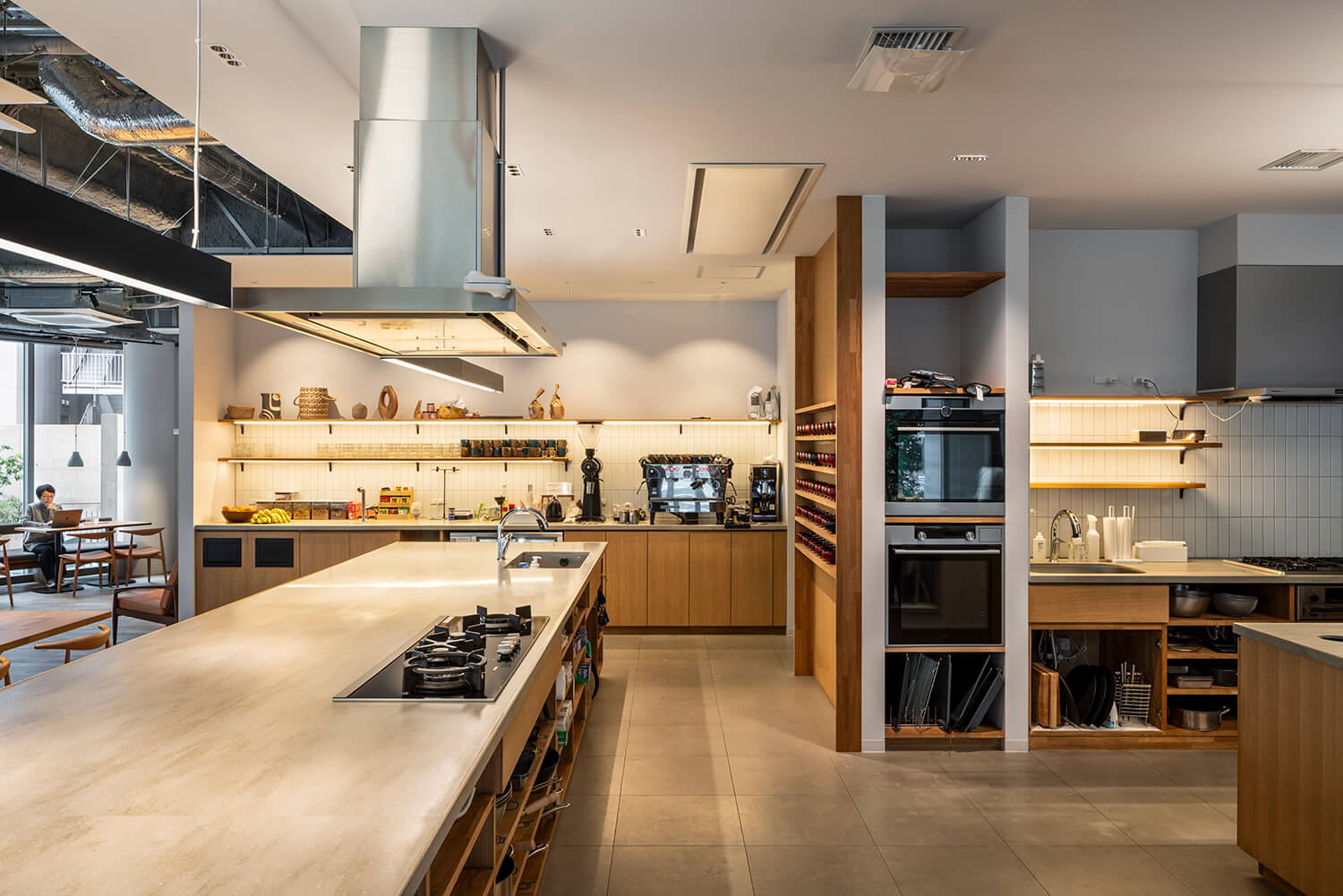
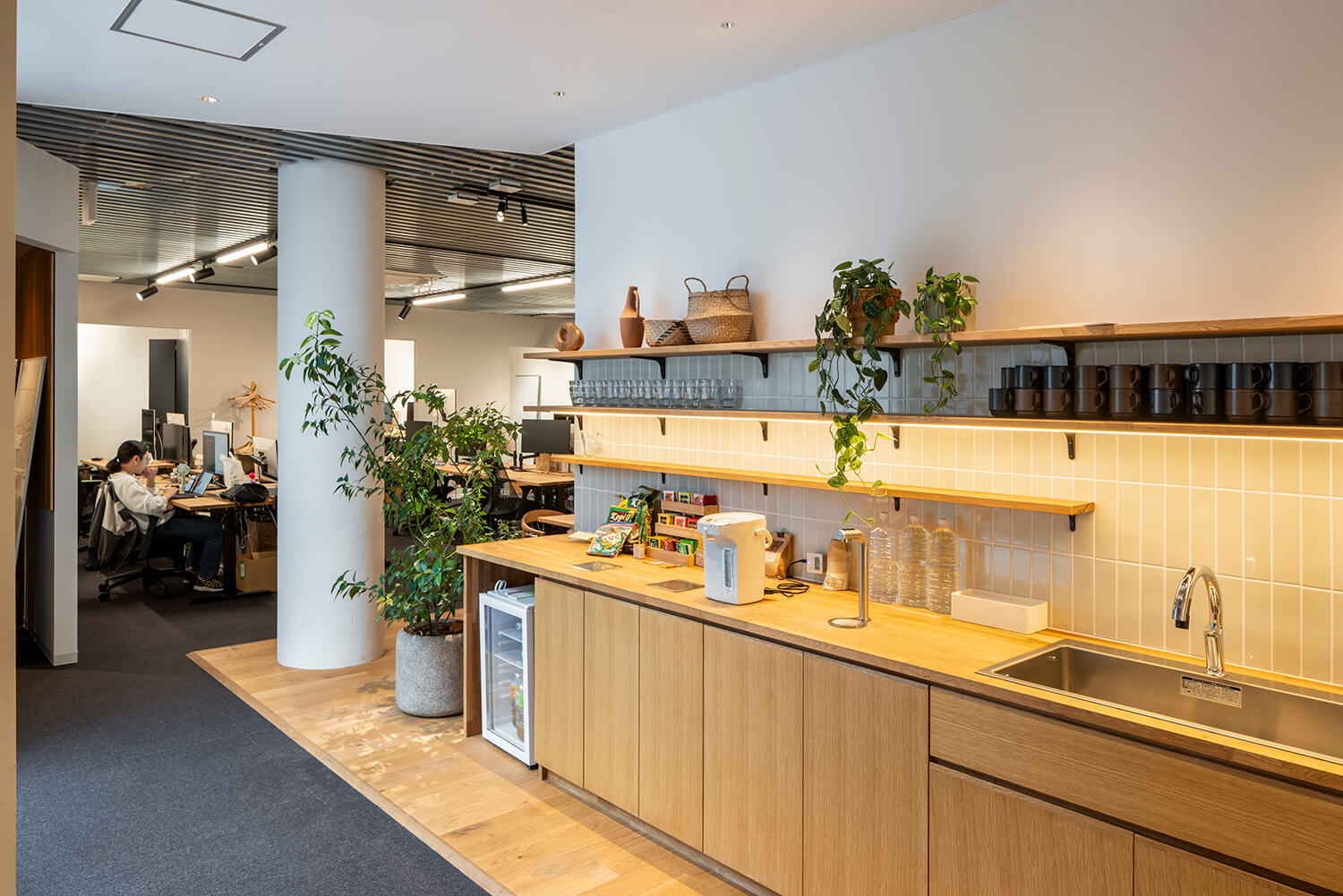
The kitchen is scaled to accommodate multiple users simultaneously. By distributing work surfaces and hobs, it flexibly supports everything from individual use to group cooking. Ingredients and seasonings are always plentifully stocked, and ample washing-up space is provided. At lunchtime, a daily scene unfolds where staff naturally gather, either individually or in small groups, to cook and share meals together.
This dining area serves as a multipurpose space, utilised not only for meals but also for meetings, informal discussions, lectures, and events. The flexible furniture arrangement allows the space to be reconfigured according to its purpose, creating an environment where the boundaries between work and non-work, formal and informal, blend seamlessly. Equipment such as an espresso machine is incorporated as an element enhancing the space’s appeal for extended stays.
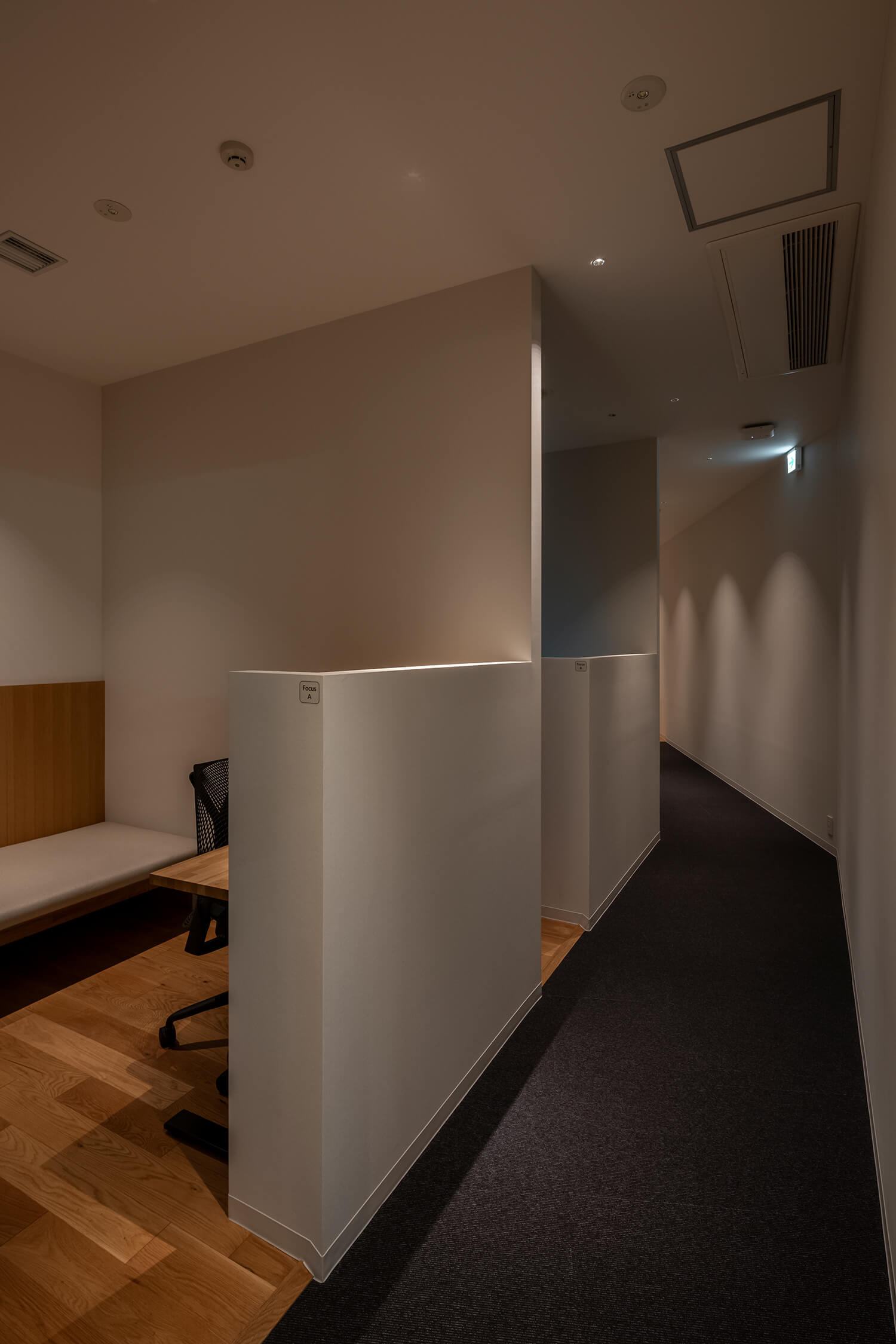
Meanwhile, the administration department’s workspace occupies the same ground floor. Given its handling of highly confidential information, this area is distinctly zoned from the kitchen and dining space, separated both visually and in terms of circulation routes. Small meeting rooms for one-on-one discussions are dotted along the connecting corridor, facilitating the natural insertion of work-related dialogue.
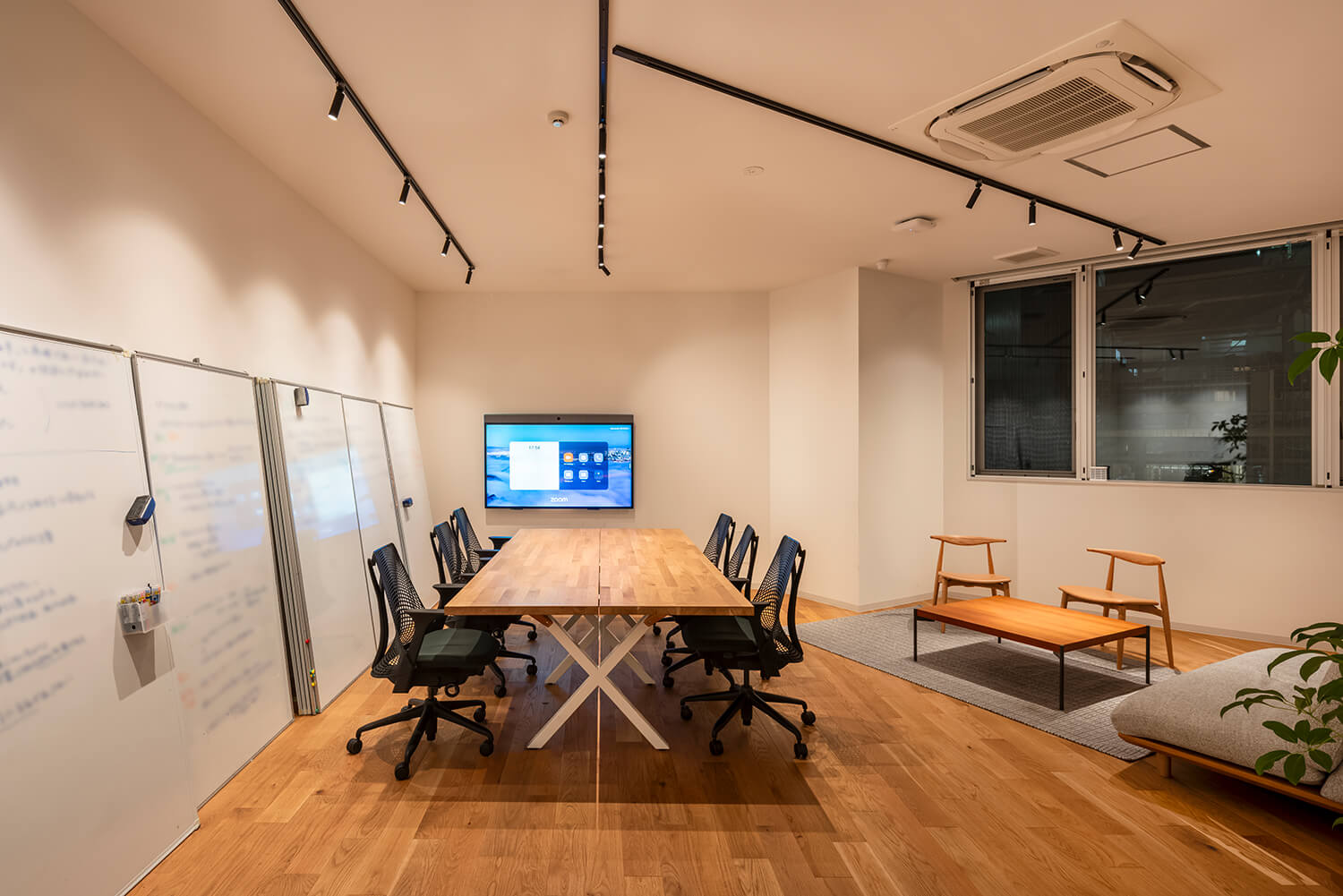
Furthermore, along this corridor, meeting rooms with a distinct character, differing from conventional “conference rooms”, have been established. Their furniture arrangement and sense of scale evoke a residential living room, intending discussions to take place within a relaxed atmosphere. Numerous whiteboards are fitted to the walls, planning the space as one for developing thoughts through physical movement.
B1F|Inward-facing relaxation and diverse working environments
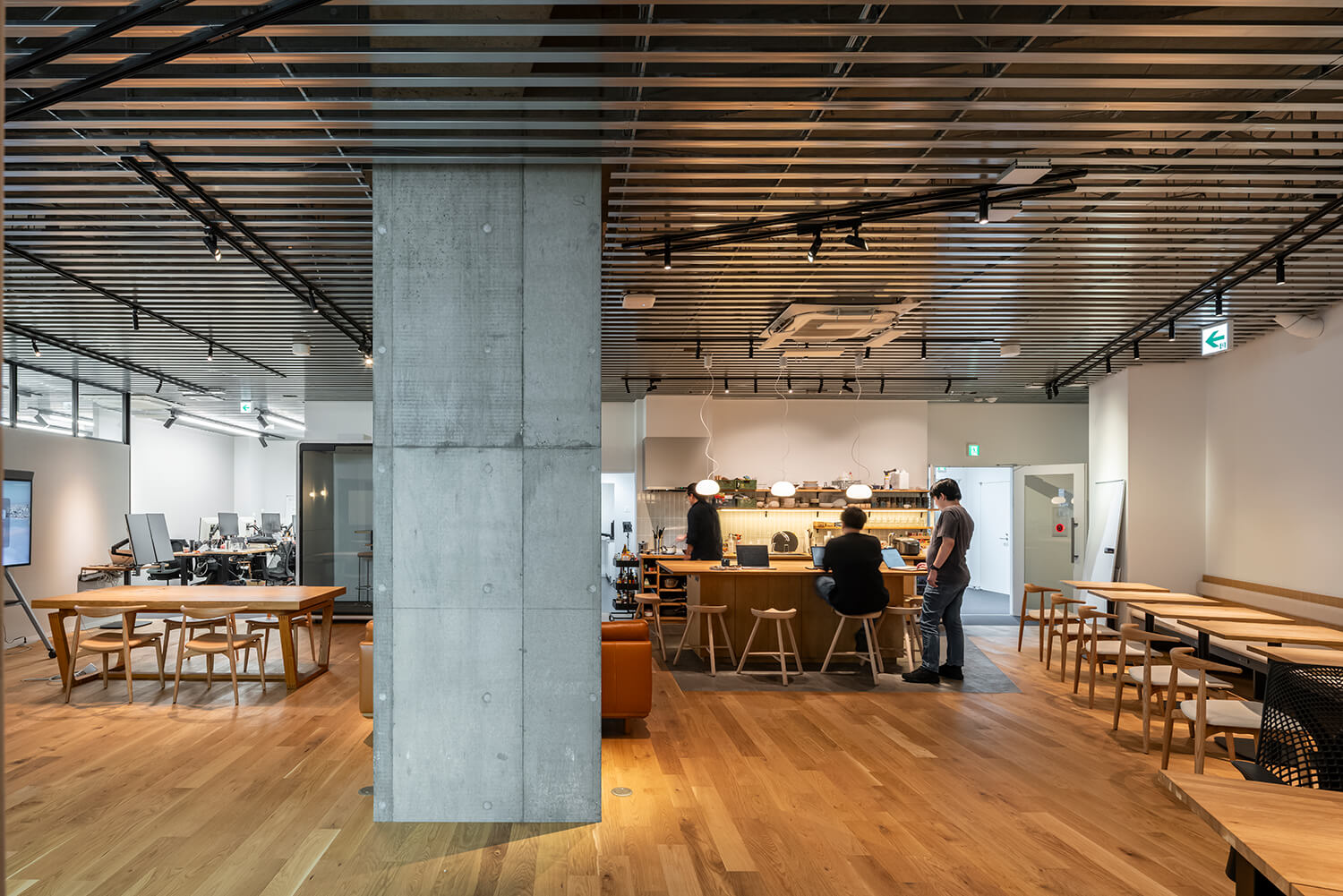
In contrast to the first floor, the basement level is designed as a more inward-facing, private space. Centred around a kitchen, with relaxation areas arranged around it, the layout creates a gently flowing sequence of spaces for different activities: office work, workshops, and focused concentration.
This kitchen prioritises internal use over external outreach, functioning as a hub for daily cooking, light meals, and communication. From here, circulation routes branch out to the workshop area where engineers work, the standard office space, and further areas where one can lie down to rest or concentrate.
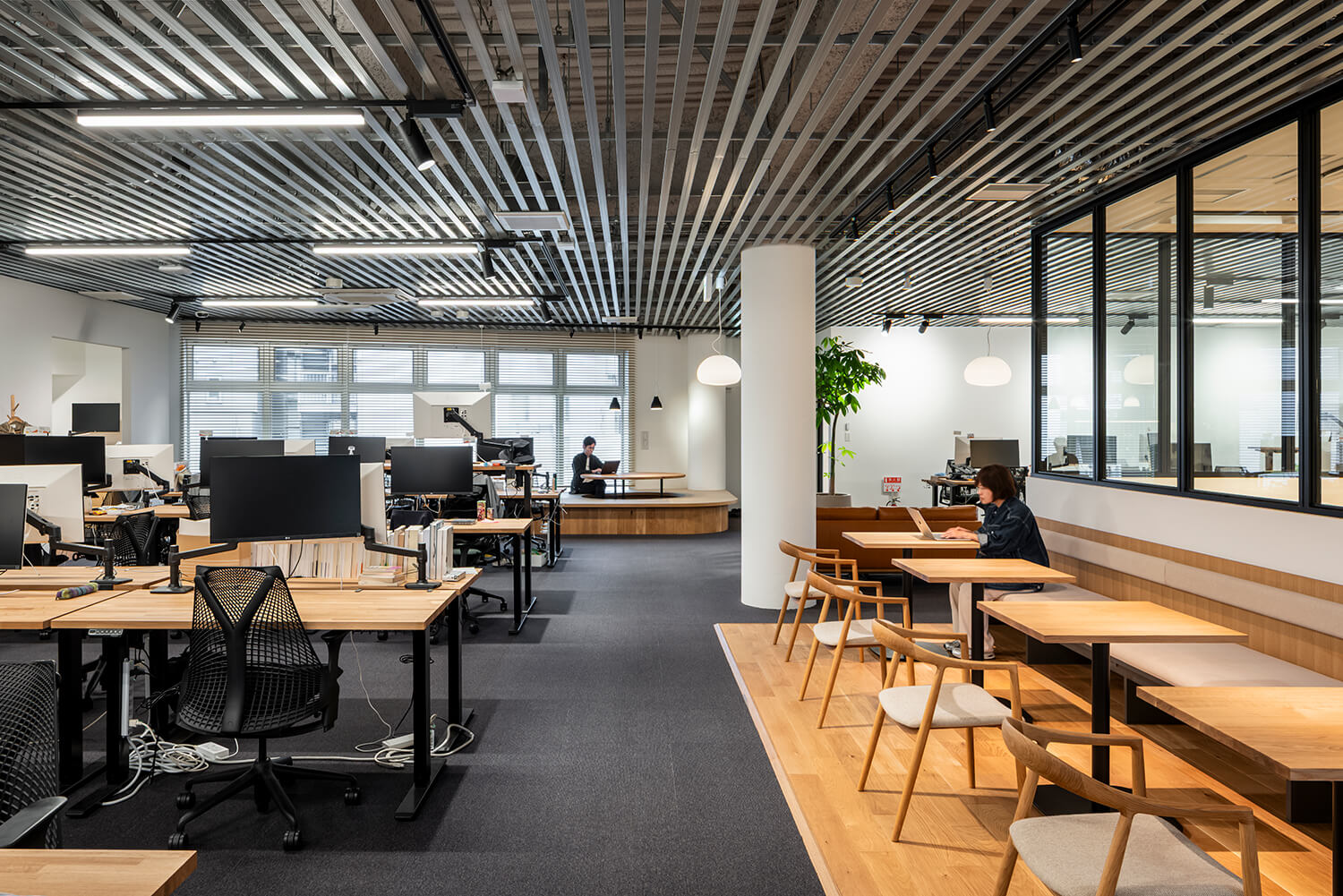
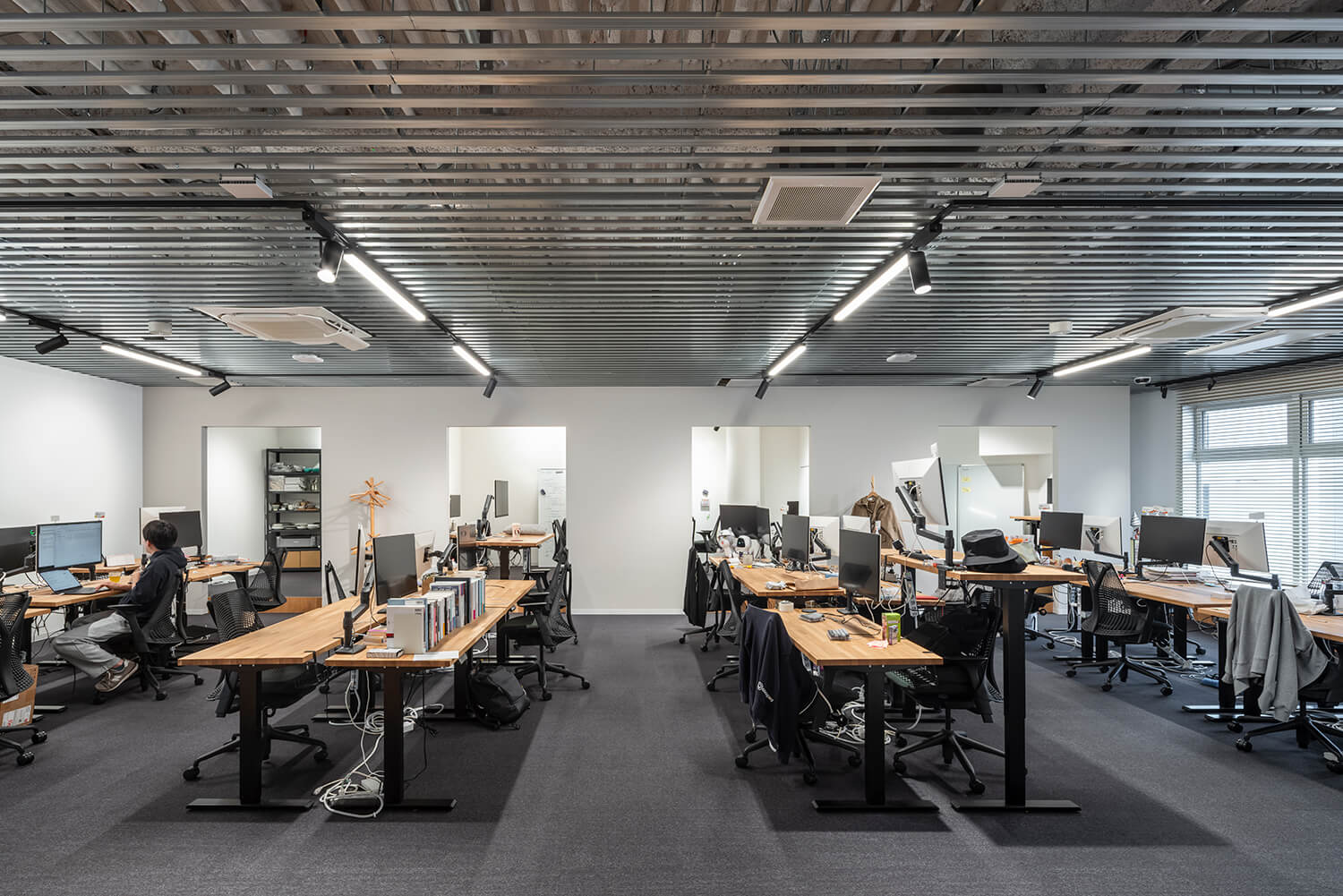
In the work area, glass used near the ceiling blocks sightlines while maintaining spatial continuity. Lighting colour temperature is deliberately adjusted to facilitate a psychological shift from the relaxed atmosphere around the kitchen to a work mindset. The juxtaposition of expansive open space and booth-like areas for group work allows occupants to choose their location according to task requirements.
Furthermore, despite being underground, parts of the area housing meetings and workstations utilise the site’s rear elevation to face externally, securing indirect natural light and a connection to the outside. Conversely, areas without windows actively leverage this characteristic, being designed as darker spaces for power naps or deep concentration.
2F|Overlapping Studio Functions and Daily Operations
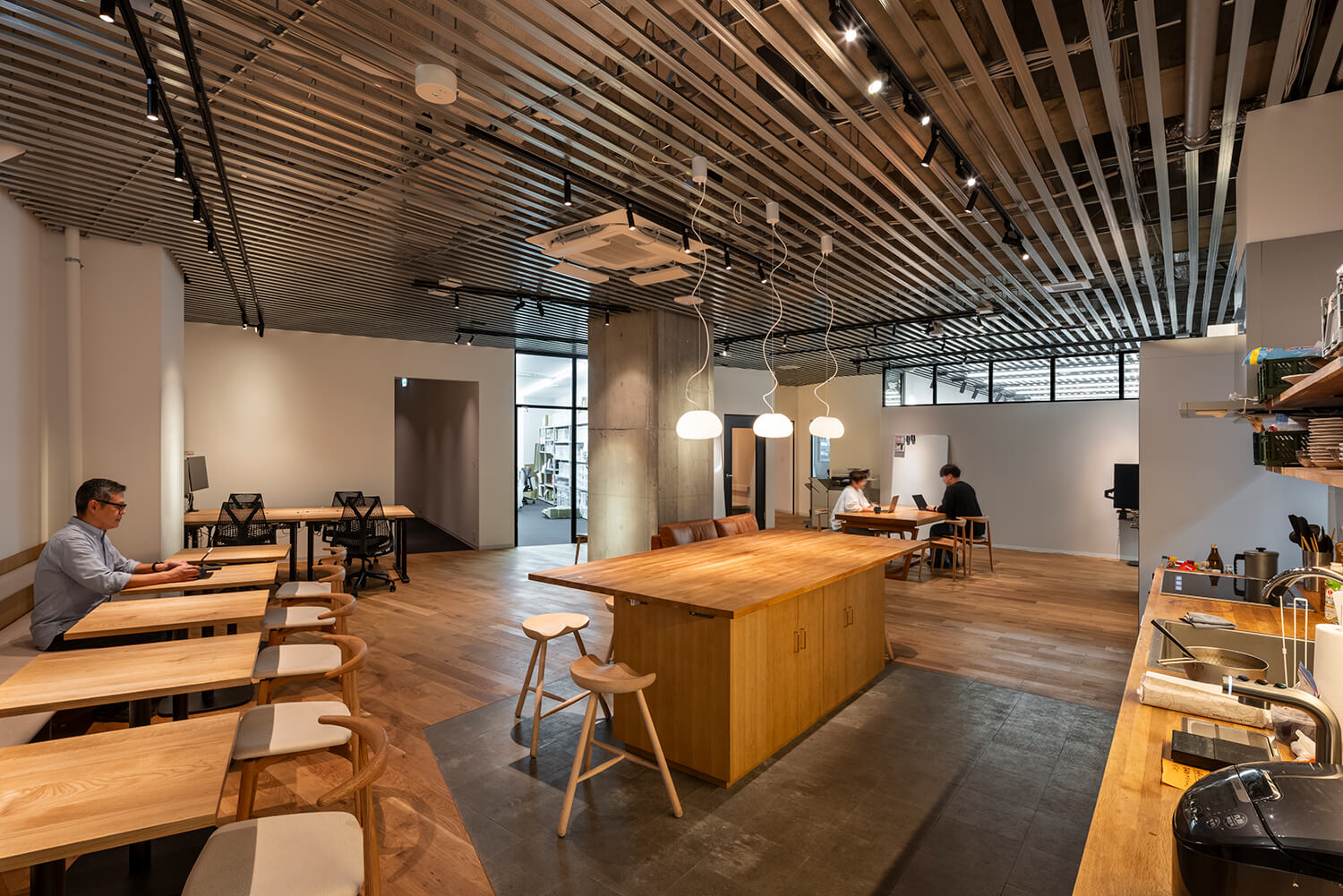
The second floor provides a quieter working environment while incorporating studio functions. Upon exiting the lift, a simple kitchen area is provided for preparing drinks and supporting short stays. Beyond this, a series of booth-style meeting areas without doors are arranged to naturally encourage casual discussions and standing conversations.
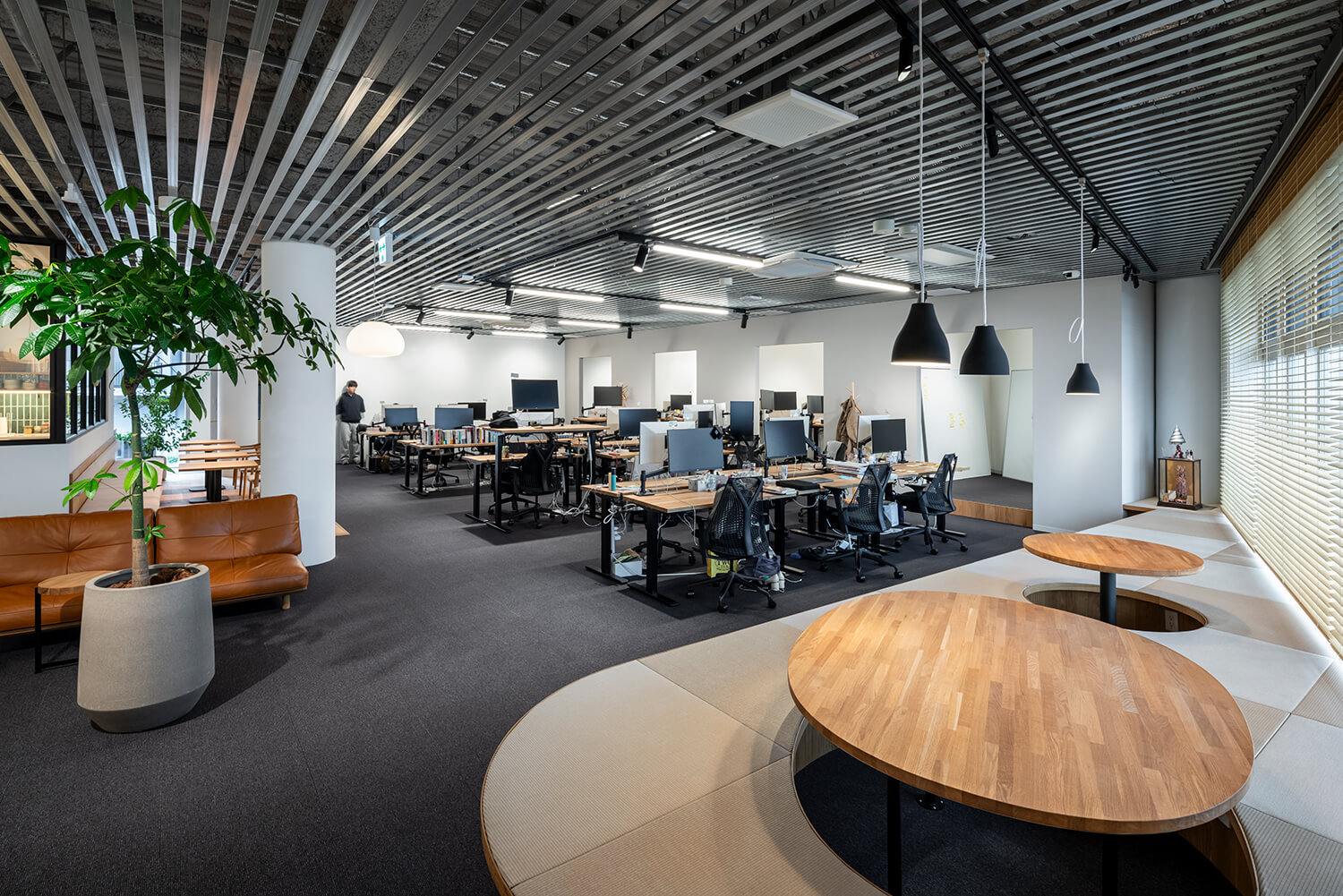
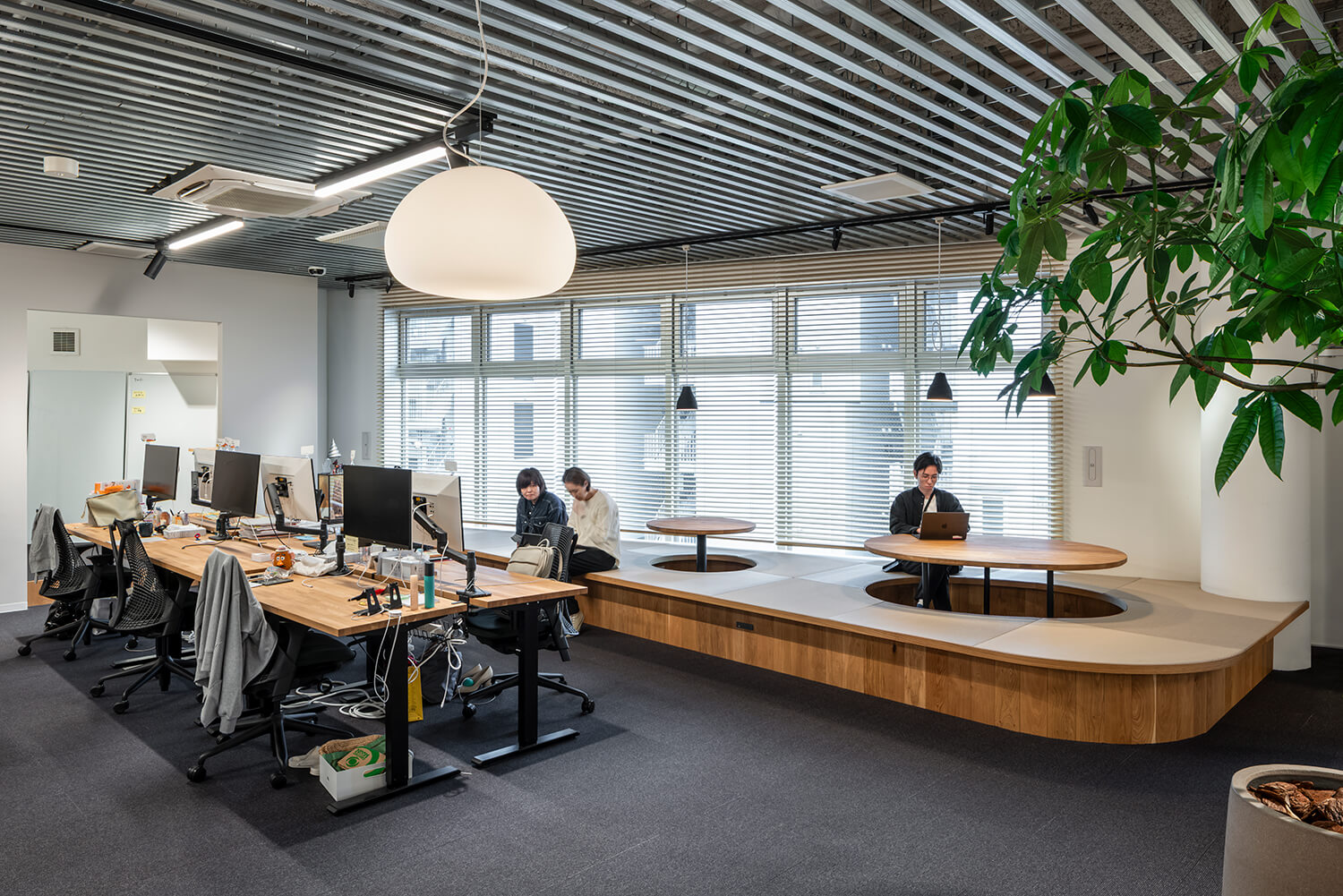
The office area combines expansive open spaces with booth-like spaces for smaller teams, providing environments suited to varying levels of task complexity. Raised seating areas are positioned by the windows, functioning as spaces to shift one’s mode of thinking by altering eye level and posture.
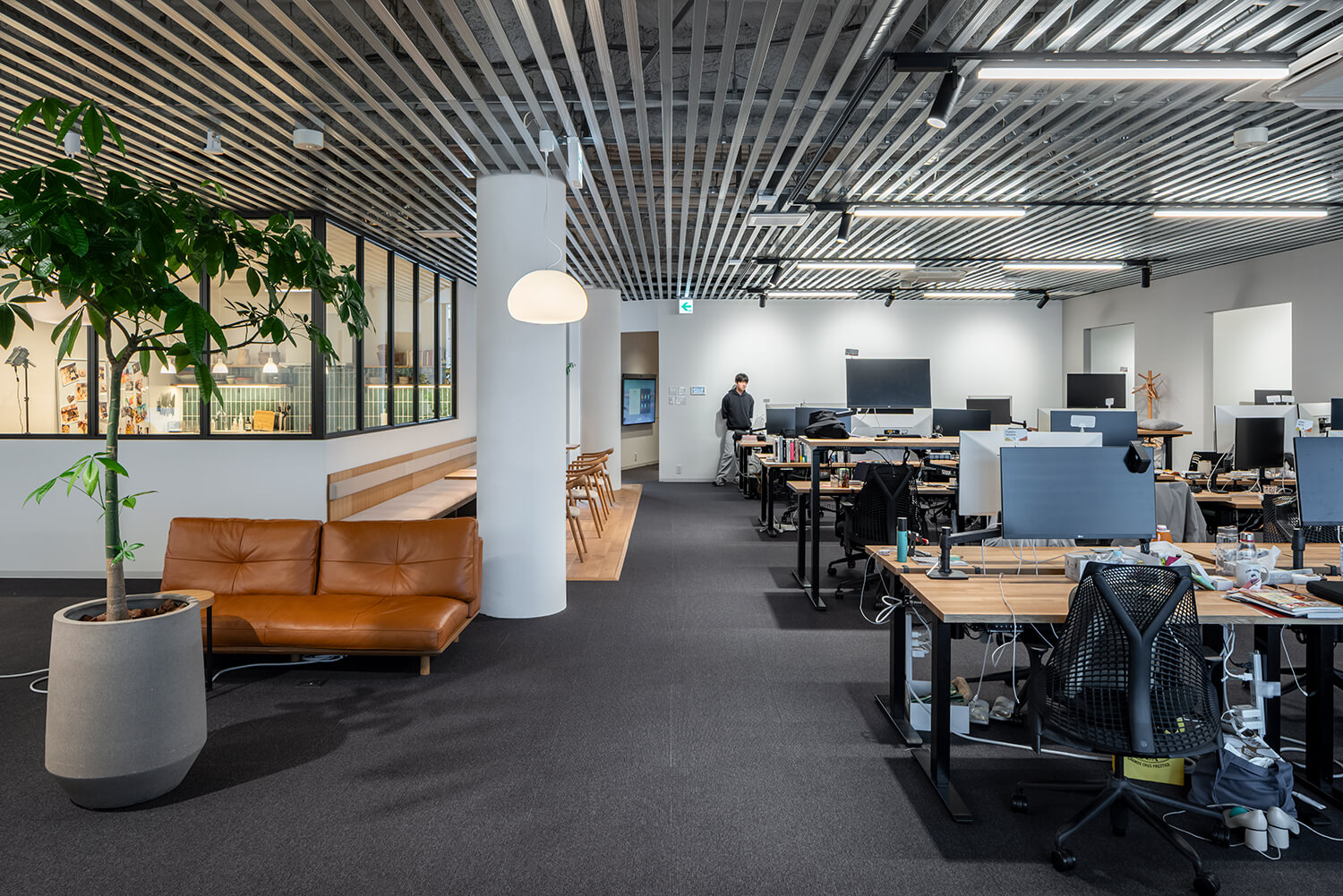
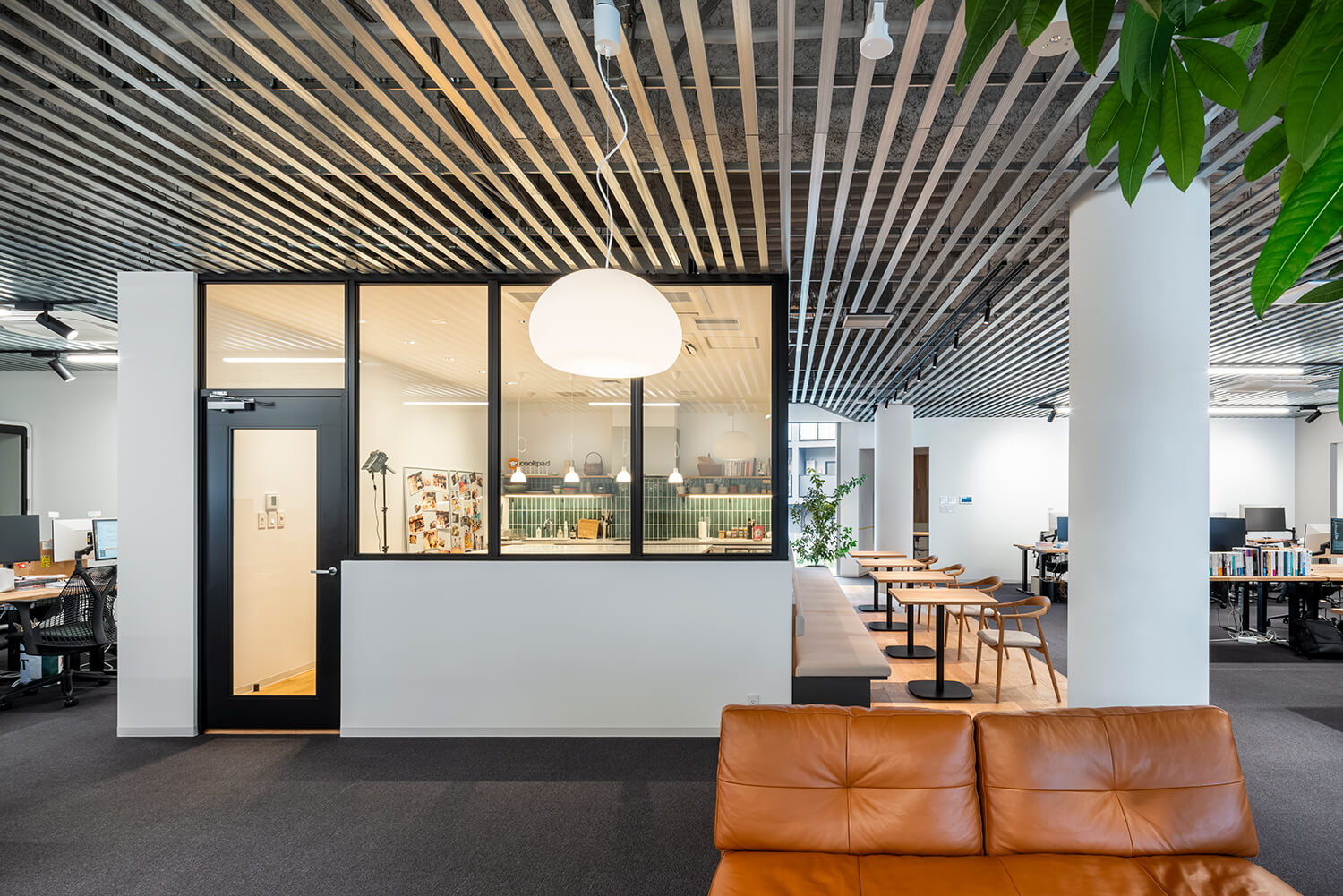
Additionally, a lounge is situated on this floor, with the kitchen studio positioned behind it, visible through glass. The visual overlap between daily office work and non-routine activities like filming and recording brings a sense of multi-layered time and activity throughout the entire office.。
Architecture that redefines the workplace
Within this office, the kitchen is positioned not as a welfare facility, but as an architectural device to reweave human movement and relationships.
It serves different purposes throughout the day and night, allowing people who previously never crossed paths to naturally intersect. The space must not be closed off by rigid functions or excessive management, preserving room for such interactions to occur. To achieve this, zoning, circulation routes, sightlines, and the lighting environment have been meticulously designed.
This project attempts to reimagine the office not merely as a place of labour, but as the very environment where corporate culture is continually renewed each day. Architecture does not end upon completion; its meaning is continually updated by how it is used. Based on this premise, this Ikejiri office will continue to reveal different expressions over time.
- Site:Meguro-ku, Tokyo
- Use:Office
- Completion:2025.08
- Client:Cookpad Inc.
- Architectural Design:KEY OPERATION INC. / ARCHITECTS
- Contractor:OGA kengyo
- Kitchen Design and Construction:Matsushita Setsubi Kougyo Co., Ltd.
- Electrical and Mechanical Equipment Design and Construction:Tousai Co,Ltd
- Photo:Tololo studio Mayu Nakamura
- Total Floor Area:1,498.47m²