Commercial Building in Shimokitazawa “REVE SQUARE SHIMOKITAZAWA”
- COMMERCIAL
2026.02
Setagaya-ku, Tokyo
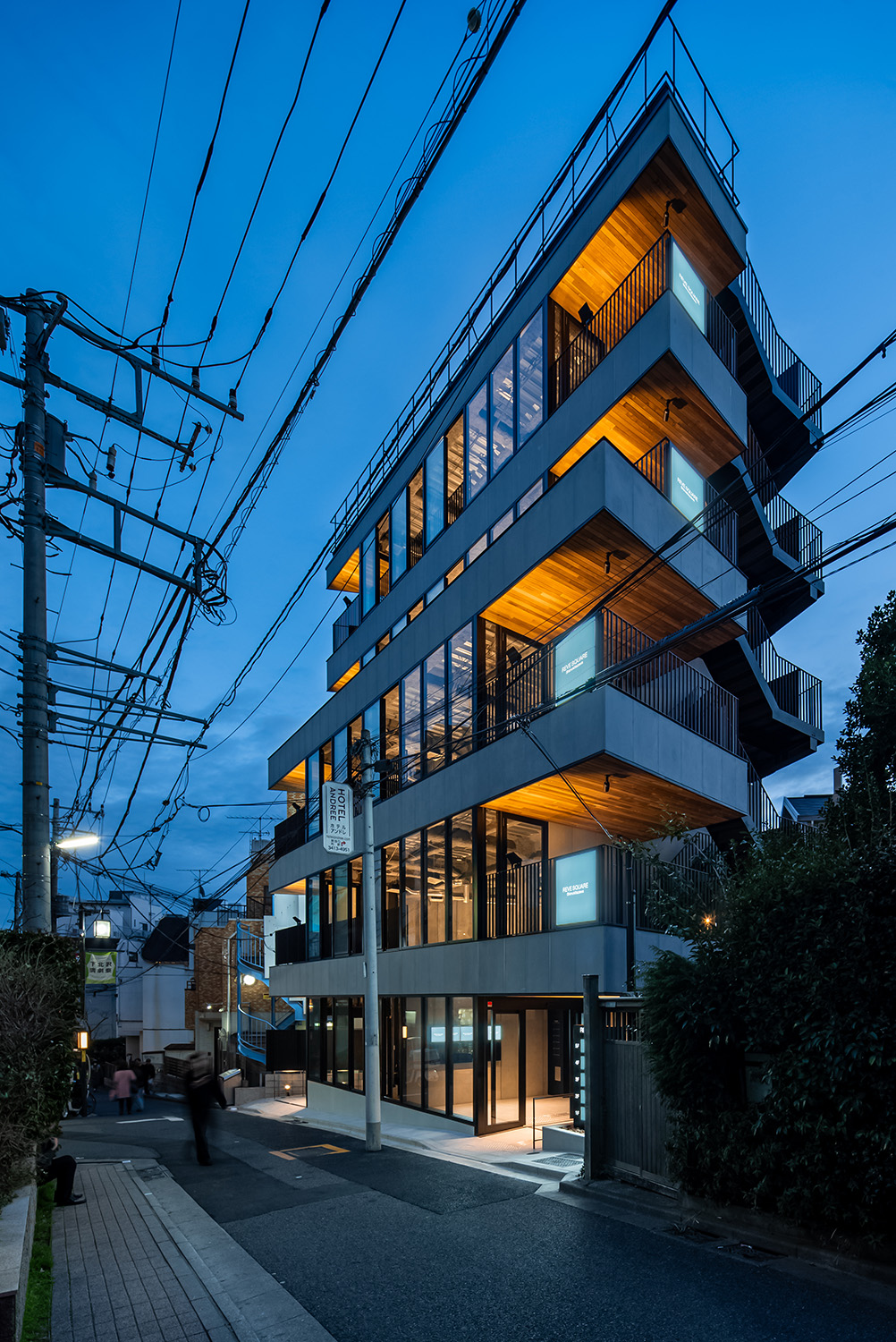
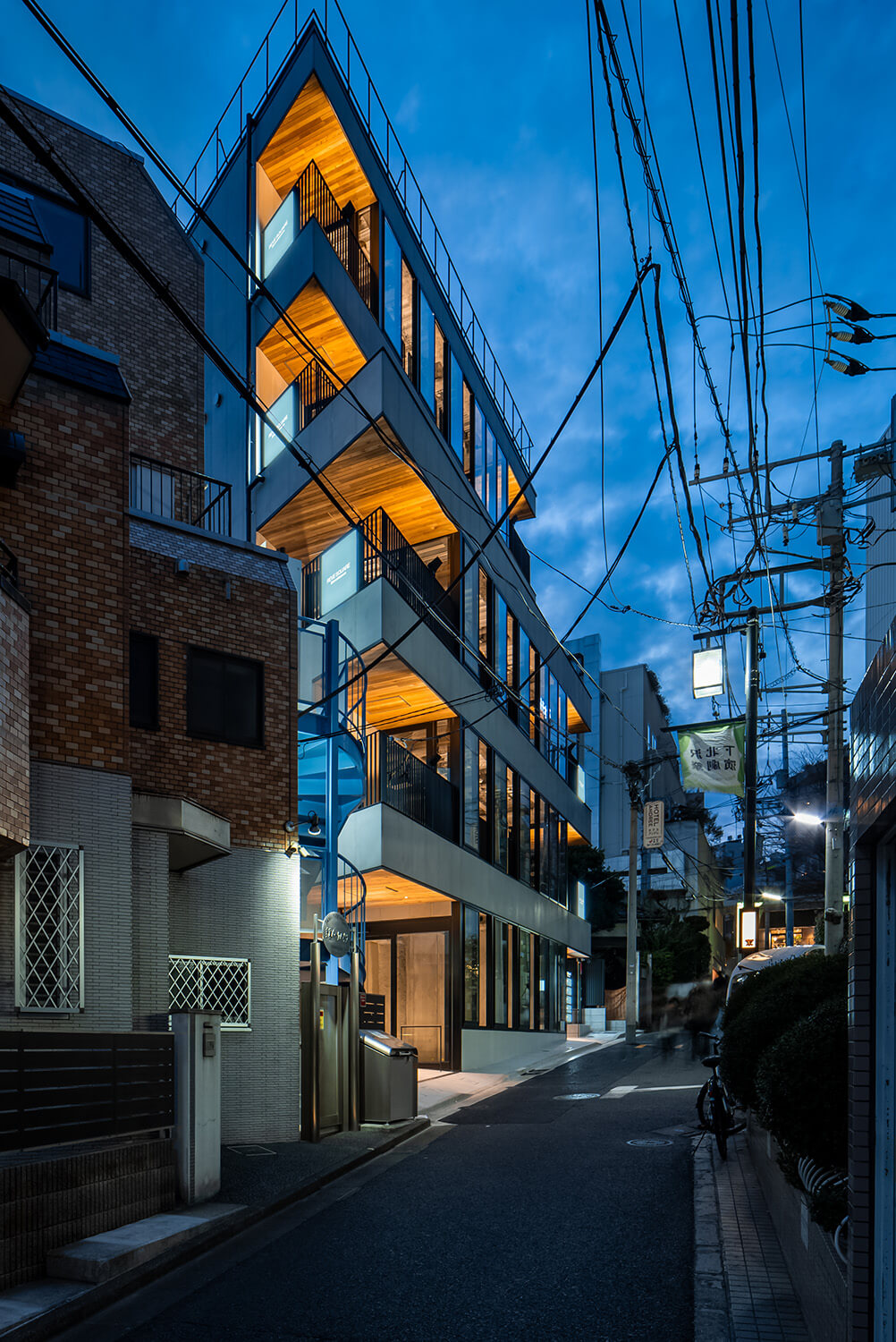
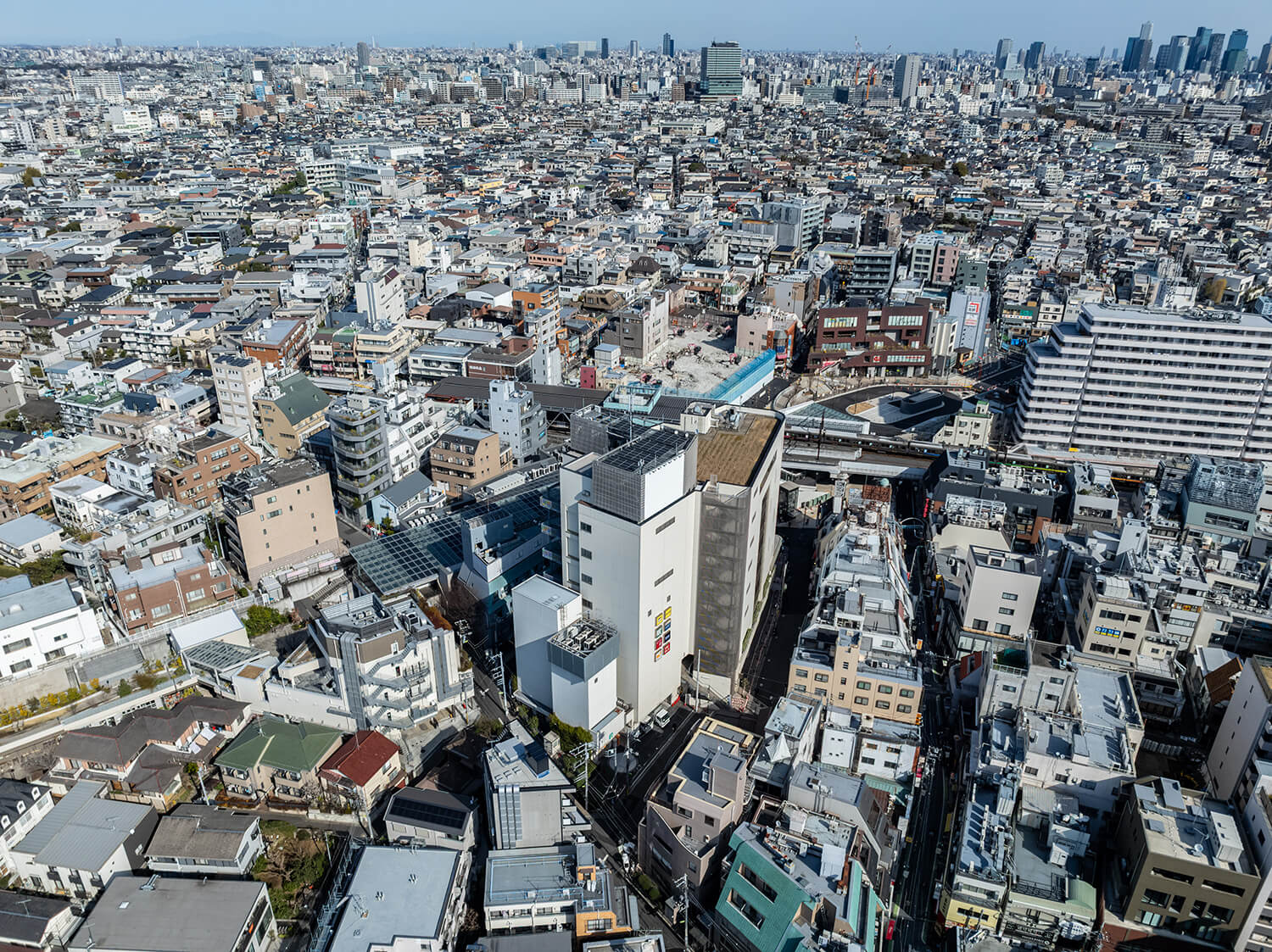
REVE SQUARE SHIMOKITAZAWA is a small-scale commercial building accommodating restaurant and service retail tenants, situated in a neighbourhood commercial zone in close proximity to Shimokitazawa Station. The project was shaped by a confluence of constraints: a site area of approximately 140㎡, height restrictions and overshadowing regulations imposed by the district plan, mandatory setback lines, and a fronting road width of only 4 metres.
Given the scale of the site and the conditions of the development brief, the scheme was designed without bicycle parking provision. Installing a bicycle store on the roof was impractical in relation to the building’s scale and the applicable height limits, whilst a basement solution lacked cost justification. Instead, the permissible uses and floor areas of each tenant were carefully examined against the Setagaya City Bicycle Parking Ordinance, and the scheme was structured so that no statutory obligation to provide bicycle parking would arise. This decision meant that none of the limited site area needed to be consumed by infrastructure use, making it possible to dedicate the building as a whole to a spatial composition that opens itself to the city.
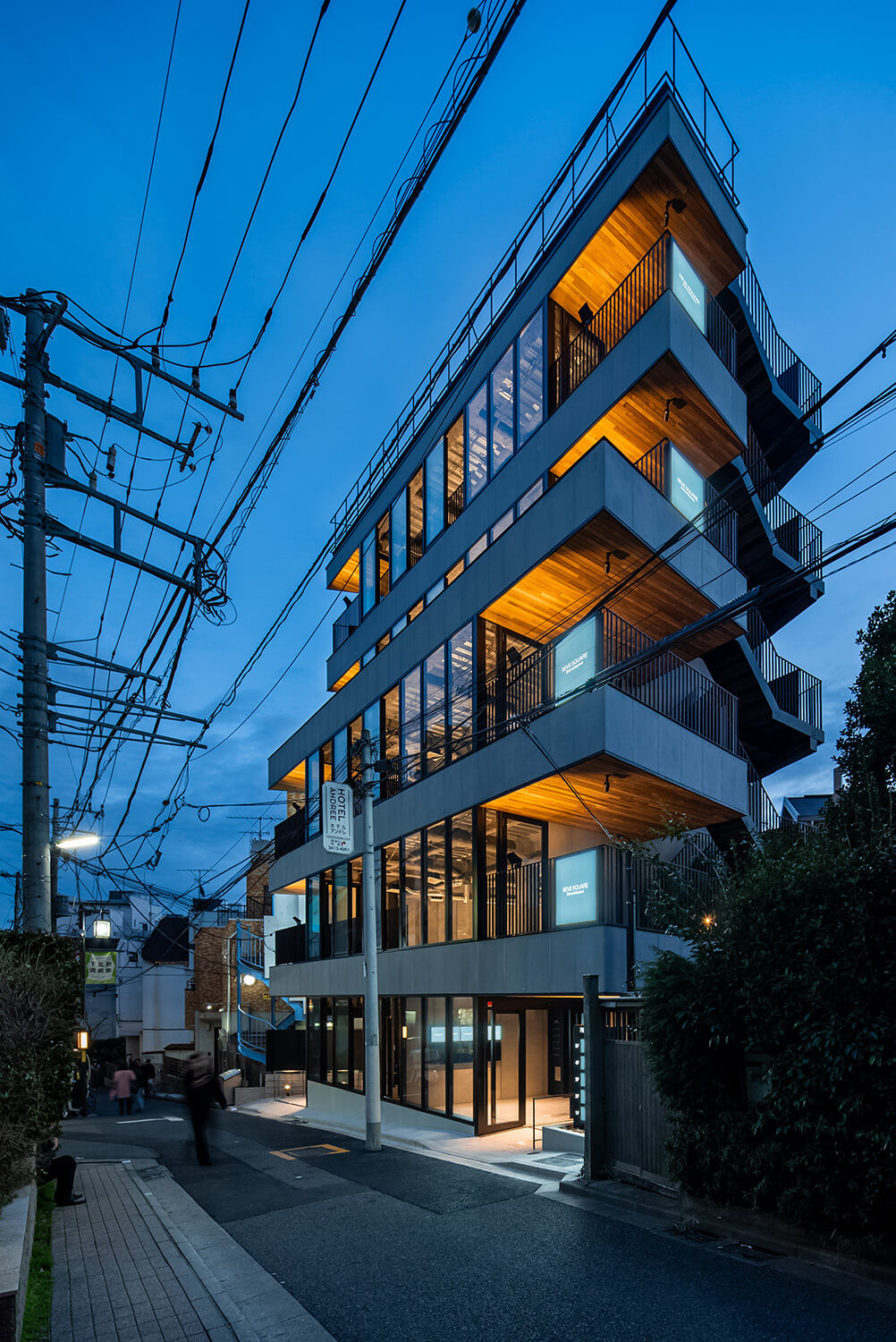
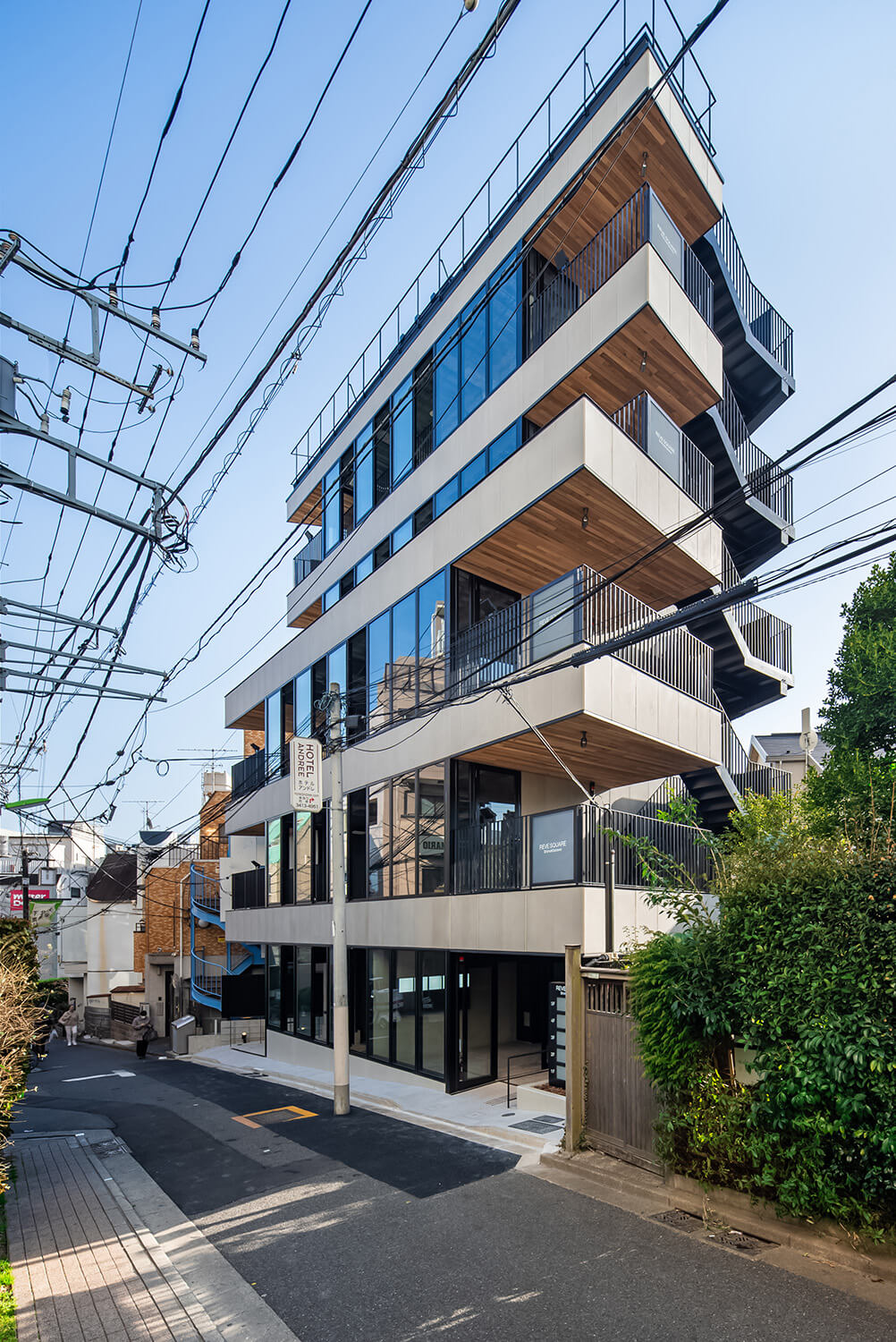
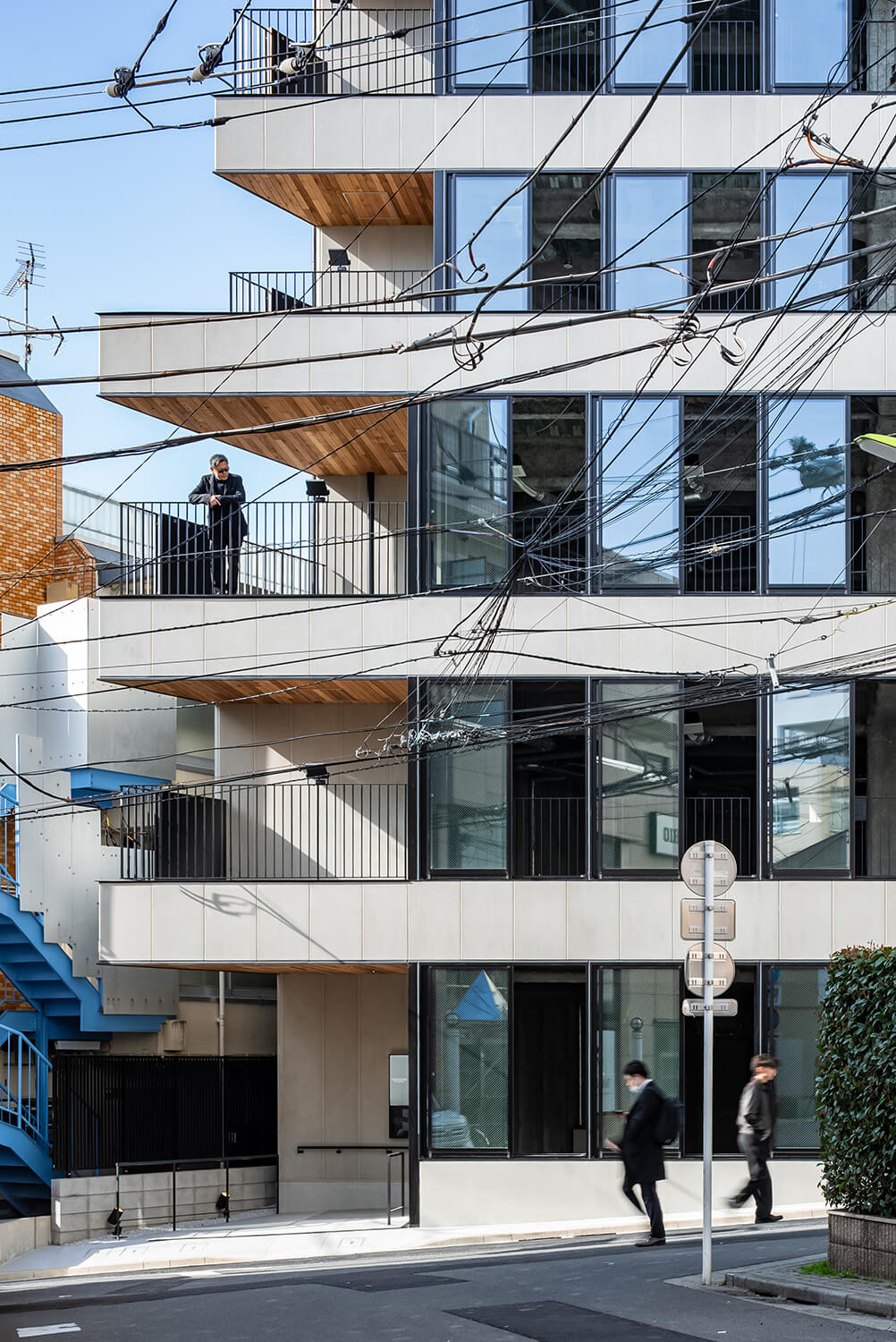
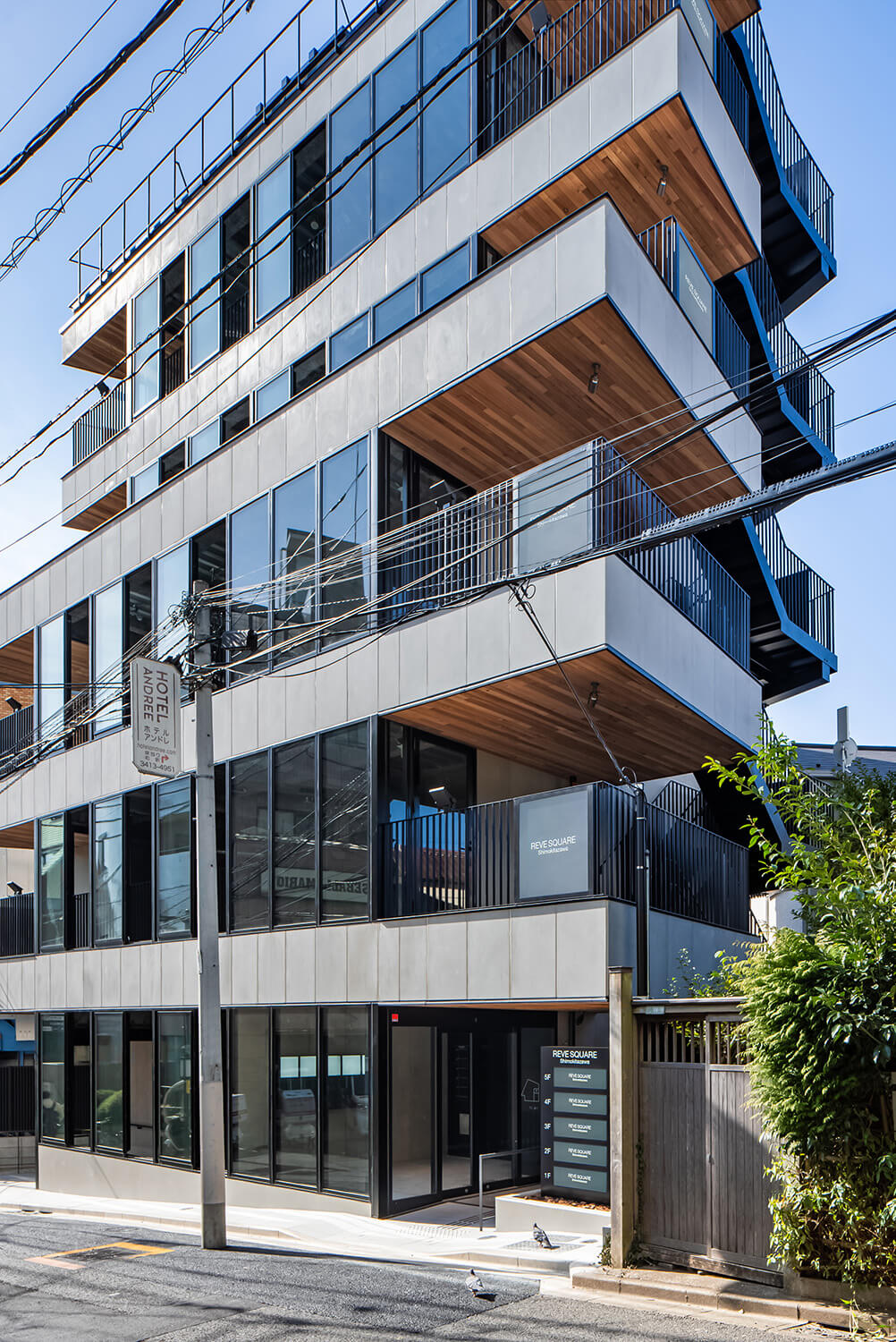
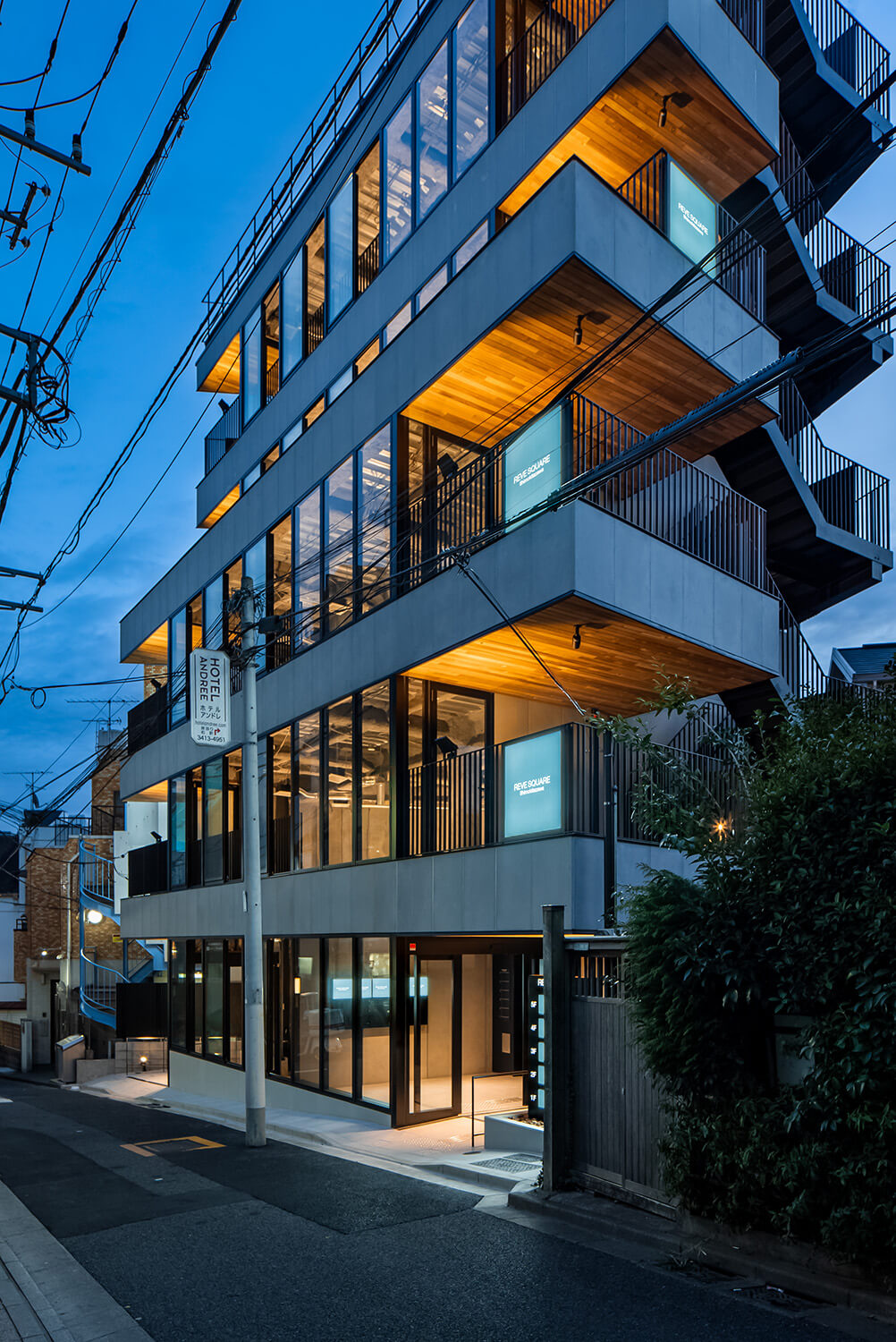
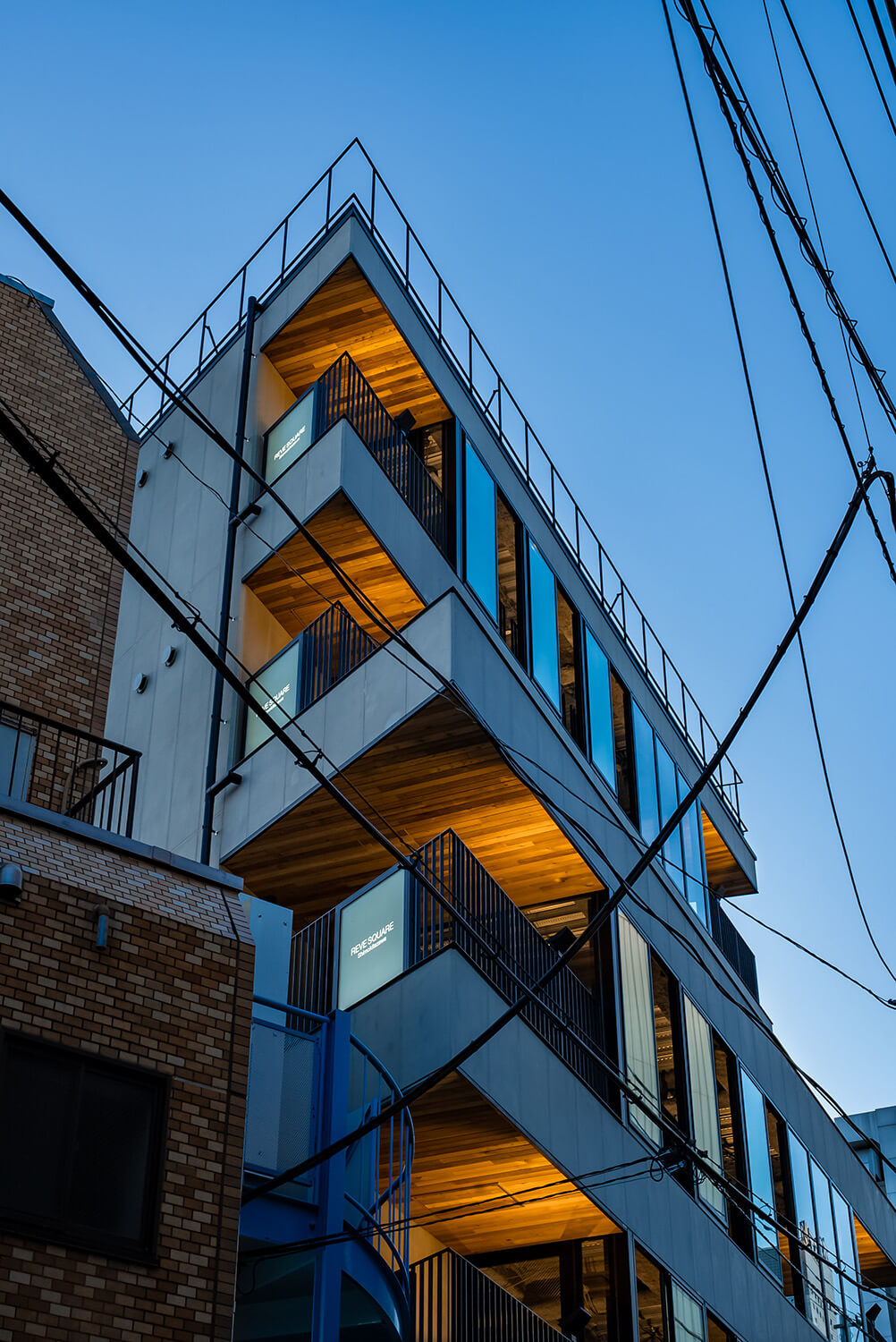
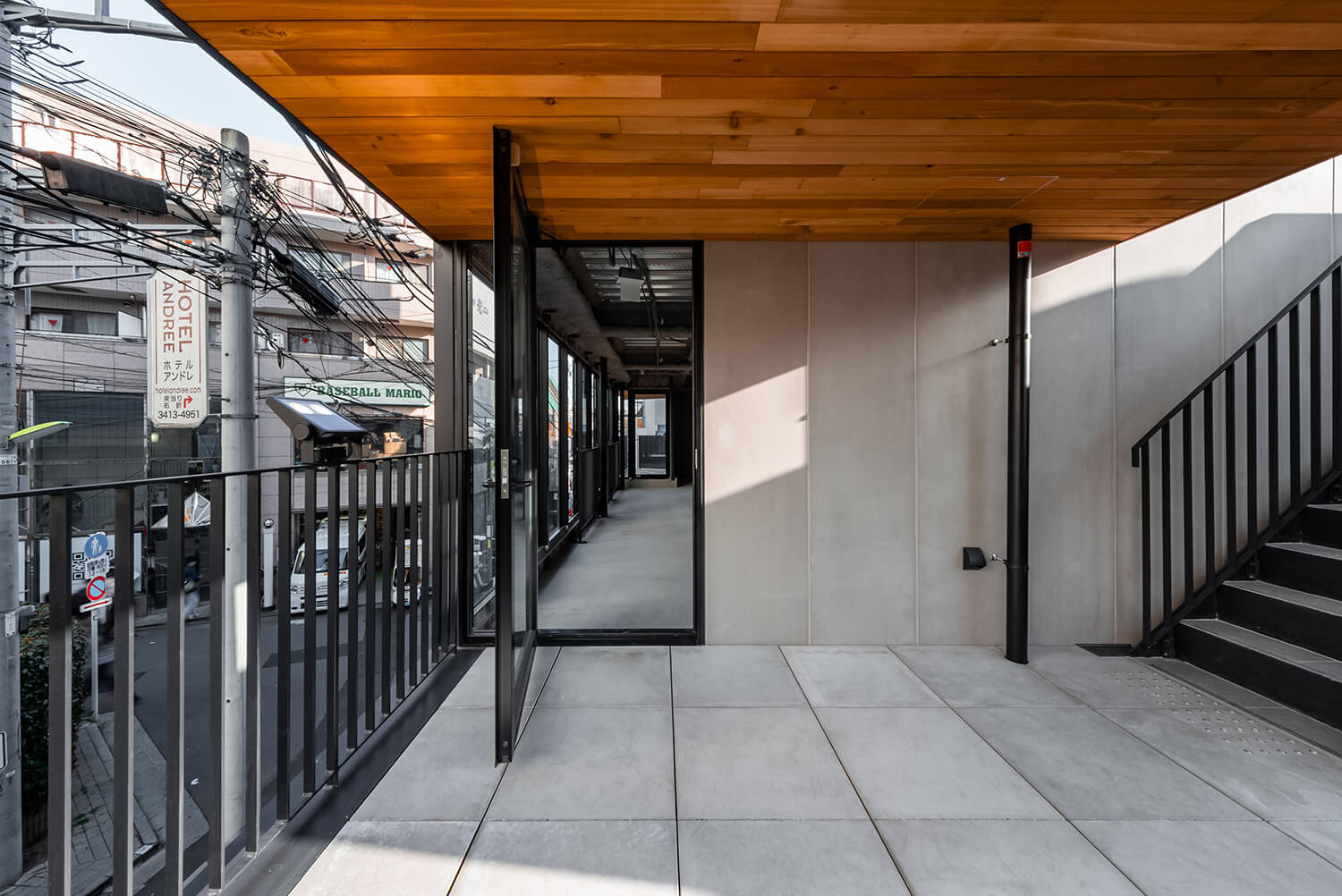
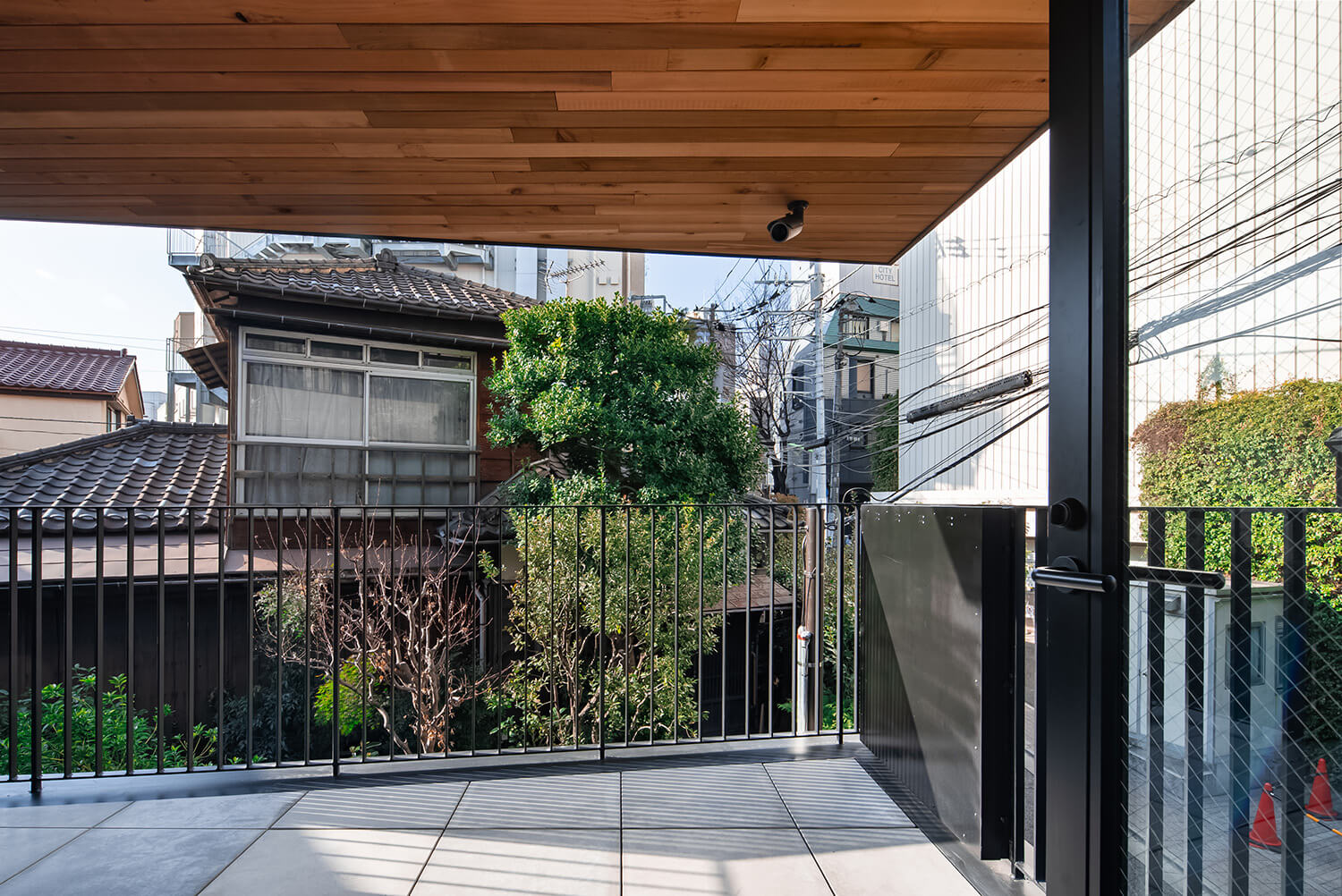
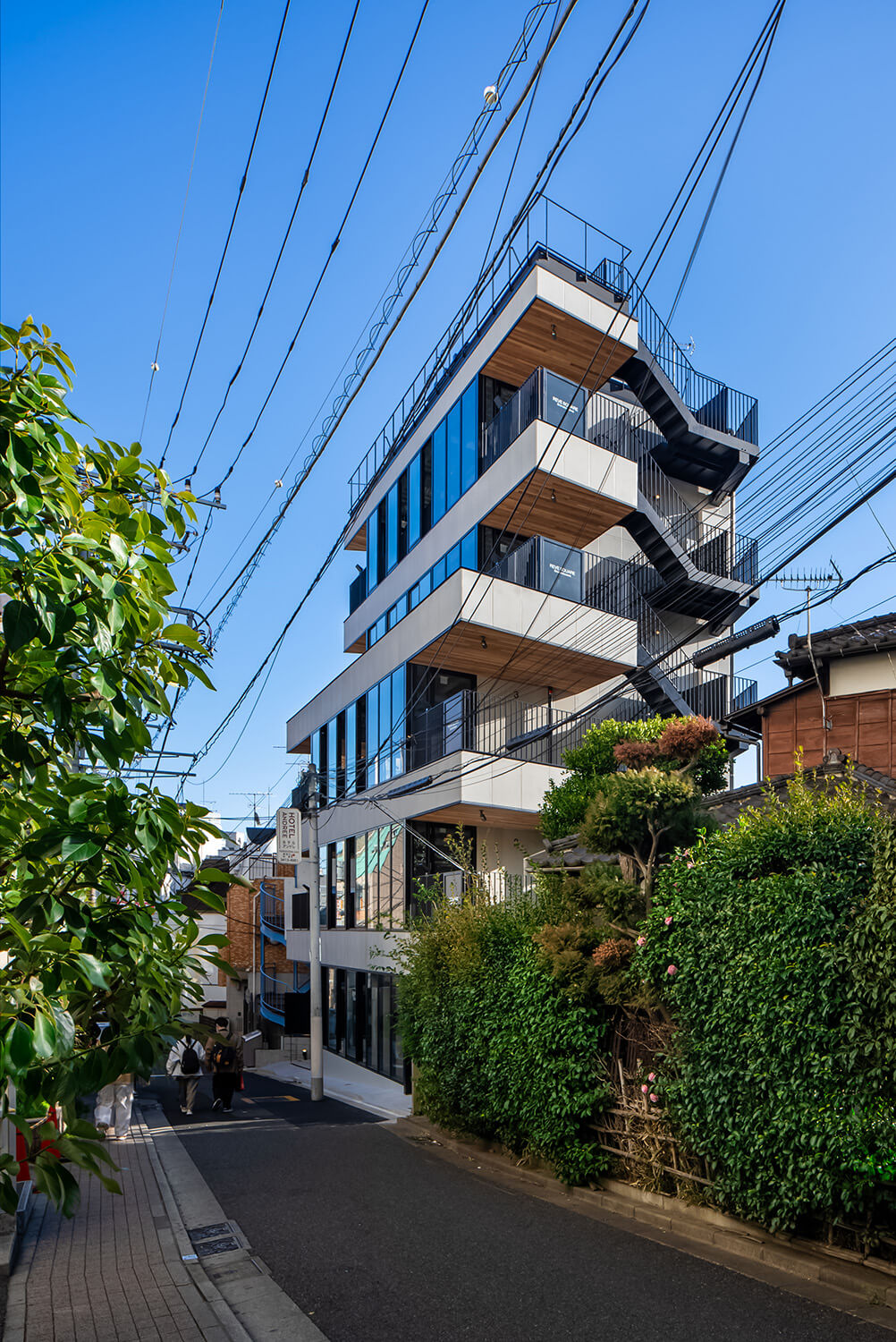
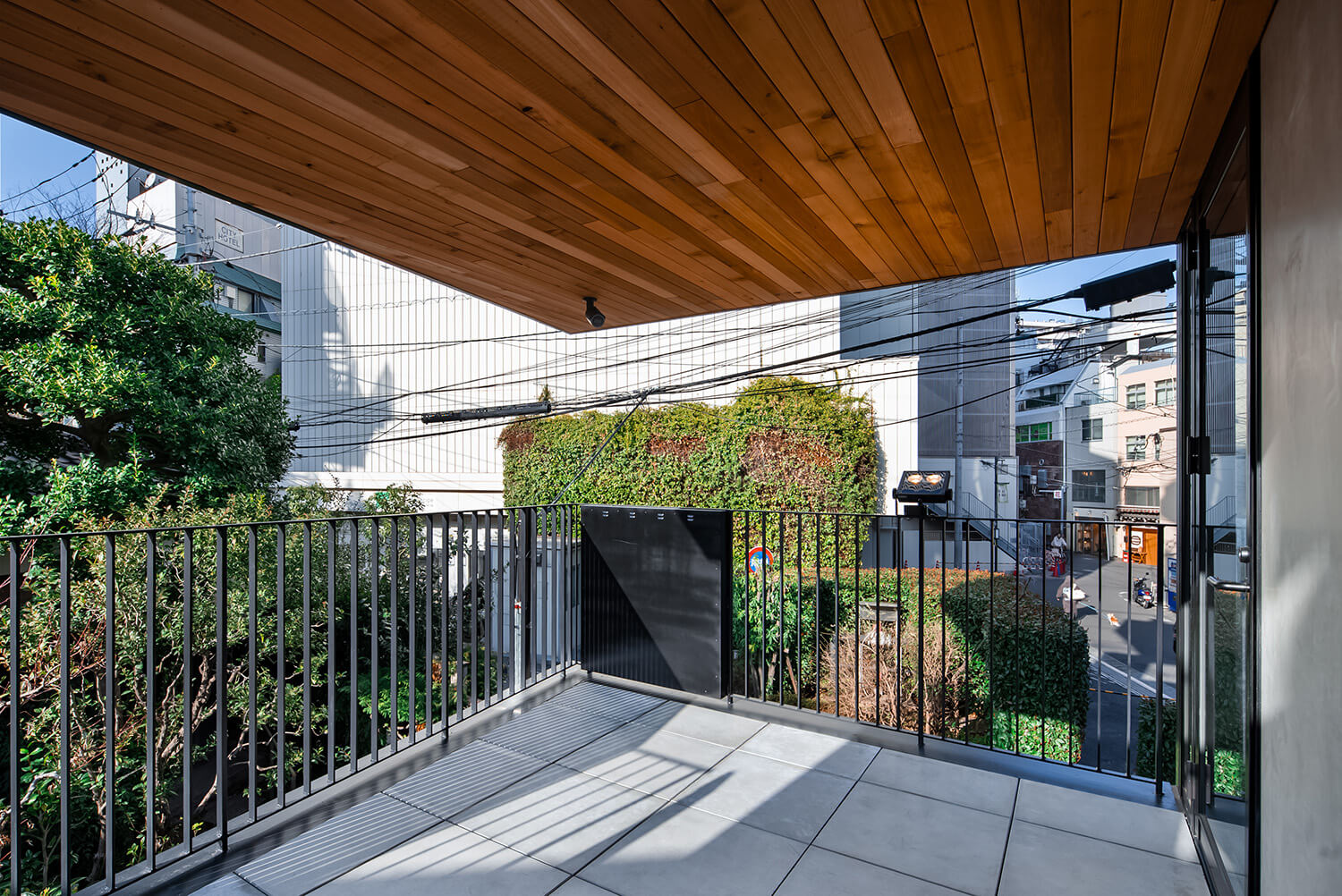
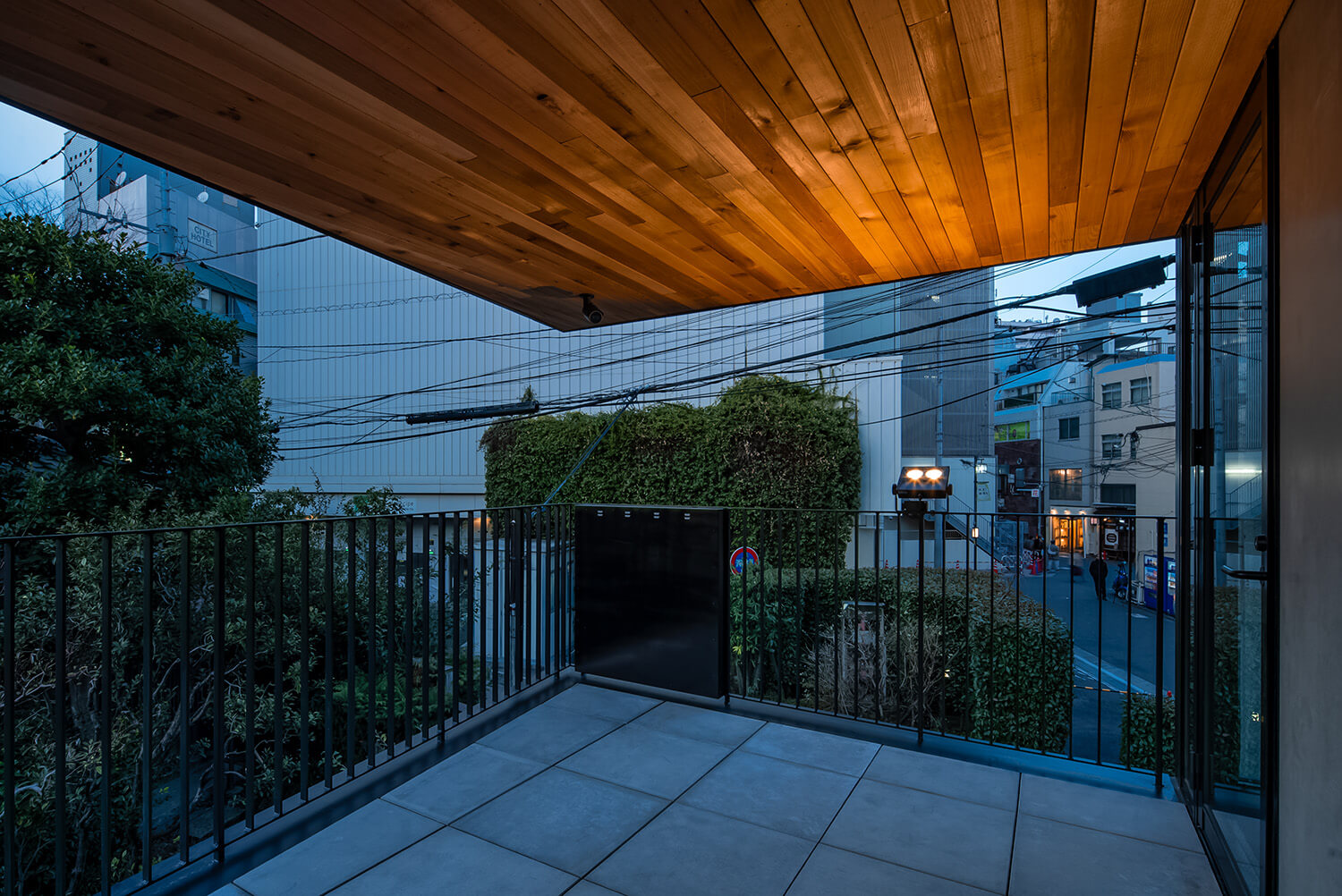
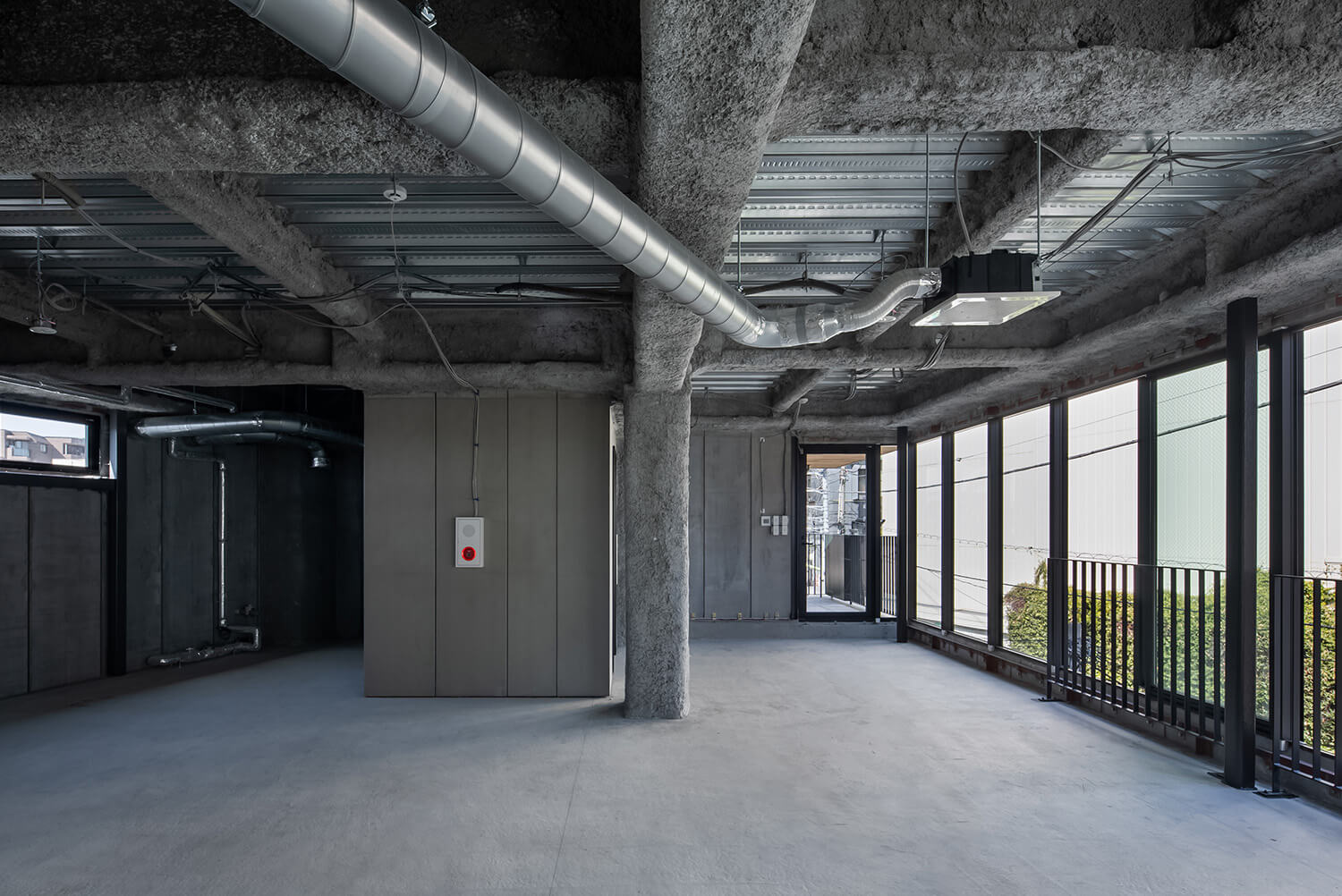
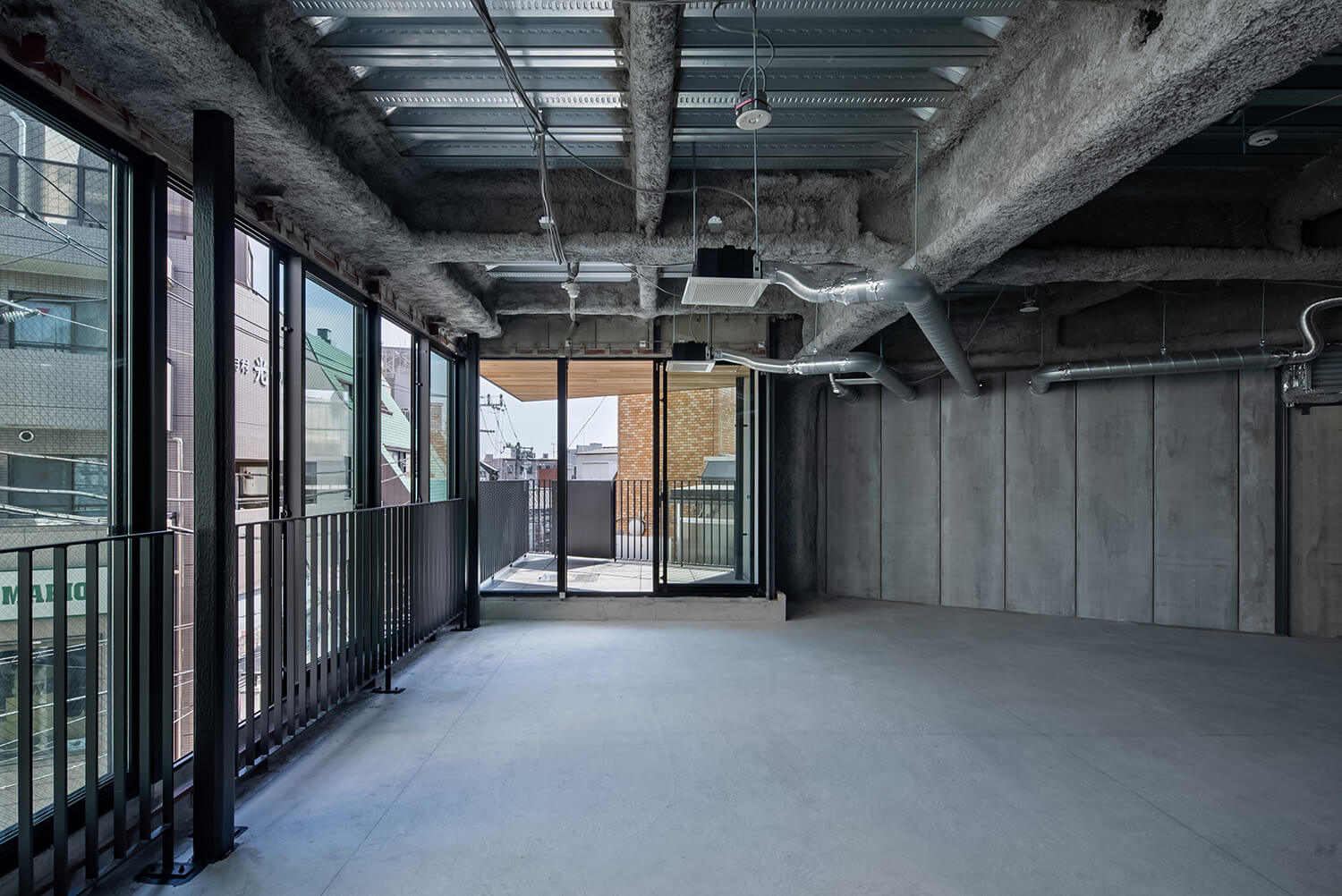
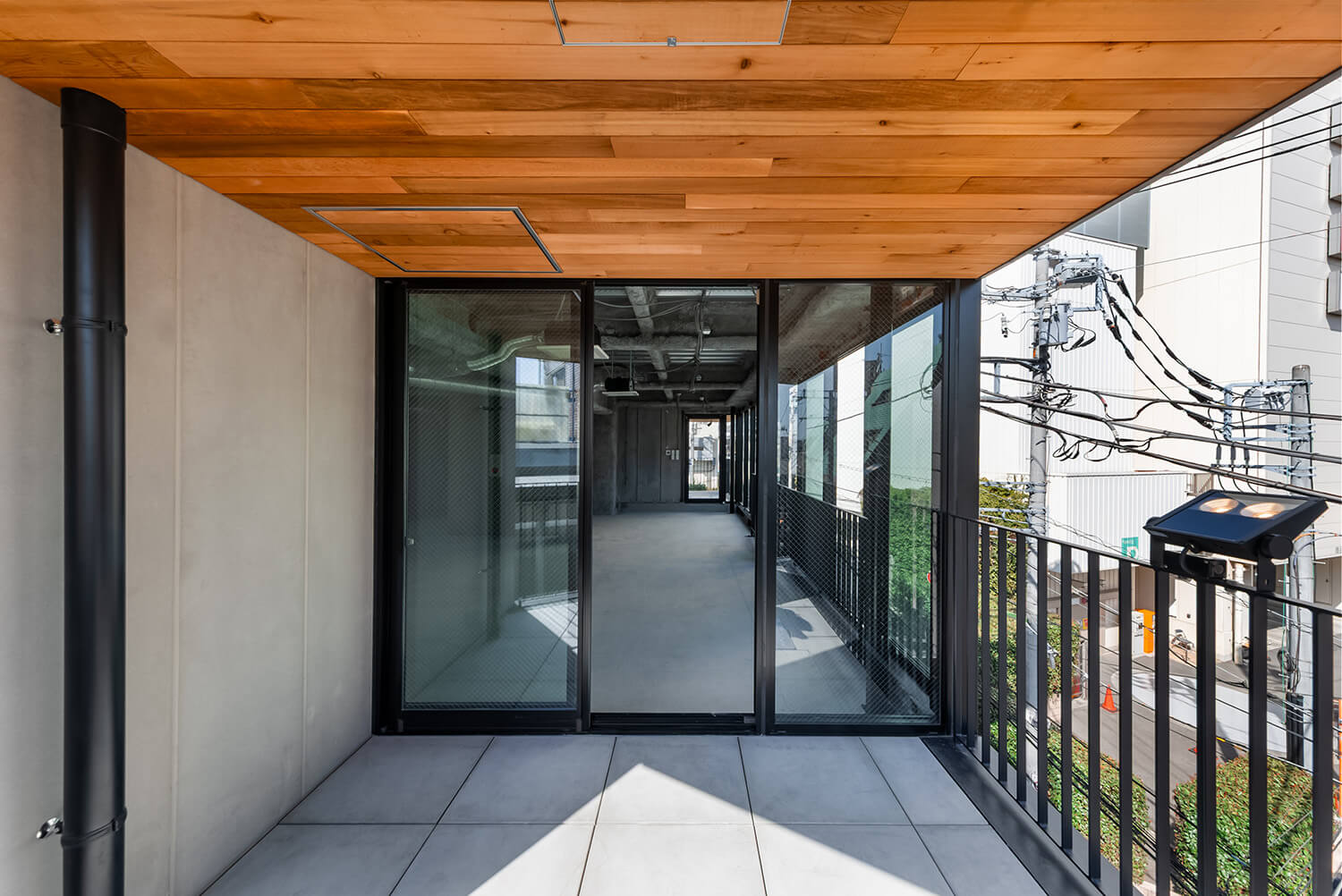
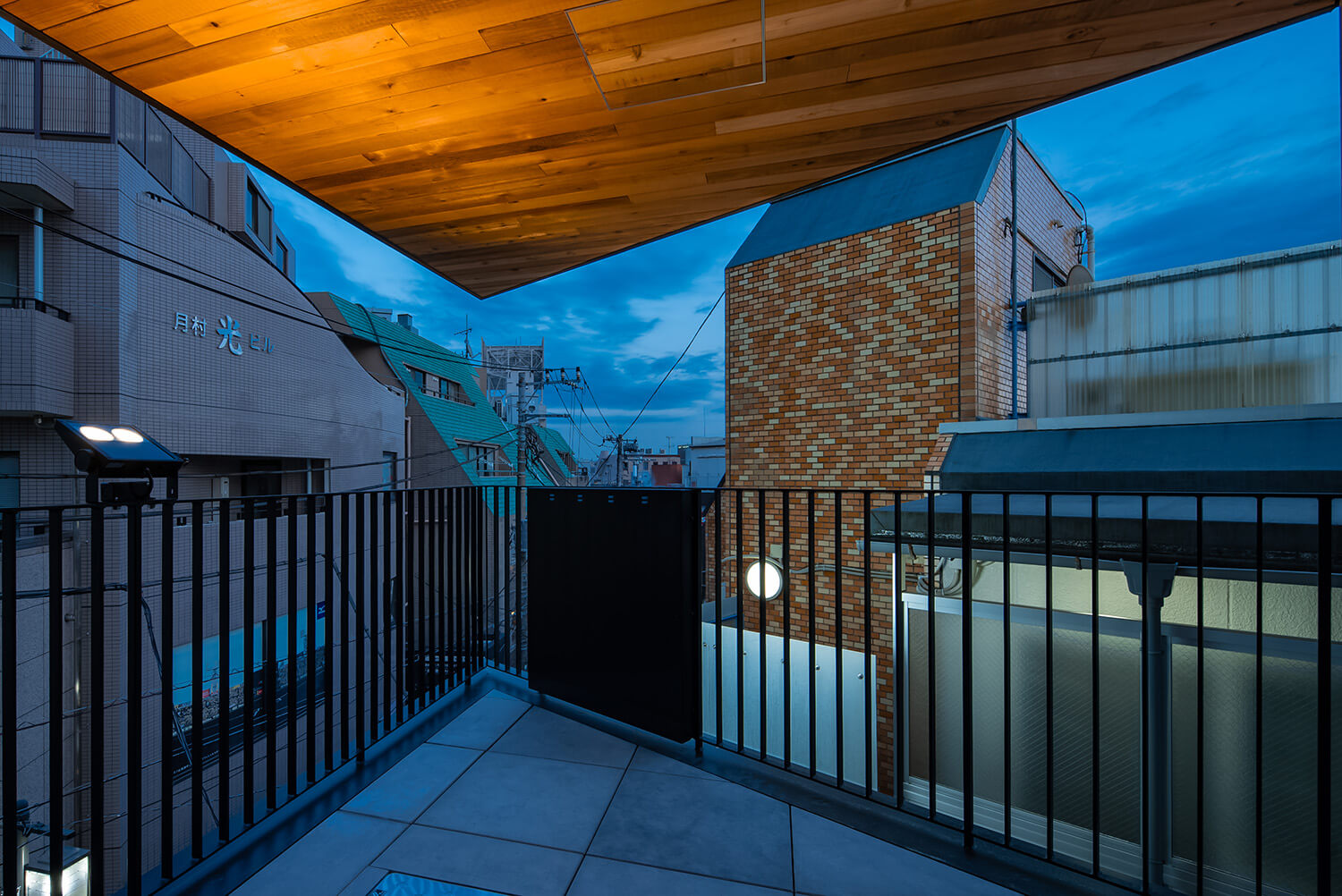
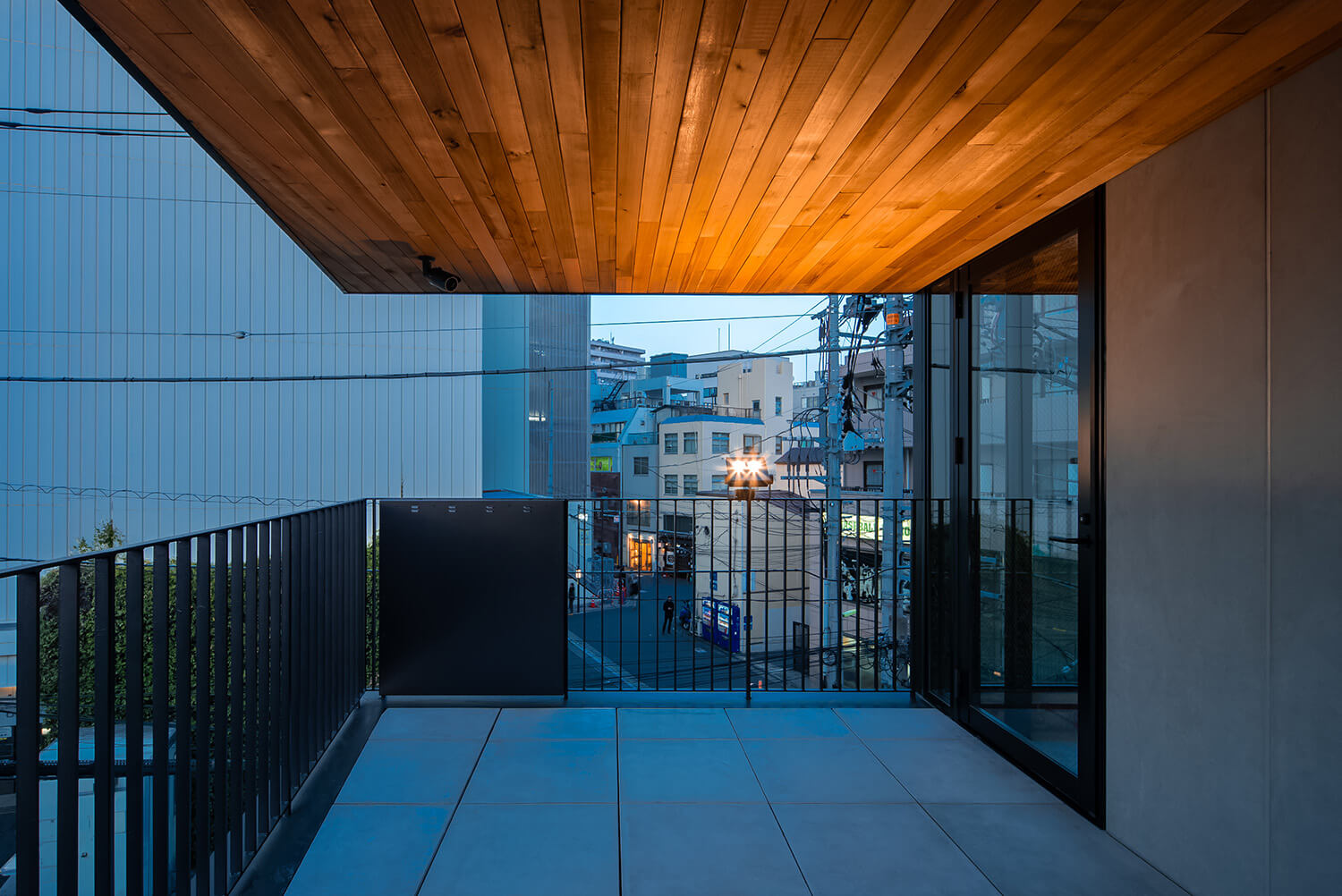
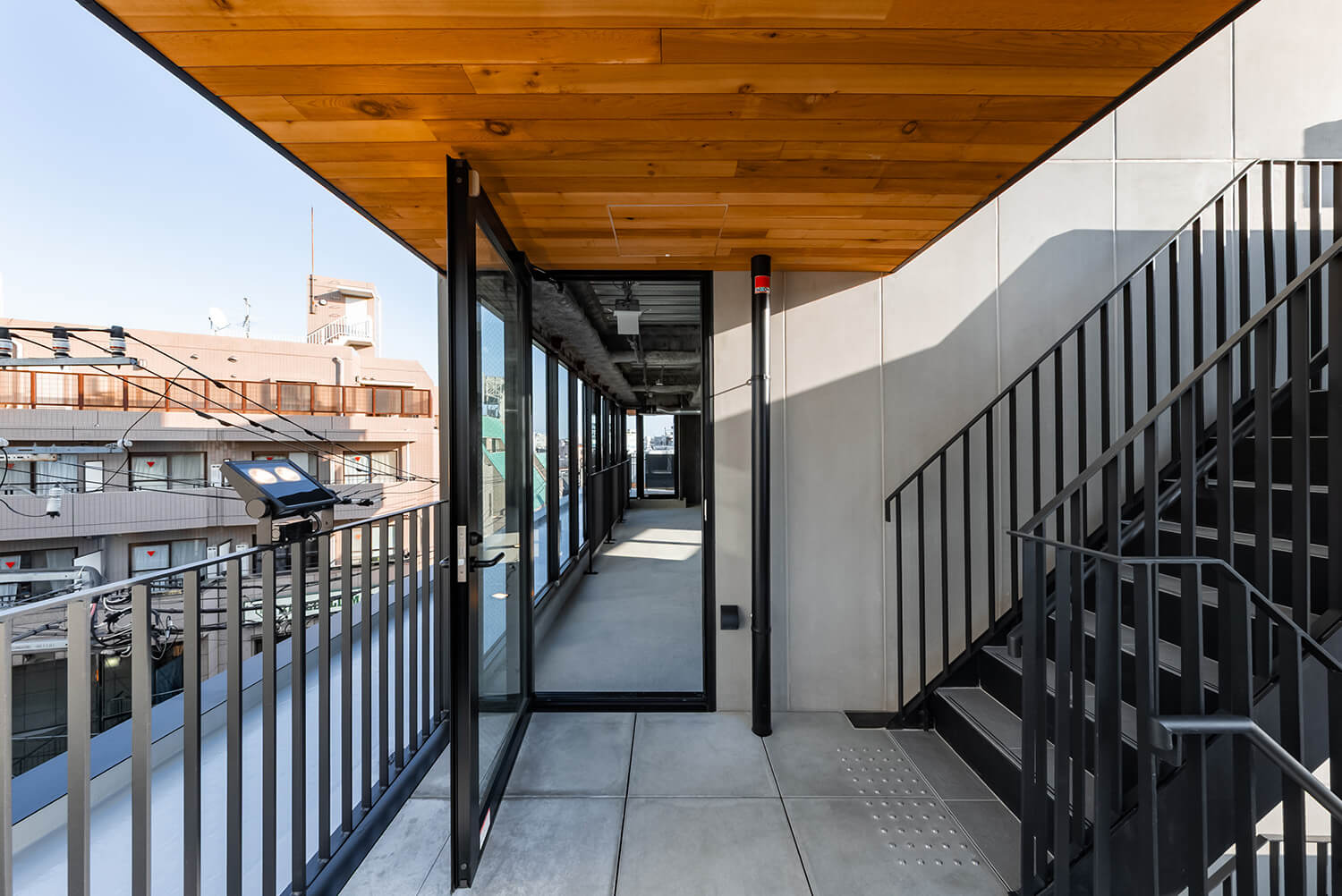
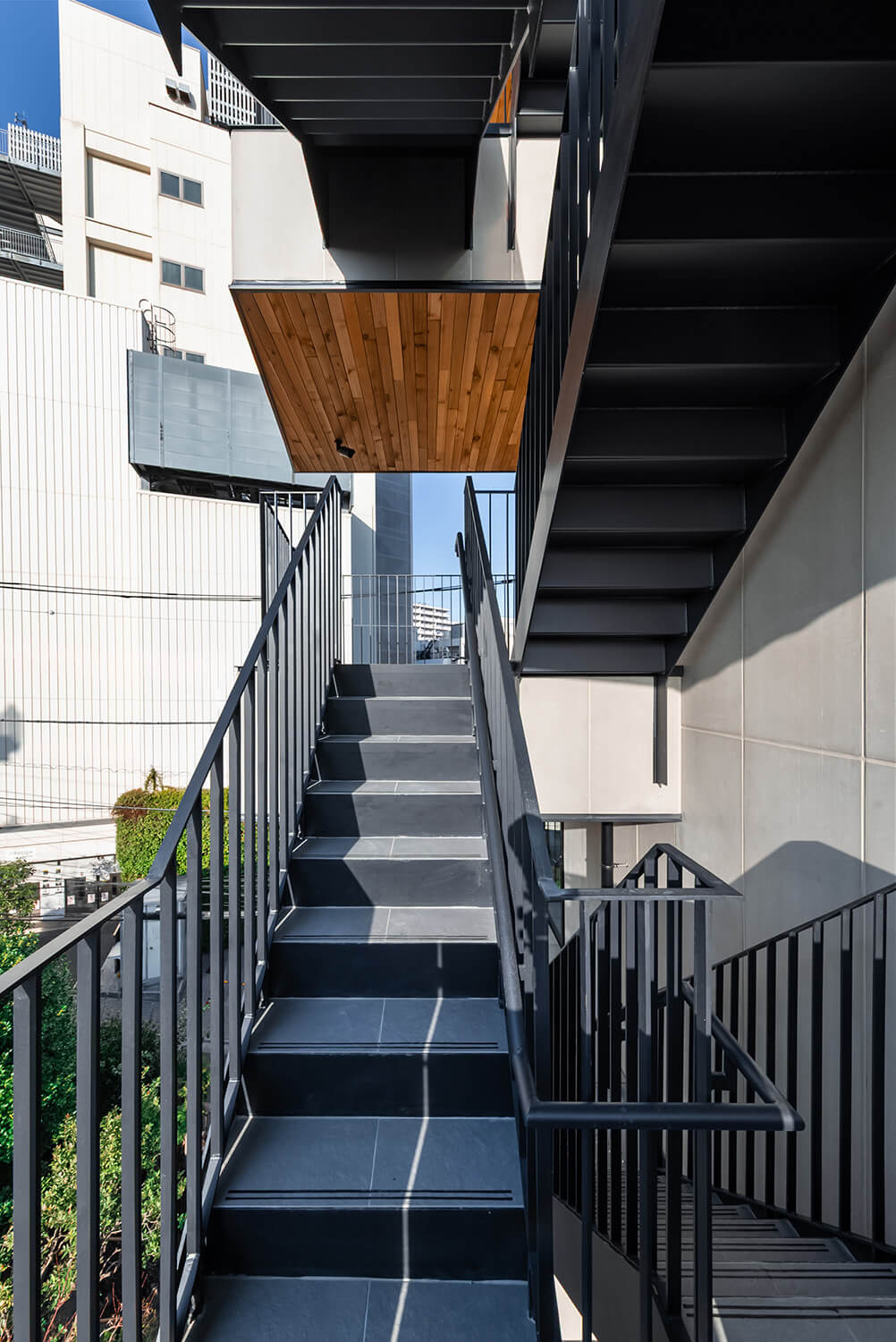
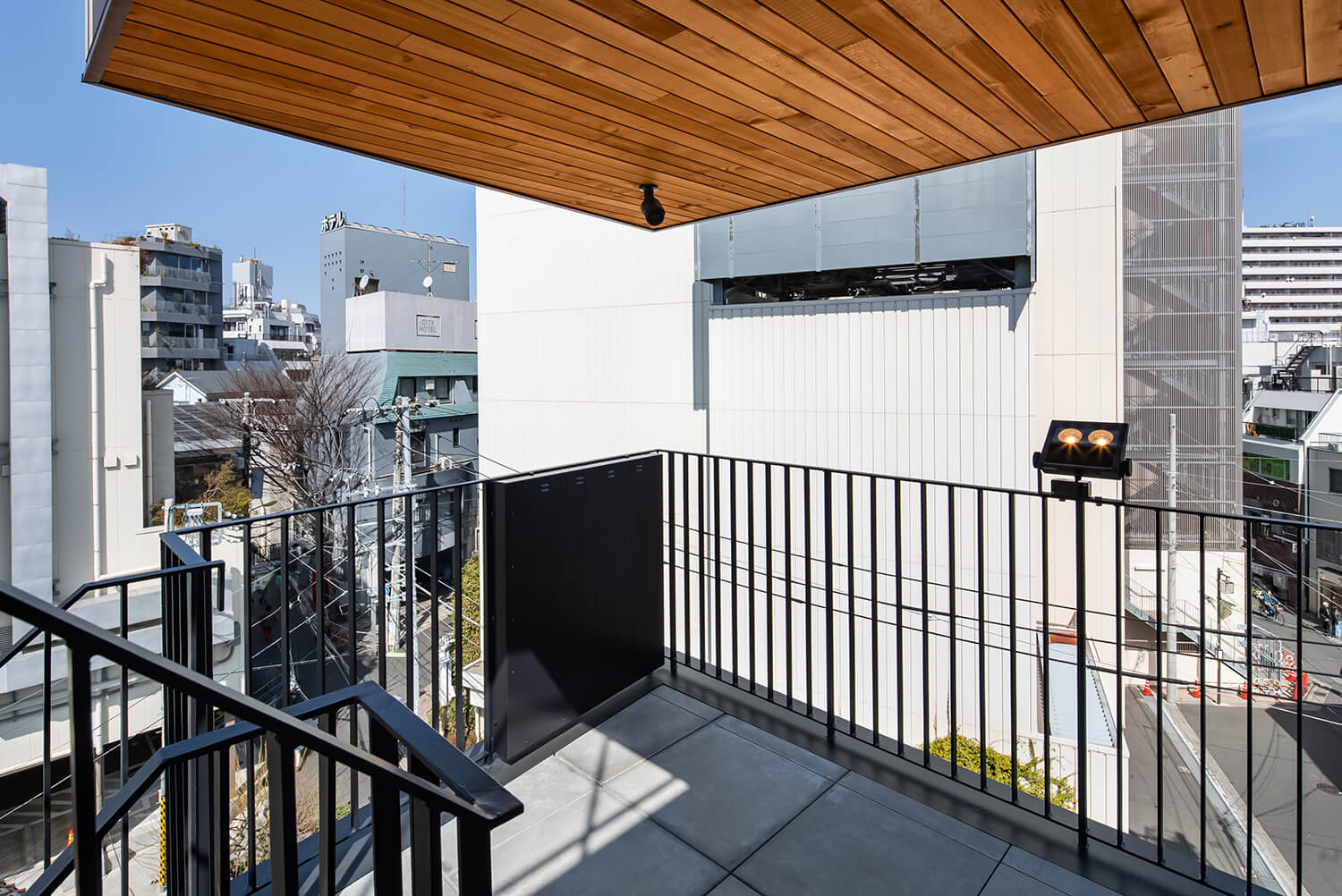
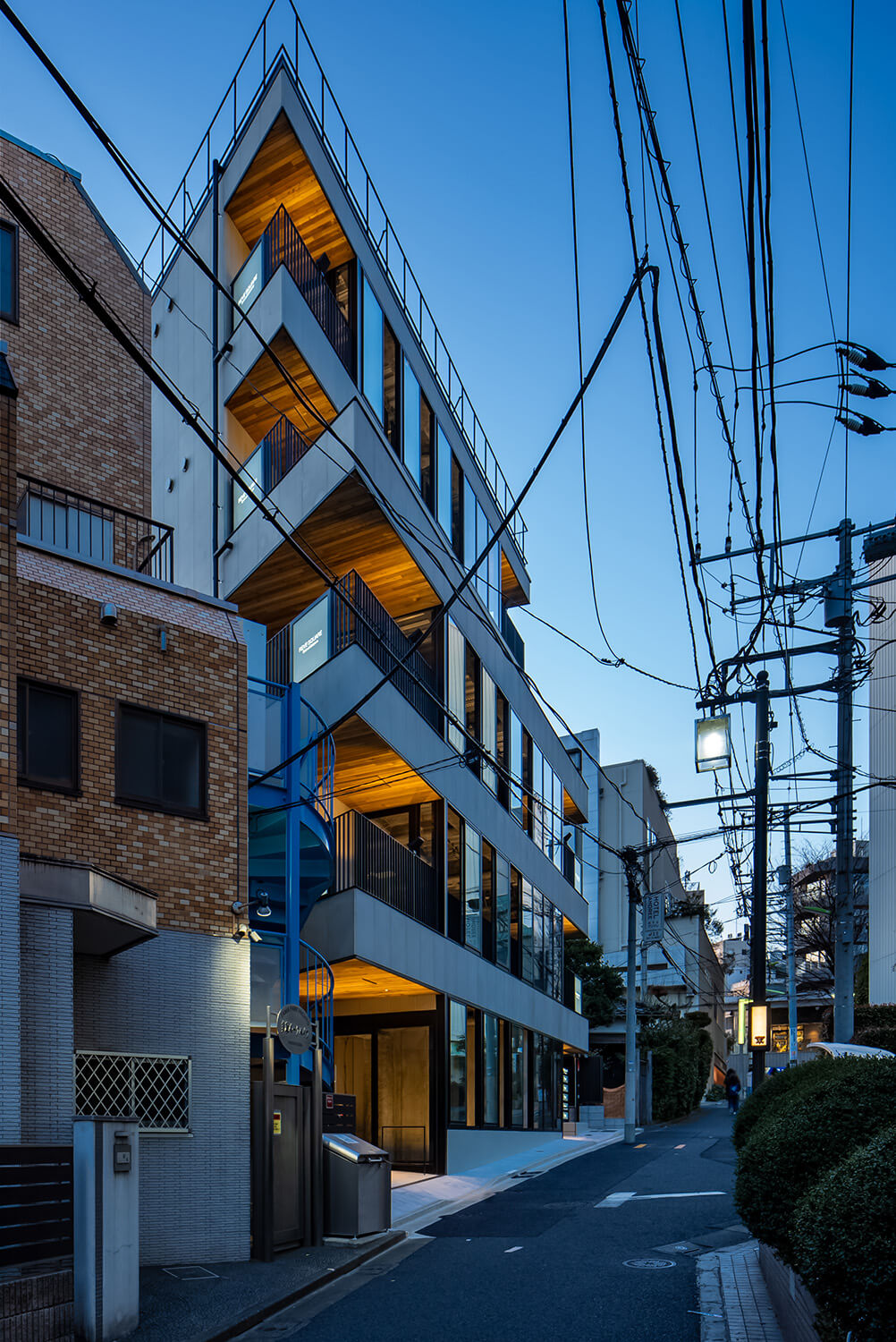
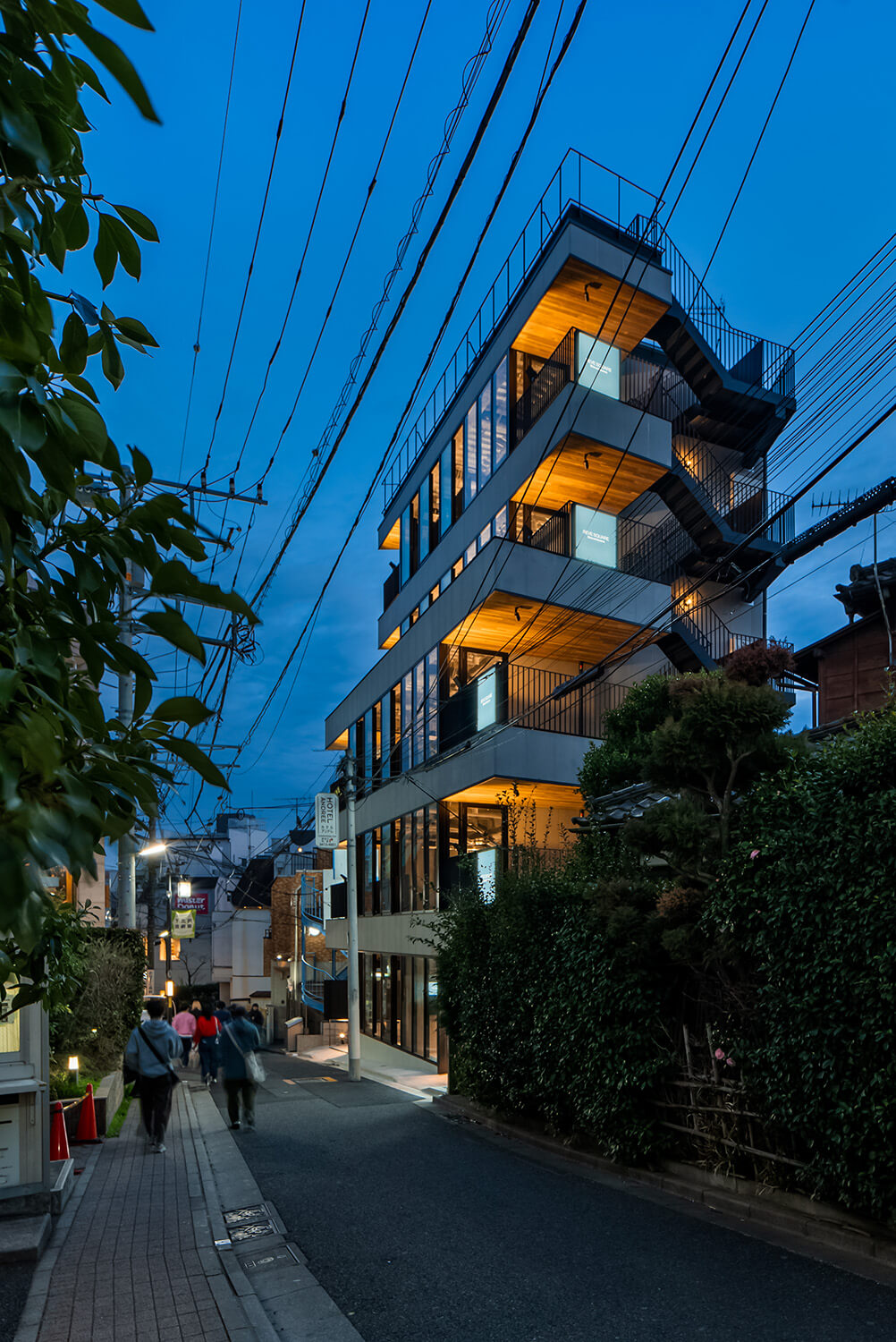
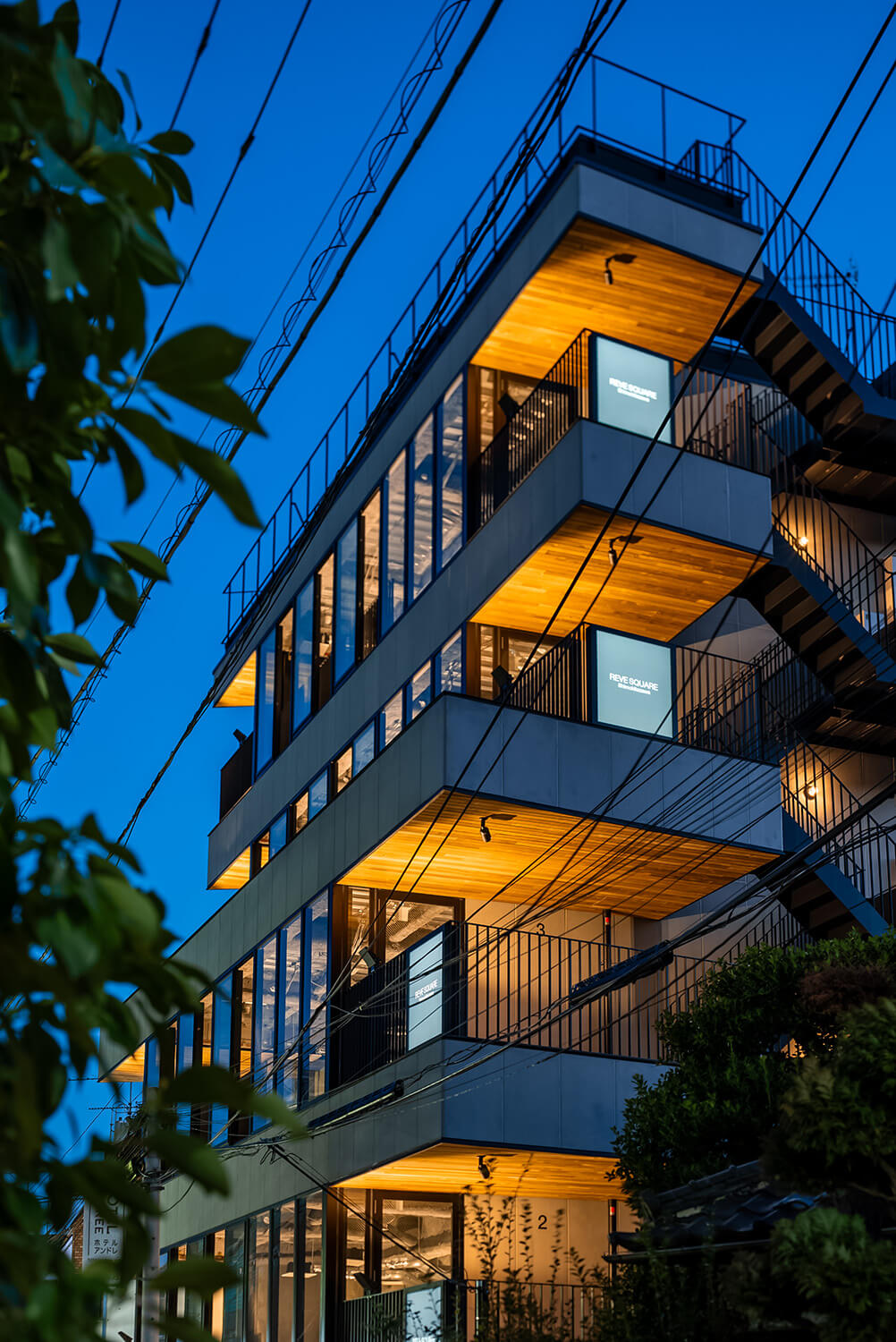
The building is a five-storey steel-framed structure, organised on a one-floor, one-tenant basis. Because the site is triangular in plan, the evacuation stair and escape balconies — legally required means of egress — were positioned at the apex of the site, where the interior geometry would otherwise be awkward and difficult to use. Rather than providing these elements at their minimum permissible dimensions, the landings and balconies were generously sized so as to function as usable outdoor terraces. By treating the evacuation routes demanded by regulation not as passive addenda but as active spatial elements that define the building’s exterior, each floor is given a place that holds a relationship with the city below.
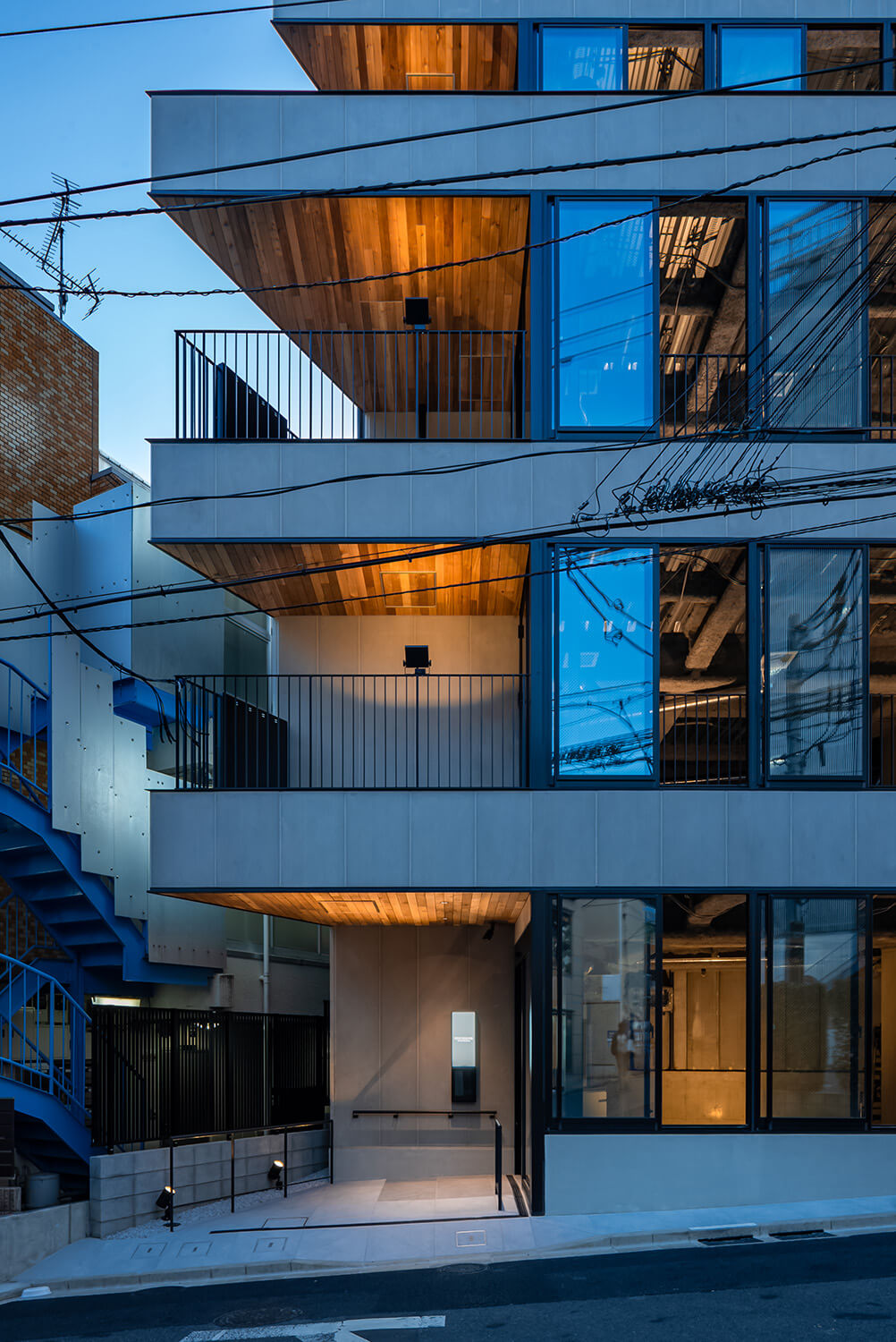
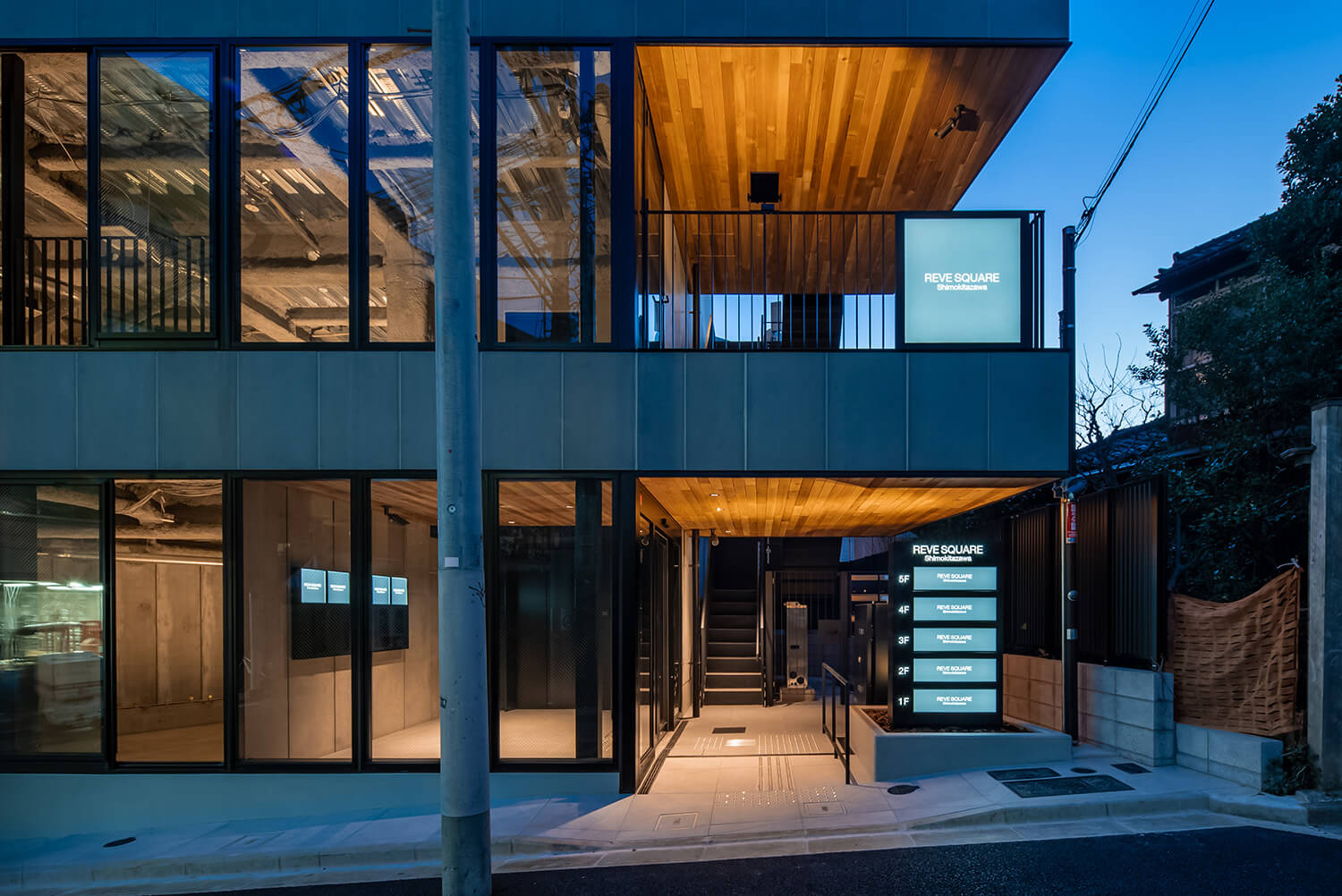
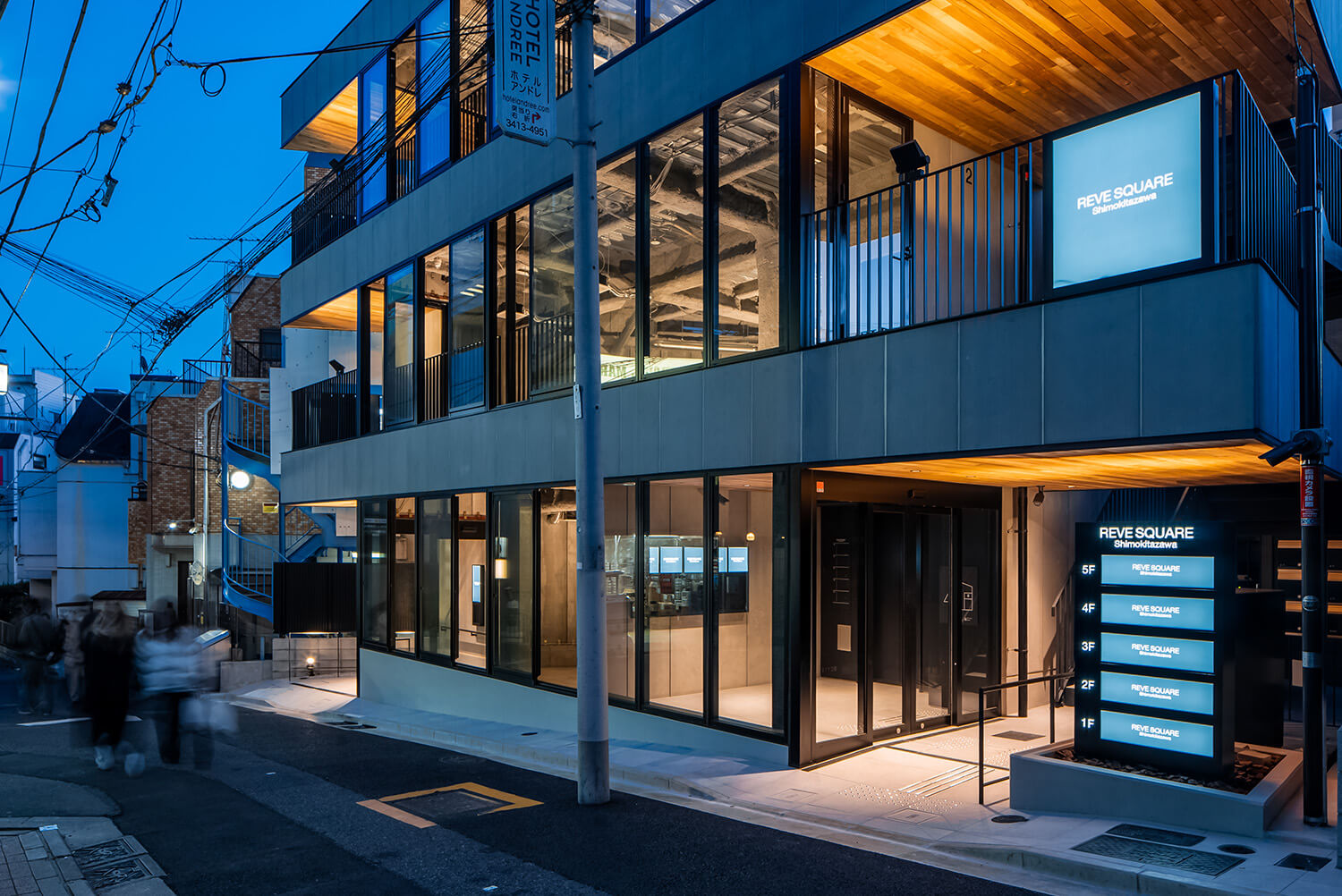
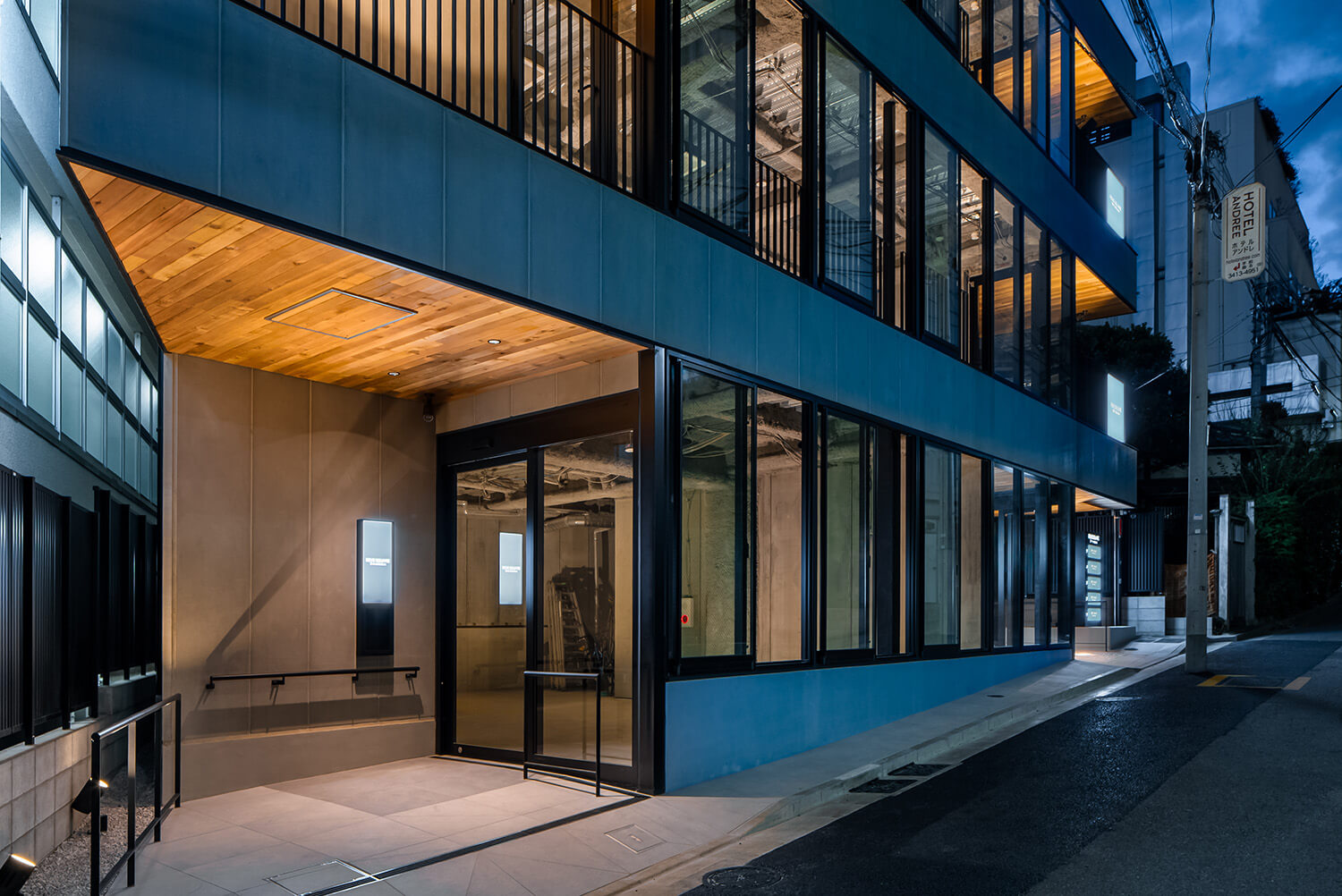
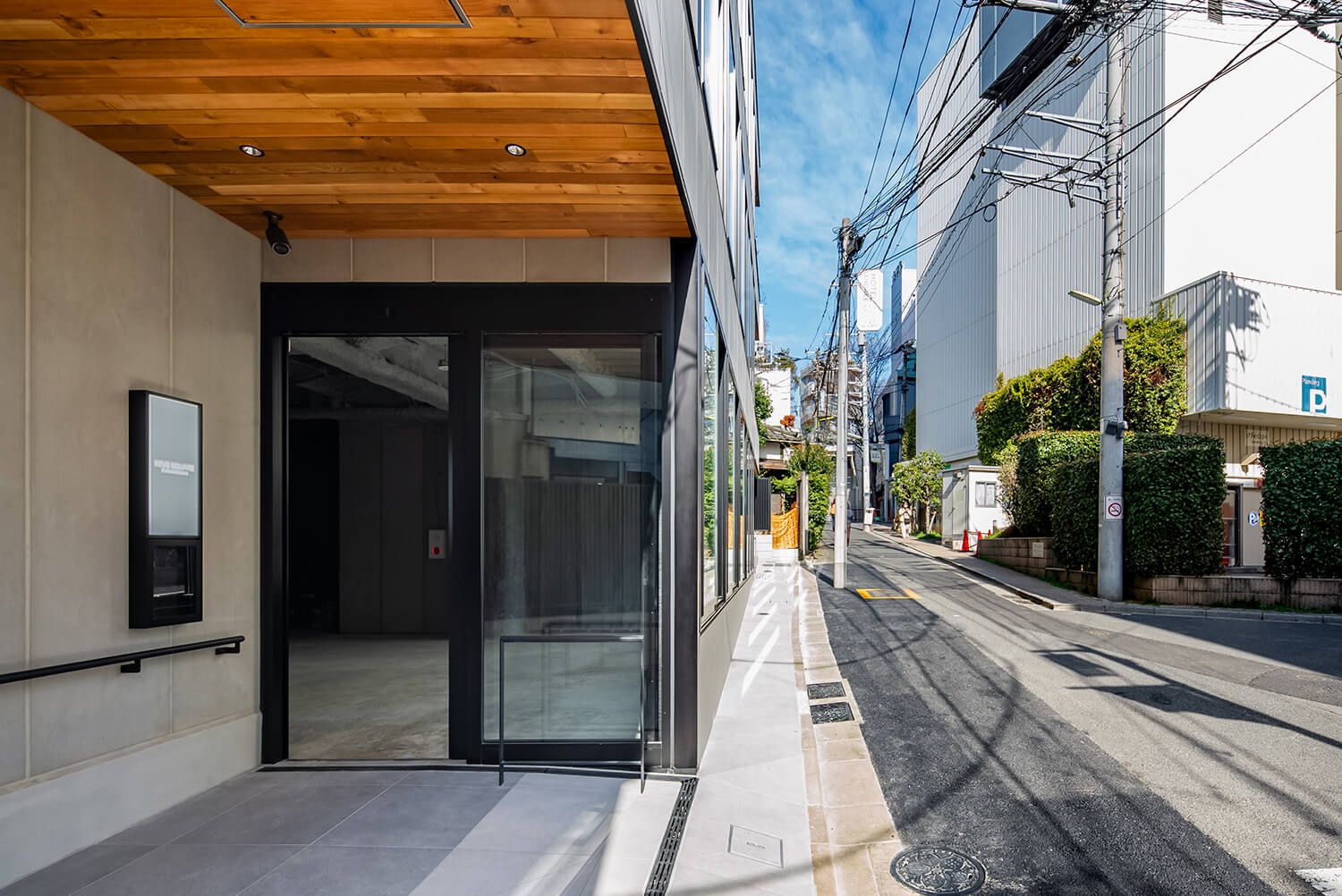
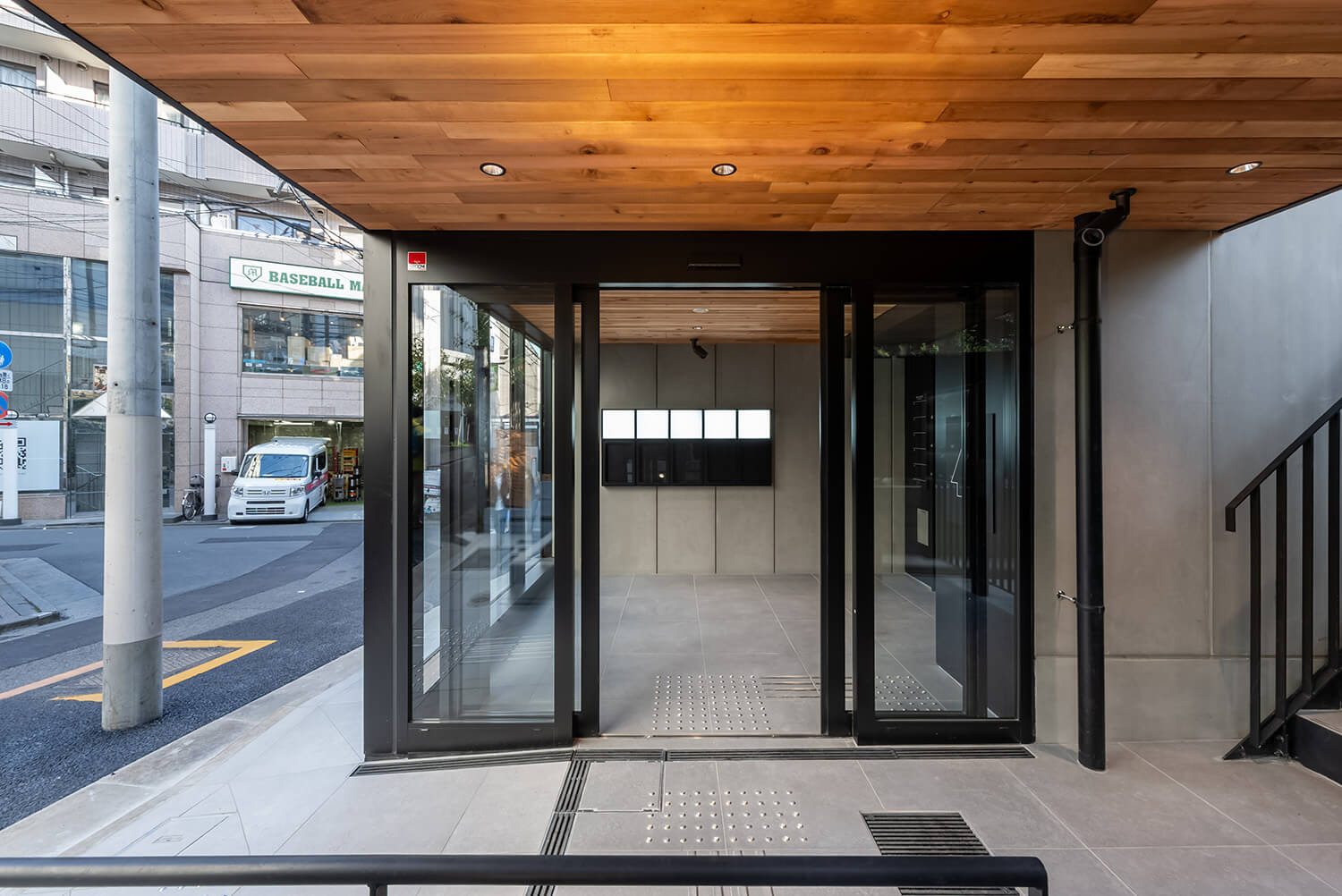
As the fronting road runs on a gradient, the shop entrances at ground level and the shared building entrance were separated and their respective floor levels adjusted independently to absorb the change in level. Rather than resolving the relationship with the street through a single floor datum, each point of arrival is given its own appropriate approach, achieving both ease of use throughout the building and a coherent connection to the streetscape.
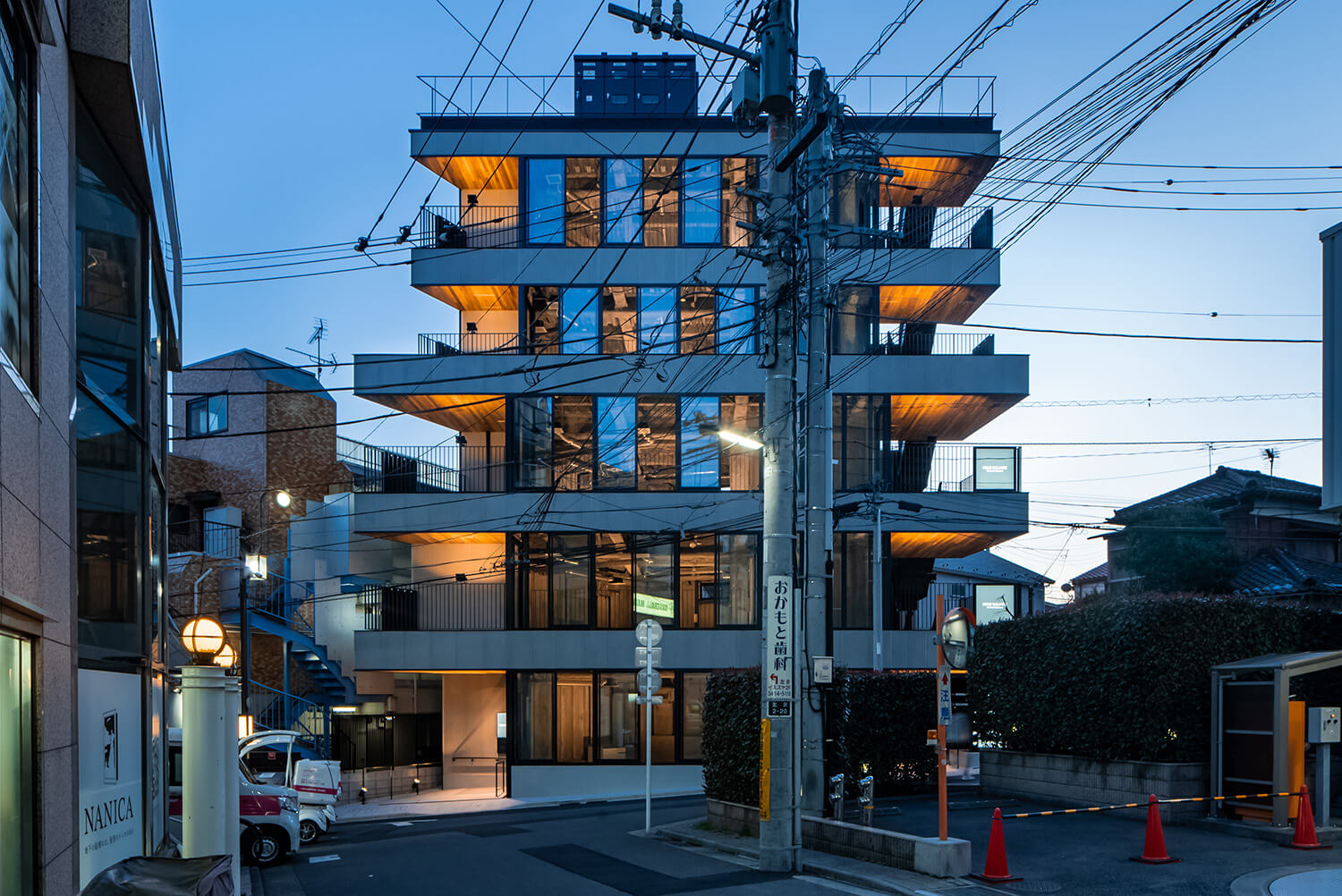
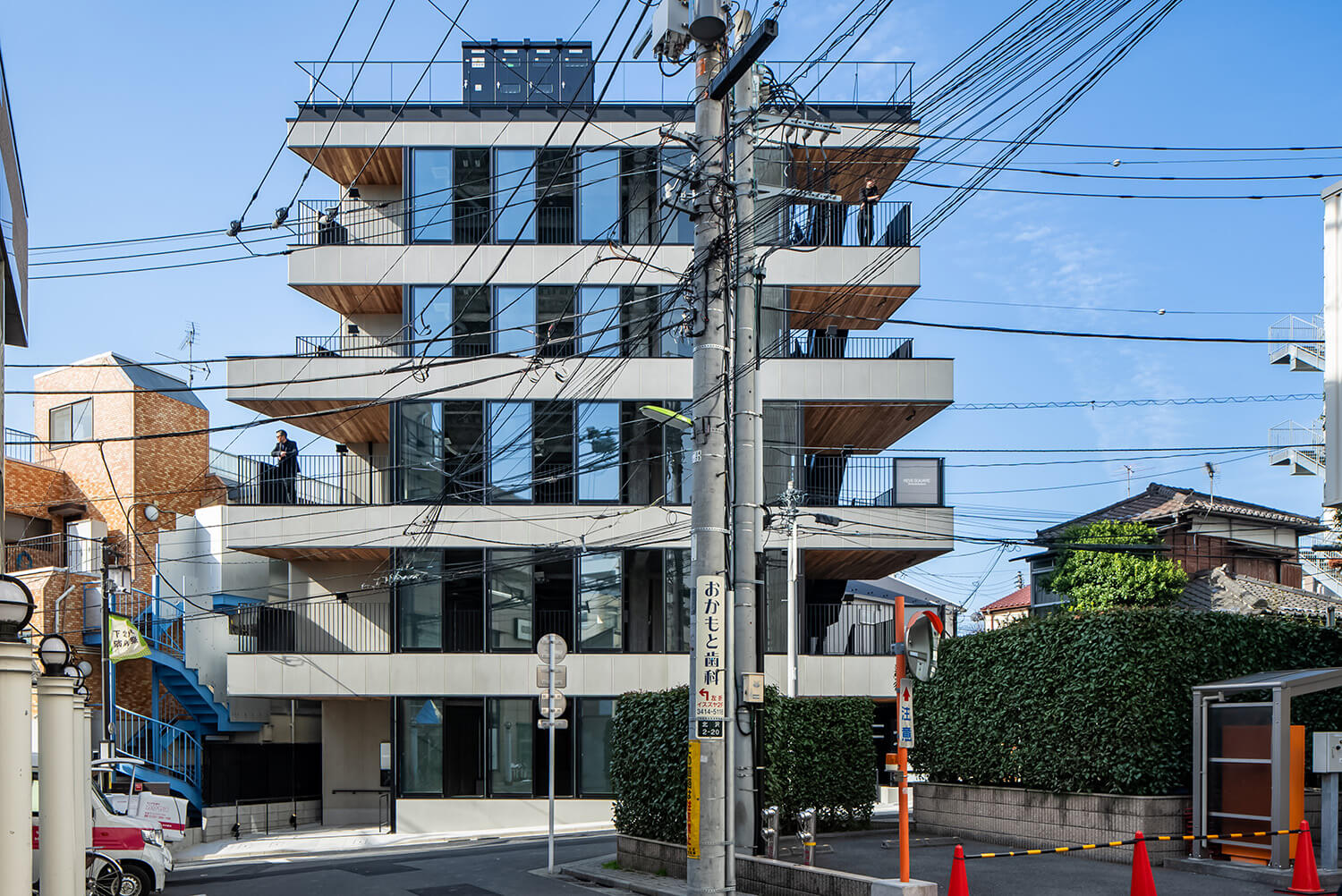
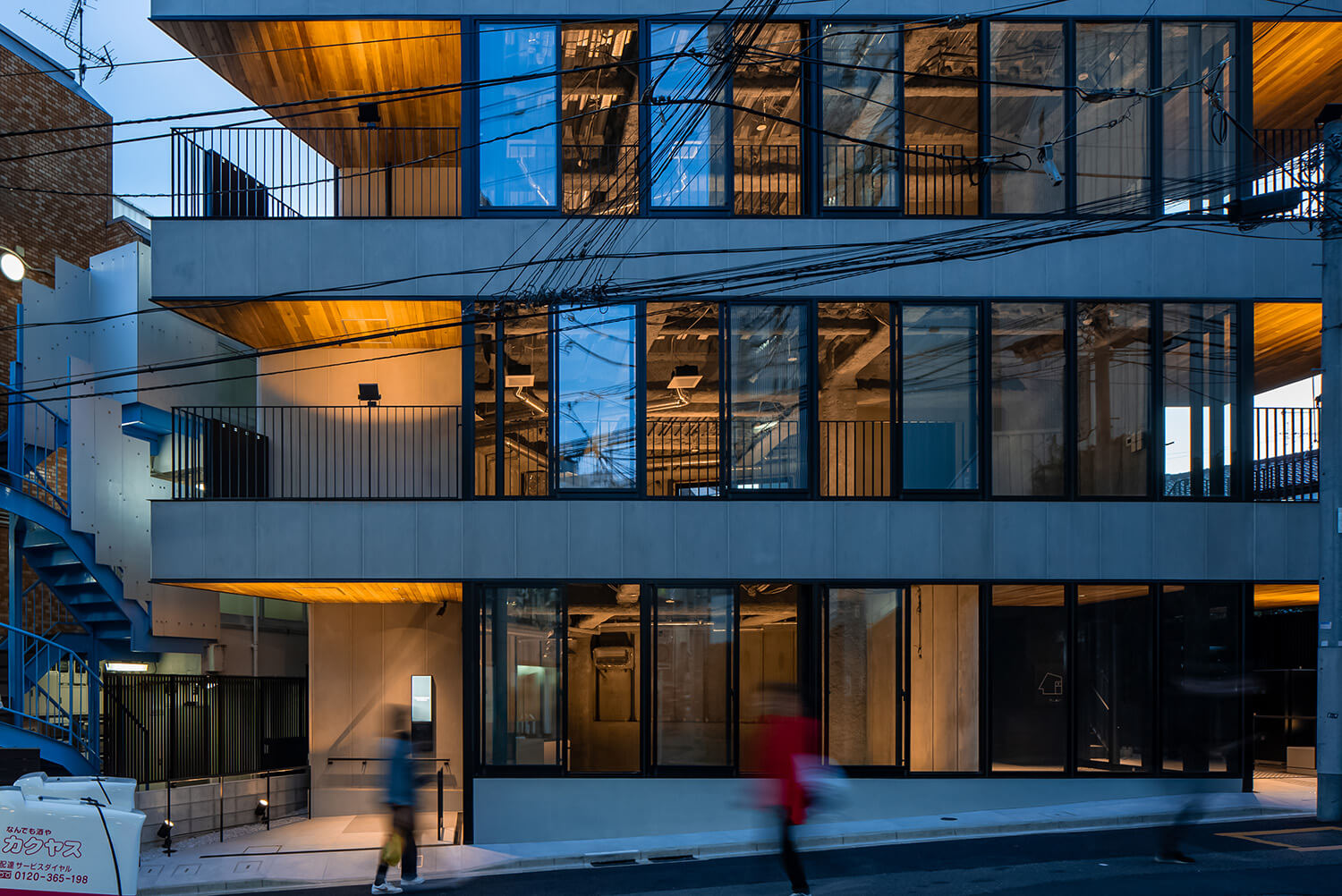
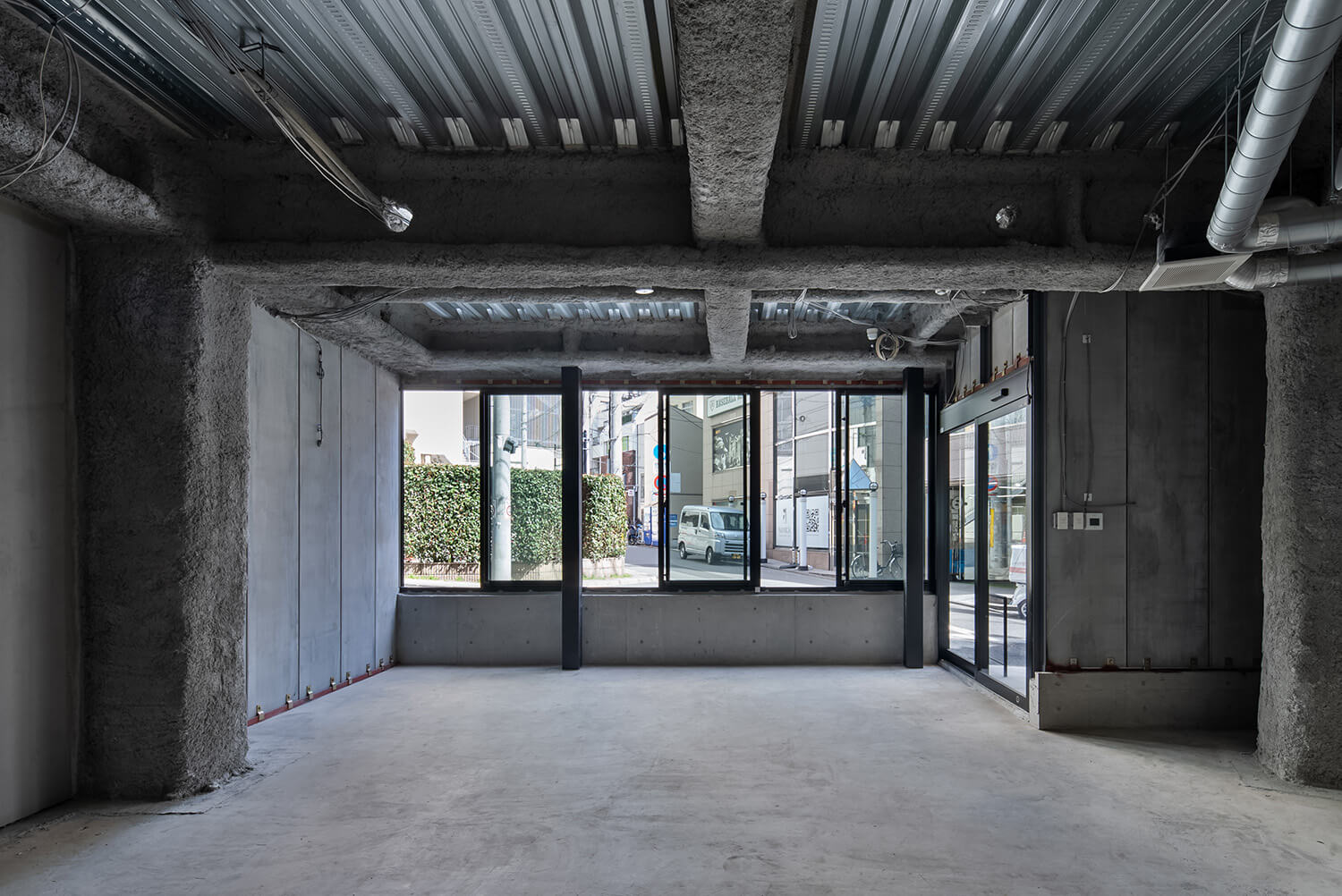
In the structural scheme, the primary steel columns were set back approximately 3.2 metres from the façade plane, which allows the stepped volumetric setbacks to be formed rationally. Slender 100mm-square columns were introduced on the road-facing side of the deep lower floors to carry vertical loads; as their face dimension closely matches the sightlines of the window frames, their presence is barely perceptible.
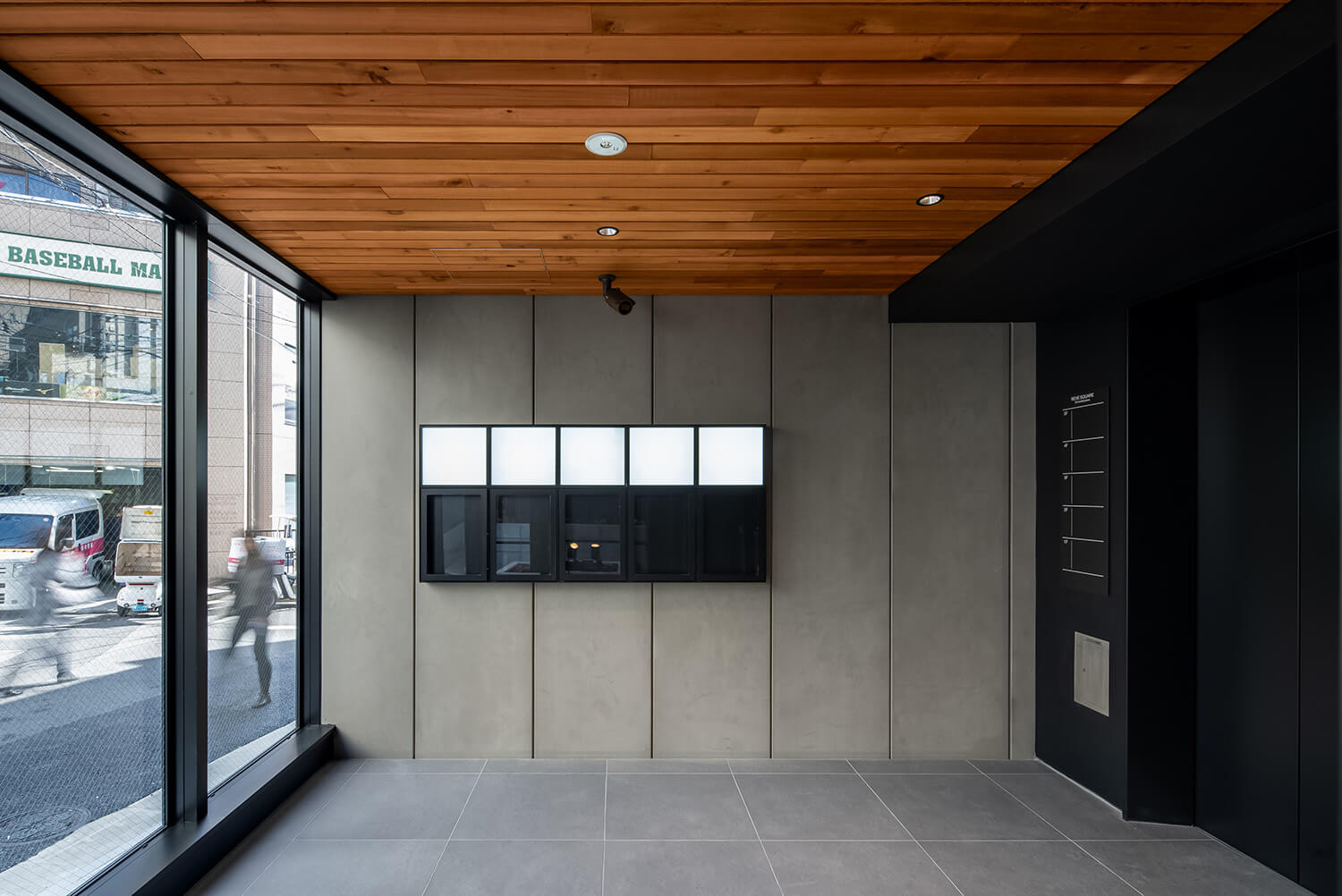
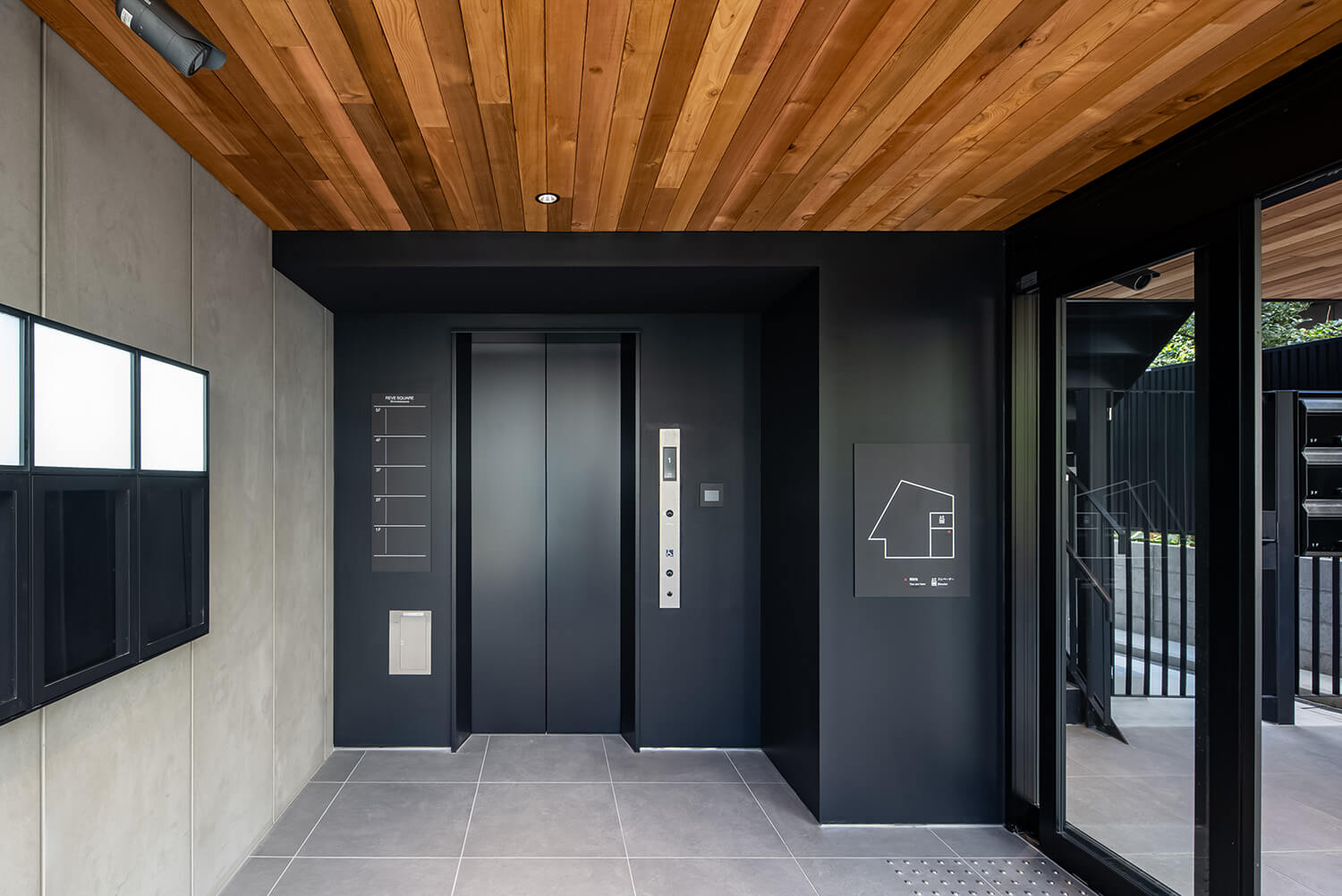
The façade is composed through the emphasis of horizontal floor slab lines and the visual openness achieved by leaving the terrace ends free of columns, avoiding the oppressive layering that tends to characterise urban commercial buildings and instead presenting a light, permeable face to the street. Timber finishes to the soffit of the terrace overhangs introduce a warmth and material familiarity that allows the building to sit naturally within the character of Shimokitazawa.
This project is an exercise in translating real-world constraints — regulatory, structural, and topographic — into the organising principles of architecture itself. By actively spatialising elements such as escape balconies and stairs, which tend to be treated as reluctant necessities, the scheme explores a mode of commercial architecture that responds lightly to the urban environment.
- Location:Setagaya-ku, Tokyo
- Completion:2026.02
- Category:Restaurant + Service store
- Building Scale:5 storeys above ground
- Structure:Steel structure
- Site Area:139.54㎡
- Building Footprint:108.37㎡
- Total floor area:441.77㎡
- Client:Medium
- Architec:Akira Koyama + KEY OPERATION INC.
- Structural Engineer:Ohno JAPAN
- MEP Engineer:Comodo Service Planning
- Contractor:Sogo Kensetsu Corporation
- Photo:Tololo studio Mayu Nakamura