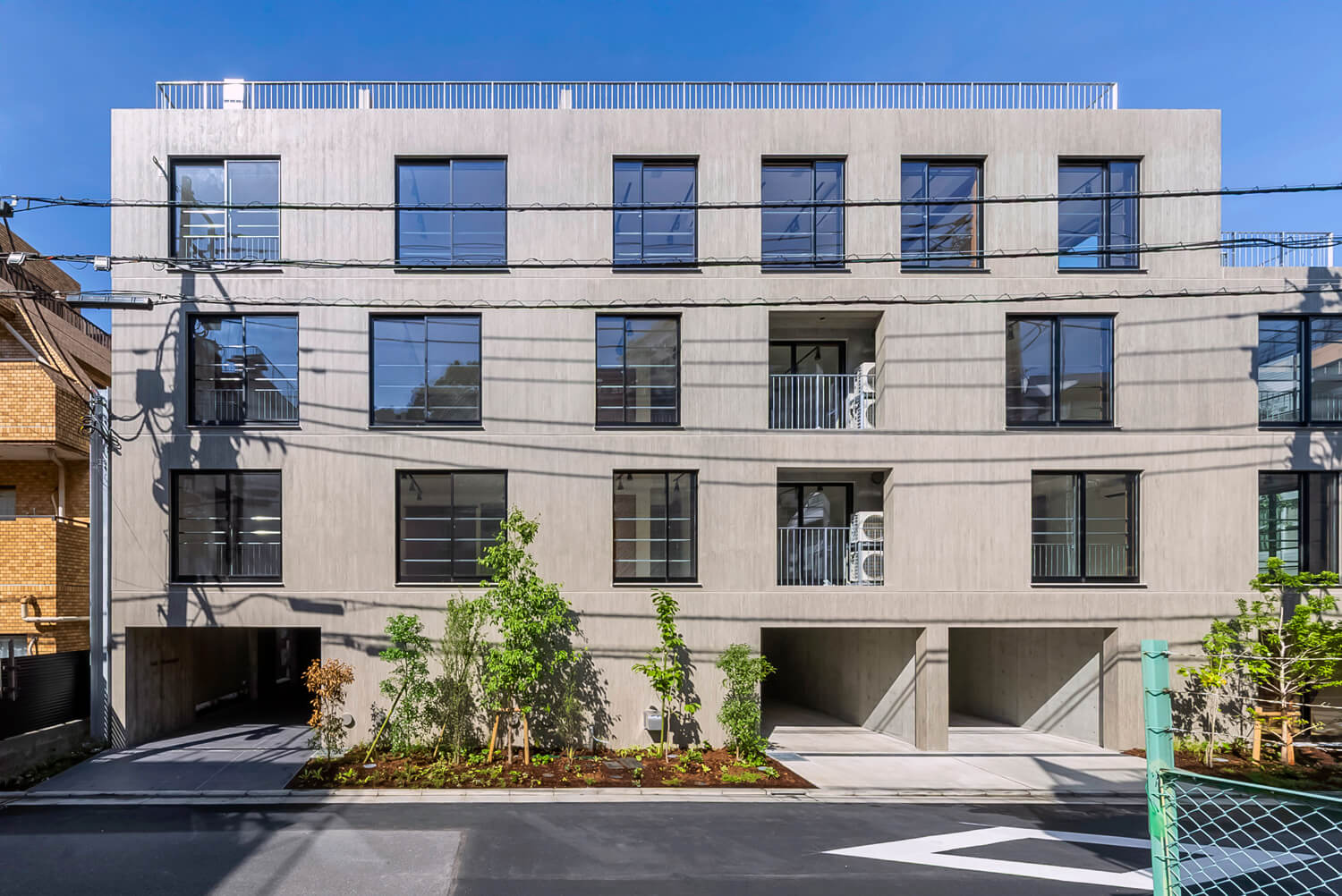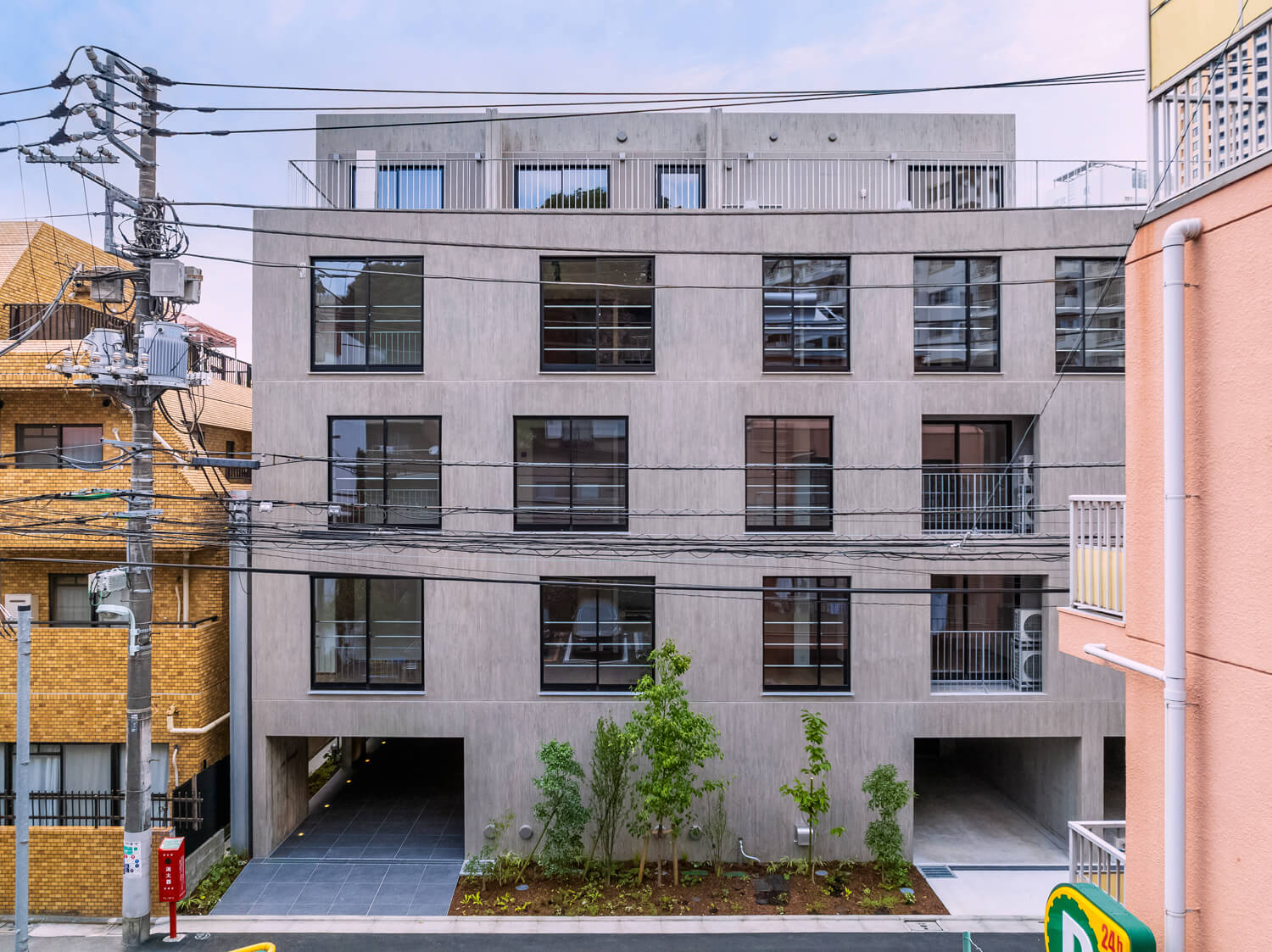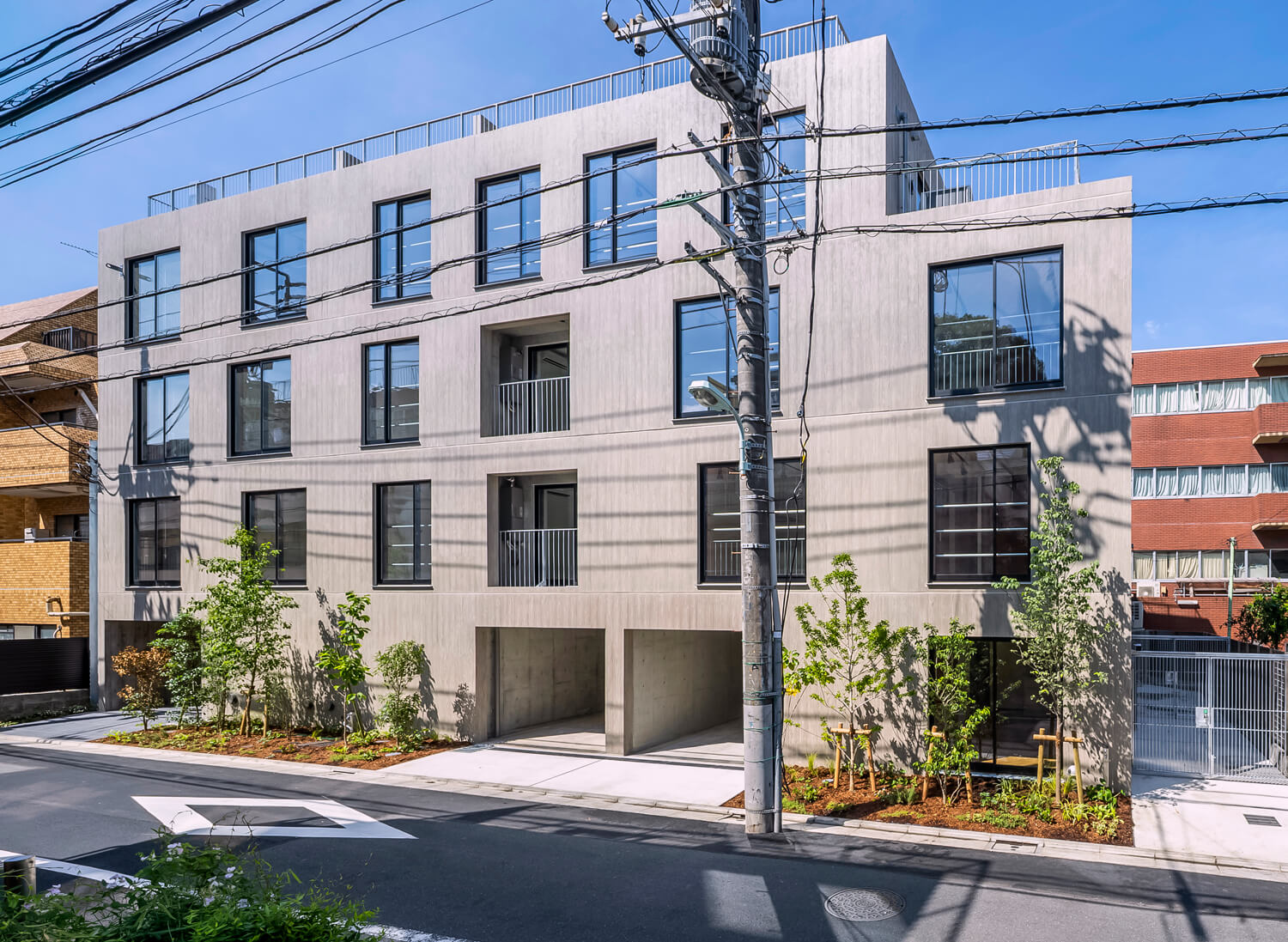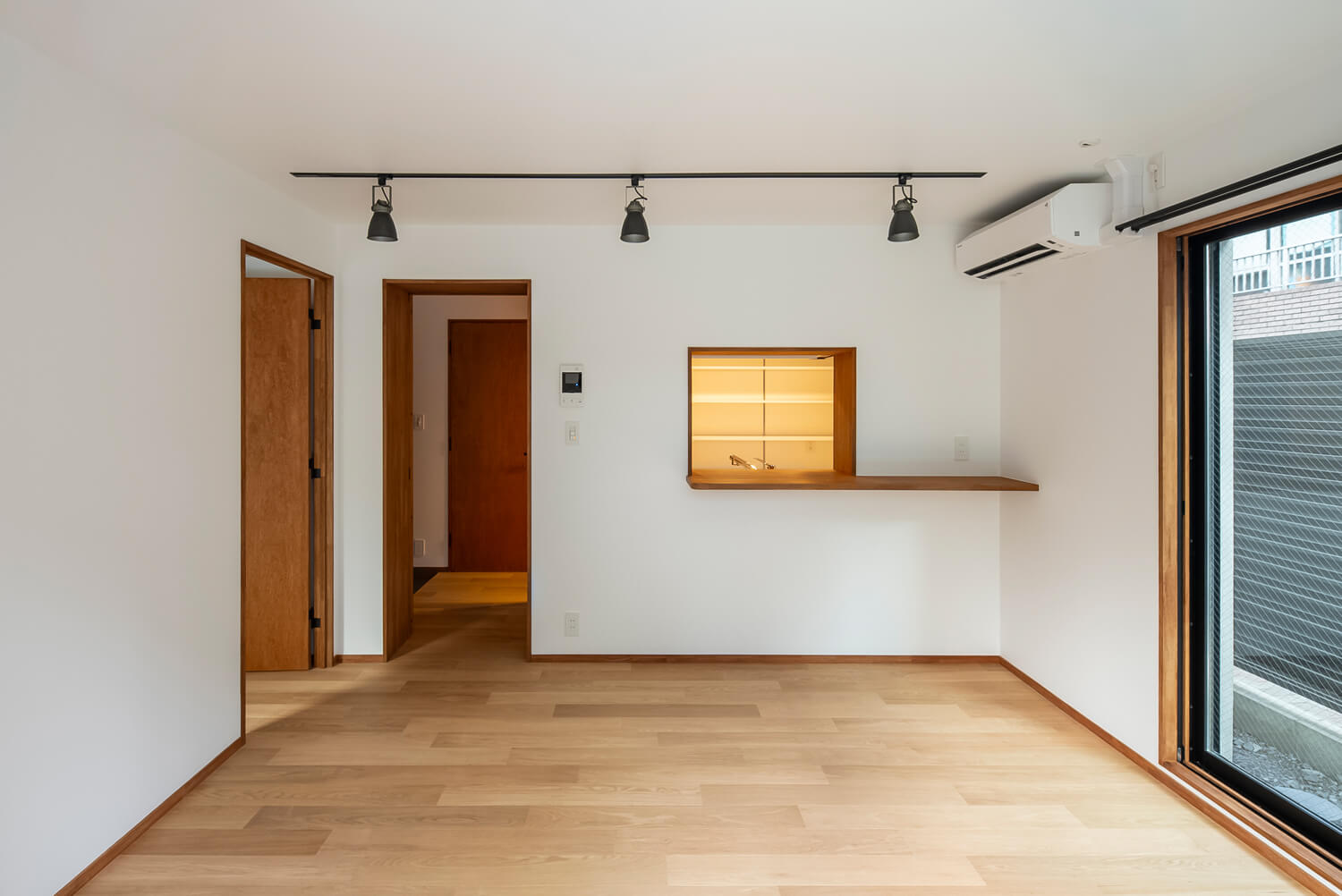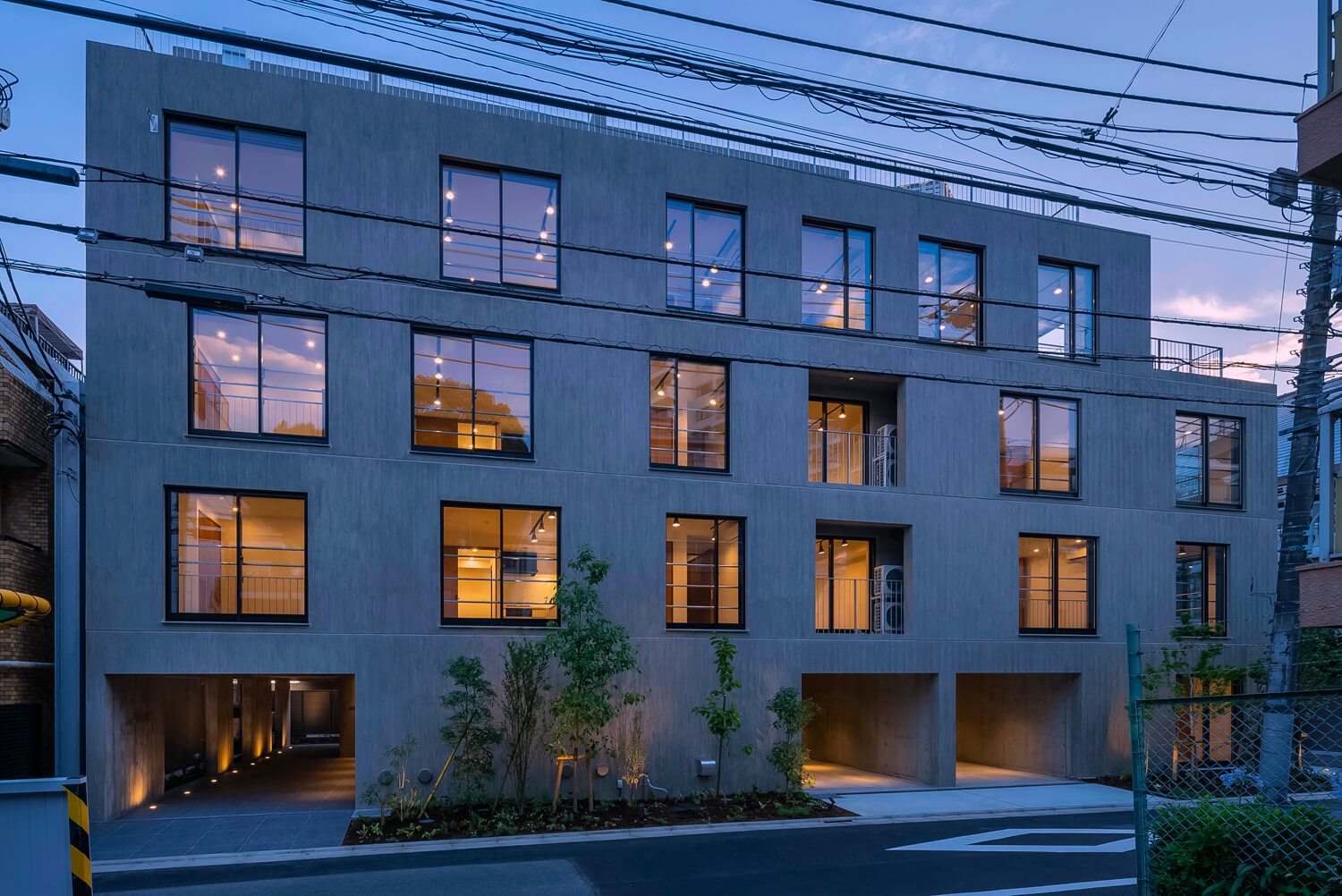
This project is a redevelopment of a residential building located in a quiet neighbourhood in Nakameguro, Meguro-ku, Tokyo. It replaces one of two previously adjacent buildings. The site faces a street to the north and a school playground to the south, offering the rare condition of openness on both sides within a dense urban context. Although the site area is limited, its shallow depth and generous frontage provide spatial potential. The central theme of the project was to establish a relationship between the building envelope as an interface with the city and the arrangement of dwelling units within.
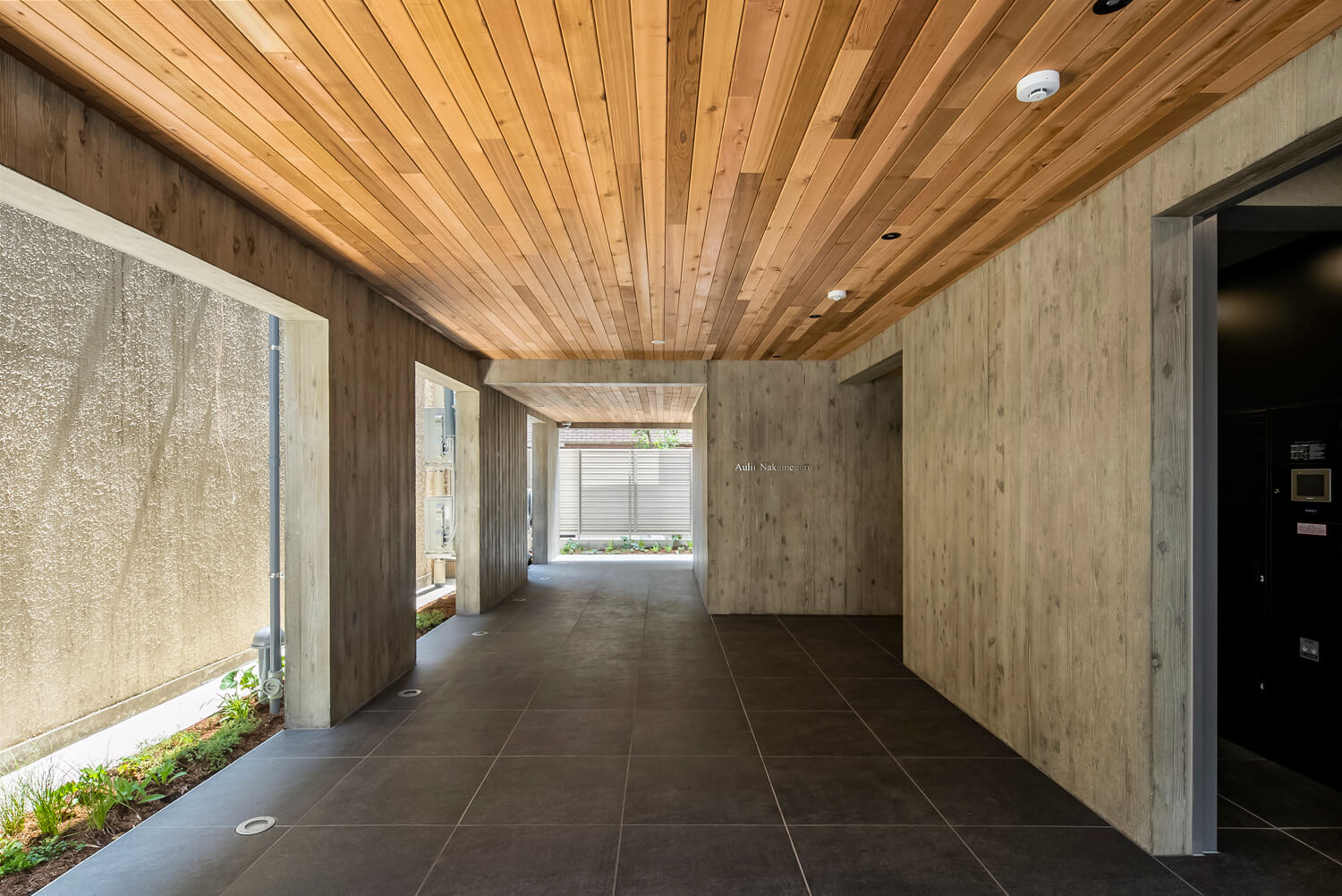
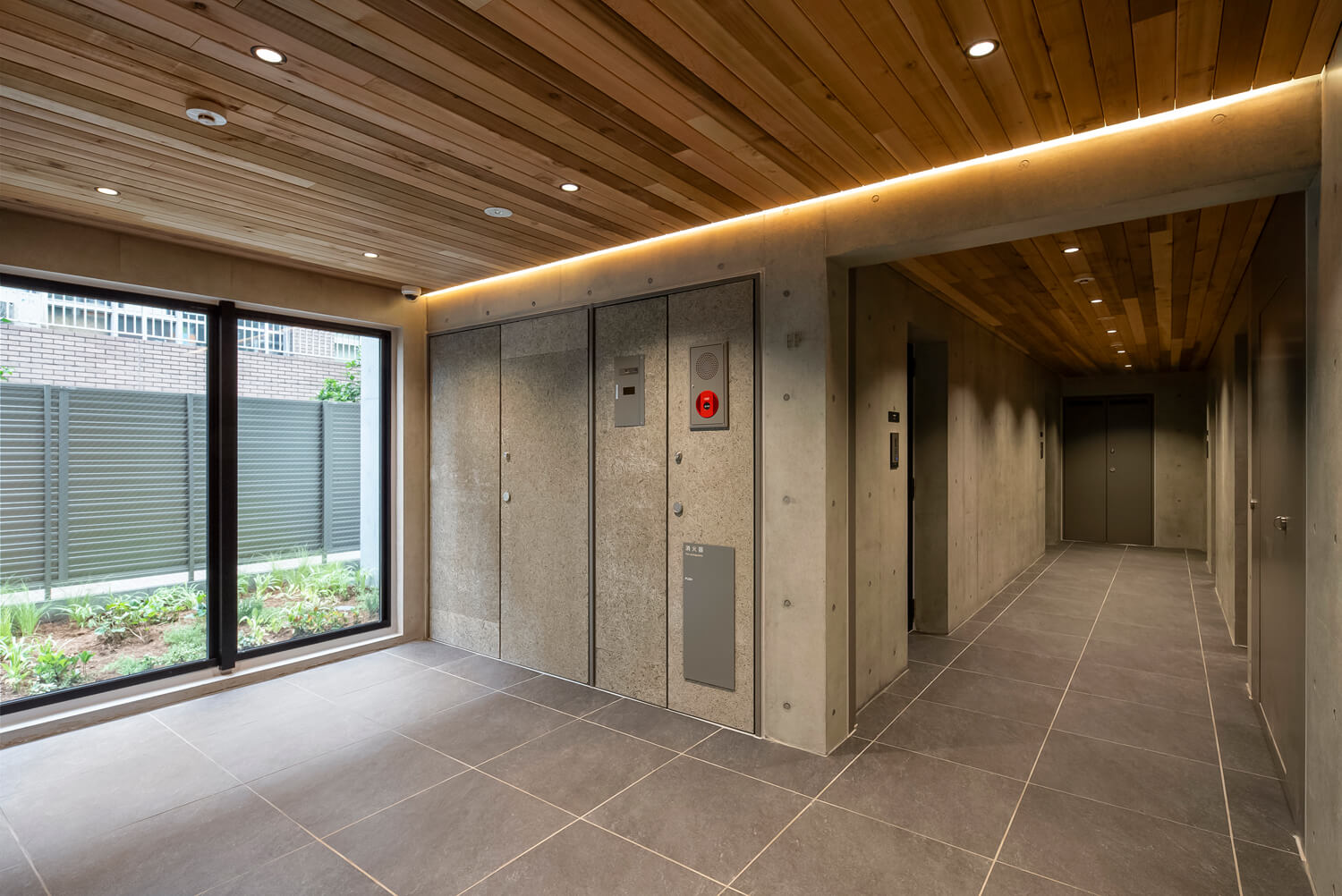
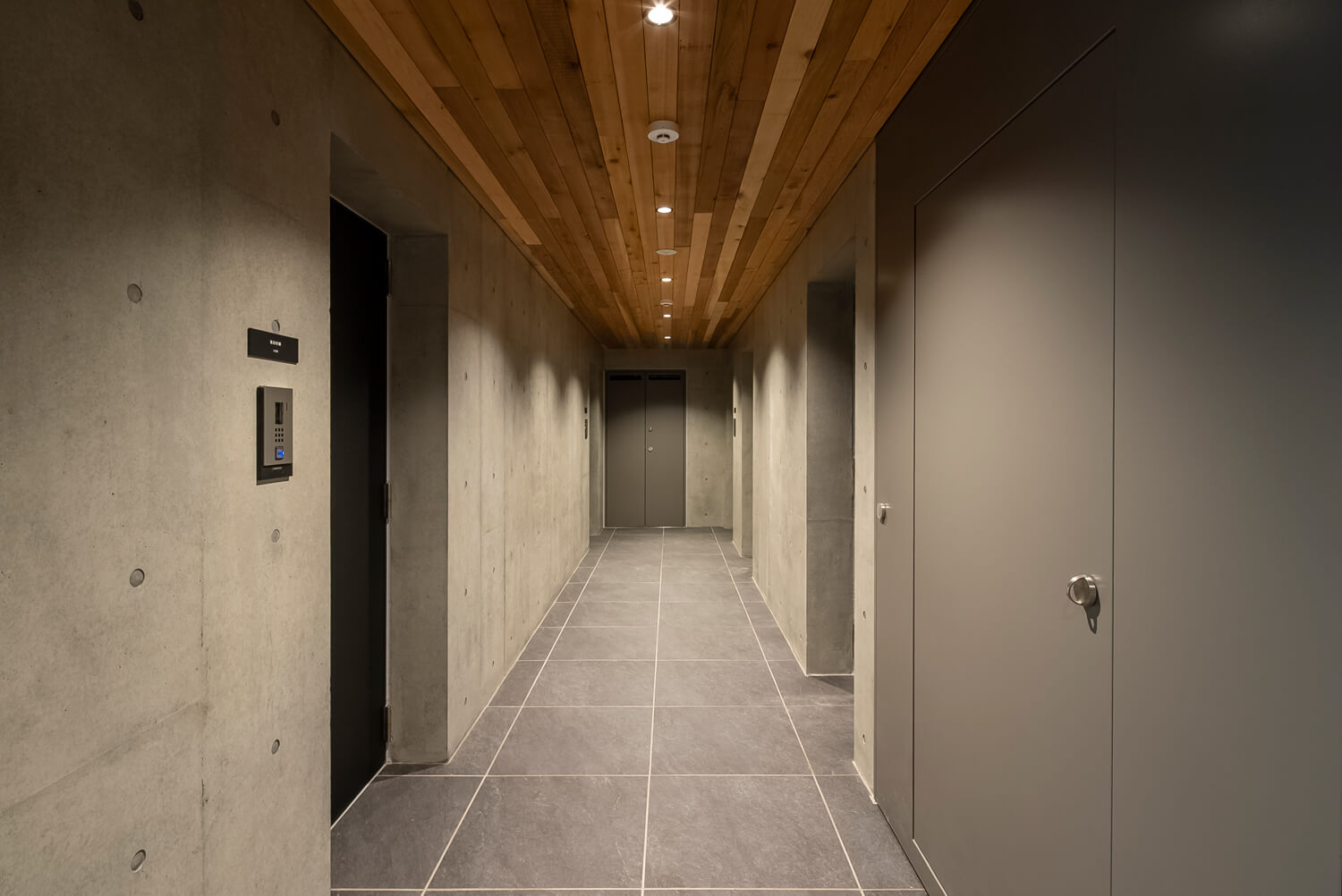
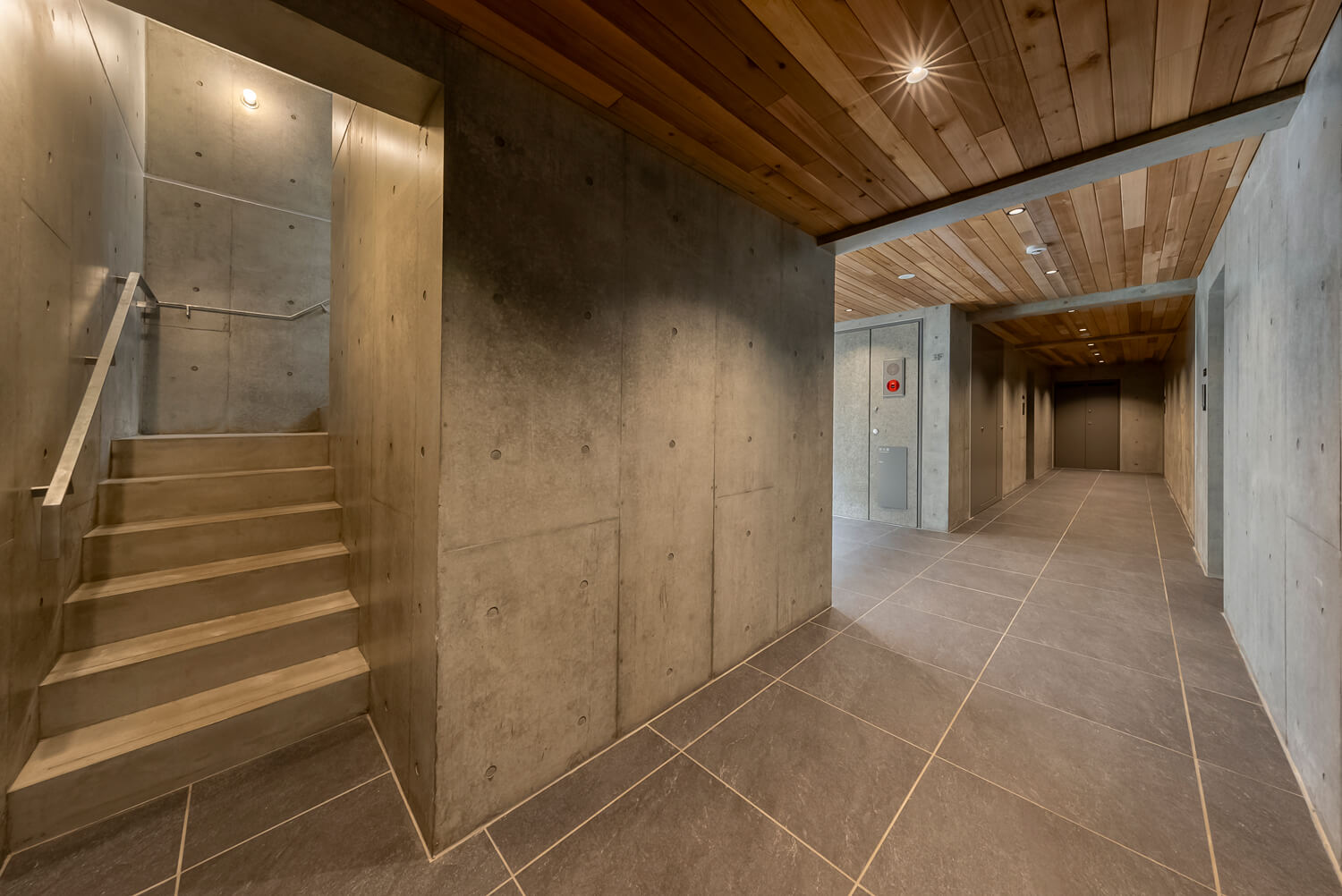
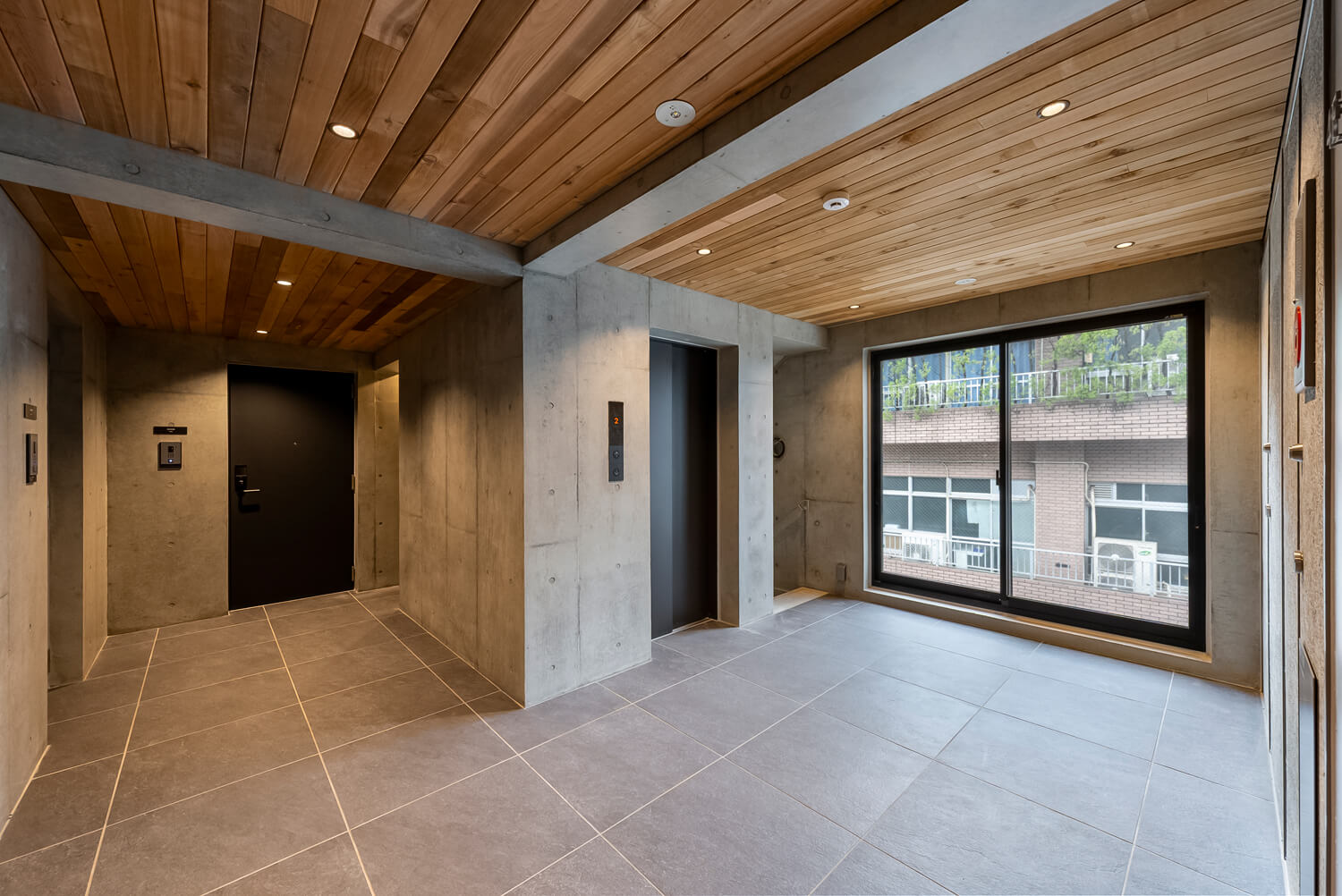
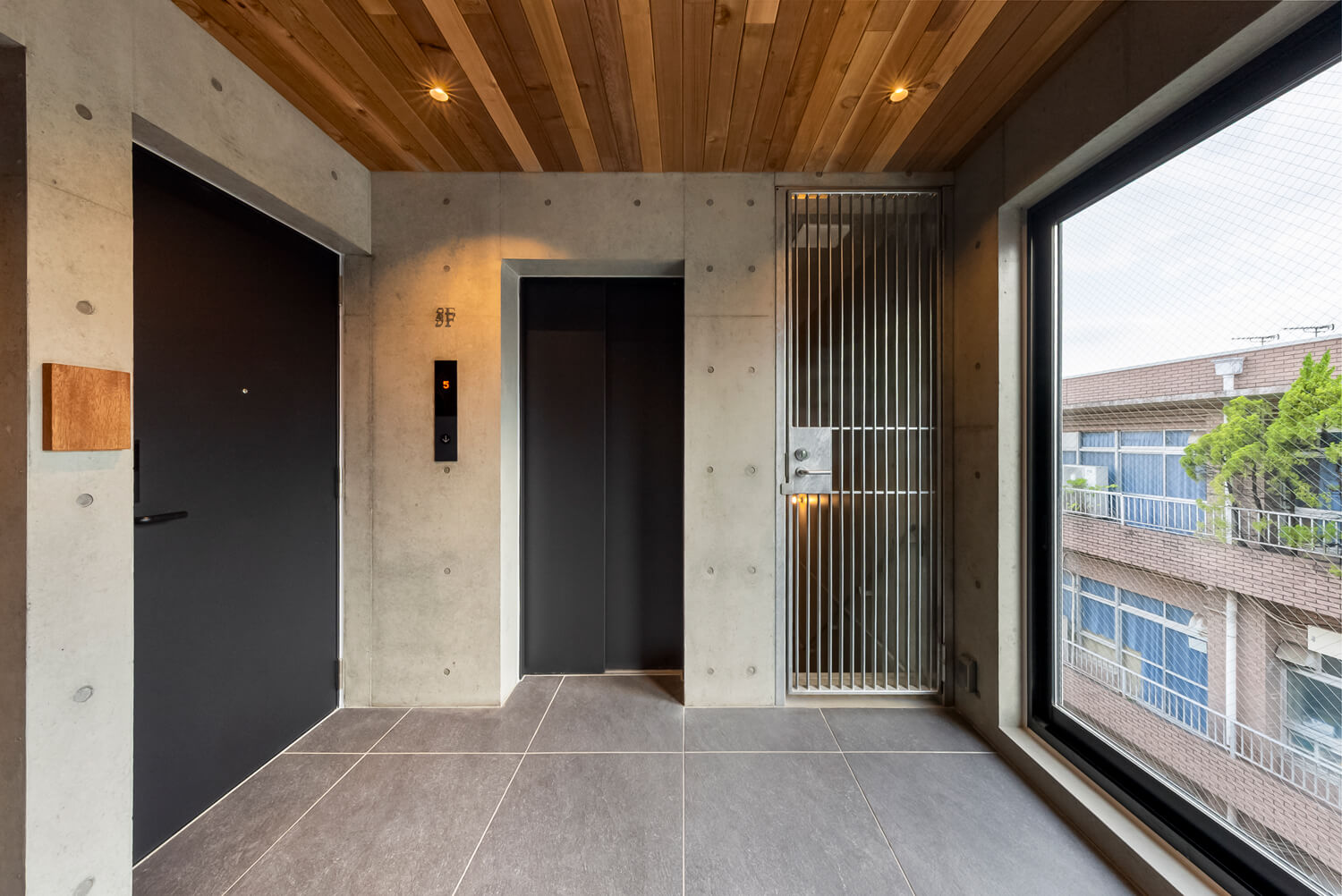
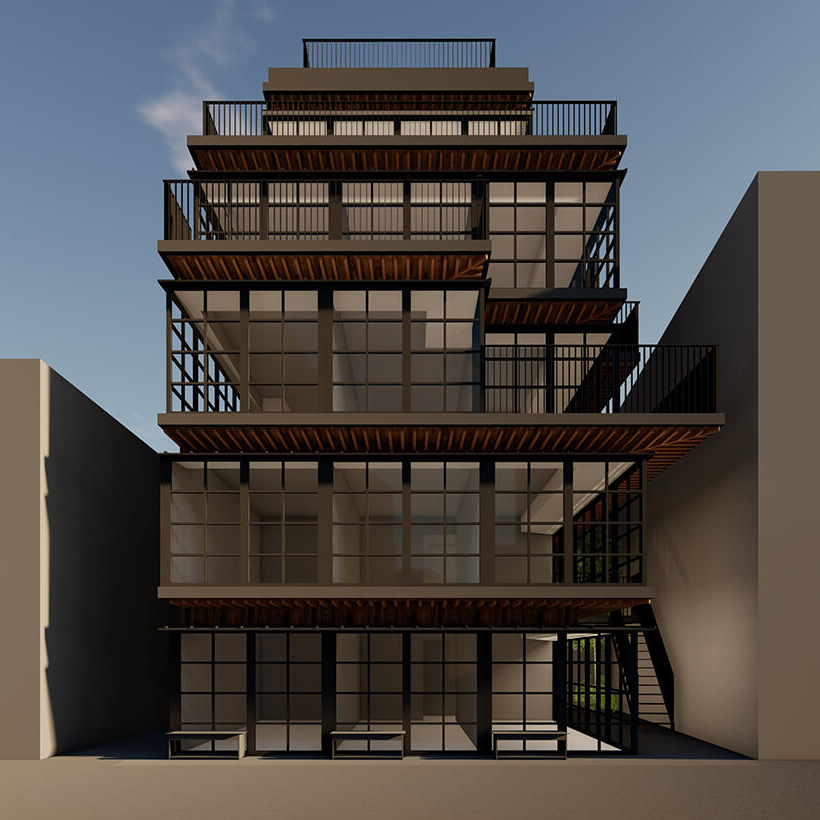
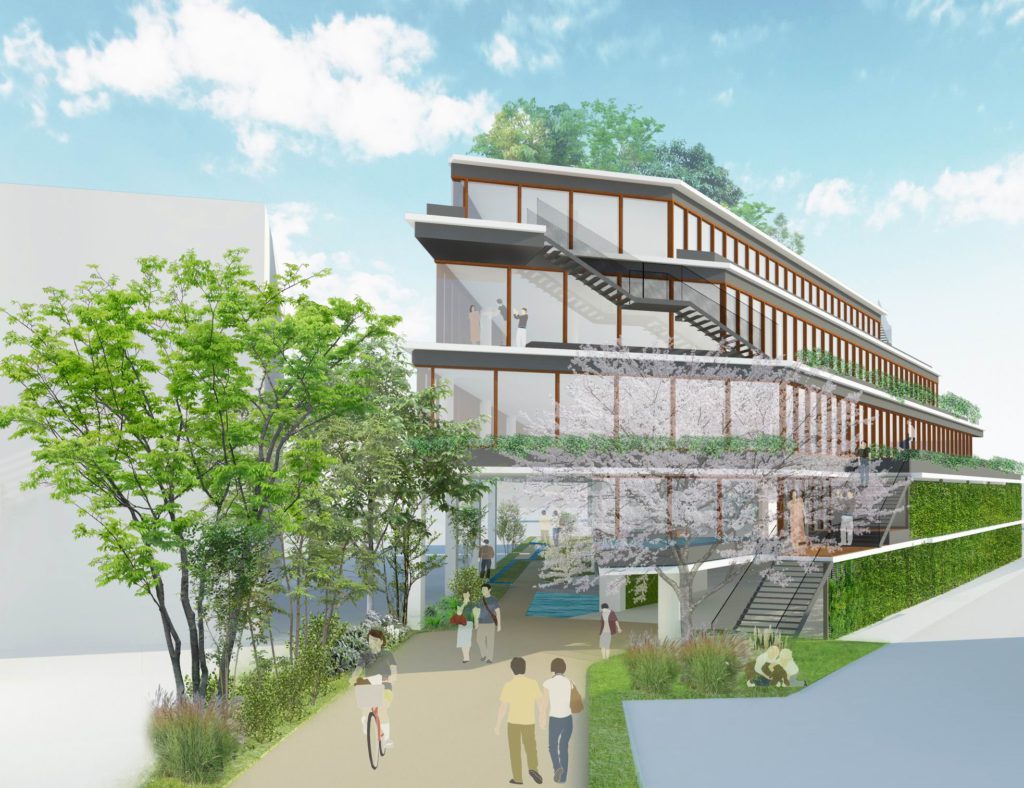
An initial study explored conventional layouts such as staircase-type and single-loaded corridor housing with units of around 20 square metres. However, these configurations resulted in excessive unit depth, leading to an imbalance in daylight, ventilation and overall living quality. In response, the design takes advantage of the site’s openness on both the street and school sides by arranging units on both facades, with a central corridor inserted between them. While central corridor schemes often produce enclosed and inward-looking common areas, this project introduces a partially open corridor connected to the school-side open space, forming an “open central corridor” that maintains a relationship with the external environment.
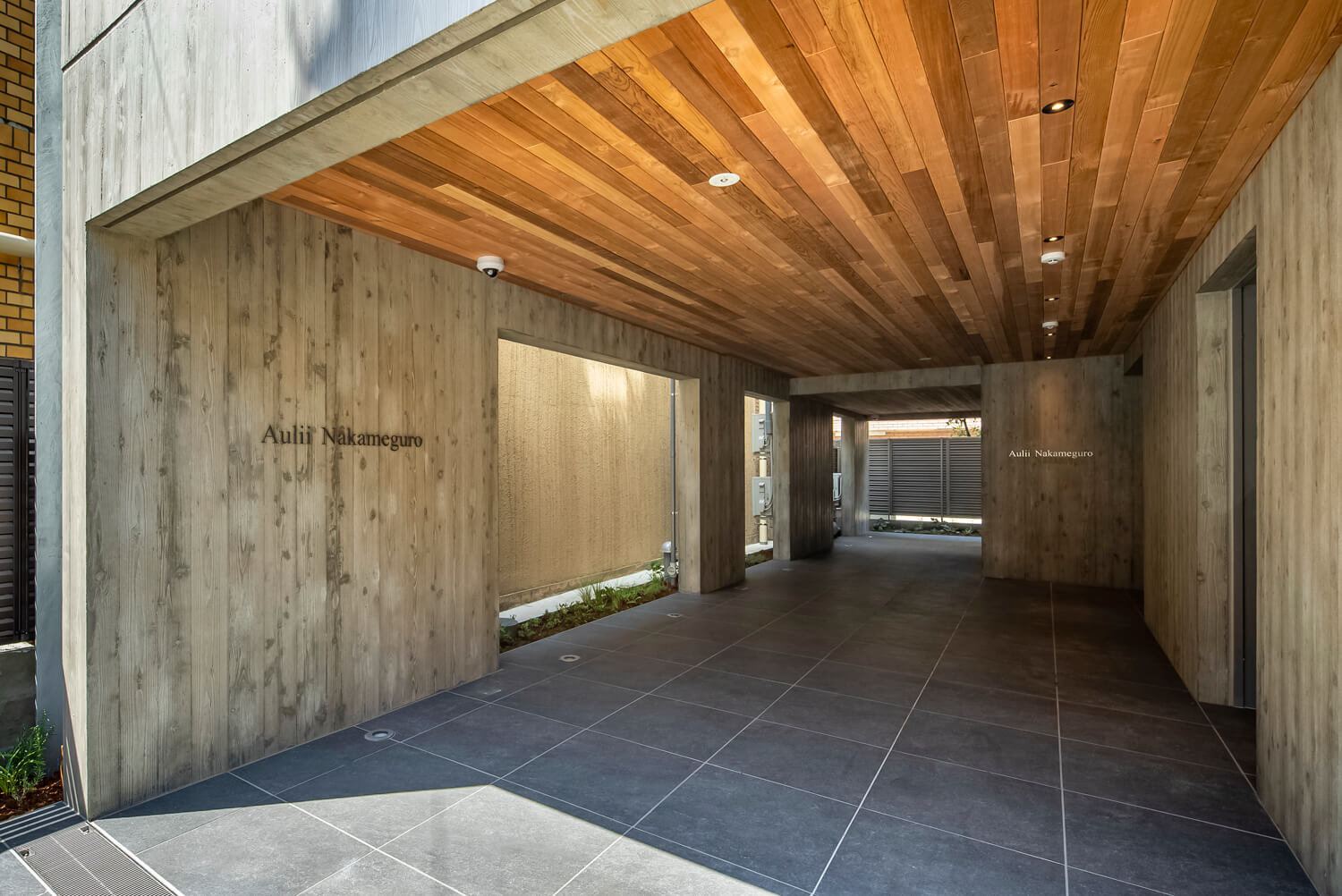
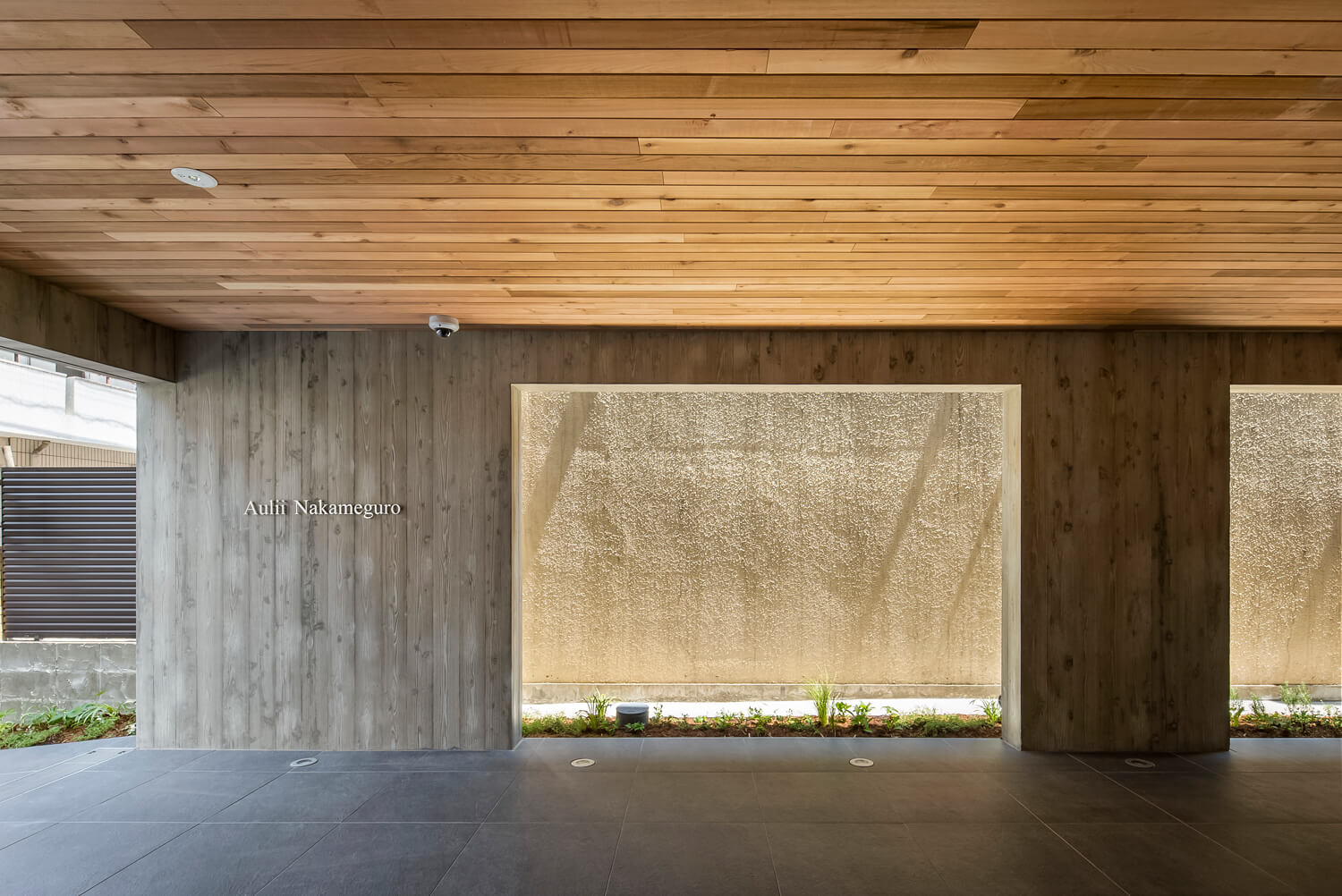
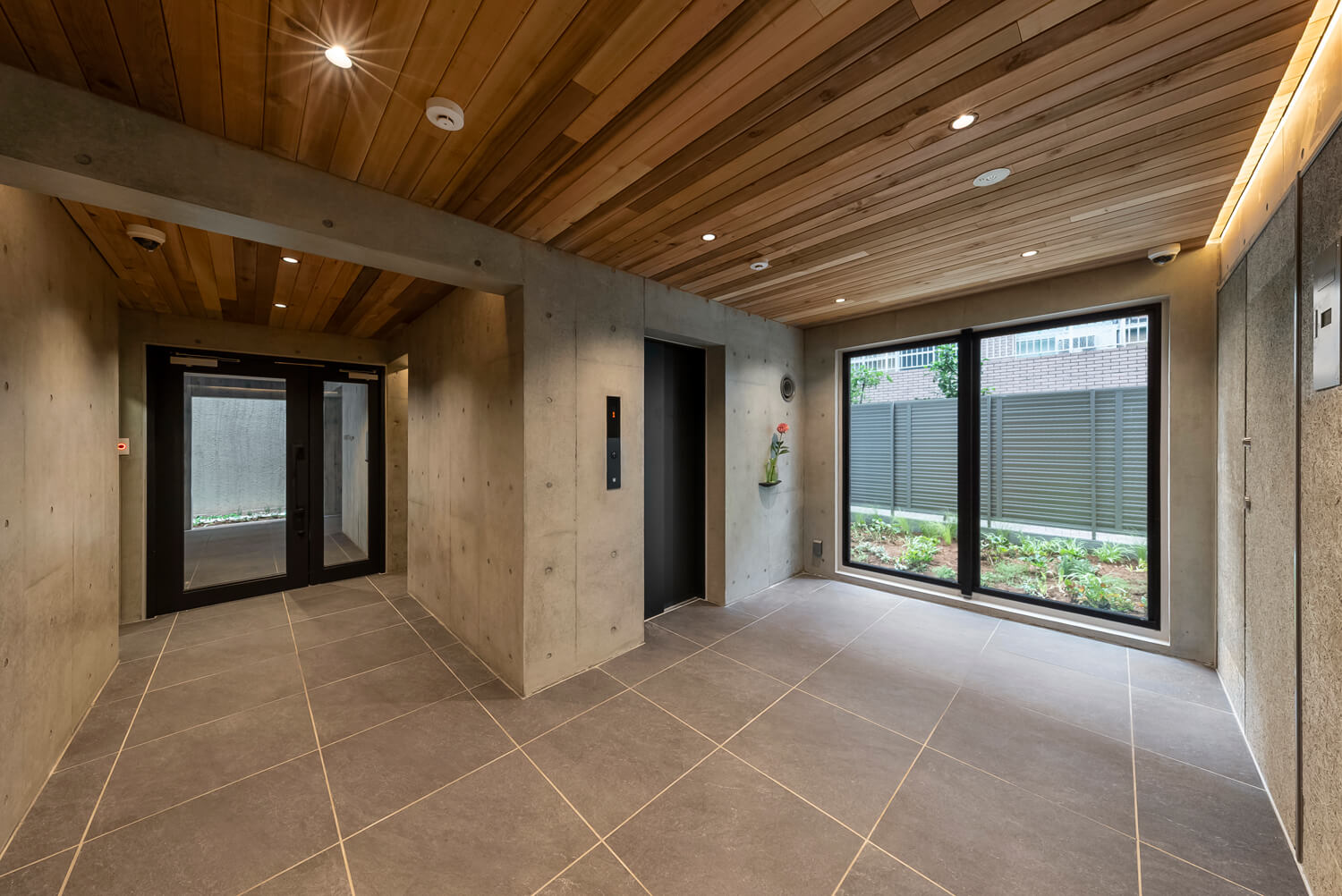
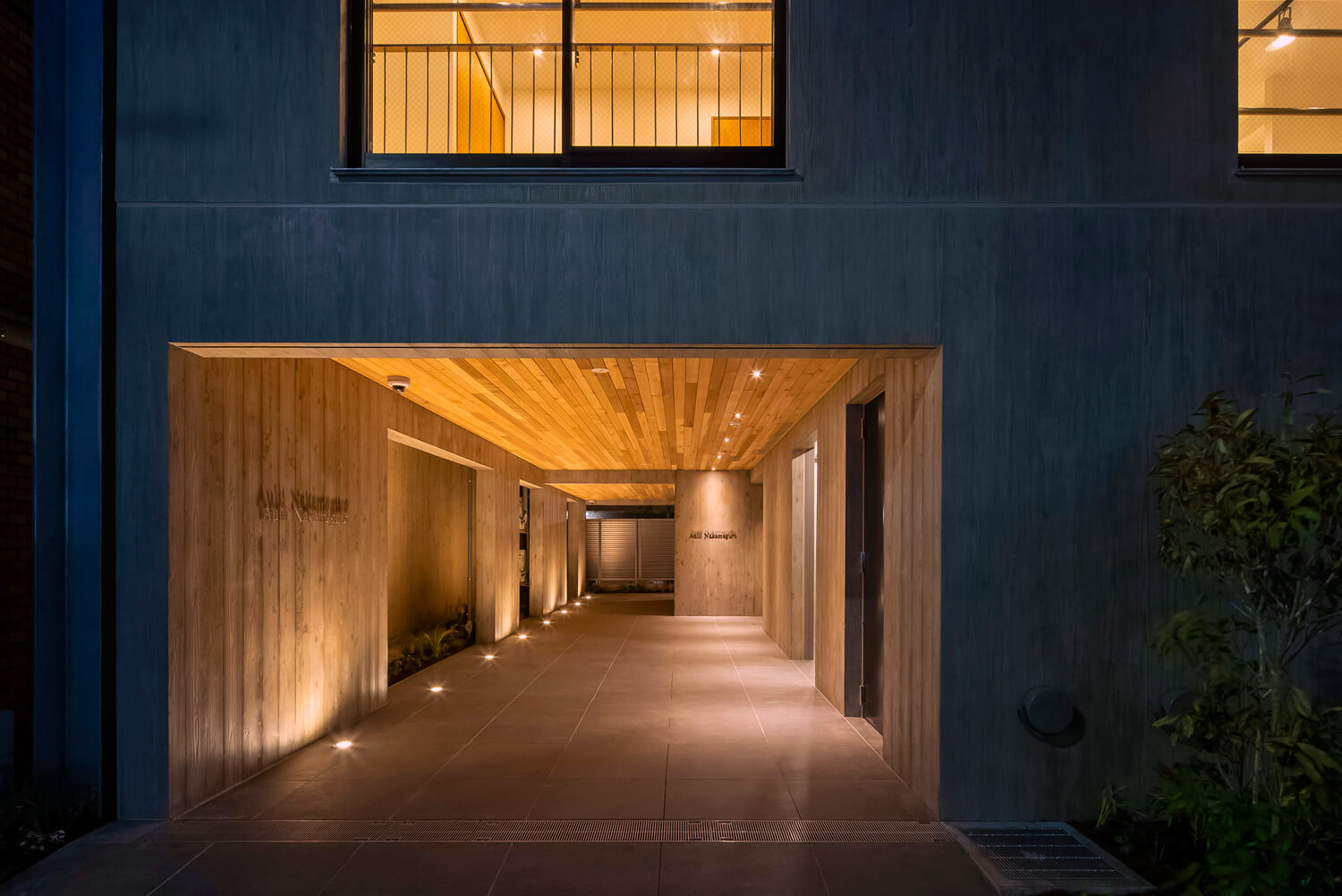
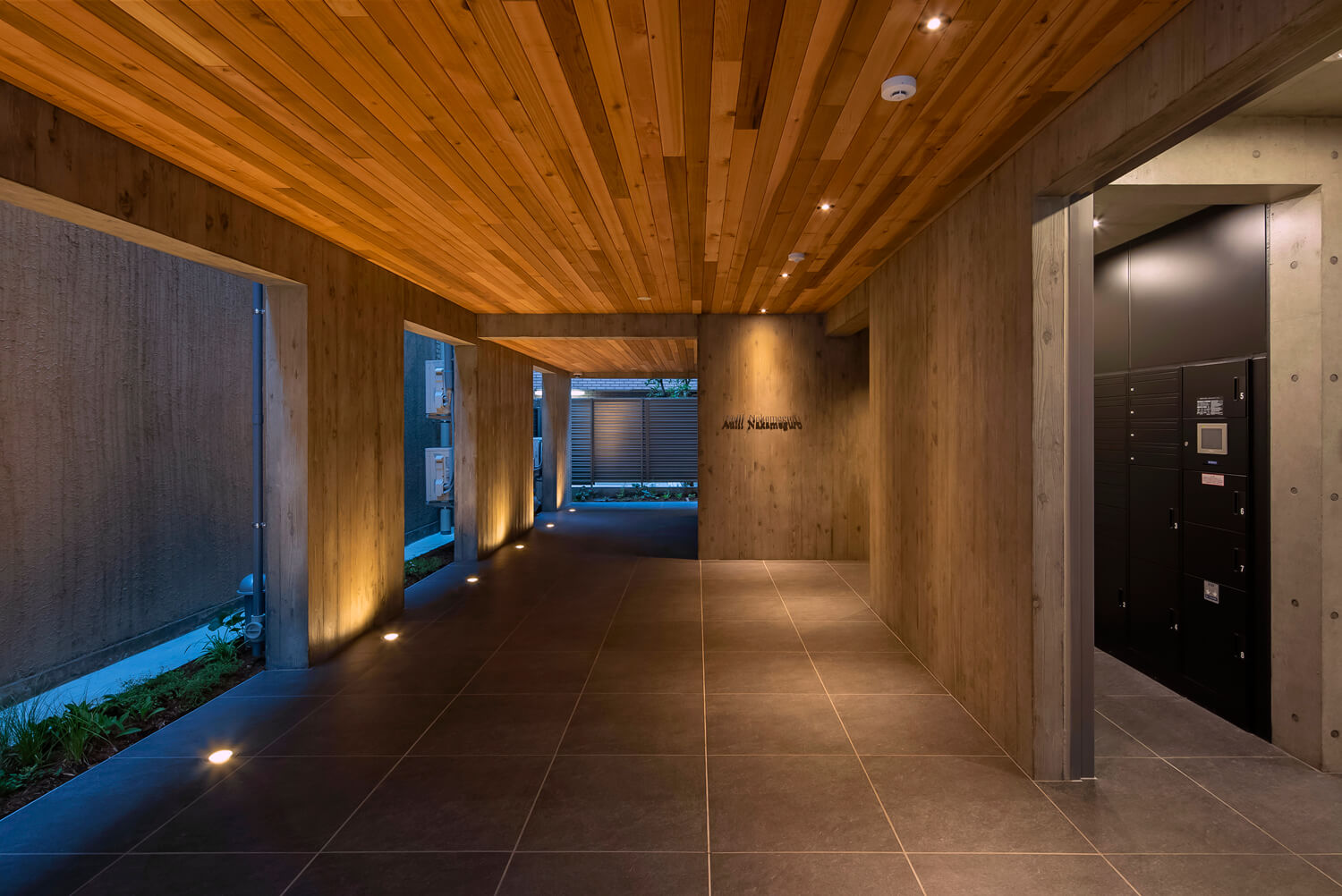
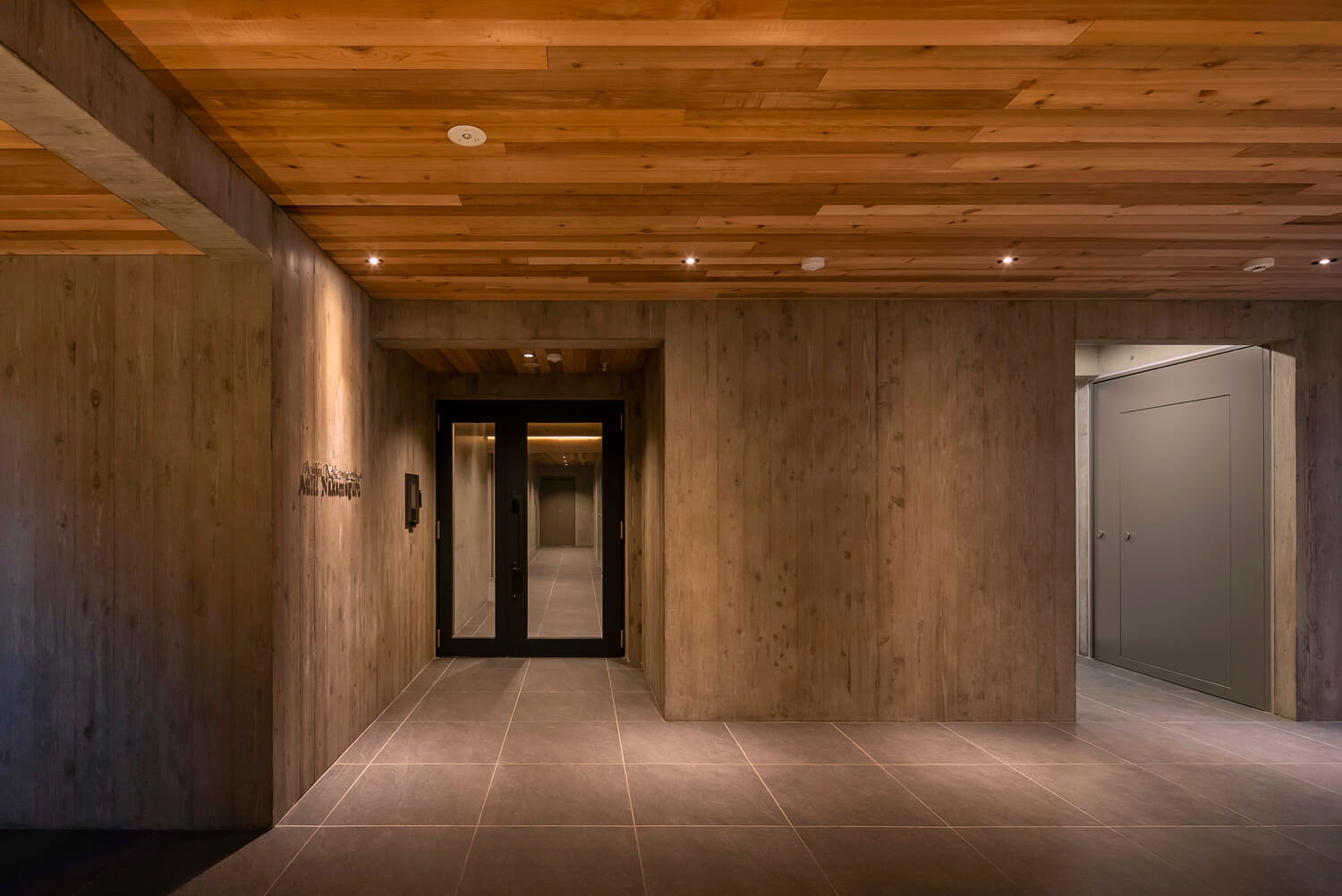
The ceiling of the corridor is finished in red cedar, and together with natural light entering through openings, it creates a warm and inviting atmosphere within the building. The open space secured along the school side functions as both an emergency escape route and a transitional zone between the building and its neighbour, improving daylight and ventilation conditions.
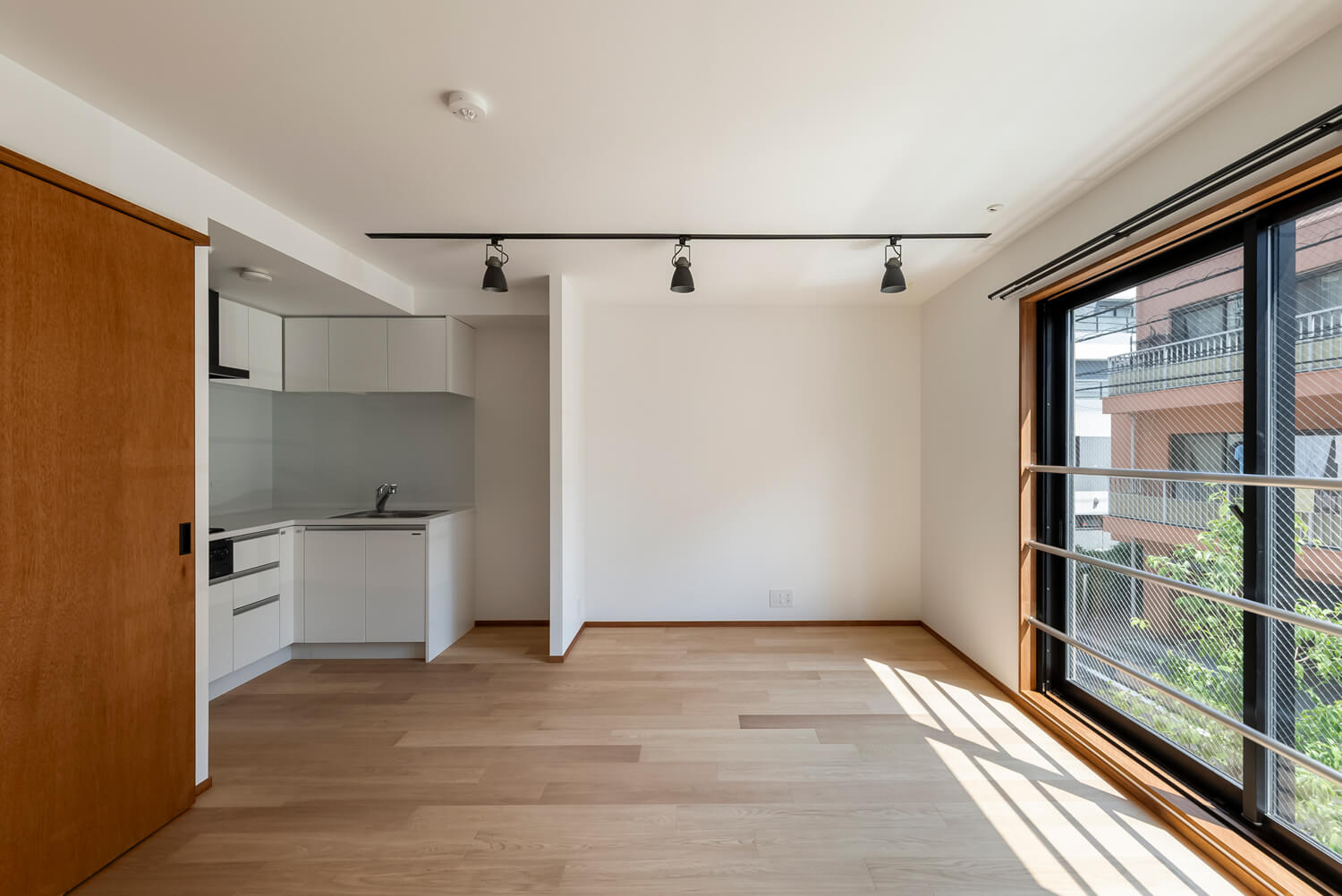
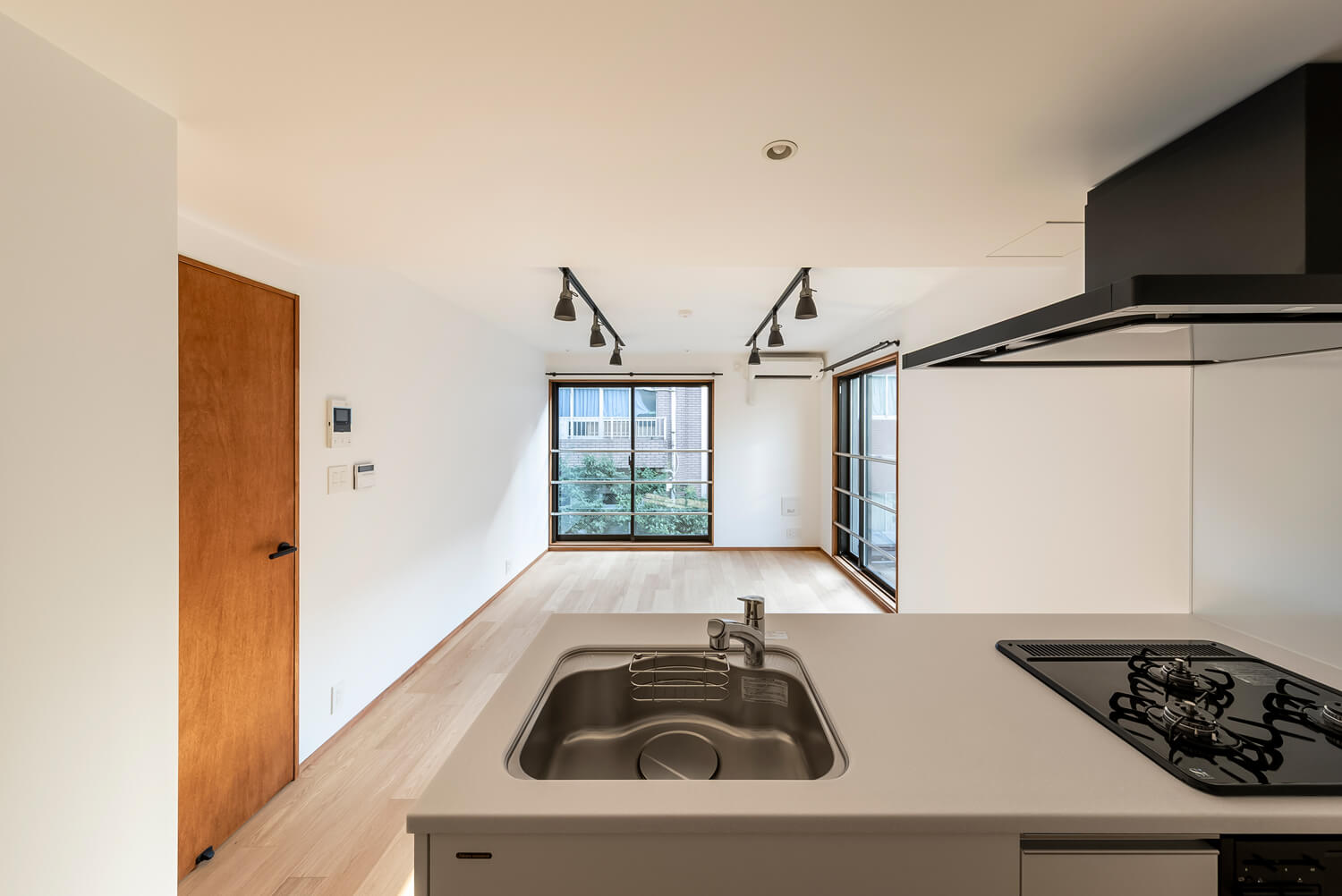
In response to recent trends in the rental market—such as increased time spent at home and the rise of two-person households—the unit sizes were revised to start from 30 square metres. The plan prioritises shallow-depth, wide-frontage units, allowing a high proportion of corner units with good access to light and air. Units ranging from approximately 30 to 60 square metres are distributed in a balanced manner to accommodate a diverse range of households, including single occupants, couples (DINKS), and families. This contributes not only to stable investment returns but also to improved living quality and tenant retention.
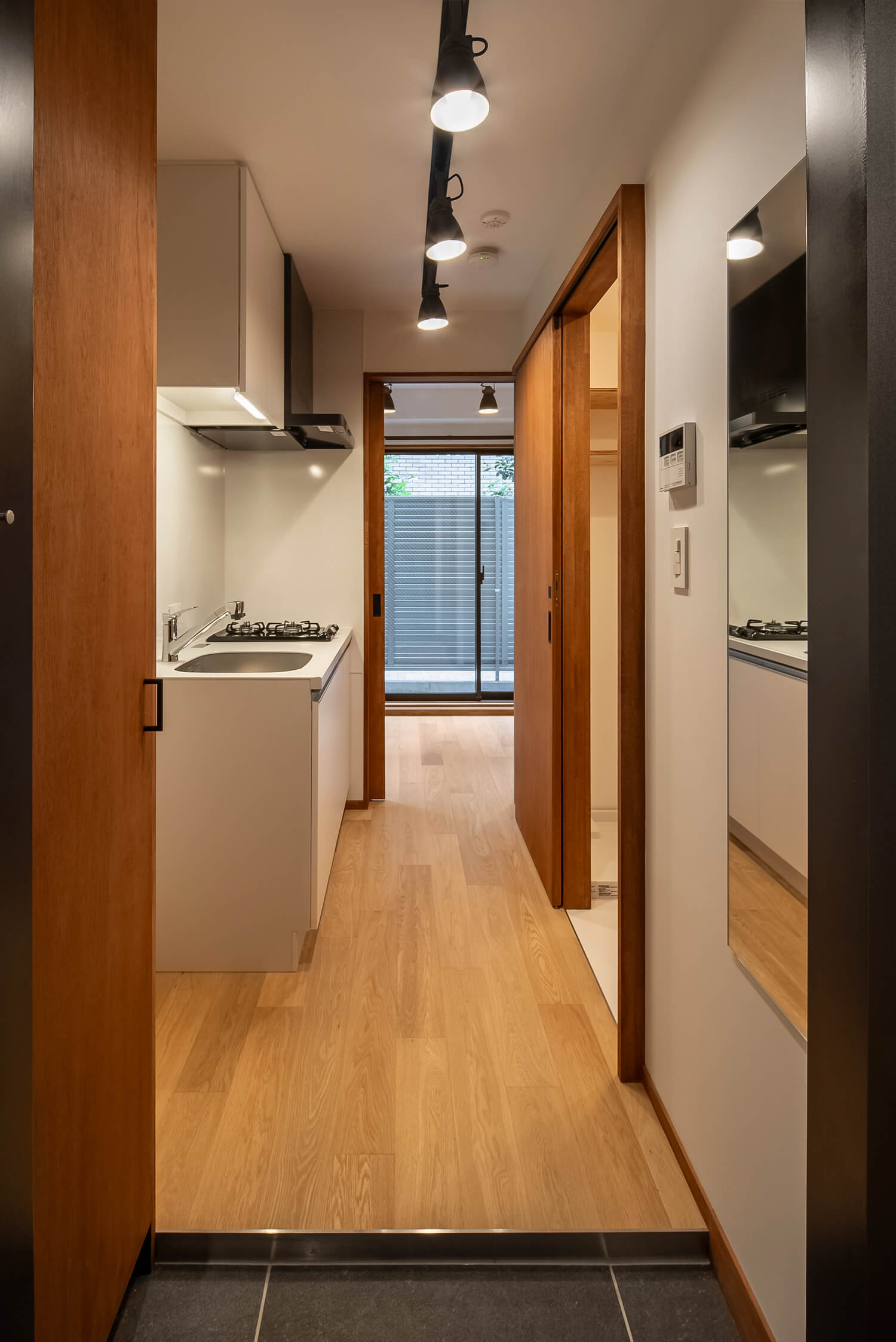
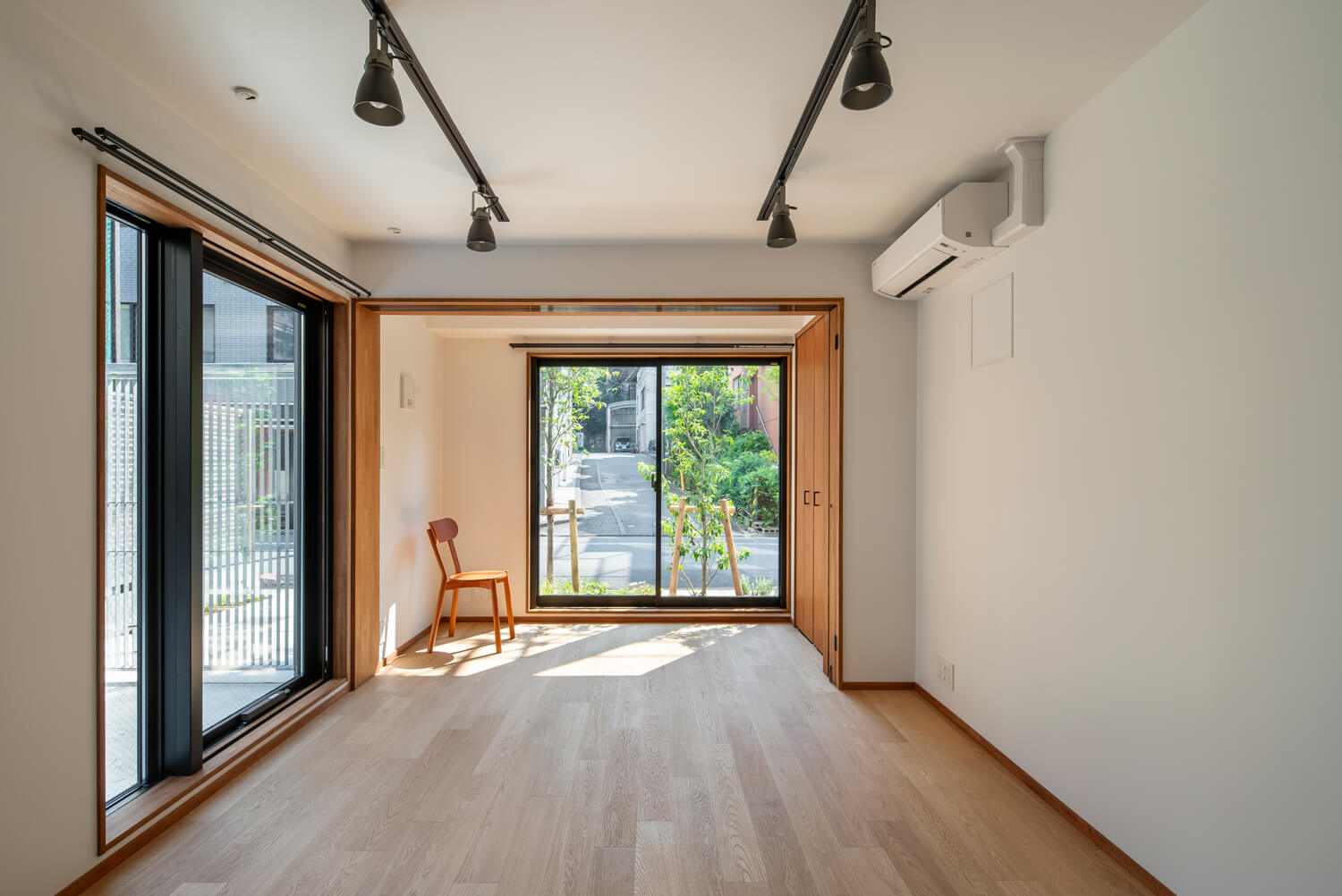
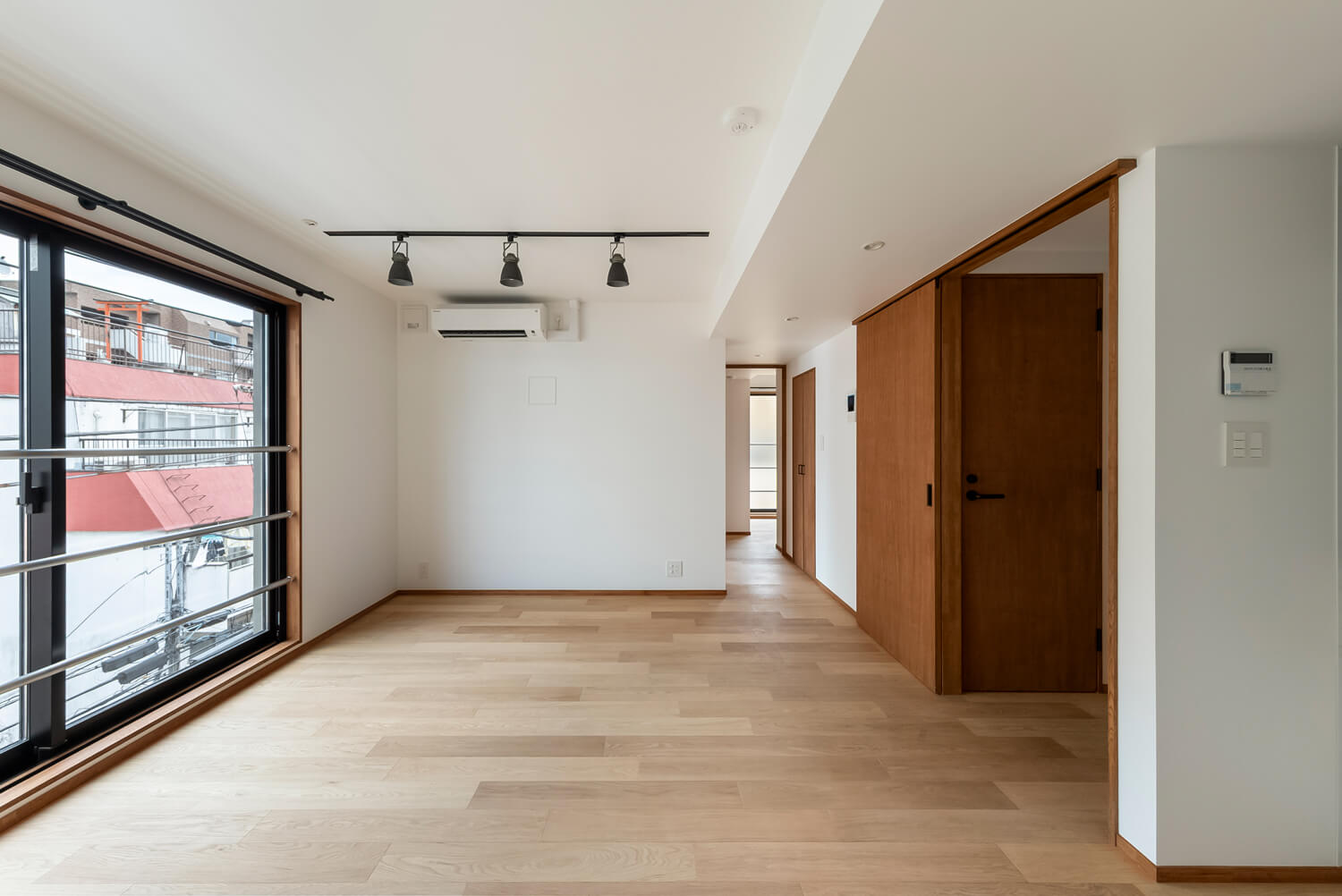
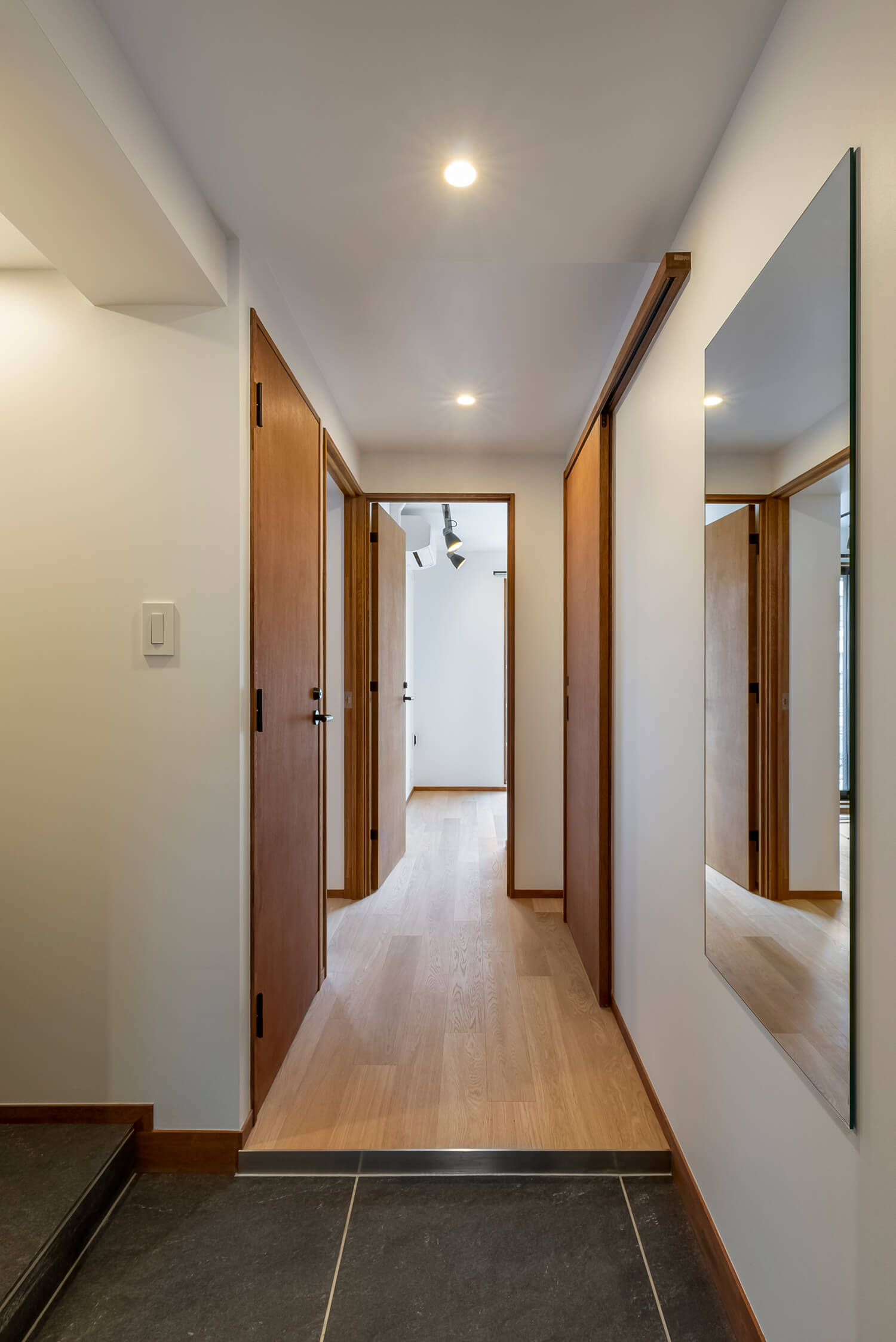
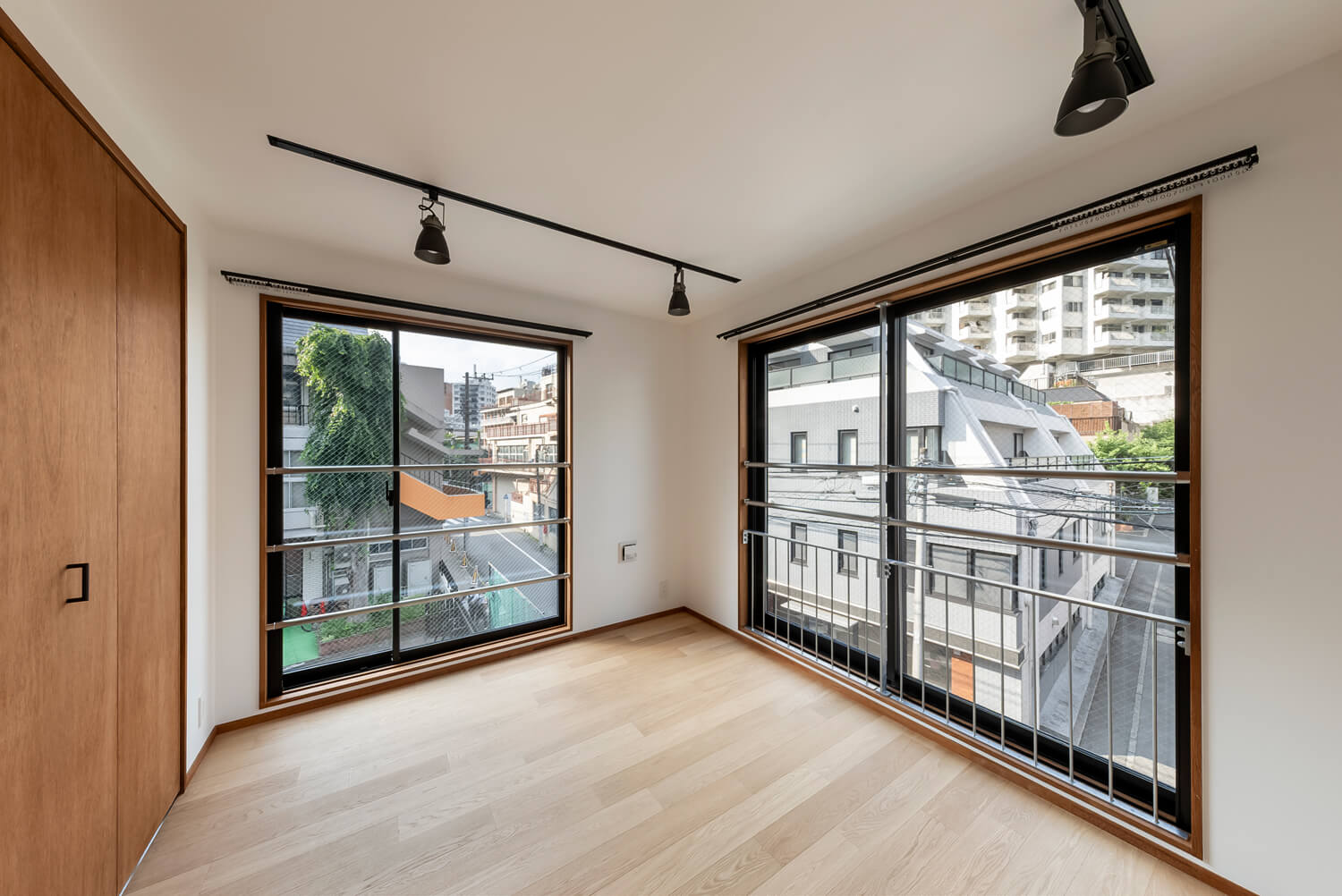
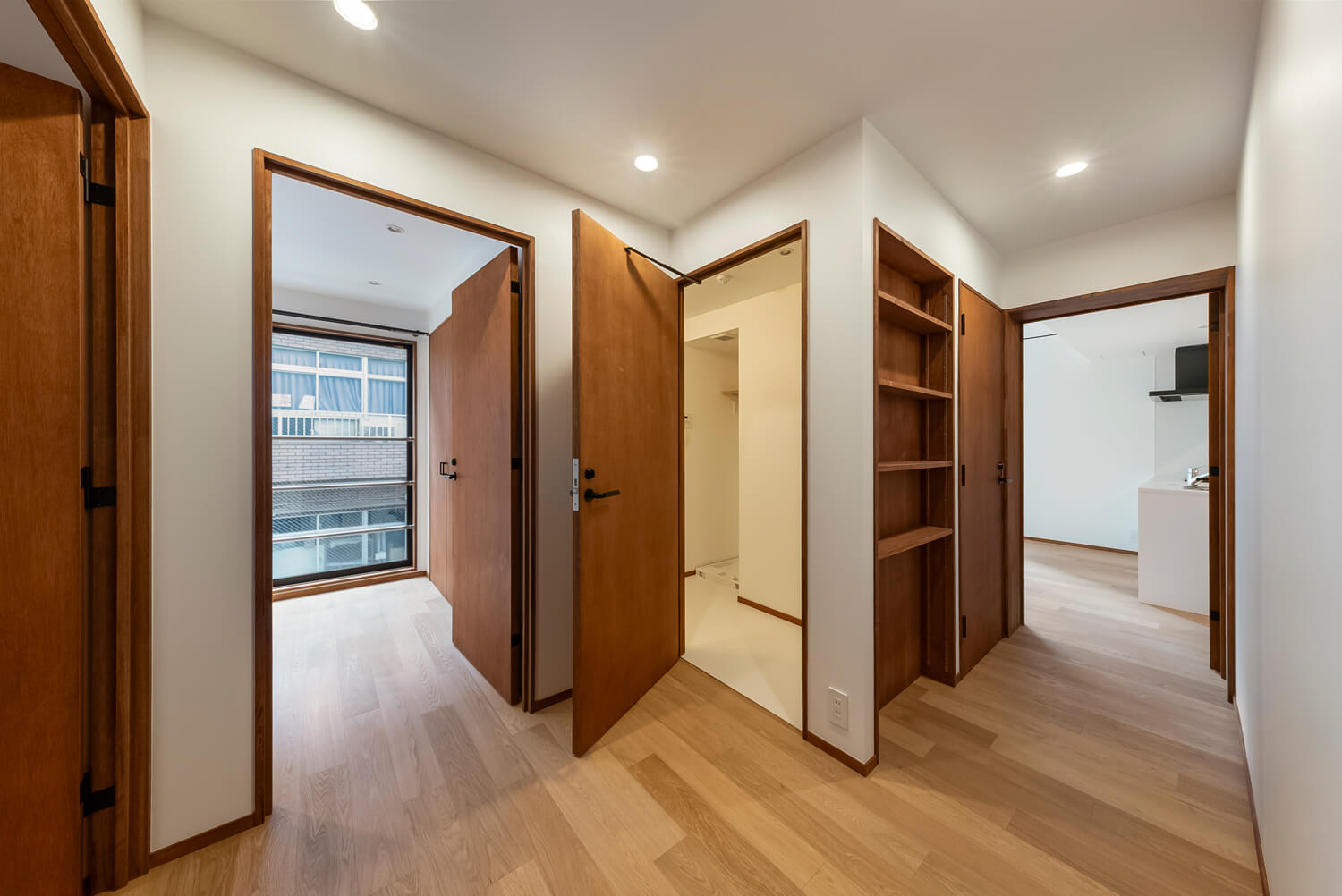
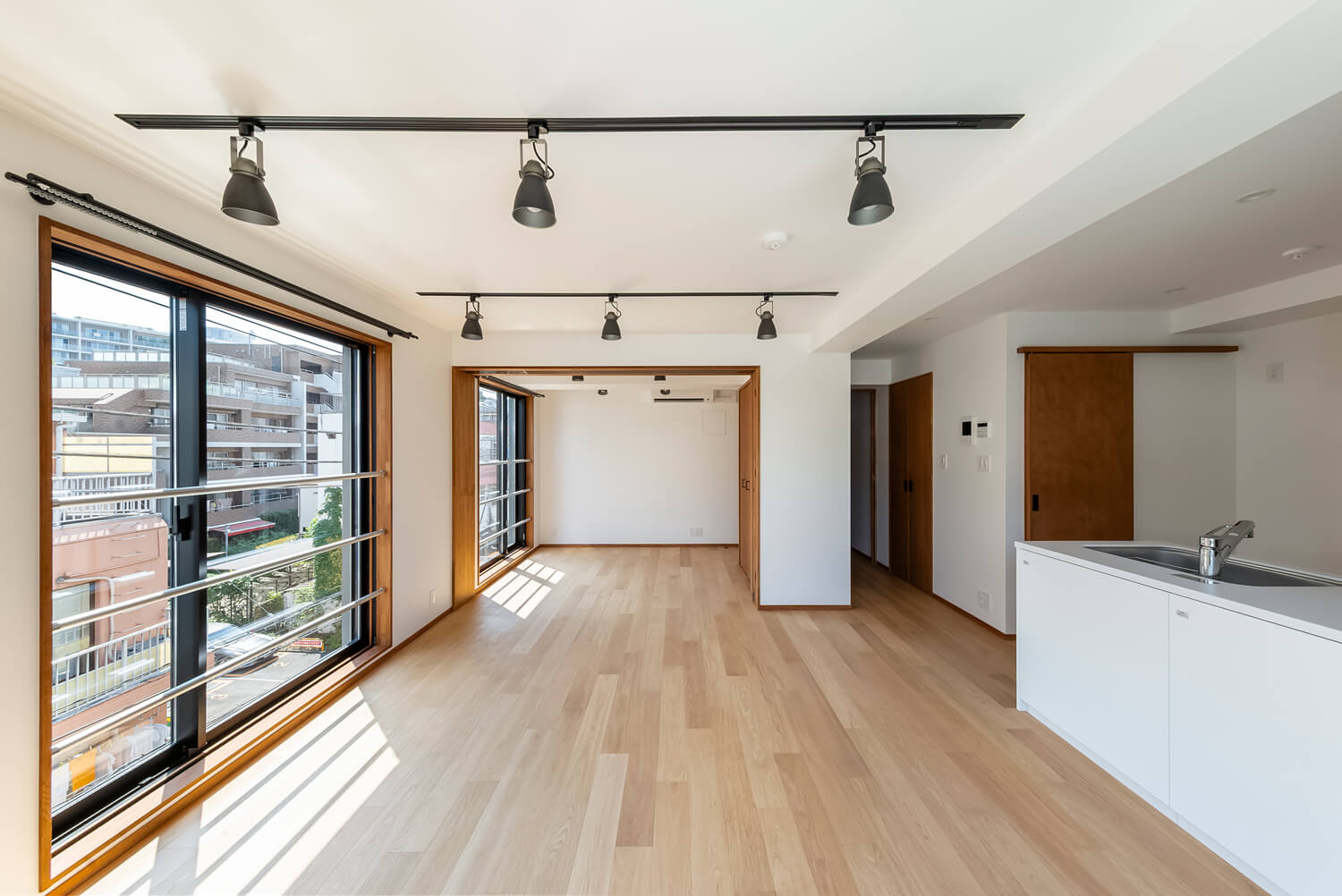
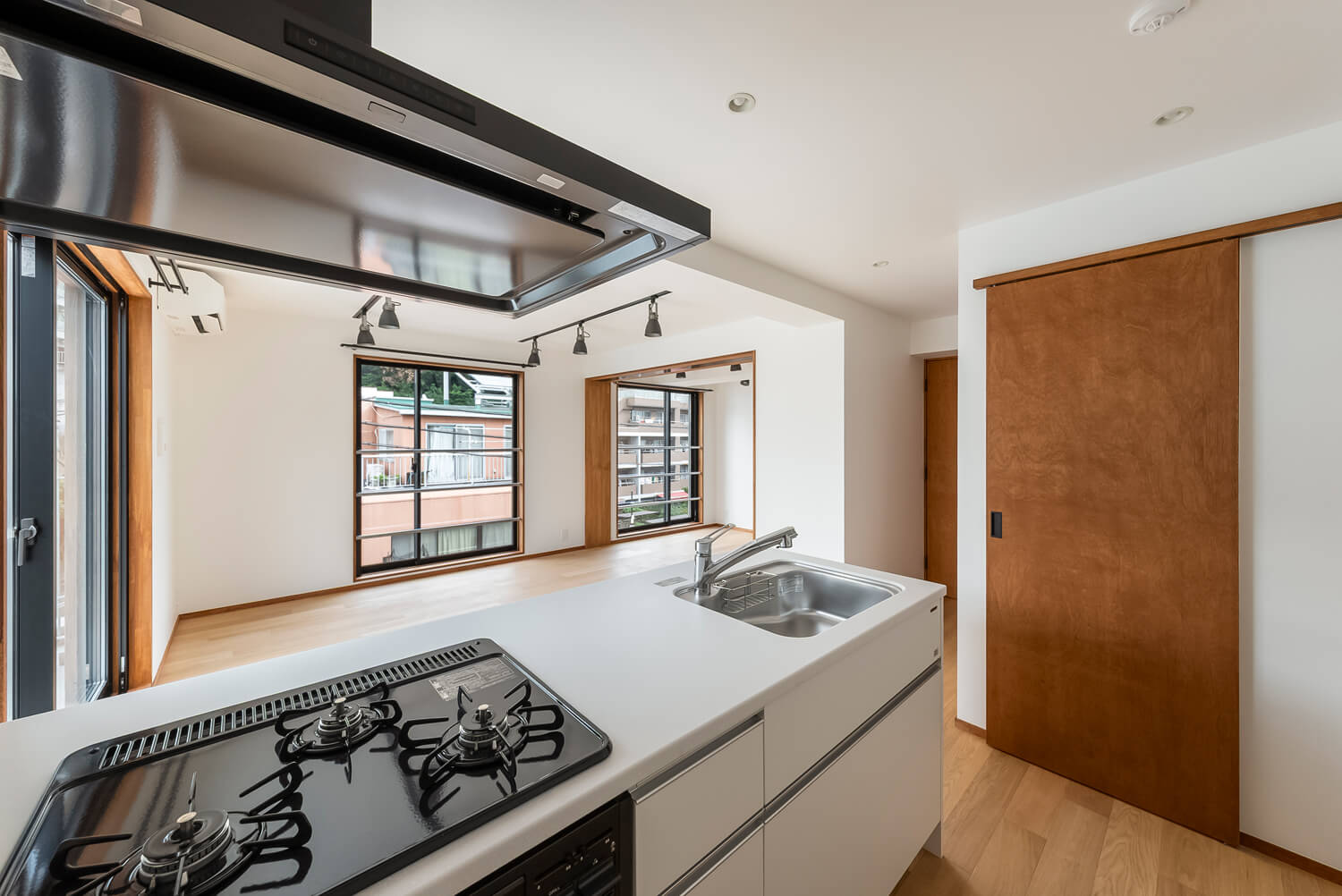
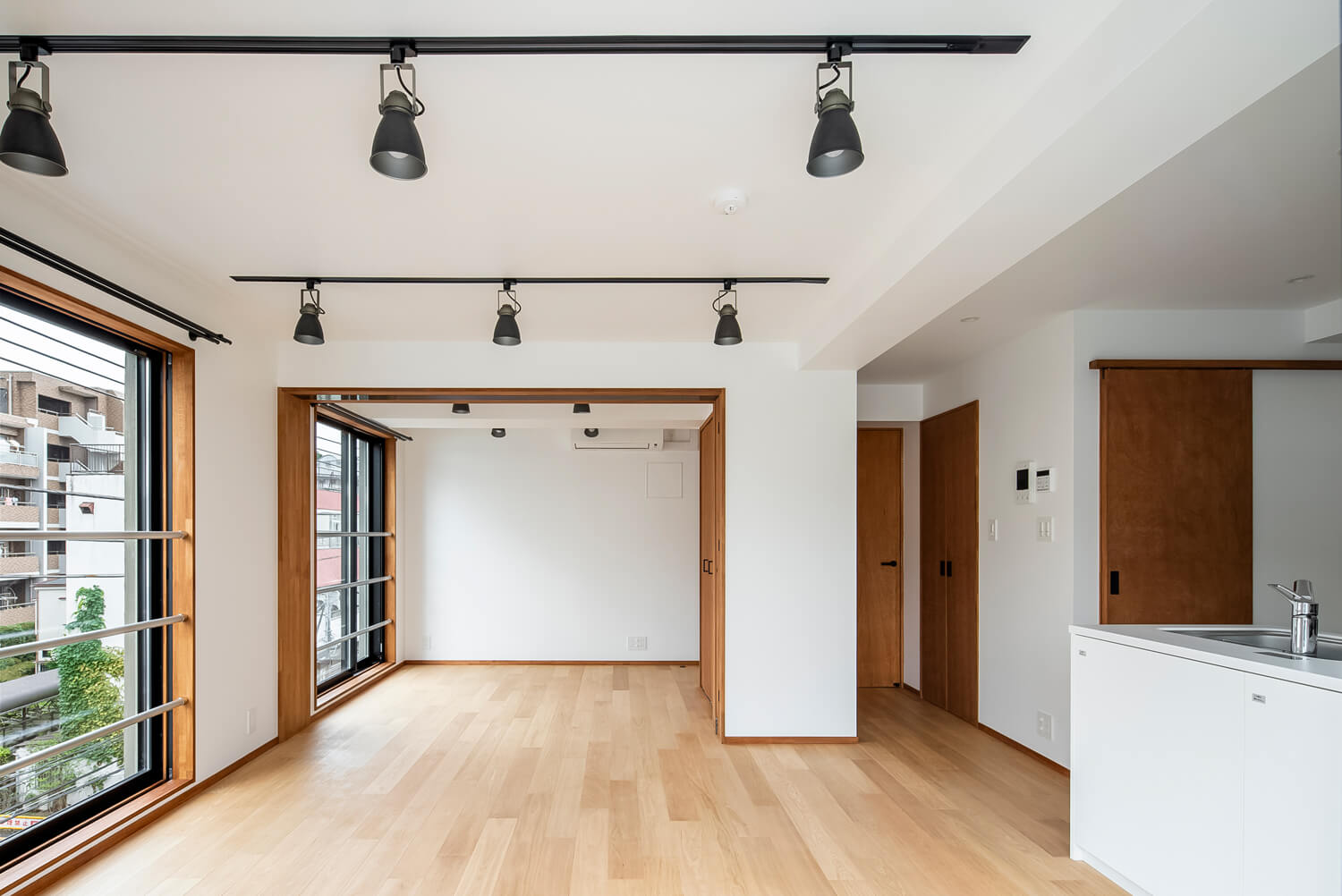
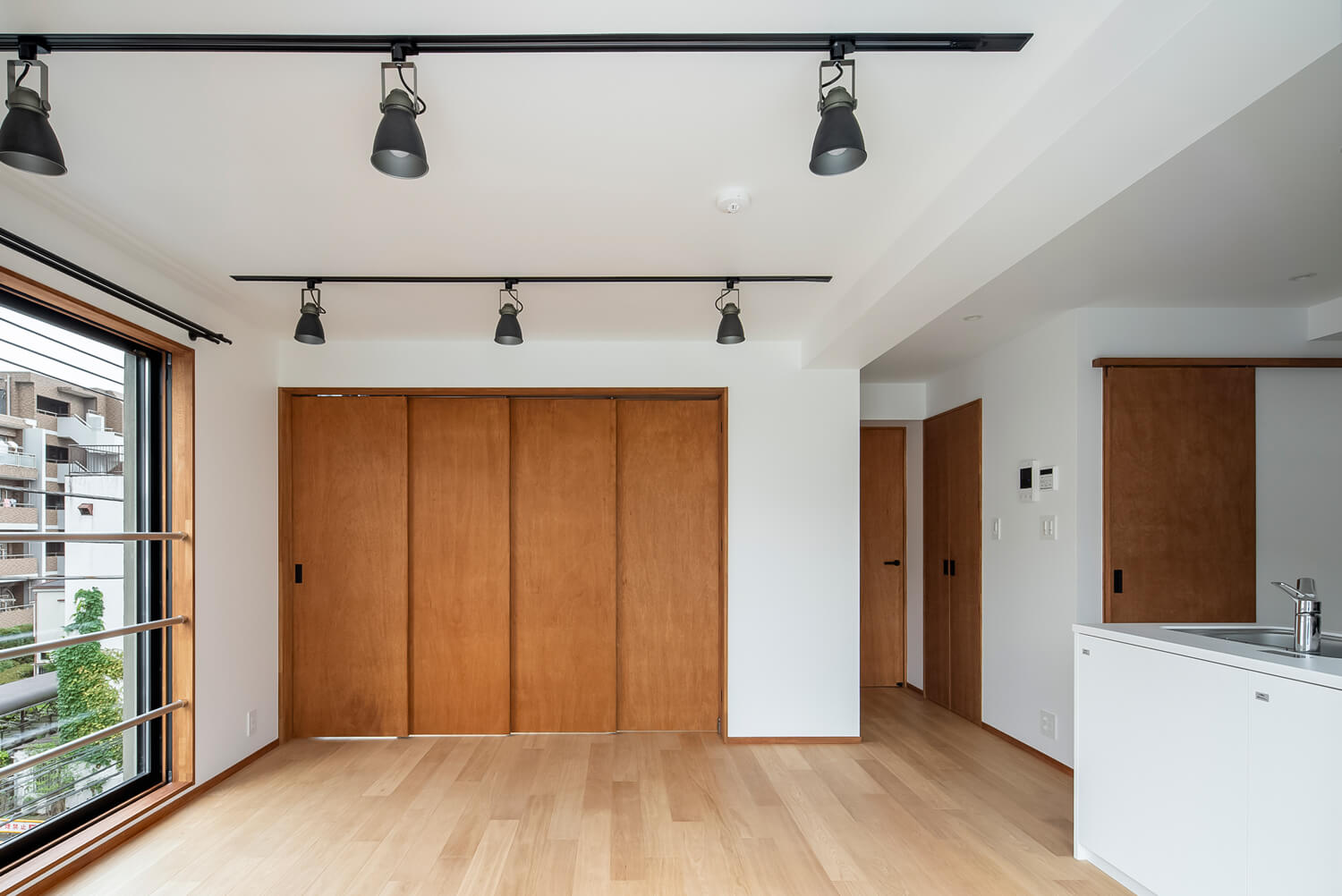
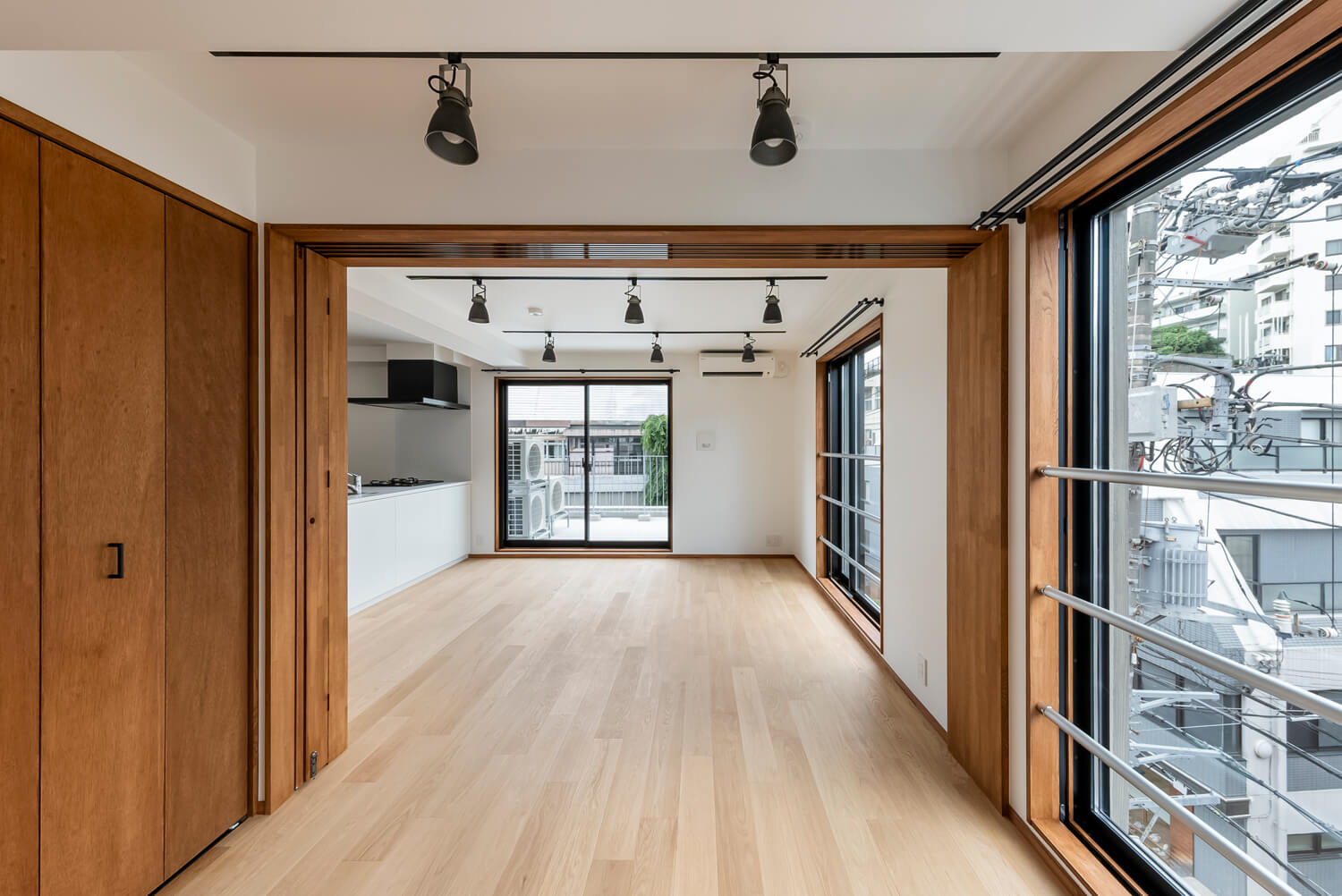
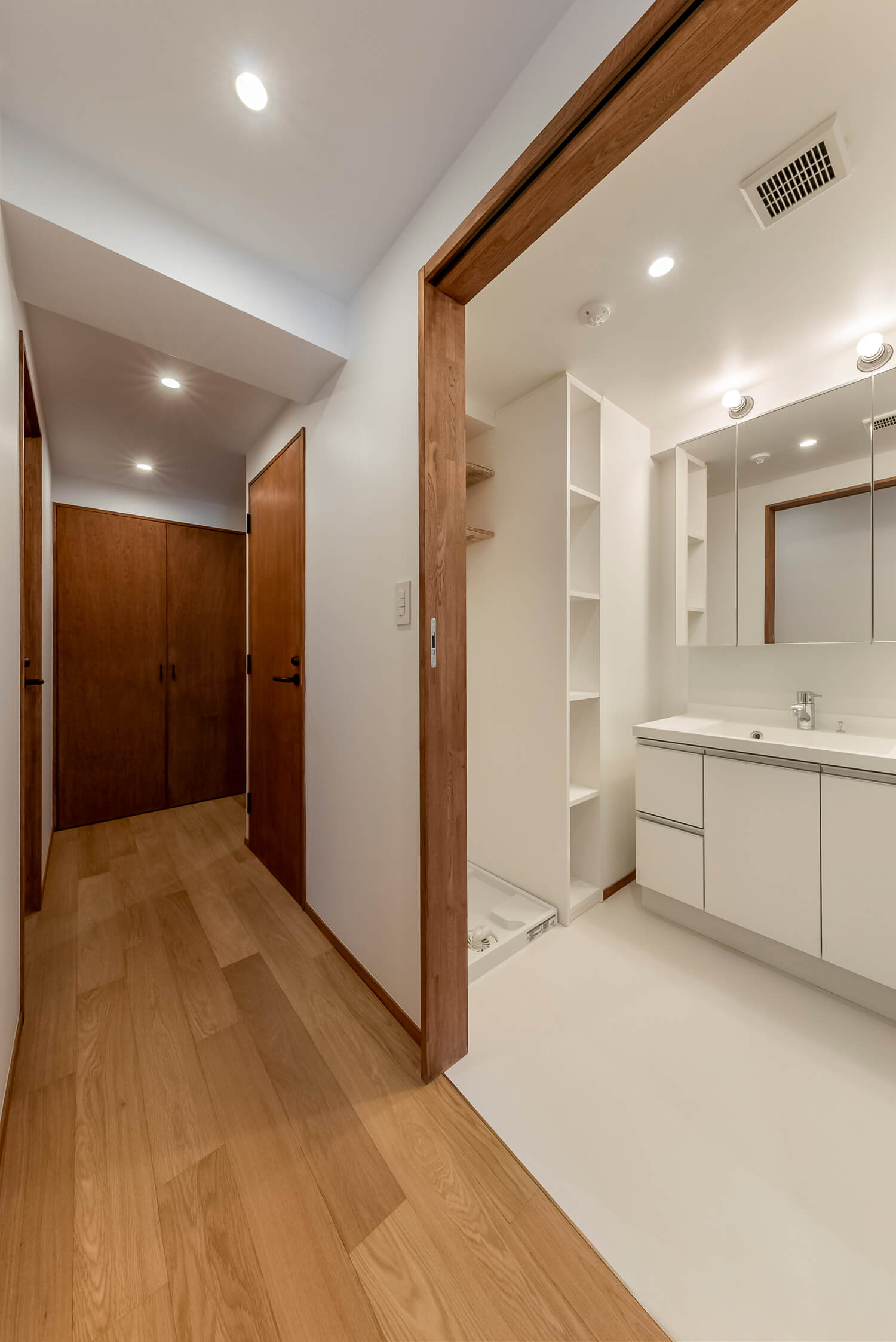
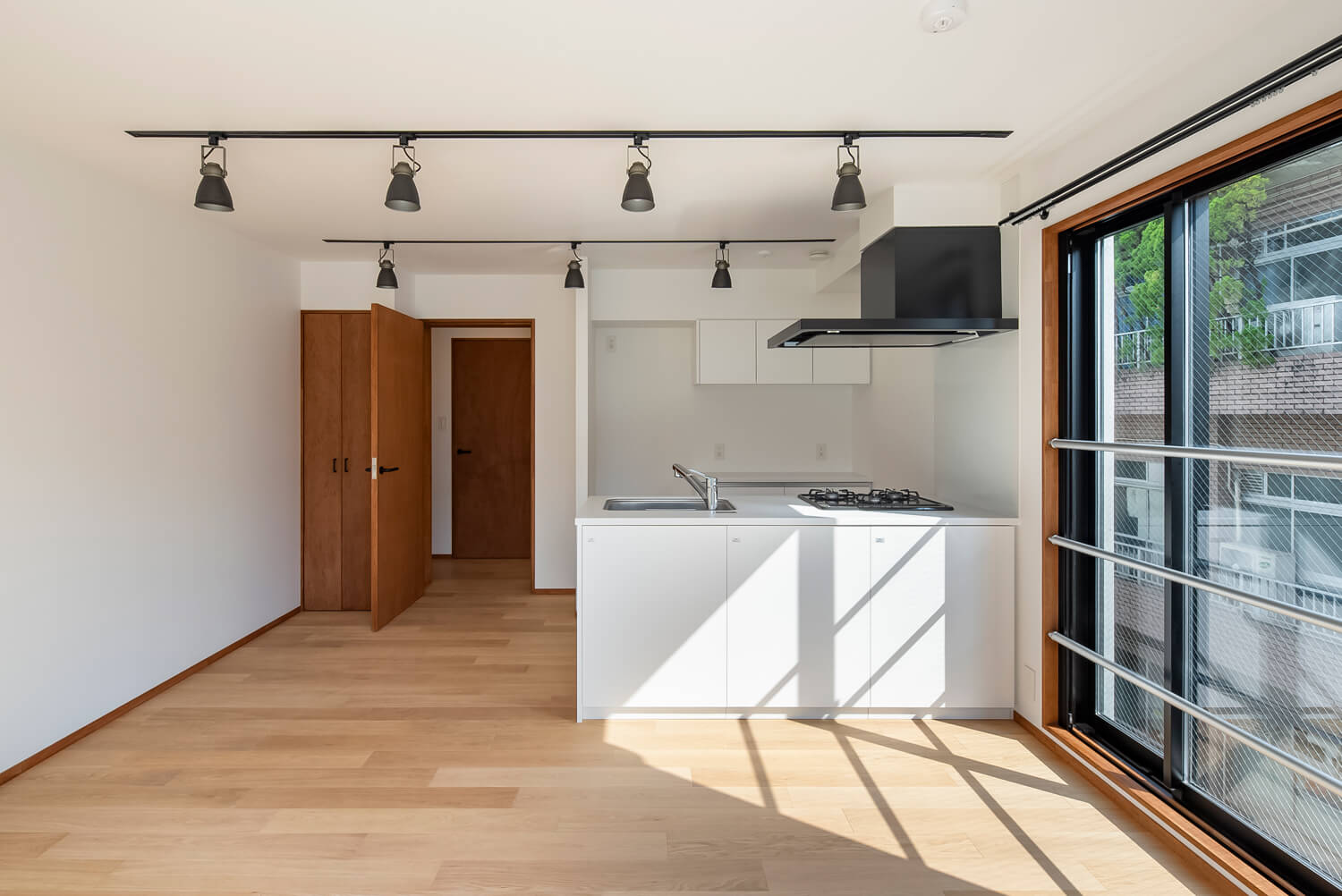
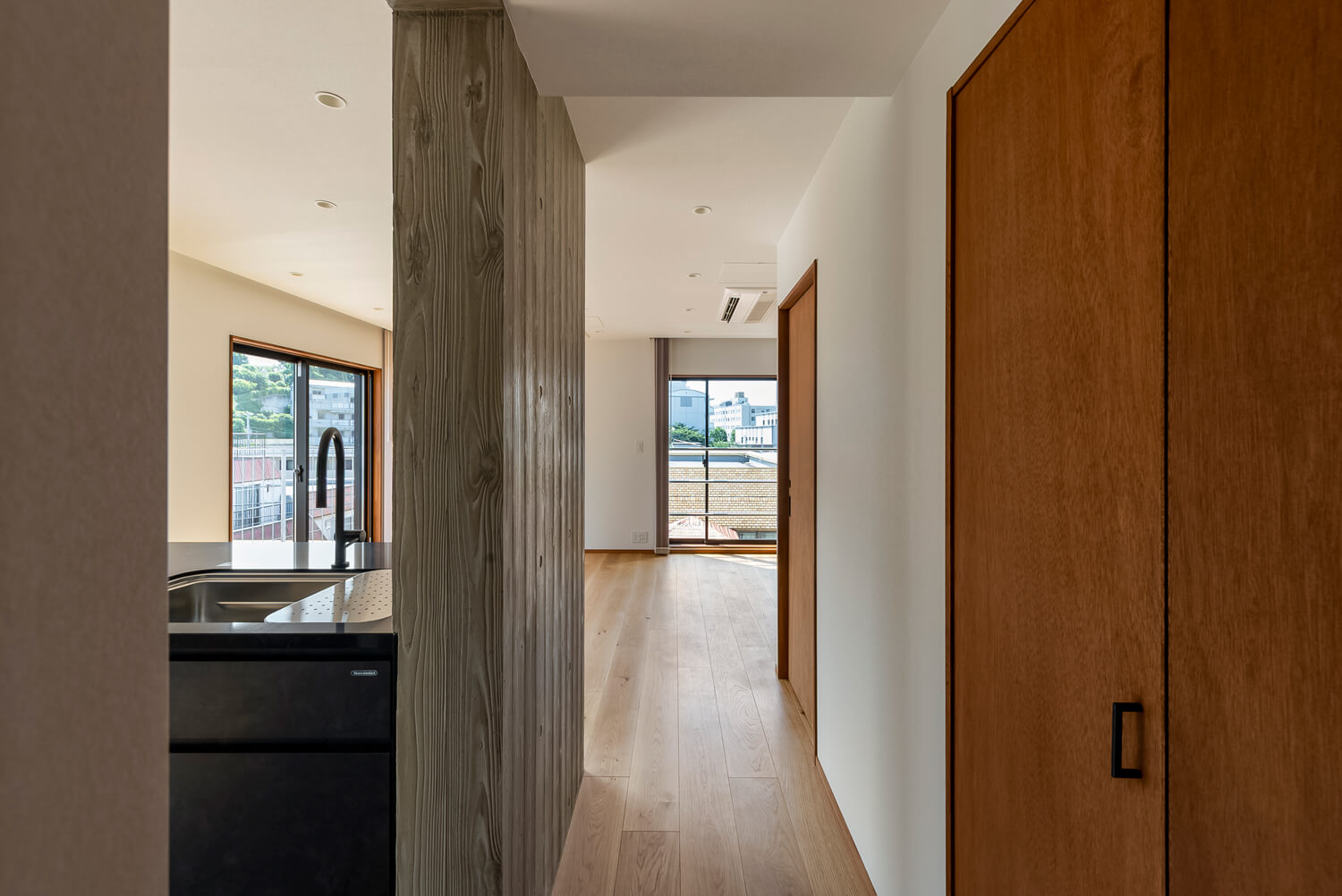
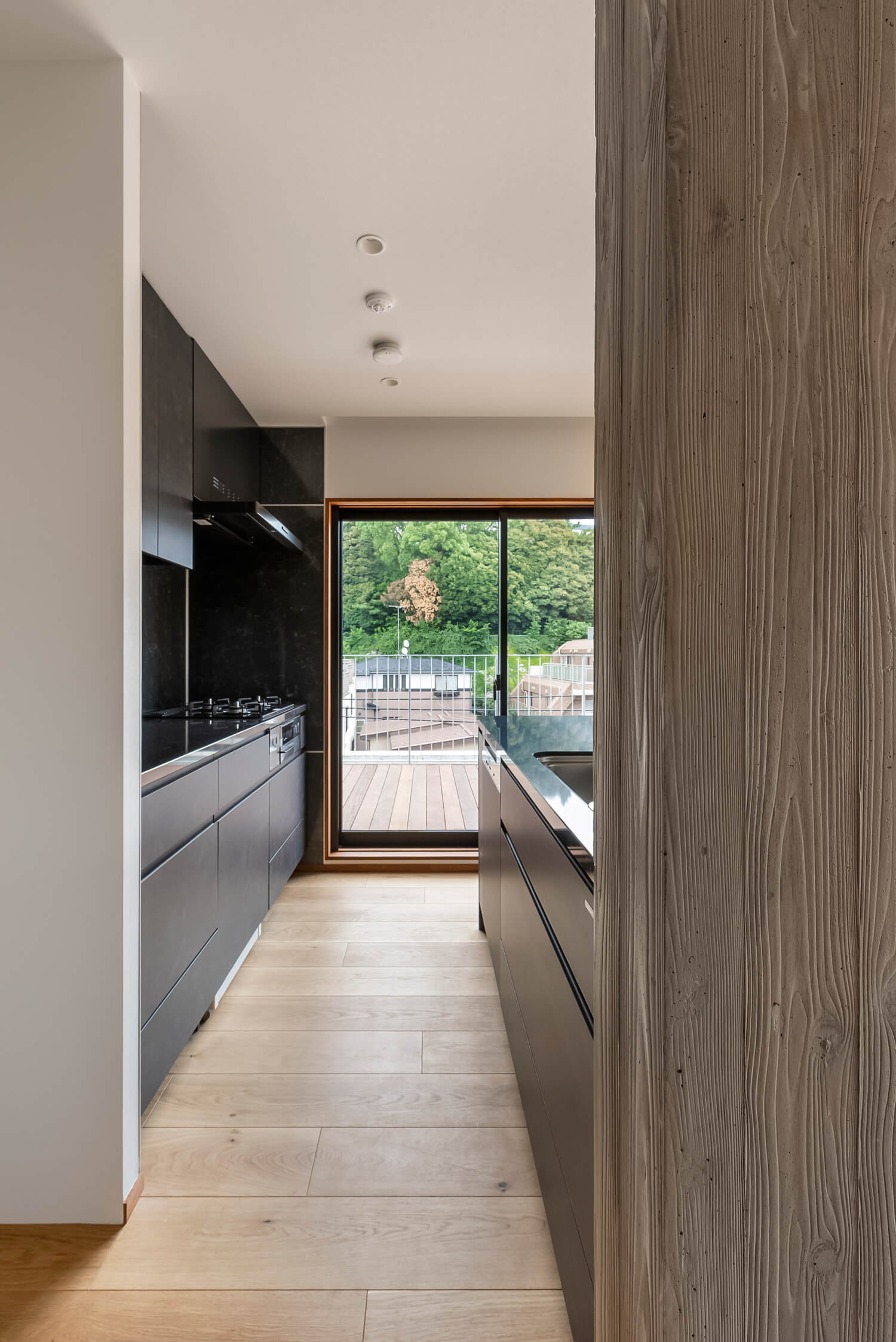
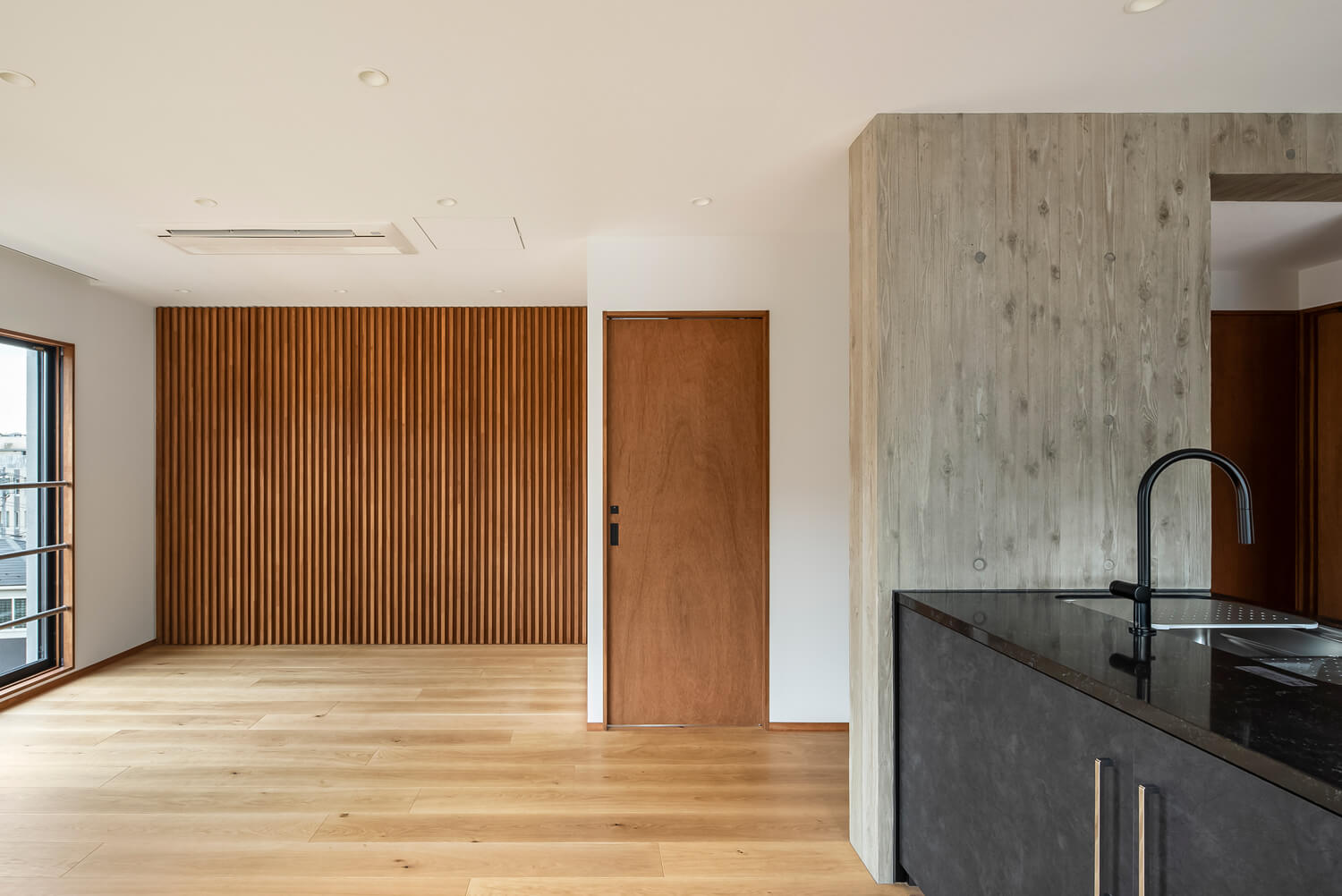
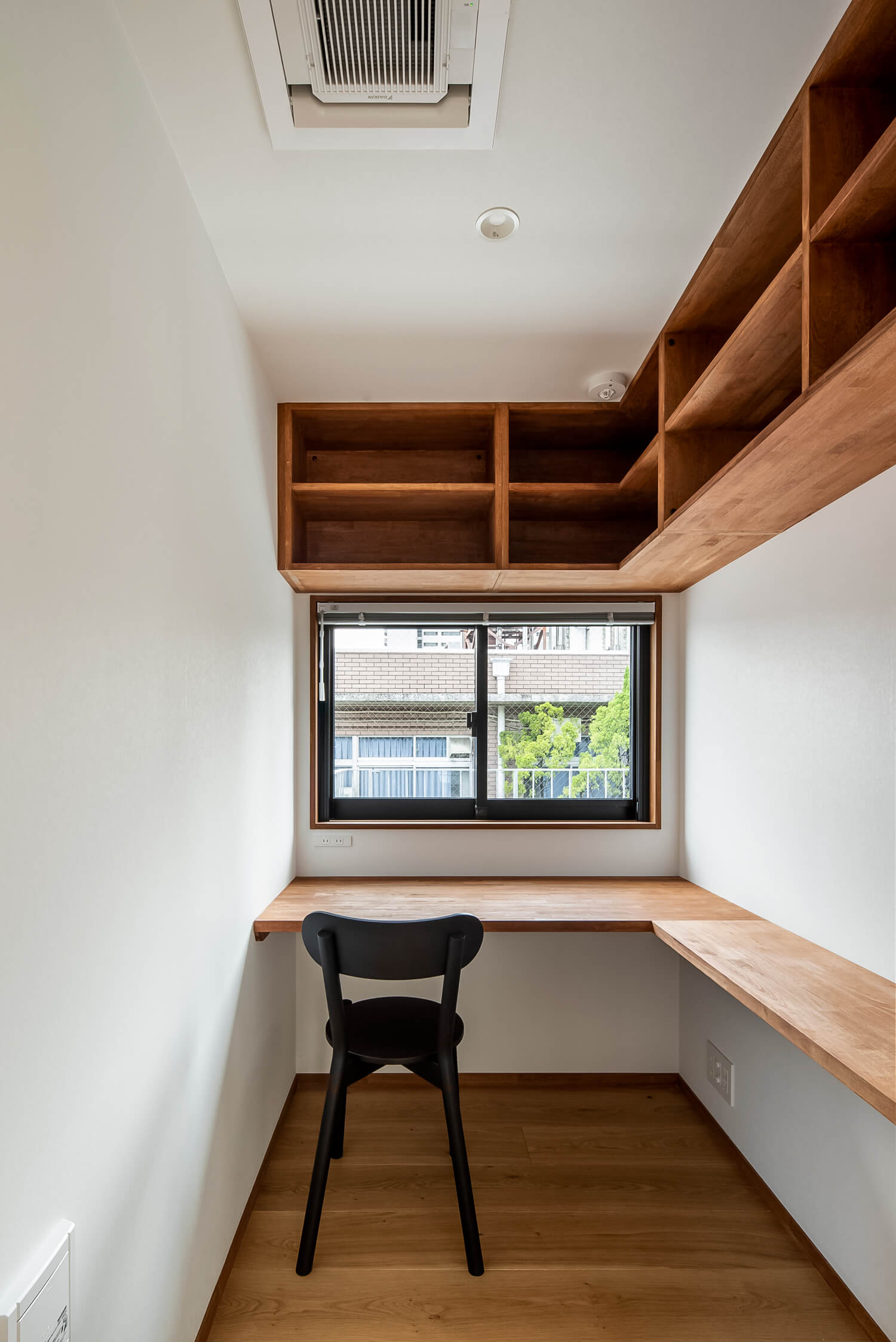
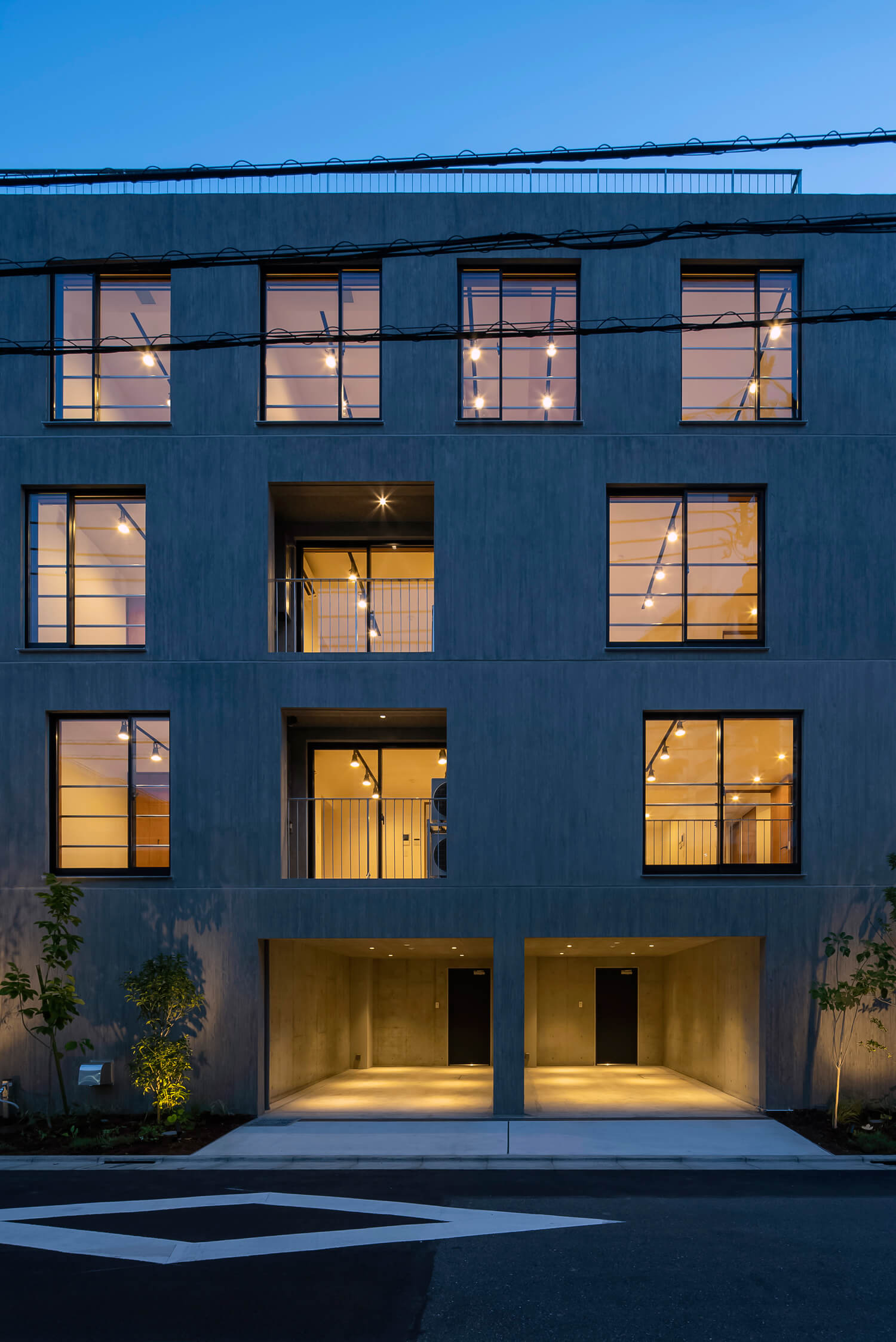
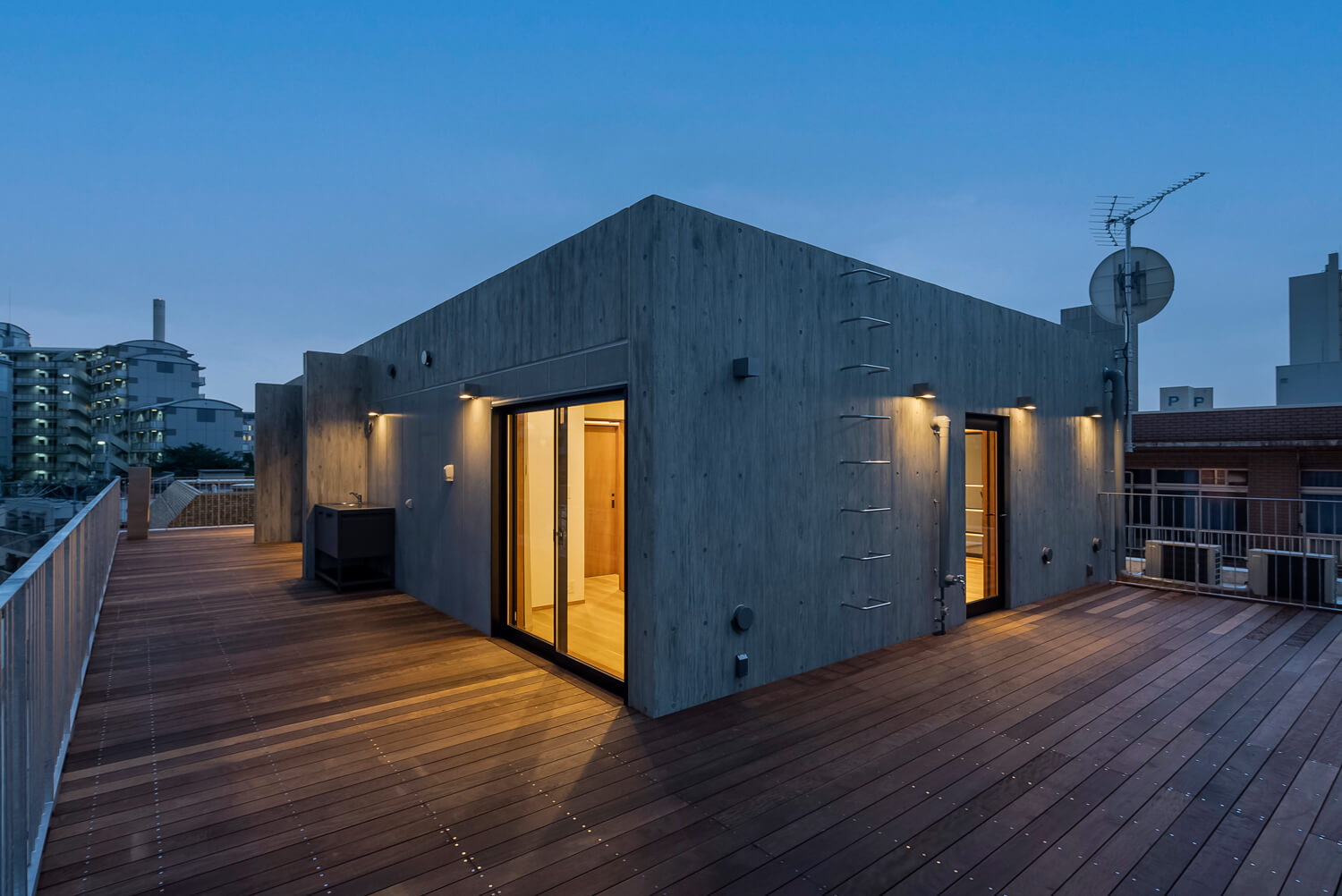
Reflecting changes in contemporary lifestyles, the units are organised around private rooms to ensure an appropriate degree of separation between cohabitants. The structural span of the wall-type reinforced concrete system corresponds to the width of these rooms. Internal circulation is compact yet avoids a sense of enclosure, with carefully arranged storage and openings allowing for subtle transitions between spaces. Mechanical equipment is concealed from the main façade; most outdoor units are placed on the roof, avoiding balconies wherever possible in order to minimise the expression of everyday life on the exterior. Laundry is designed to be dried indoors, aligning with the lifestyle of single occupants and couples. Larger units incorporate storage rooms or dens that can accommodate a range of activities such as working from home, hobbies, or rest. Setback upper floors include roof balconies paired with larger family-oriented units. On the ground floor, units facing the street can also function as SOHO or small-scale commercial spaces, allowing flexible interpretations by occupants and encouraging a natural engagement with the city.
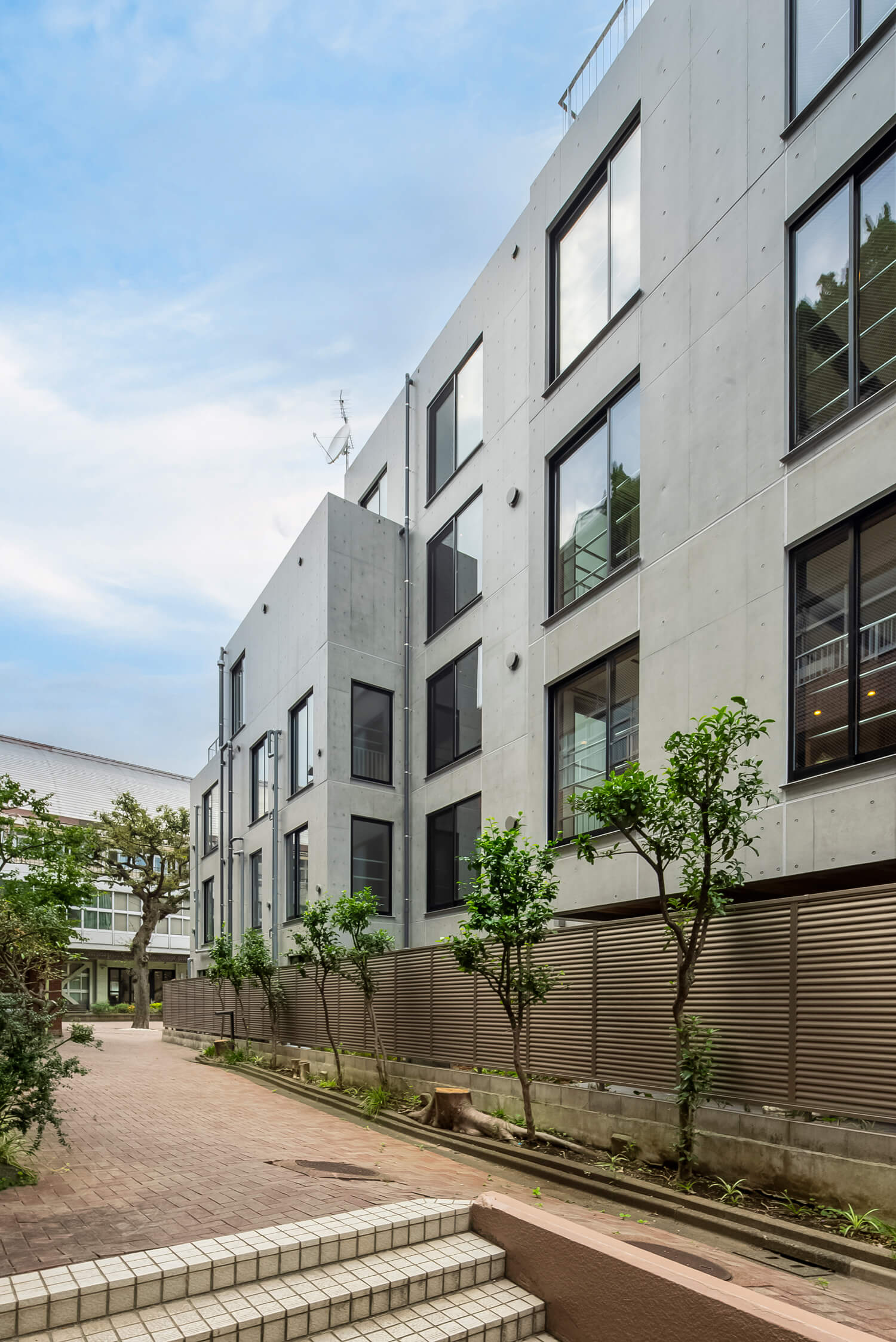
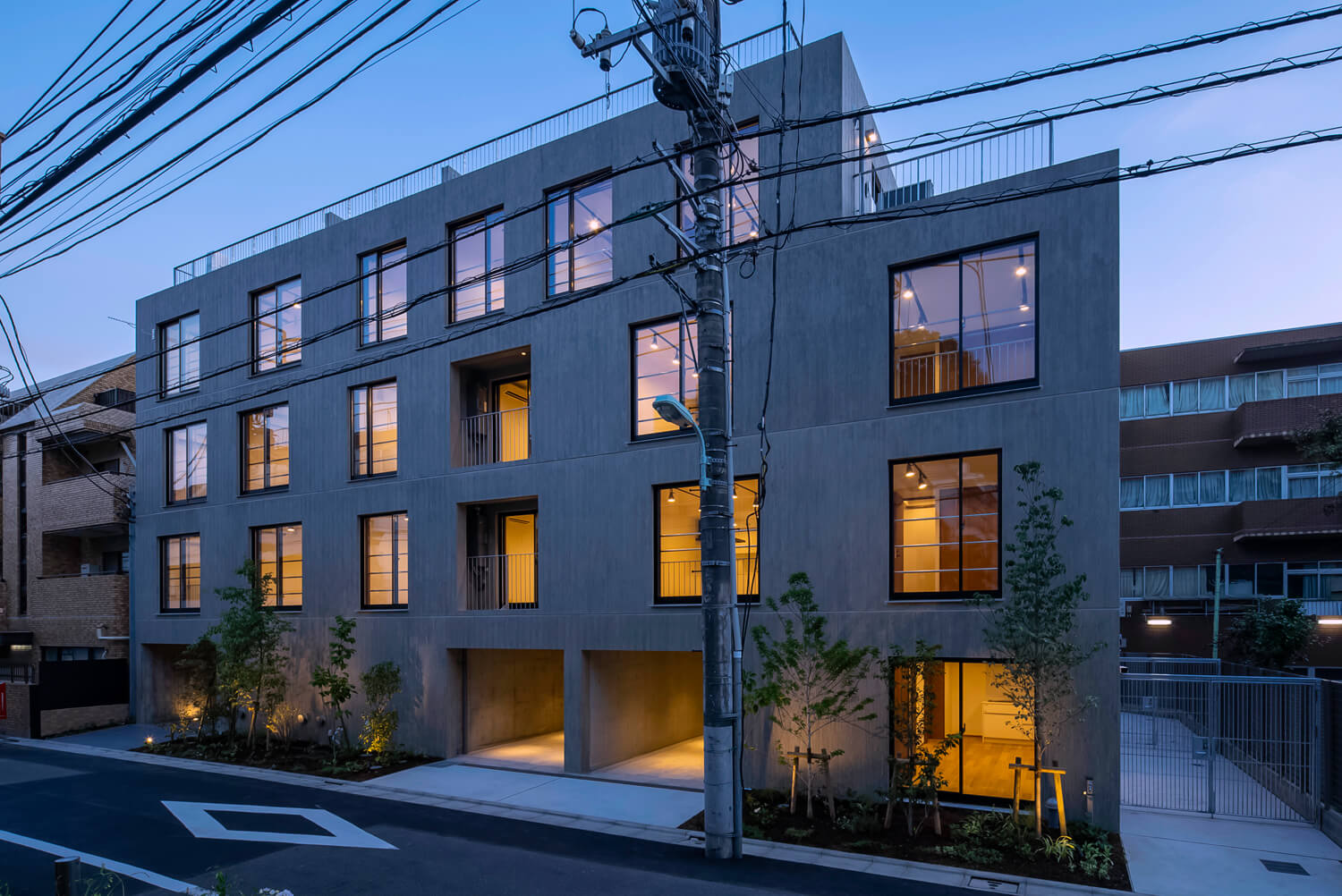
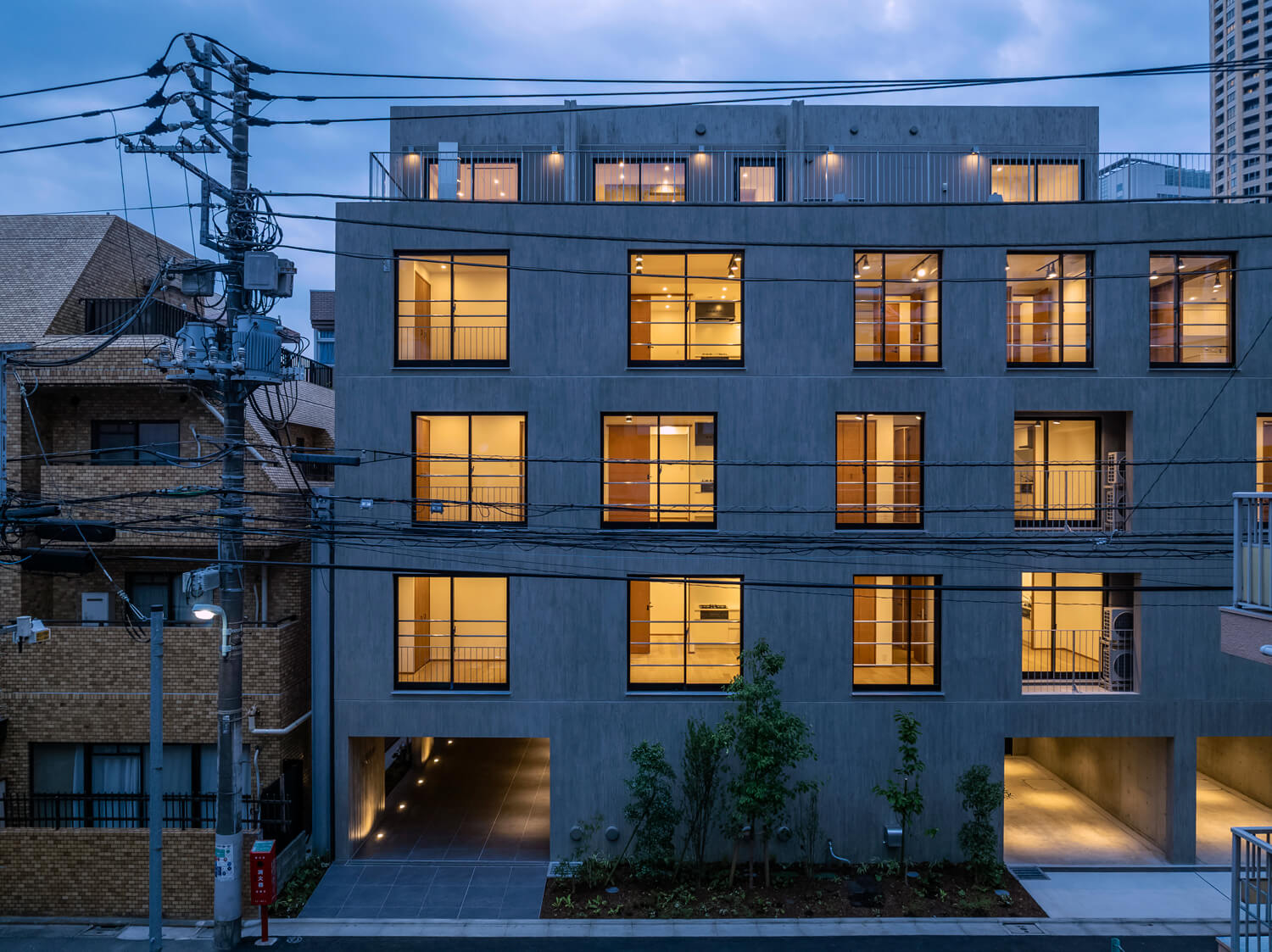
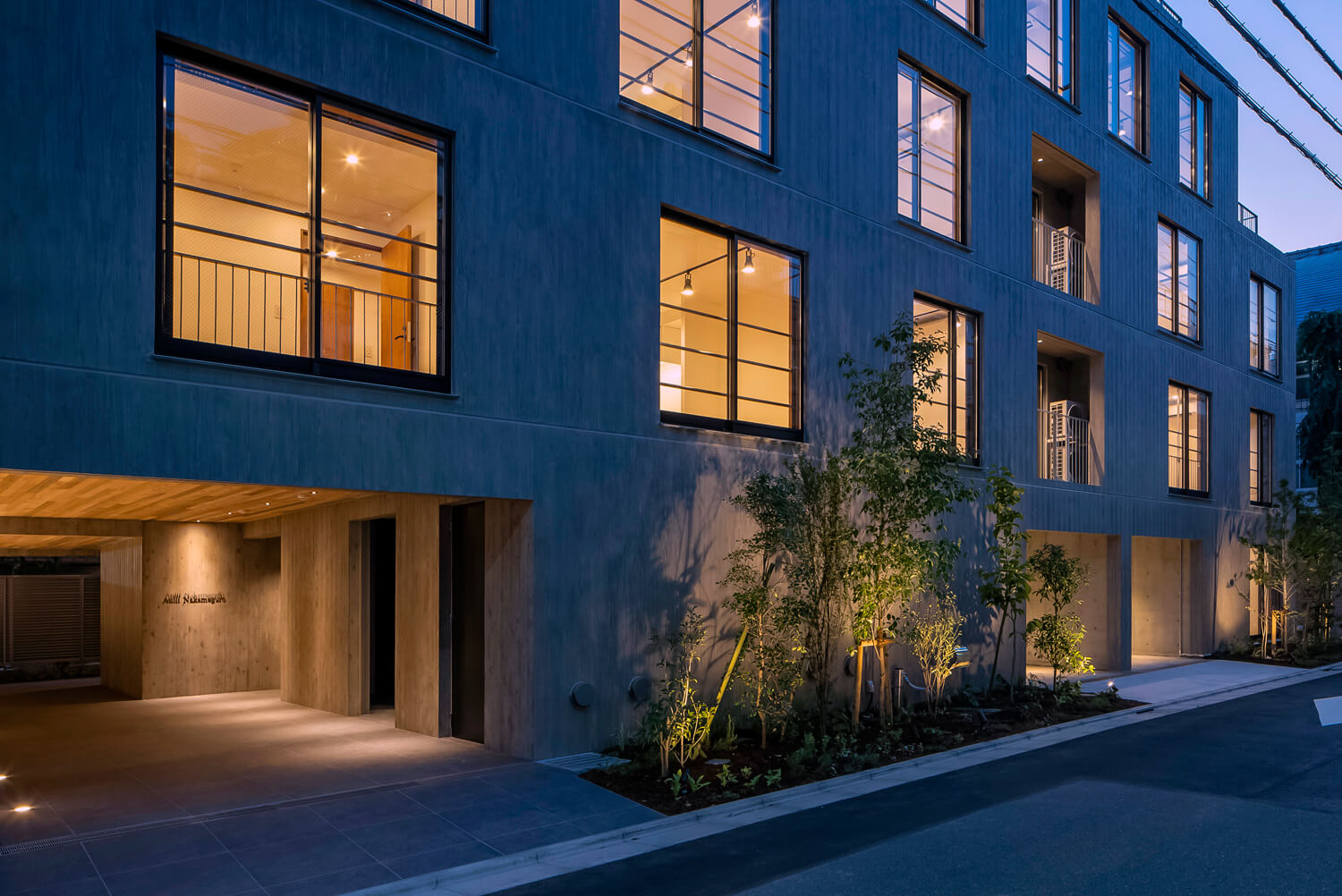
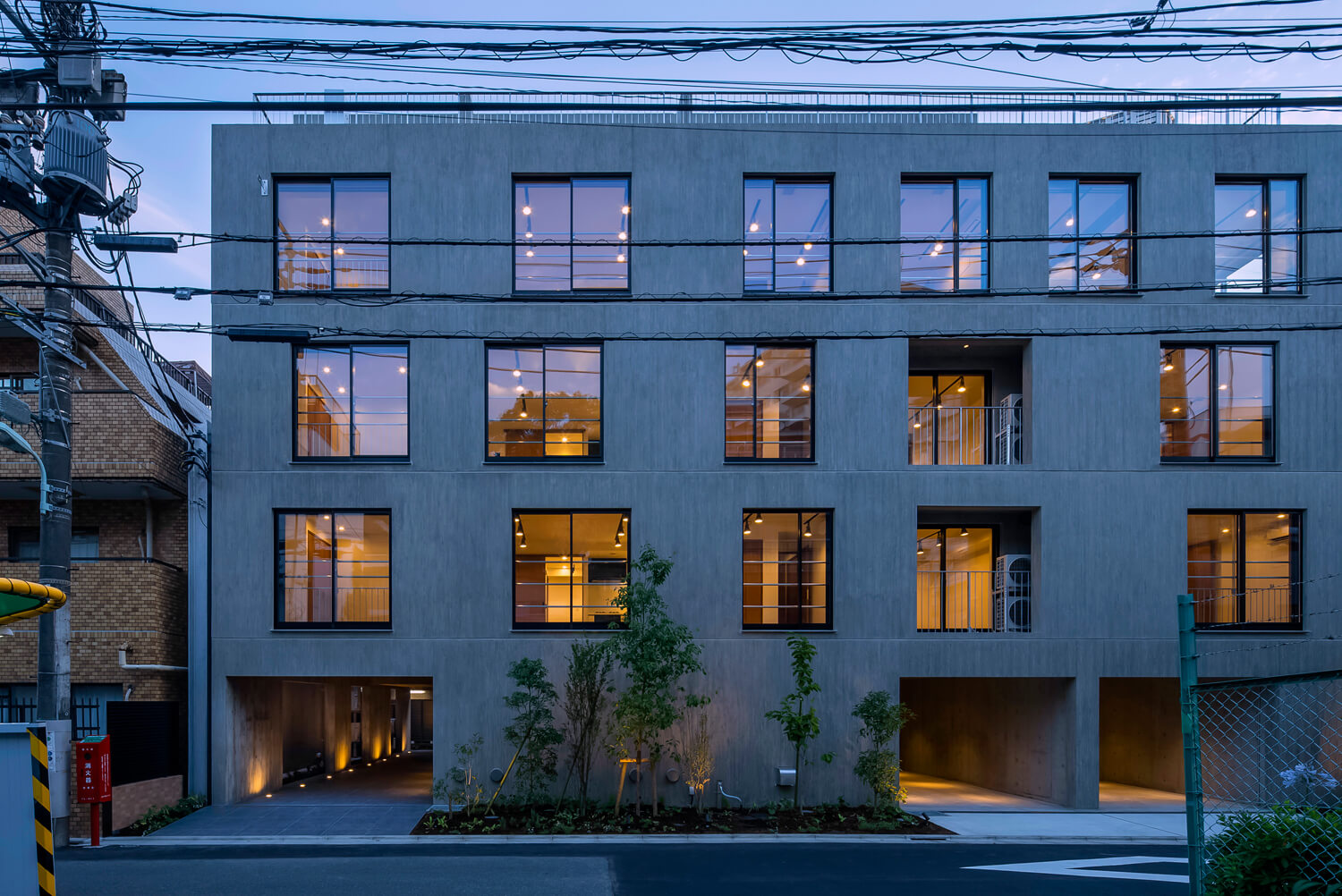
Each unit achieves a high level of openness through wide frontage openings. On the façade, window dimensions are standardised and arranged in a uniform manner so that the boundaries between individual units are not legible from the outside. Although individual windows are visible, the extent of each dwelling remains ambiguous, allowing a certain degree of privacy to be maintained at the scale of the household. Corner units incorporate windows on two sides of the external walls, bringing light and air deep into the interior. The exterior is finished in board-formed exposed concrete, whose subtle texture and soft shadows respond to the scale of the surrounding residential neighbourhood. A planted strip along the street edge creates a gentle buffer between the building and the public realm, mediating the relationship with the city.
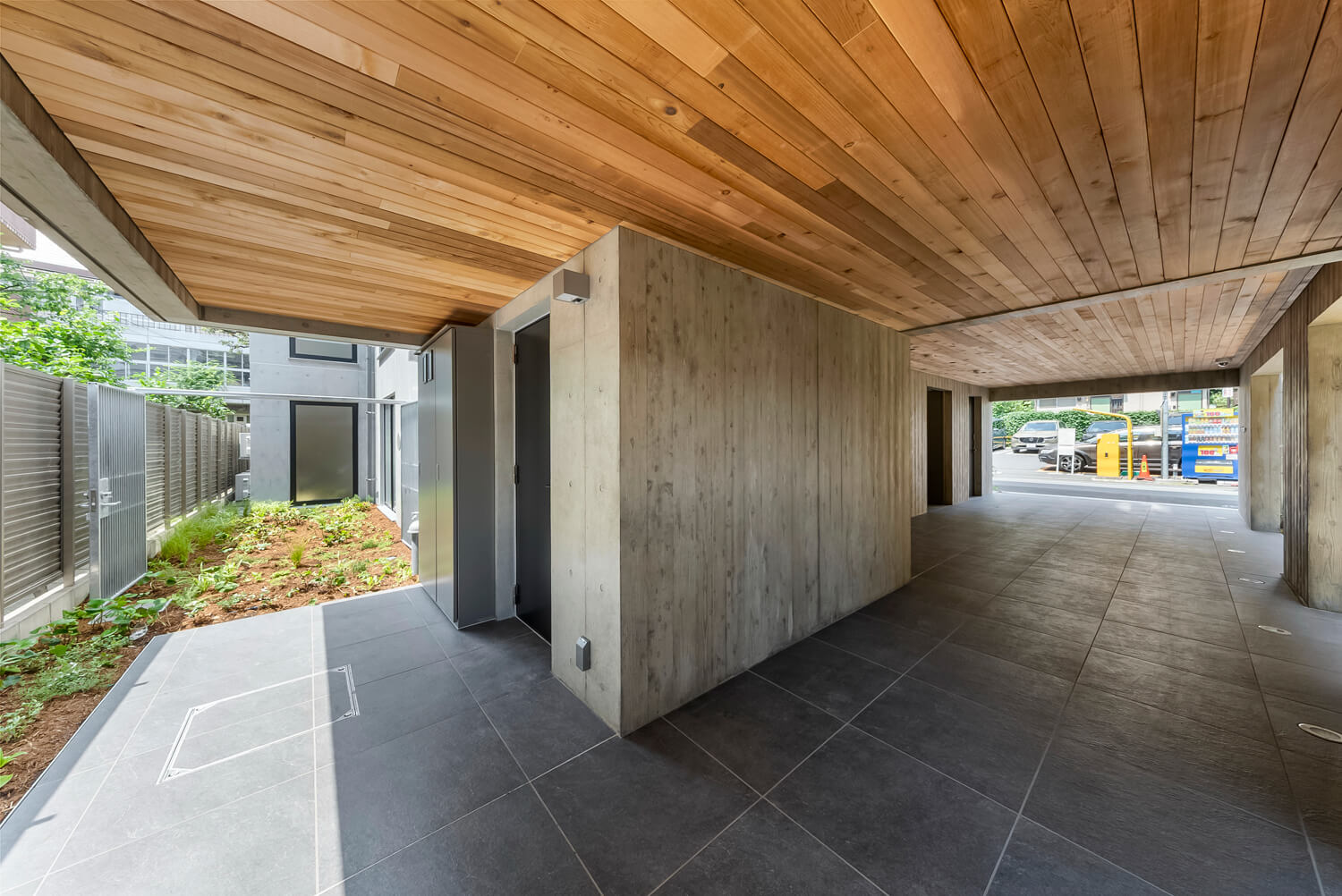
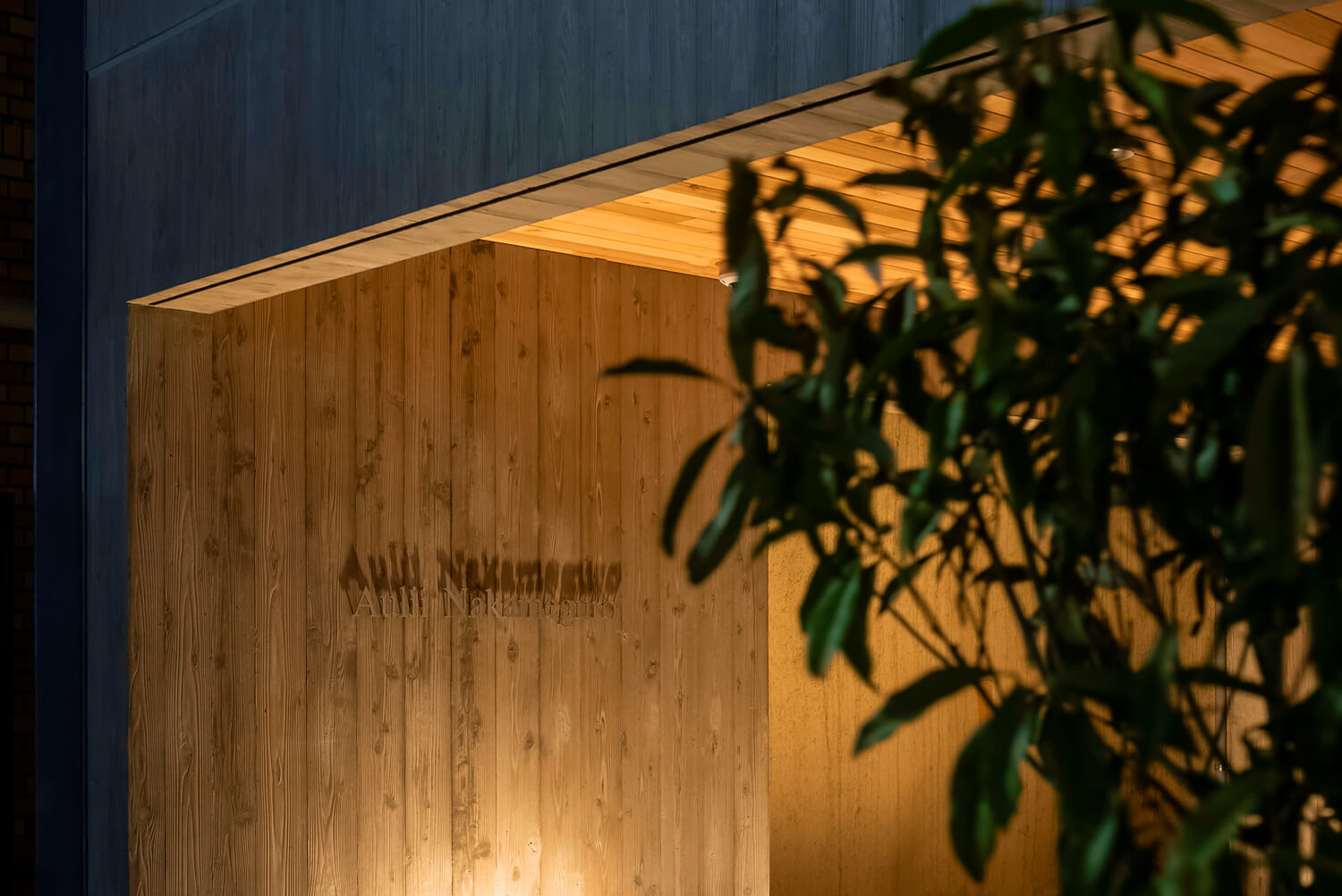
At ground level, a pilotis is introduced as an outdoor passage connecting the open space along the corridor to the street. This passage creates distance between the building and its neighbouring site, functioning as an urban buffer while also forming a small open space within the city. The pilotis also serves as the approach to the main entrance and accommodates shared facilities such as bicycle parking and refuse storage. By allowing permeability for movement and visual continuity, it becomes a space where incidental encounters may occur, fostering natural relationships not only among residents but also with the surrounding community.
- Site:Nakameguro, Meguro-ku, Tokyo
- Use:Residence
- Scale:5 storeys above ground
- Structure:Wall-type reinforced concrete construction, raft foundation
- Site area:384.30㎡
- Building Footprint:267.99㎡
- Total Floor Area:1088.23㎡
- Design:Akira Koyama+KEY OPERATION INC.
- Structural Design:Delta Structural Consultants
- M&E Design:Comodo Consultant
- Construction:Hokushin Construction
- Photo:Tololo studio Mayu Nakamura