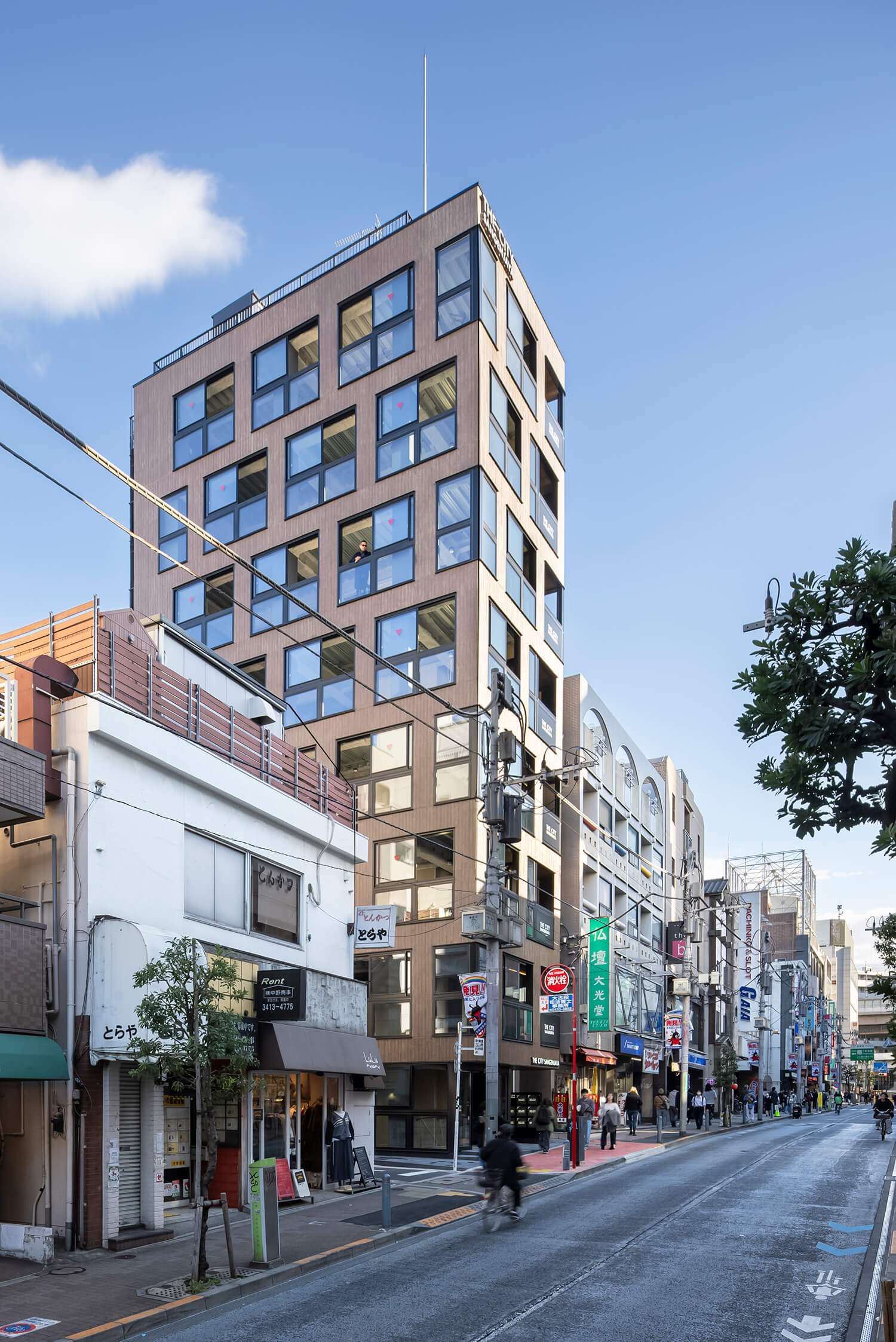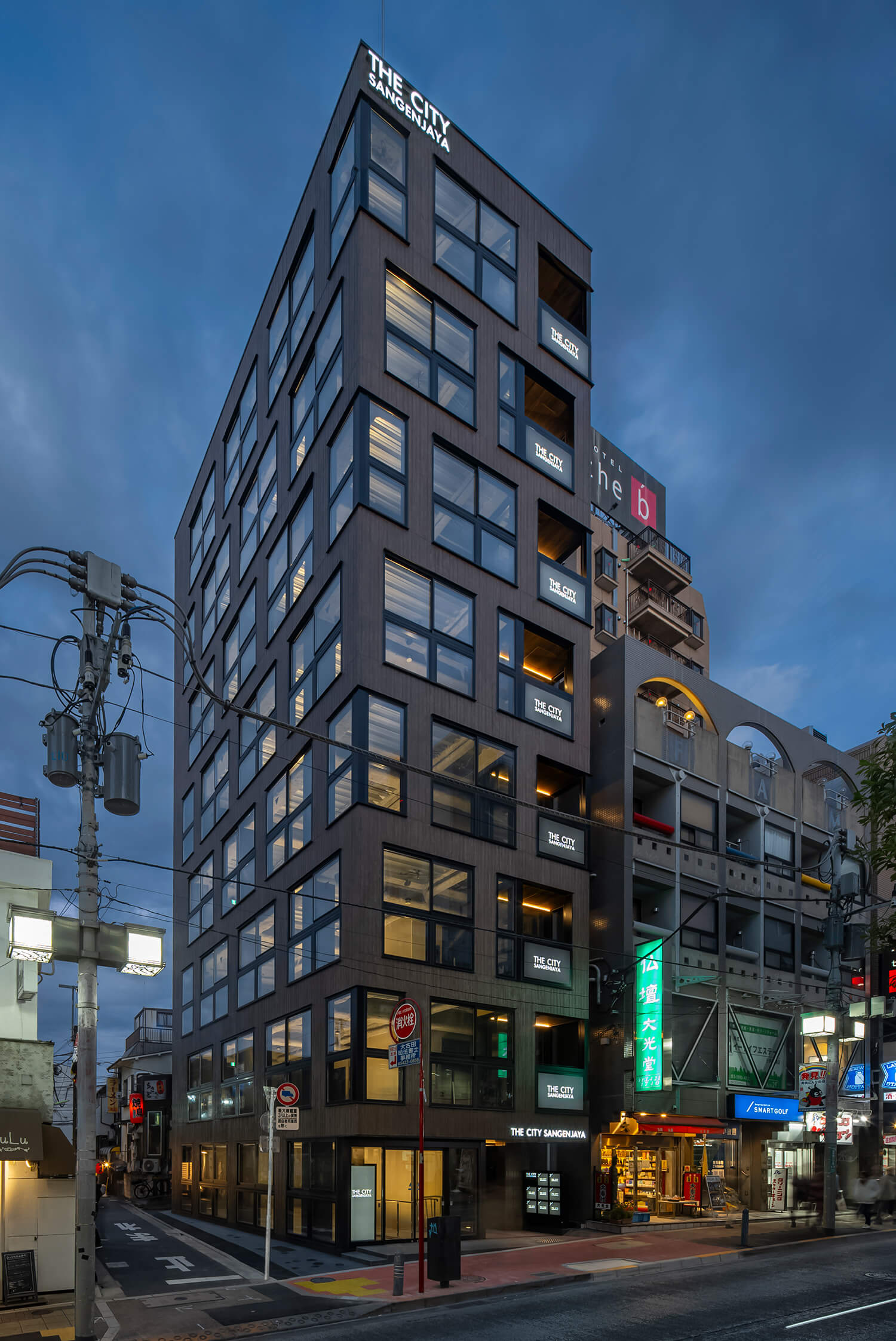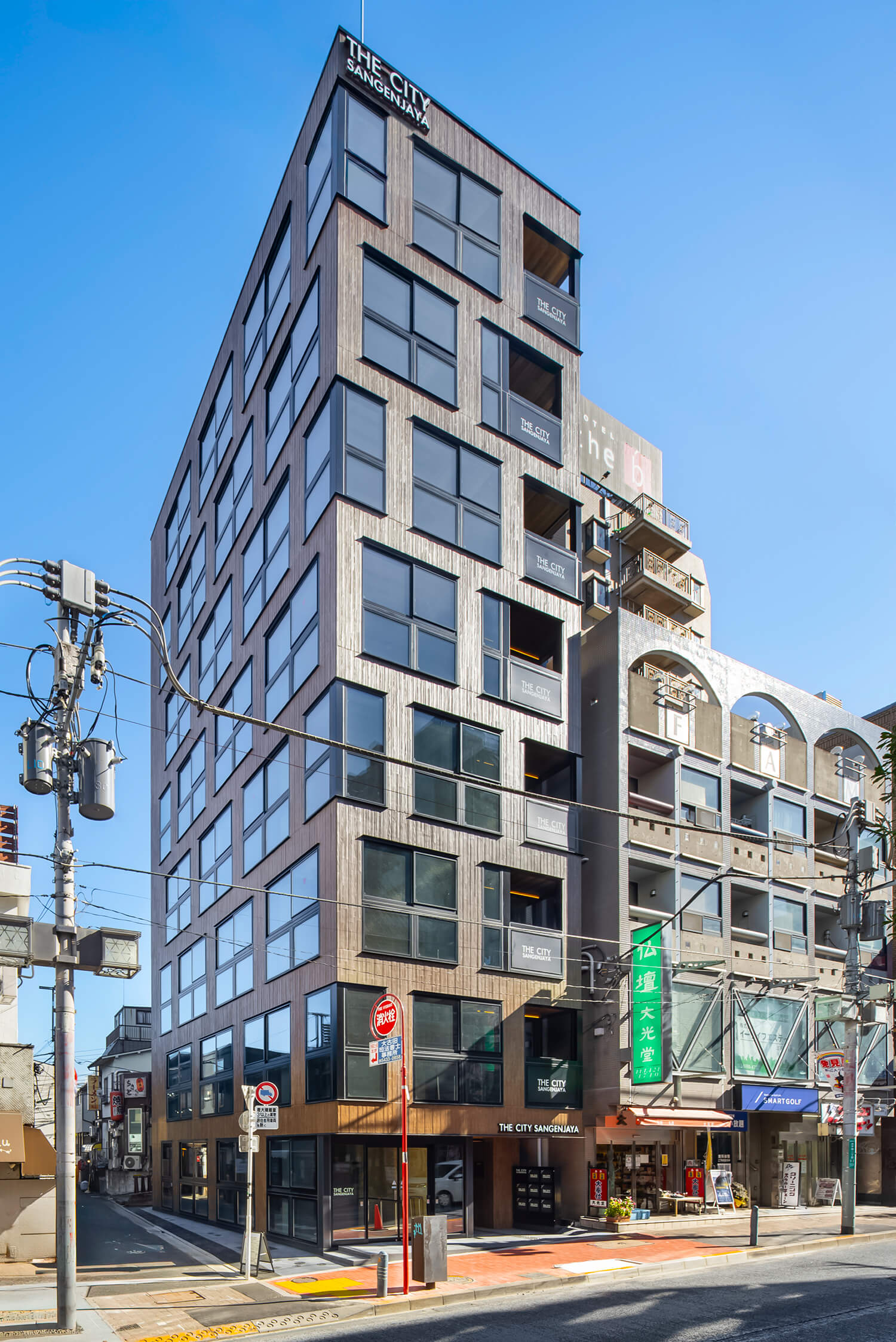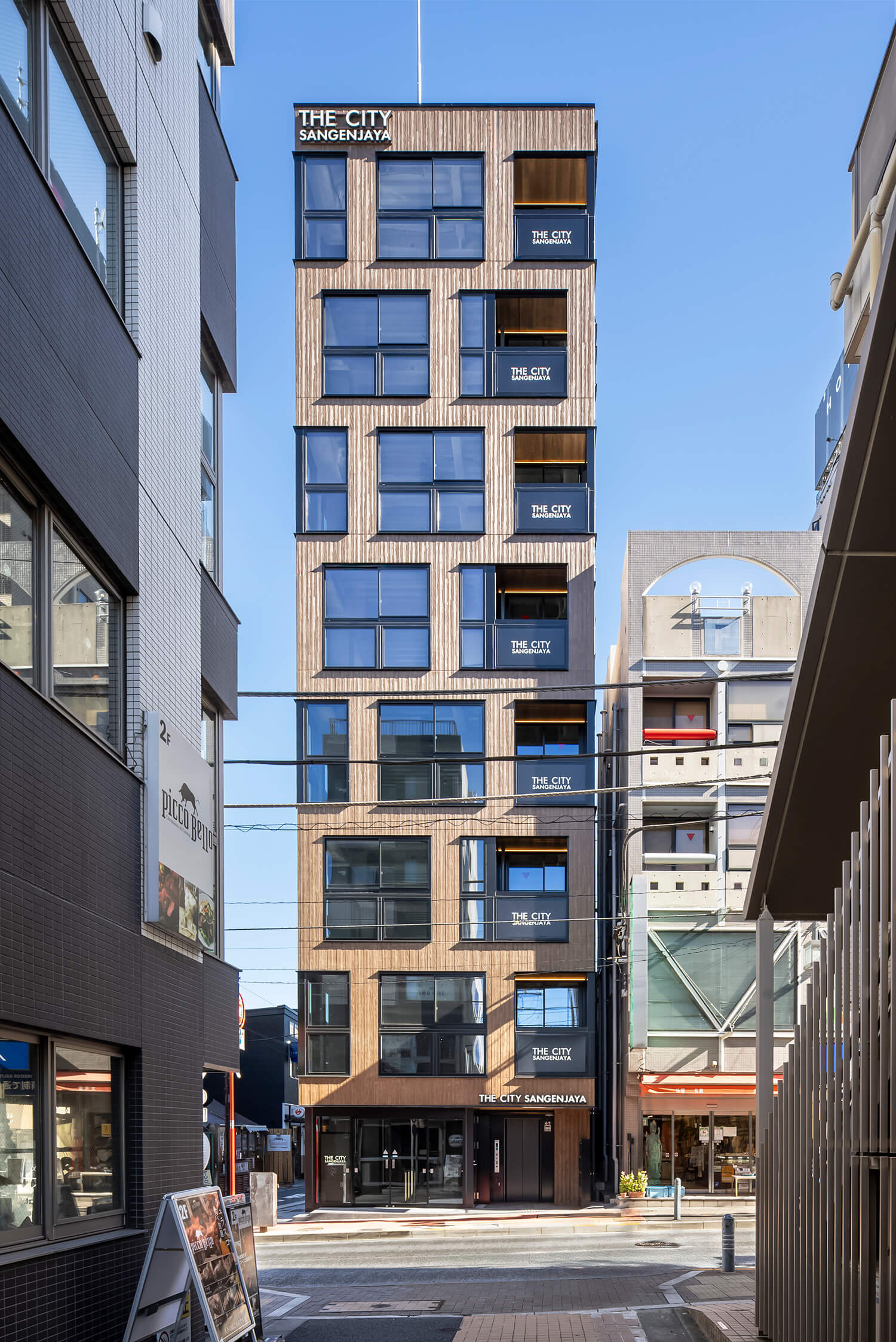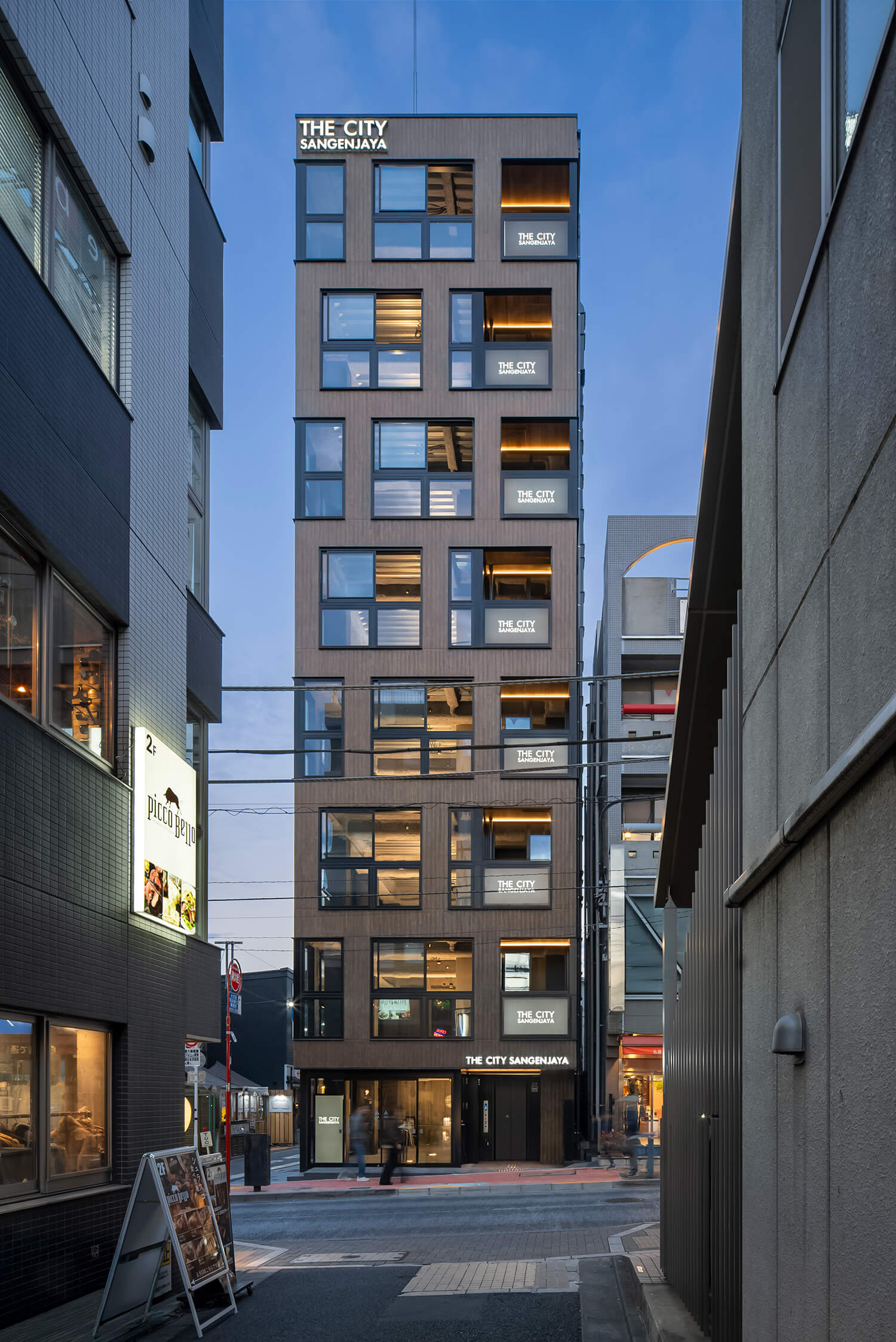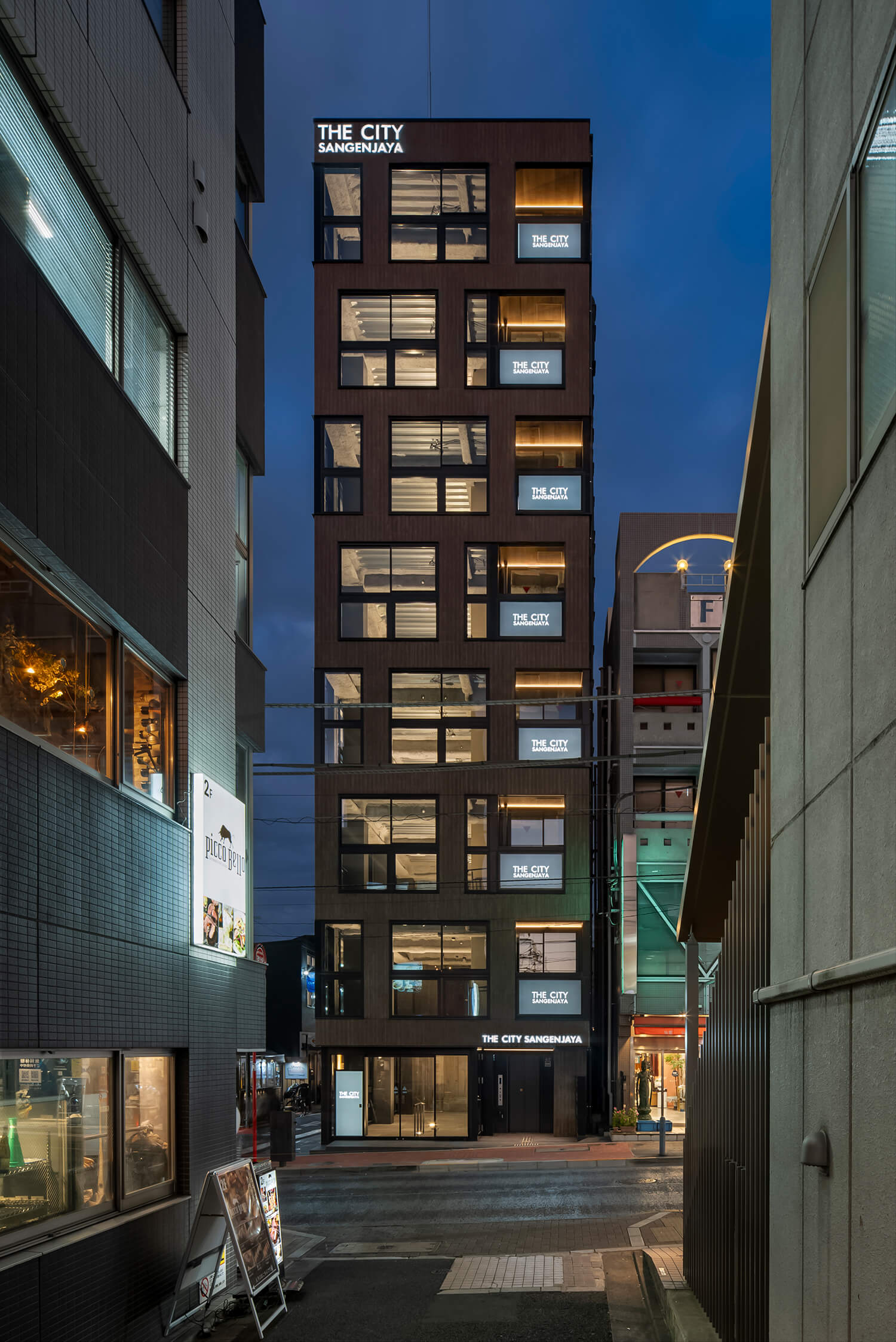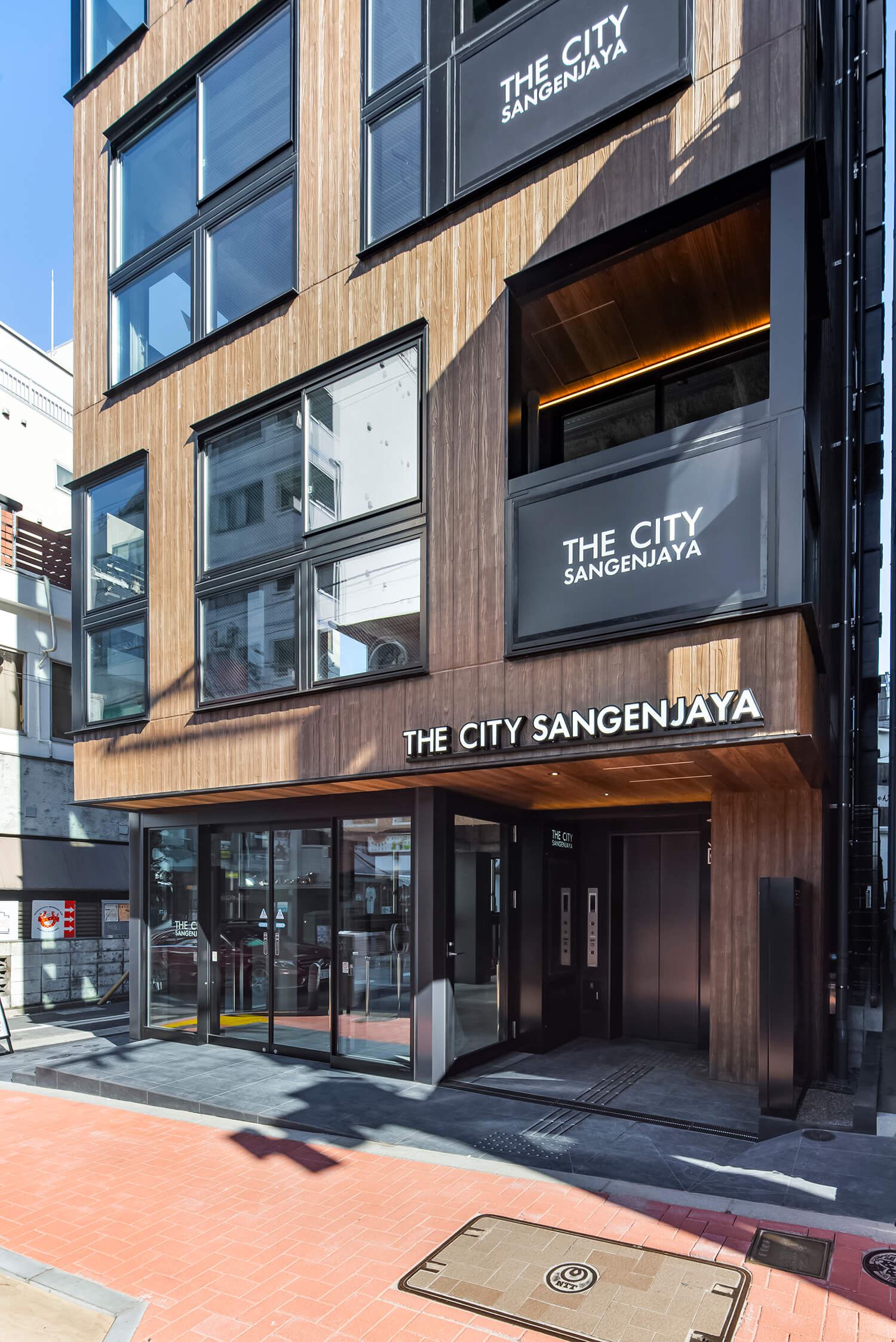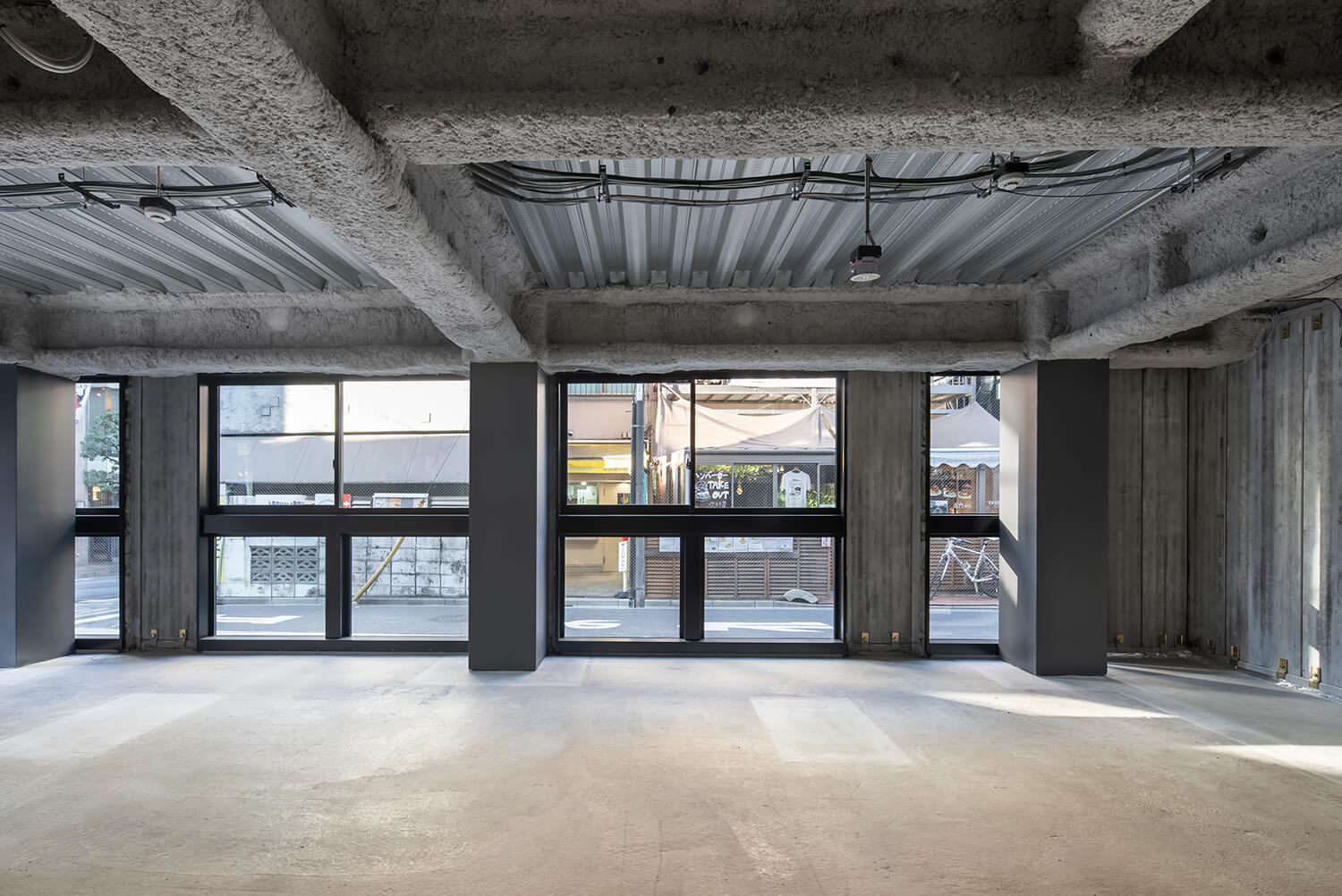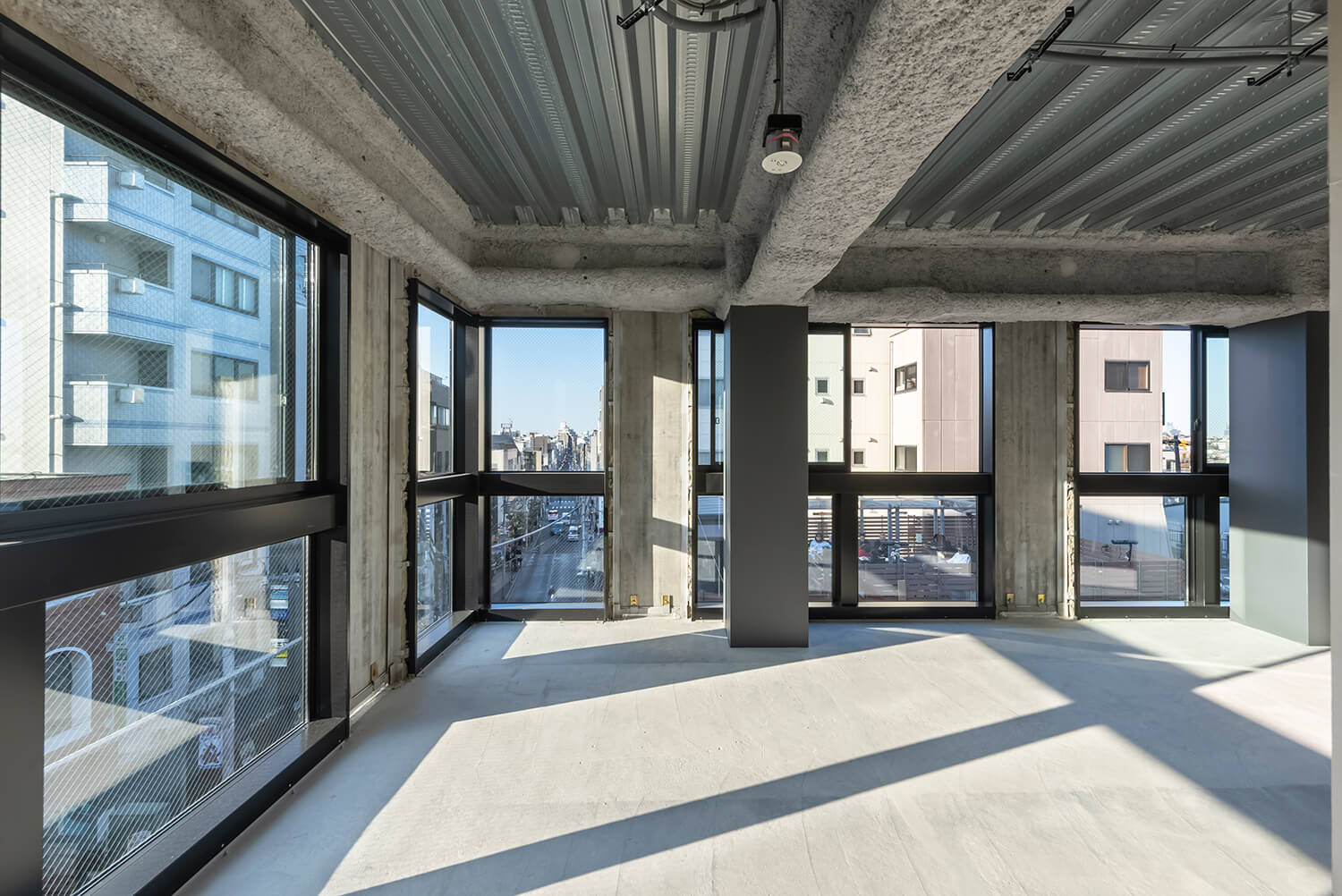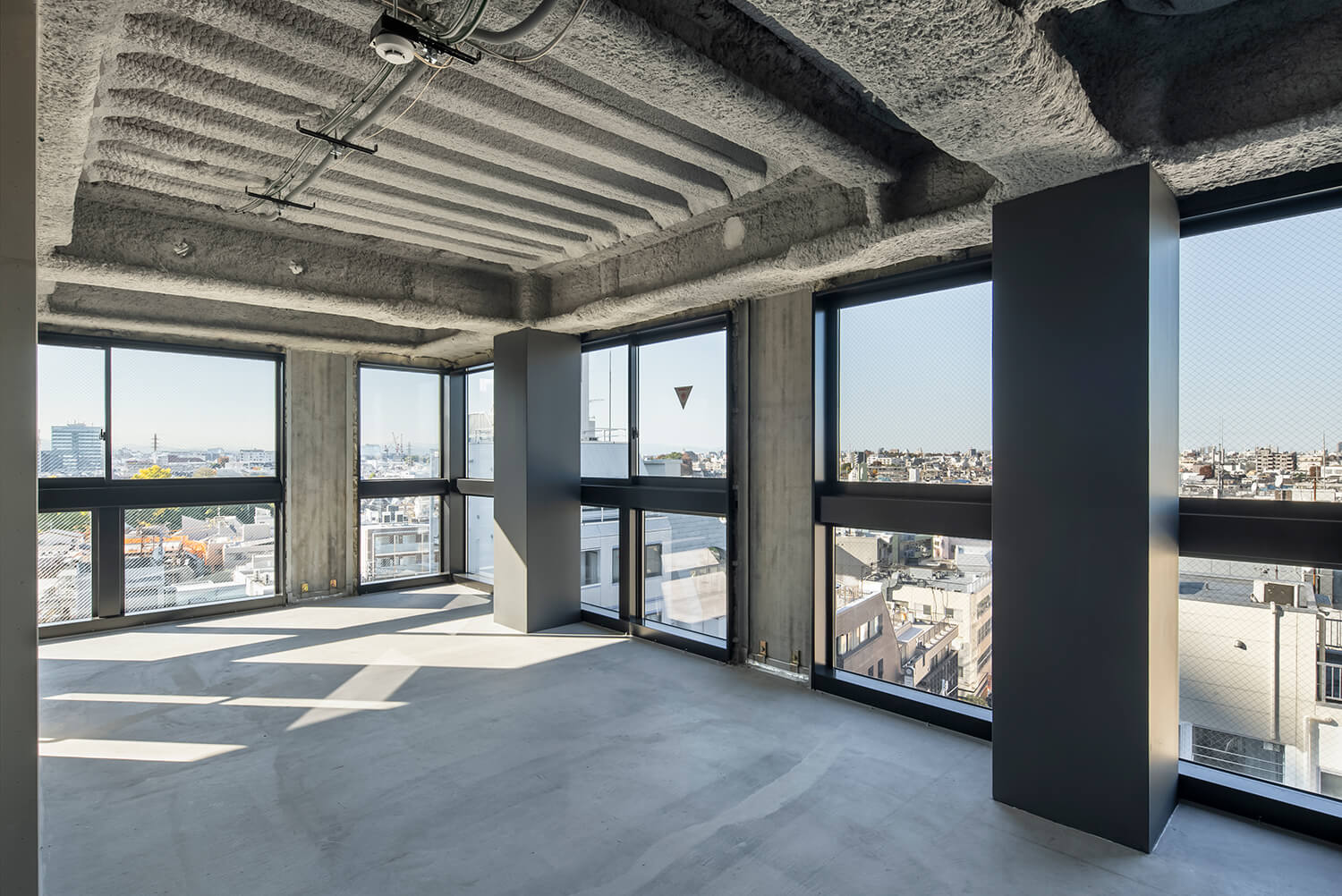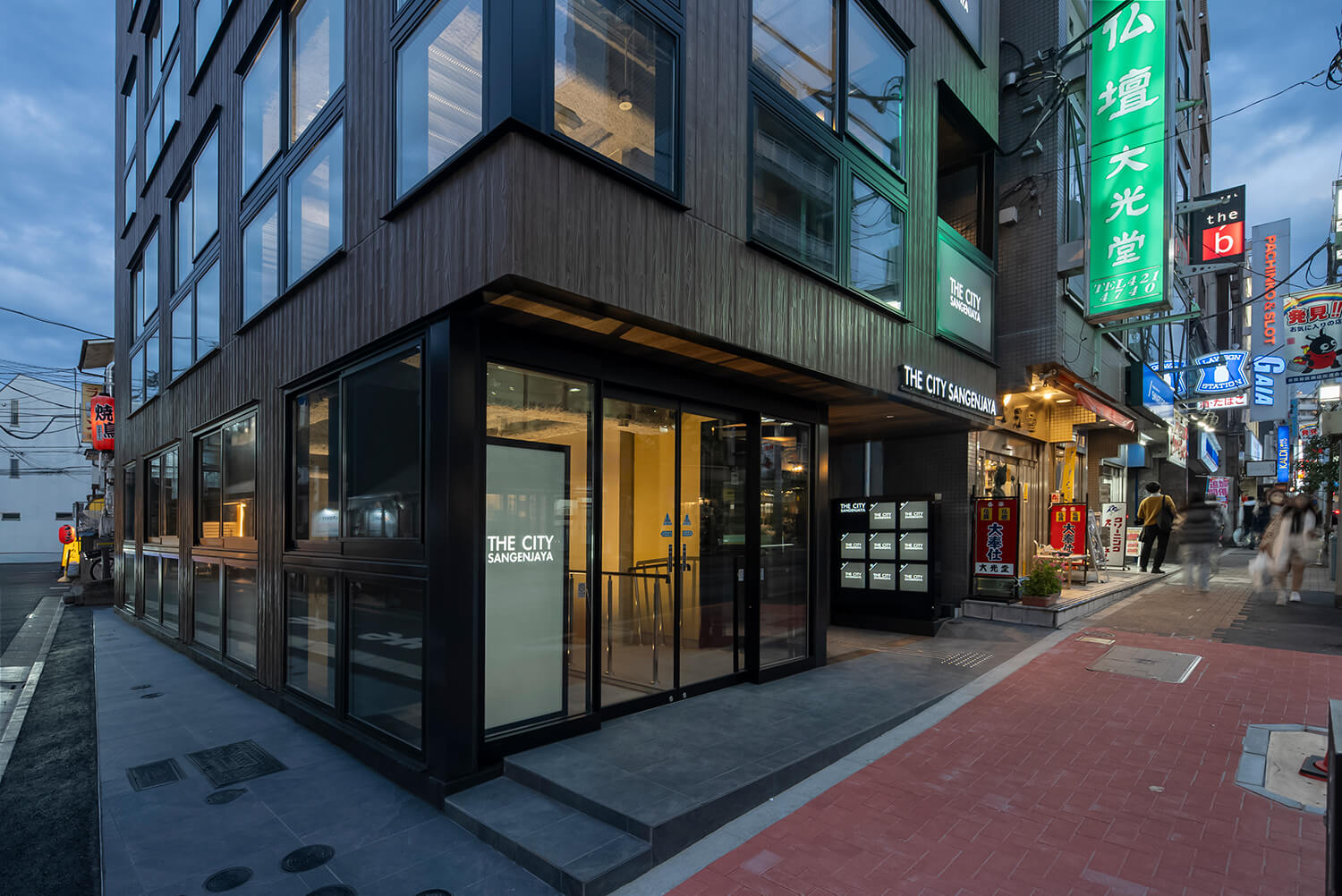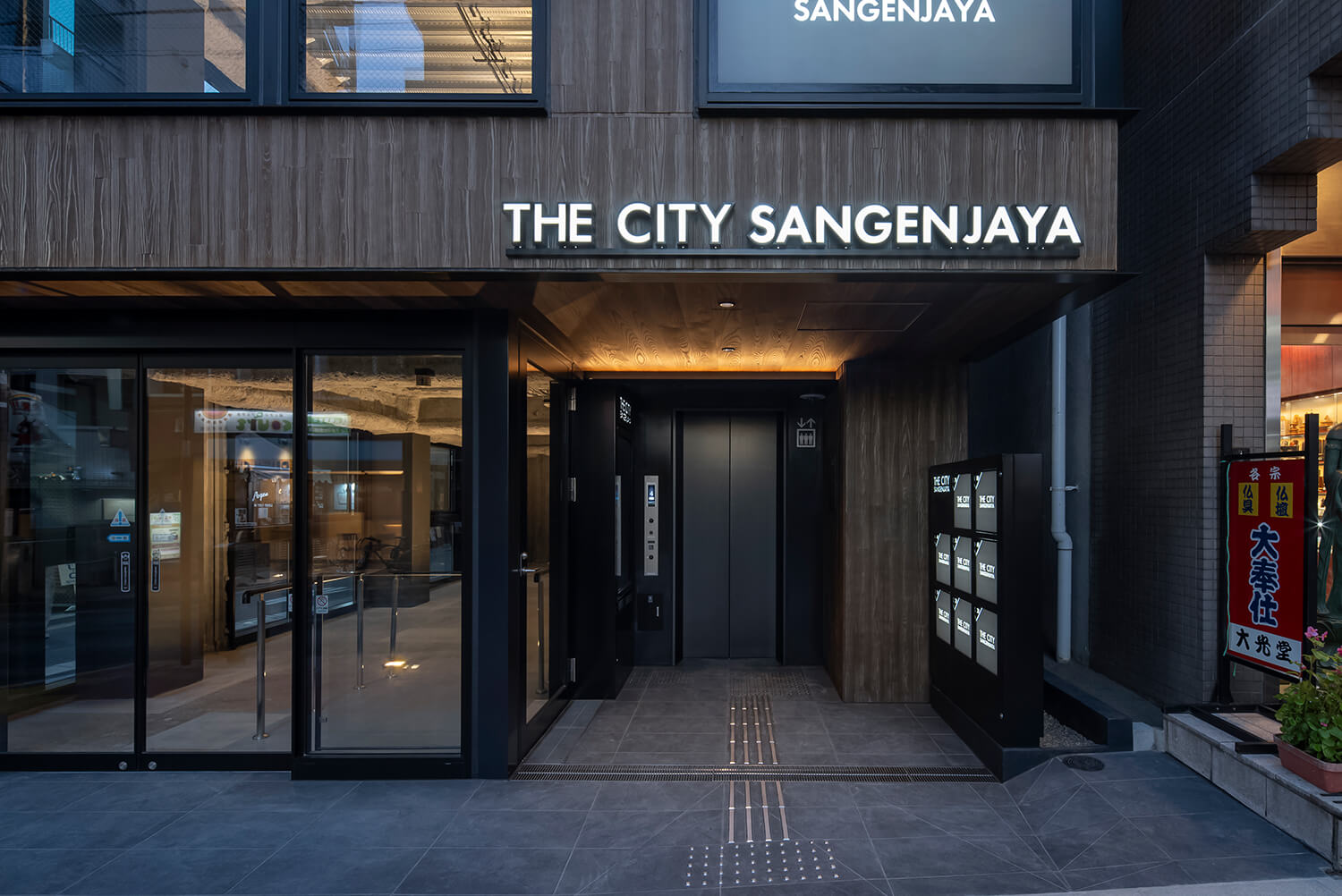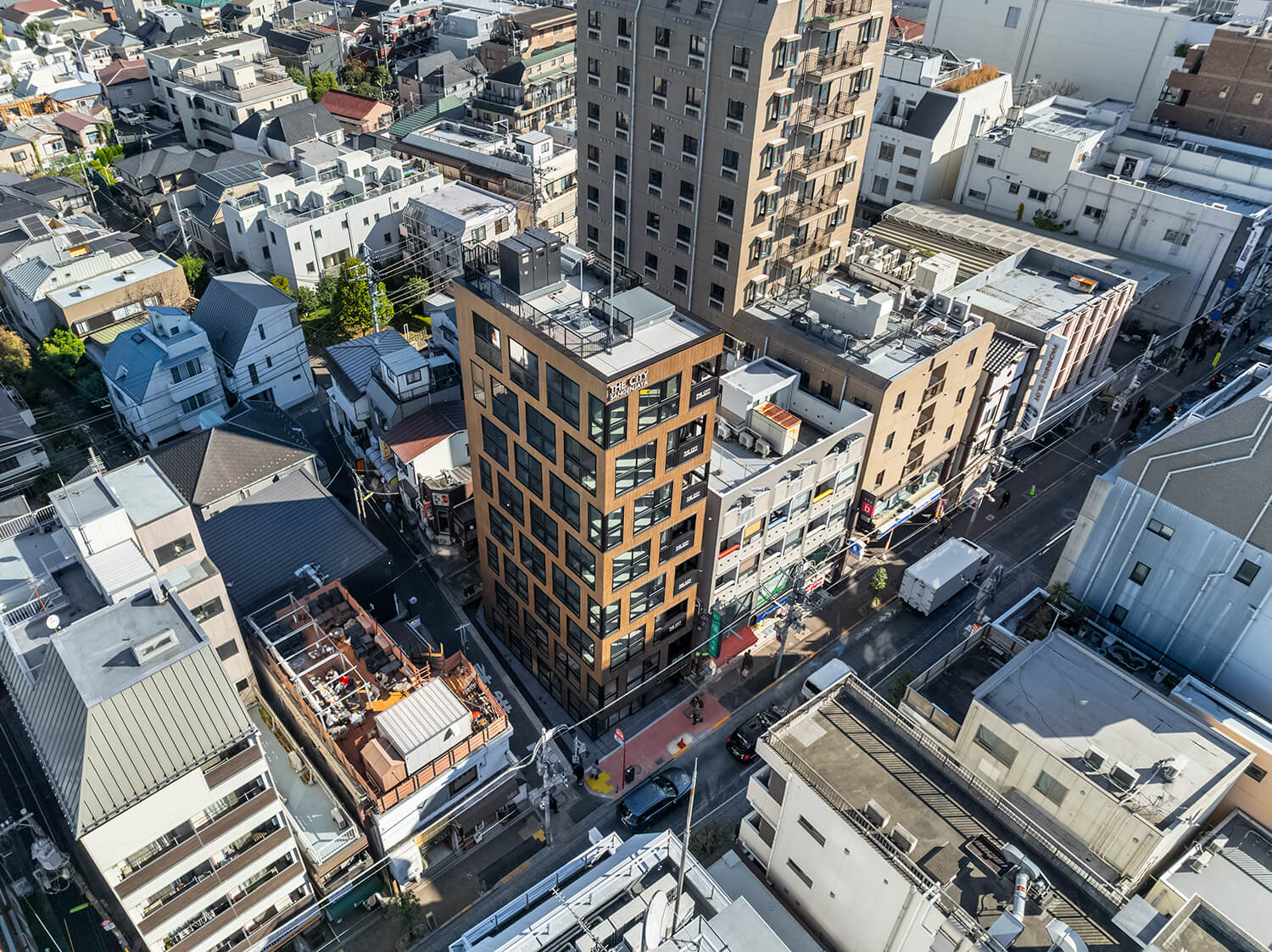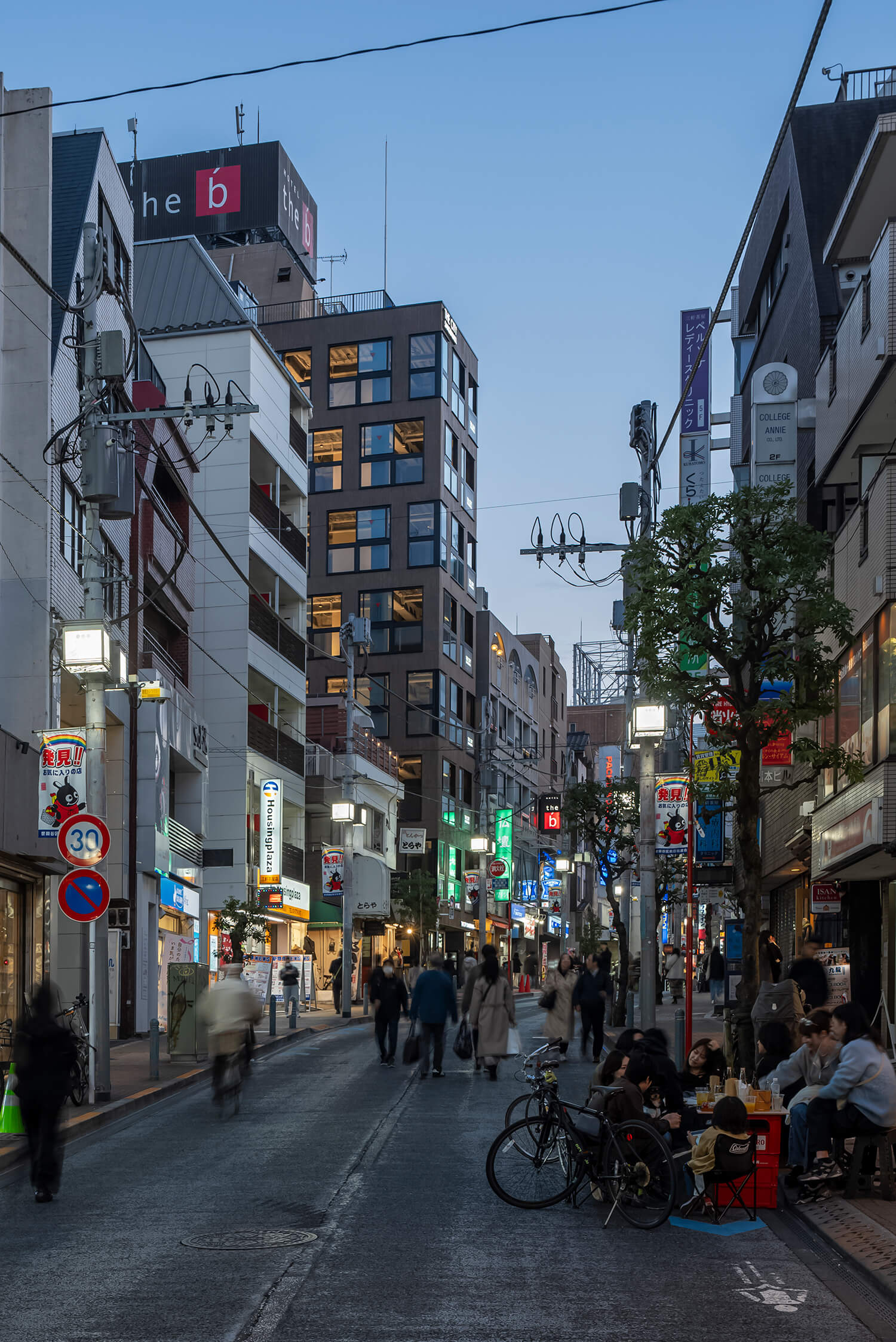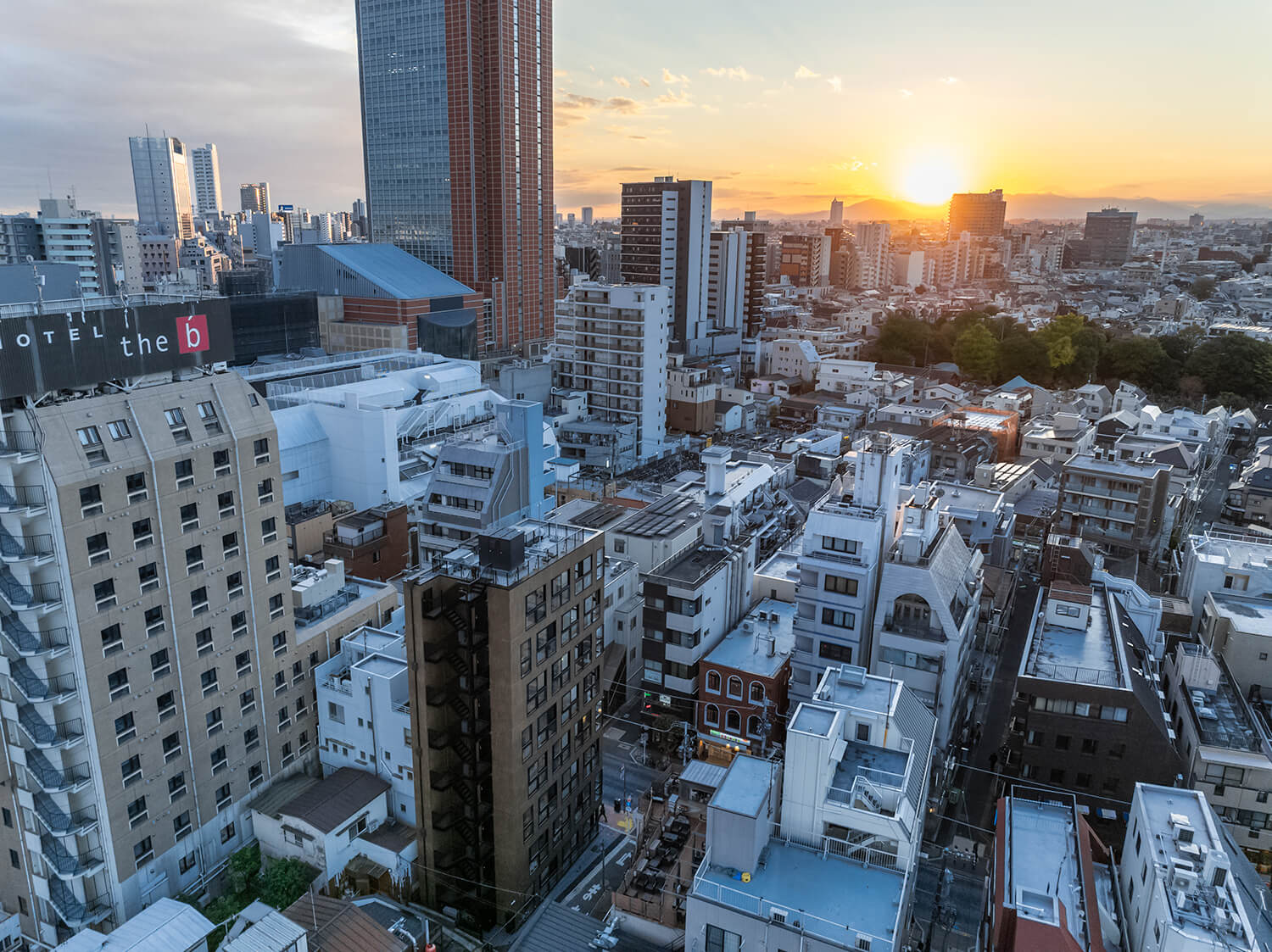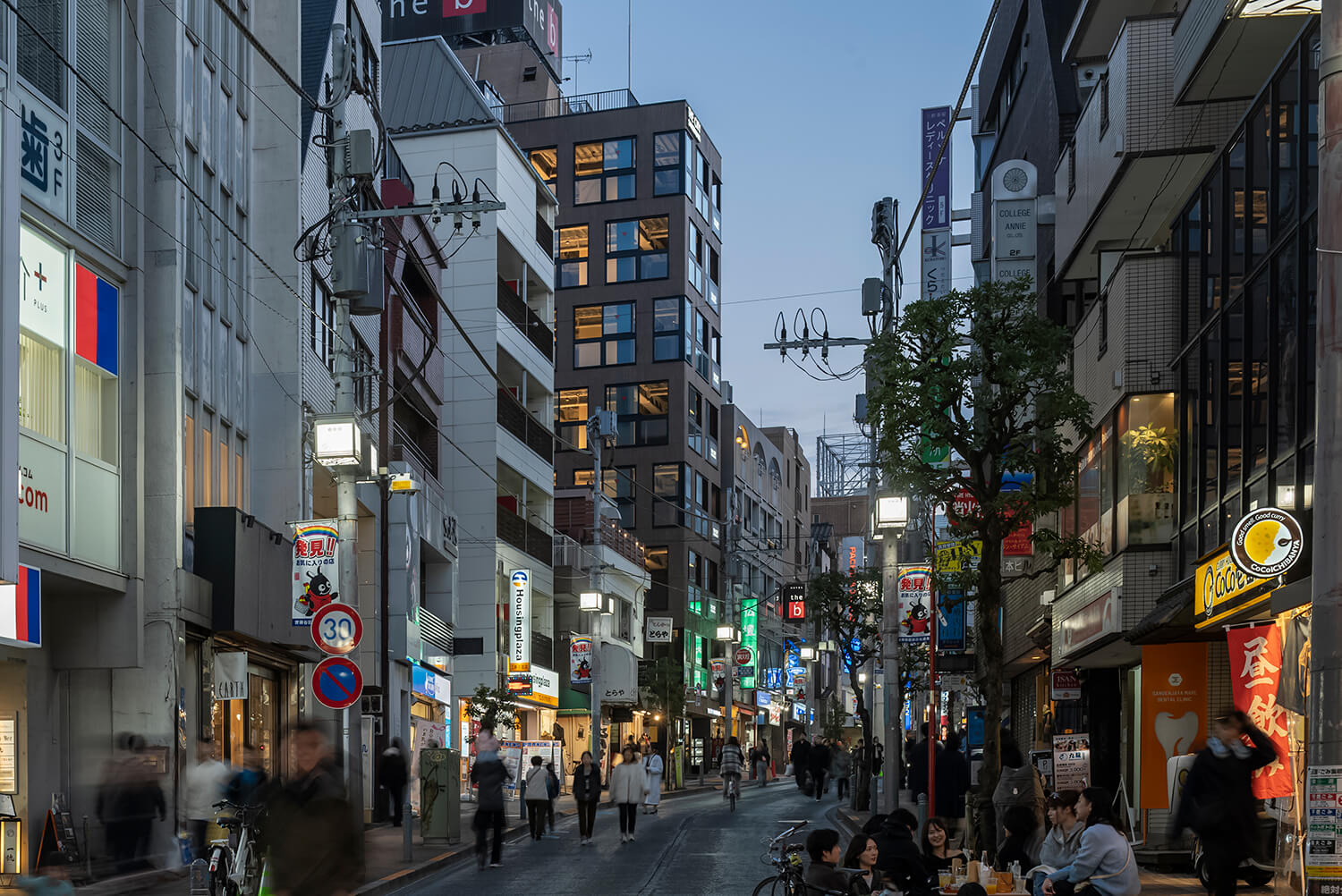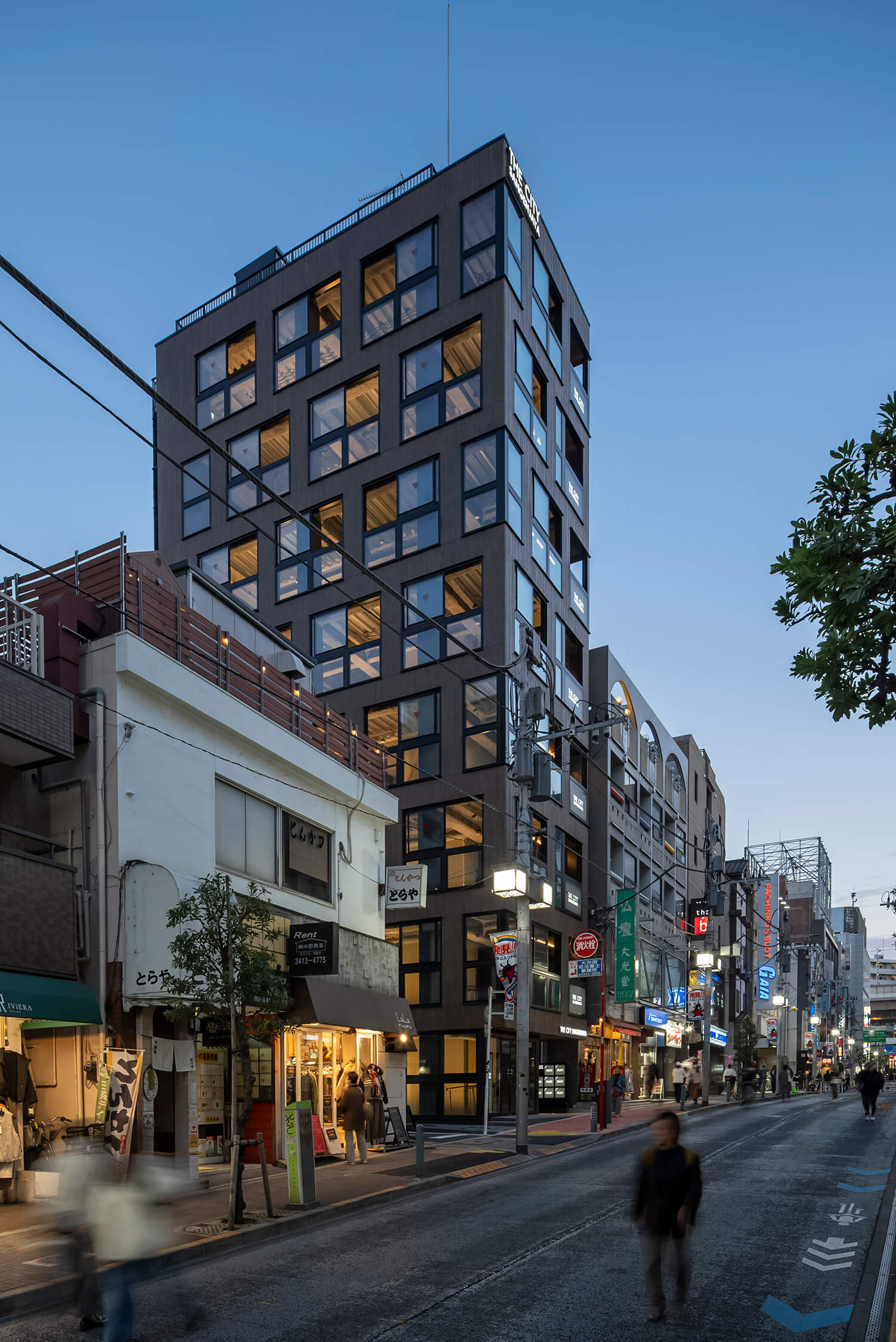
This small-scale commercial building, comprising eight storeys above ground, stands facing Chazawa-dori Street, a three-minute walk from Sangenjaya Station. It is situated within an area lined with mixed-use buildings housing long-established eateries and retail outlets. While located on a main thoroughfare, the constant flow of pedestrians demanded a commercial structure that responded to the pedestrian scale of Chazawa-dori and opened onto the street.
The building comprises ground-floor retail units accessible to pedestrians, commercial floors (2nd, 3rd, and 8th) for restaurants and shops, and office/service tenants from the 4th floor upwards. Within the constrained site area of approximately 114m², it maximises the 500% floor area ratio while addressing local constraints such as pavement widths, evacuation routes, and flood prevention measures.
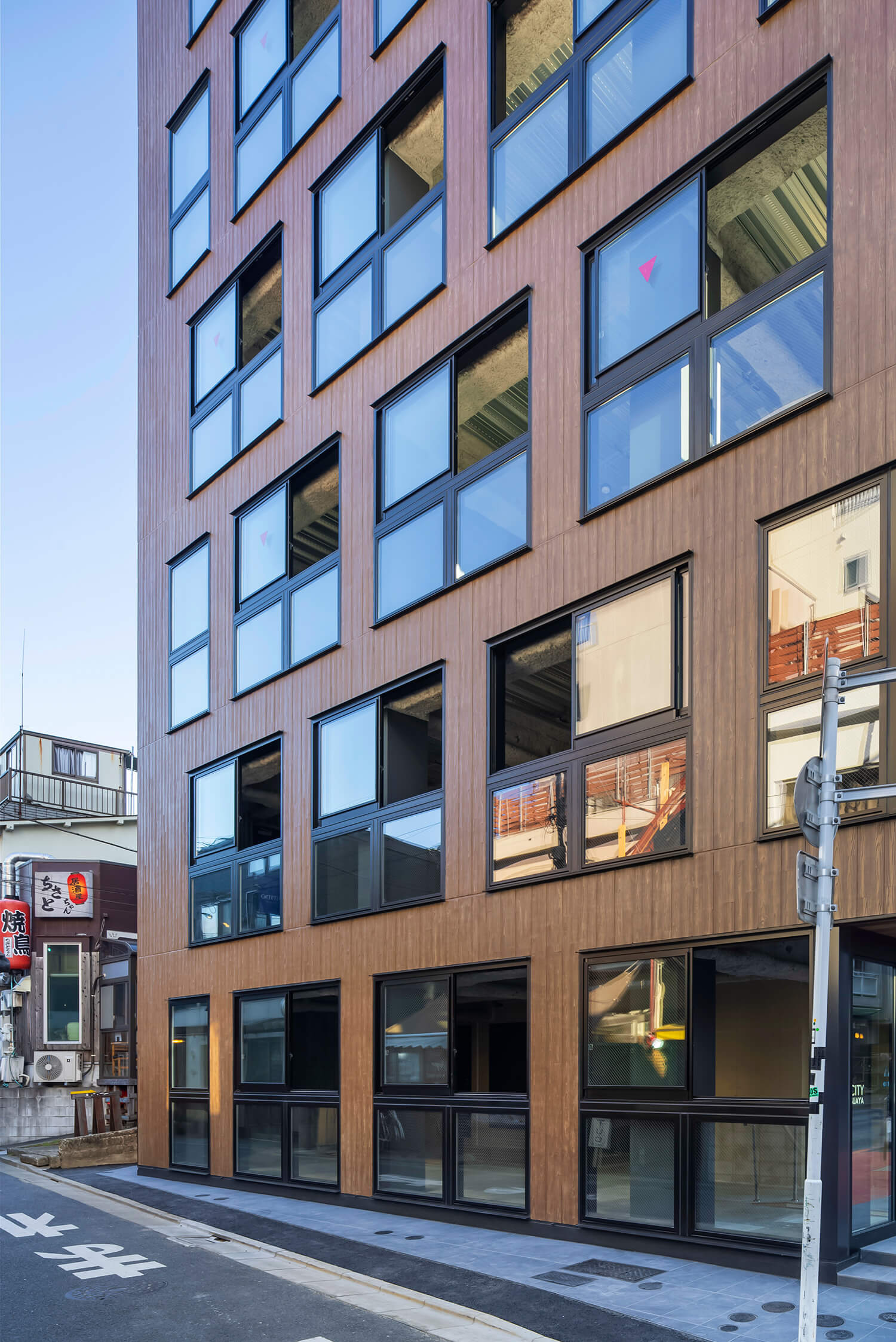
A clear composition was achieved by organising structural, mechanical, and regulatory requirements, then stacking common modular floor plans. The exterior finish comprises Asrock panels with a textured woodgrain surface, treated with a special coating. Rather than the glass curtain walls common in recent urban commercial buildings, the facade was designed through a deliberate balance of solid walls and large openings.
Rather than relying on glass transparency, the building imparts a warm presence to the street through the material’s shadows and the depth of its coating. The arrangement of openings is deliberately heterogeneous, designed to flexibly accommodate tenant plans on each floor. More significantly, it expresses a random rhythm that resonates with the cultural diversity of the Sangenjaya neighbourhood.
Unlike central commercial districts such as Shibuya or Shinjuku, Sangenjaya is a neighbourhood where long-established residences, small-scale shops, eateries, studios, live music venues, and second-hand bookshops intermingle, allowing people of different generations and professions to move freely. It maintains a distance from orderly redevelopment, where serendipity, chaos, and overlapping uses shape its culture. This building attempts to architecturally translate that “free order” and “intermingling diversity”. The arrangement of openings, breaking the grid, responds not only to functional rationality but also to the neighbourhood’s free-spirited atmosphere and the Sangenjaya streetscape, where buildings line up with slightly differing rhythms.
This random opening composition enriches the façade’s expression while also being practical for actual use.
In all-glass buildings, tenants often conceal piping and back-of-house areas by covering the glass with walls from the interior during fit-outs. This results in a closed façade, losing the architectural intent. Furthermore, shops frequently cover the glass with advertising sheets, leading to the entire building being dominated by advertising. This building mitigates these issues by incorporating walls from the outset, maintaining architectural unity and harmony with the street.
Each opening incorporates a cross-shaped sash, with the section above waist height designed as a sliding window. This allows natural ventilation even on the upper floors used as offices, fostering a connection with the exterior. Furthermore, some openings function as evacuation balconies, planned to integrate naturally into the rhythm of the façade.
In typical glass-clad office buildings, blinds are often kept permanently closed to prevent reflections on monitors and glare from the afternoon sun, frequently giving a closed impression from the outside. This building achieves a comfortable lighting environment by combining walls and openings, softly capturing natural light while controlling solar radiation and glare. The wood-grain Asrock exterior walls gently absorb light, creating shifting shadows throughout the day that impart a tranquil rhythm to the street.
These choices are not merely design manipulations but an act of designing the relationship between the city, the building, and its tenants. By disrupting the grid, the façade achieves a harmonious yet heterogeneous quality, functioning as an abstract framework that remains valid even as occupants change. It achieves a restrained expression, free from excessive embellishment, while retaining the breathing space to embrace the city’s diversity.
Looking up from the pavement of Chazawa-dori, the undulating woodgrain finish catches sunlight, creating shadows. In the evening, light spills from within through the glass surfaces, warmly illuminating the smoked ash soffits of the balconies.
For those walking the street, it becomes part of the continuous landscape, a new commercial building that nevertheless blends with the surrounding diverse structures.
The town of Sangenjaya has been shaped not by uniformity, but by diversity and freedom. This building, while embracing that culture, reflects the town’s free-spirited character through its random openings and wood-toned shadows. It aims to embody the city’s vitality not through orderly uniformity, but within the rhythm born of chance and human presence.
- Site:Setagaya-ku, Tokyo
- Completion:2025.11
- Use:Tenant Building
- Scale:8 storeys above ground
- Structure:Steel Frame
- Site Area:112.89 m²
- Building Footprint:85.60 m²
- Total floor area:605.11m²
- Client:CITY HOMES CO.,LTD.
- Design supervision:KEY OPERATION INC./ARCHITECTS
- Structural design:Delta Structural Consultants
- Mechanical design:Pros. Environmental Planning
- Construction:MIRAIZU CONSTRUCTION CO.,LTD