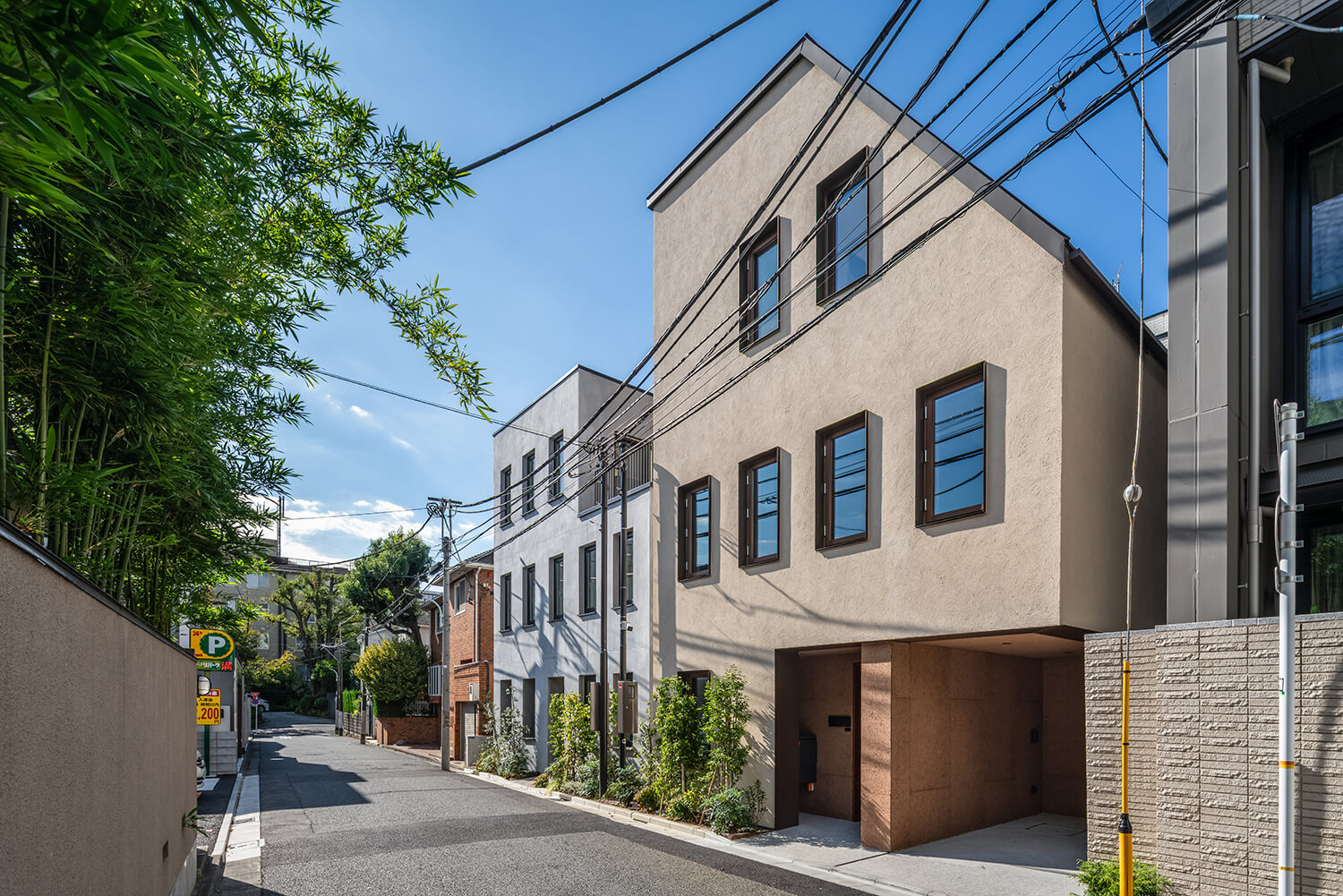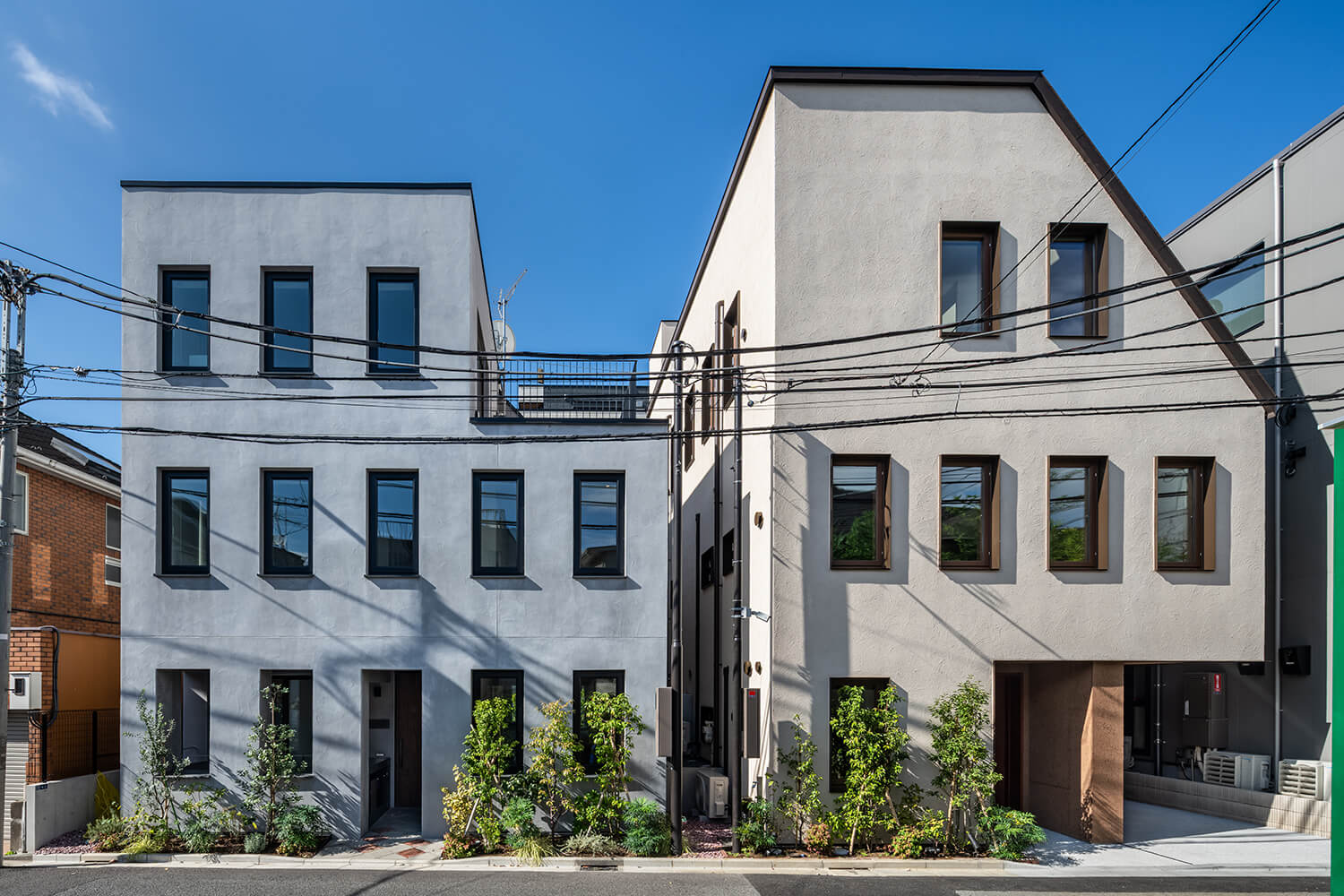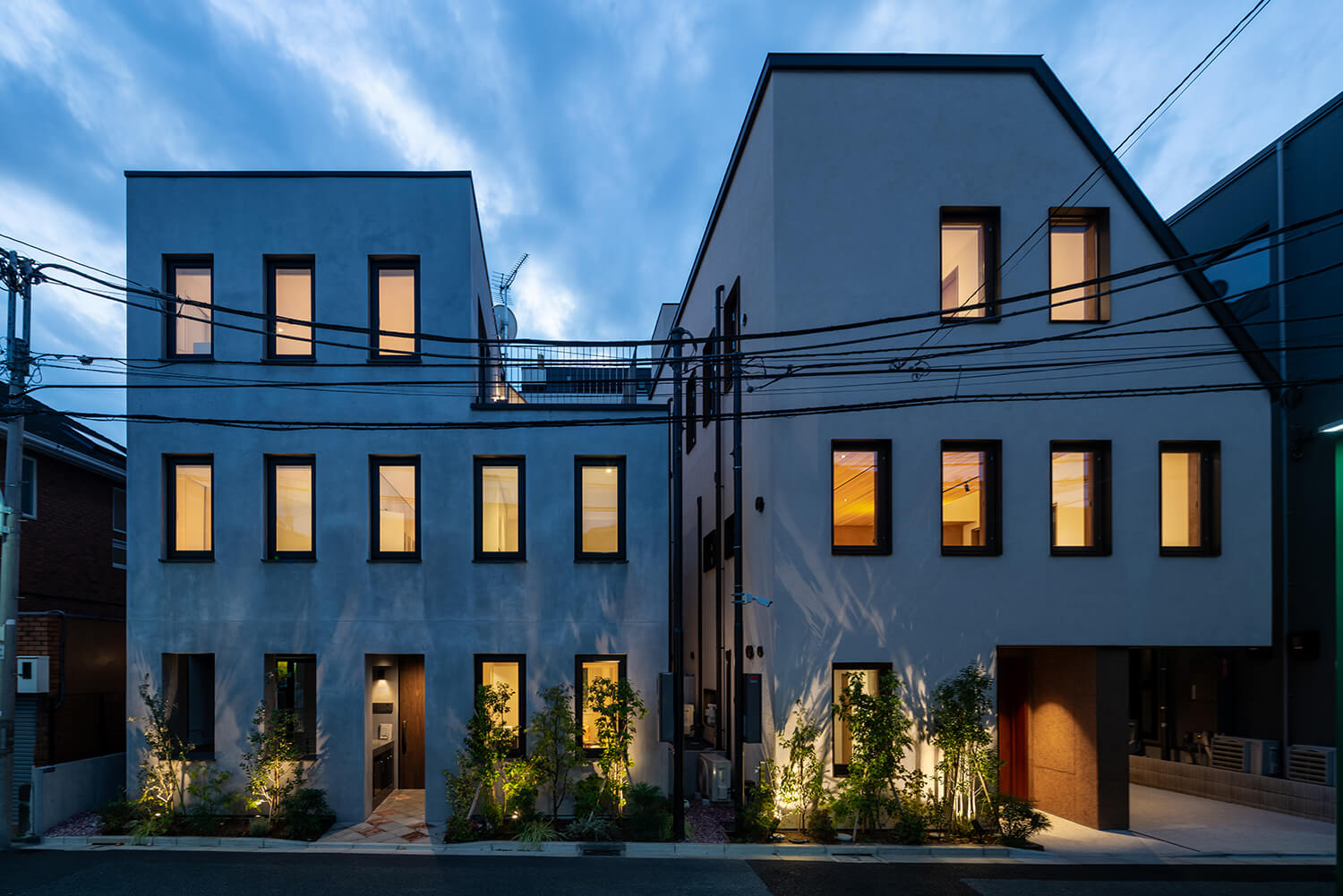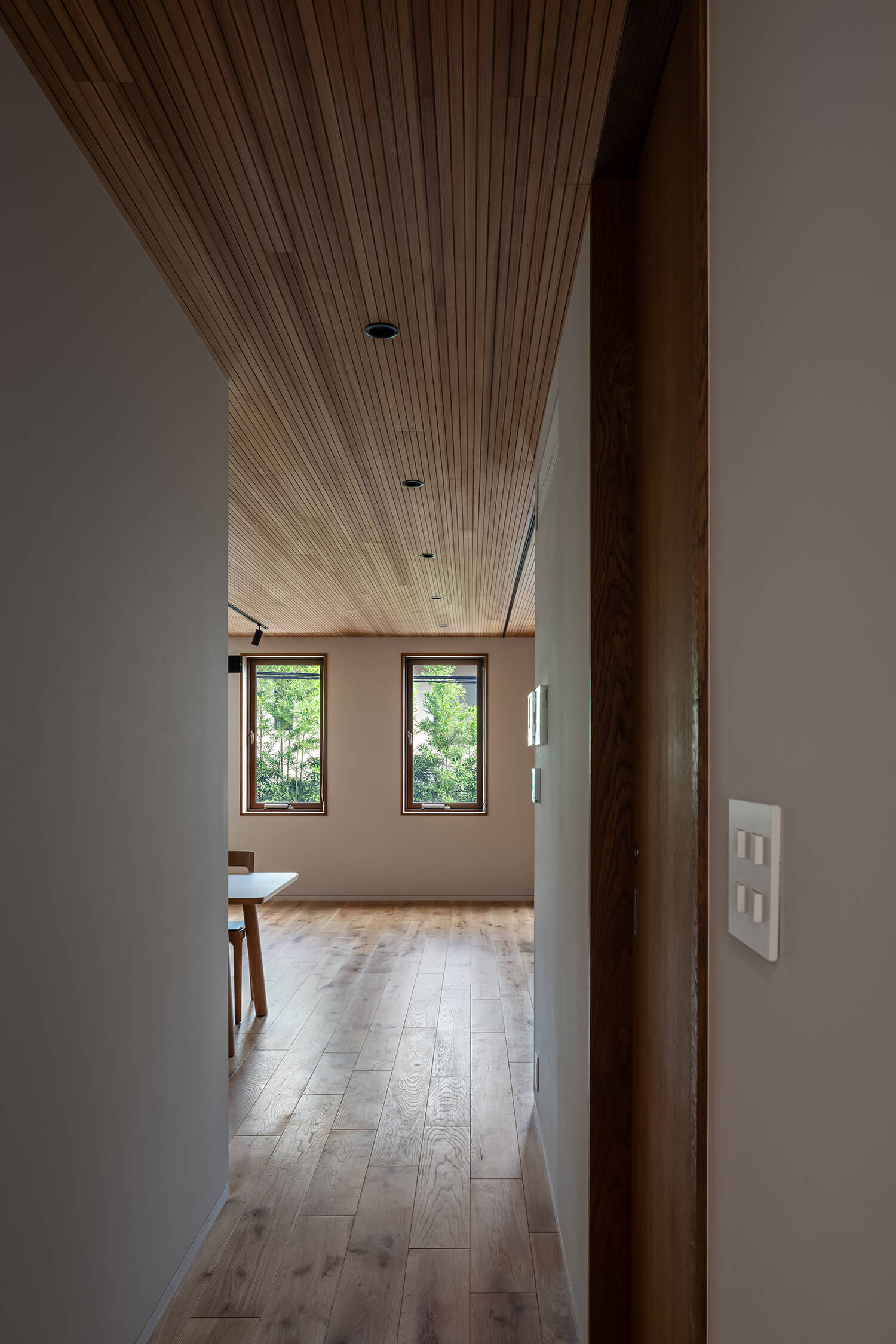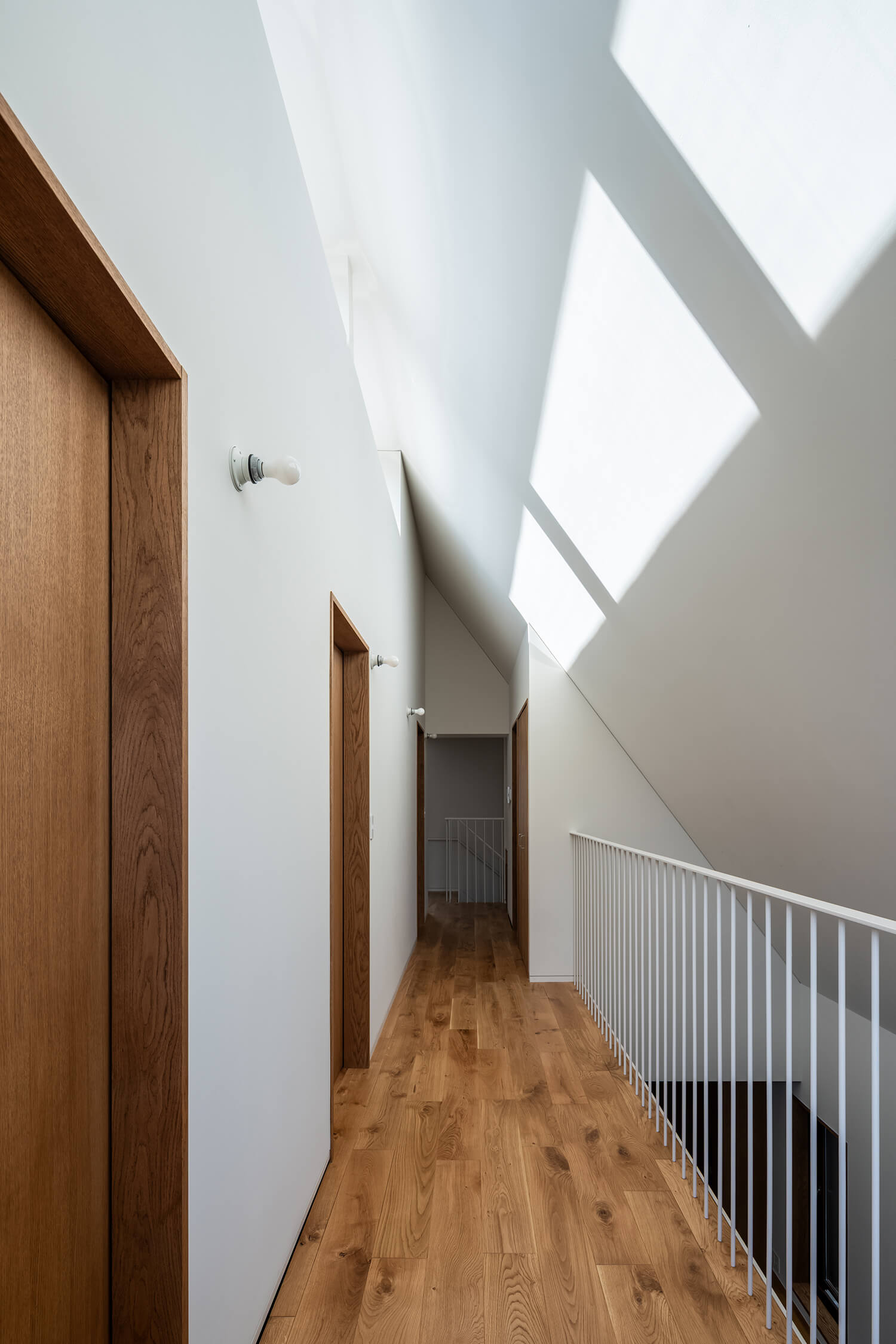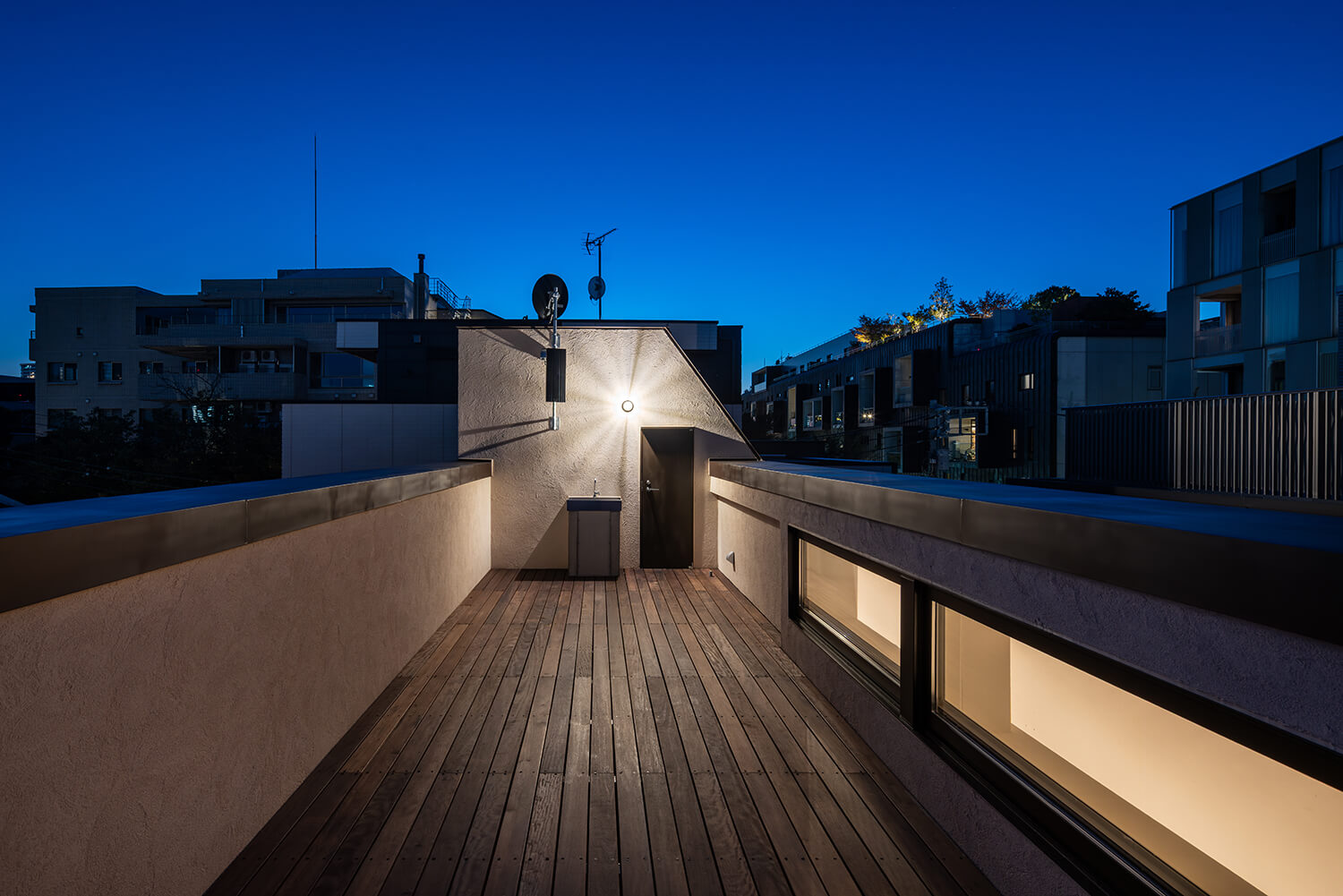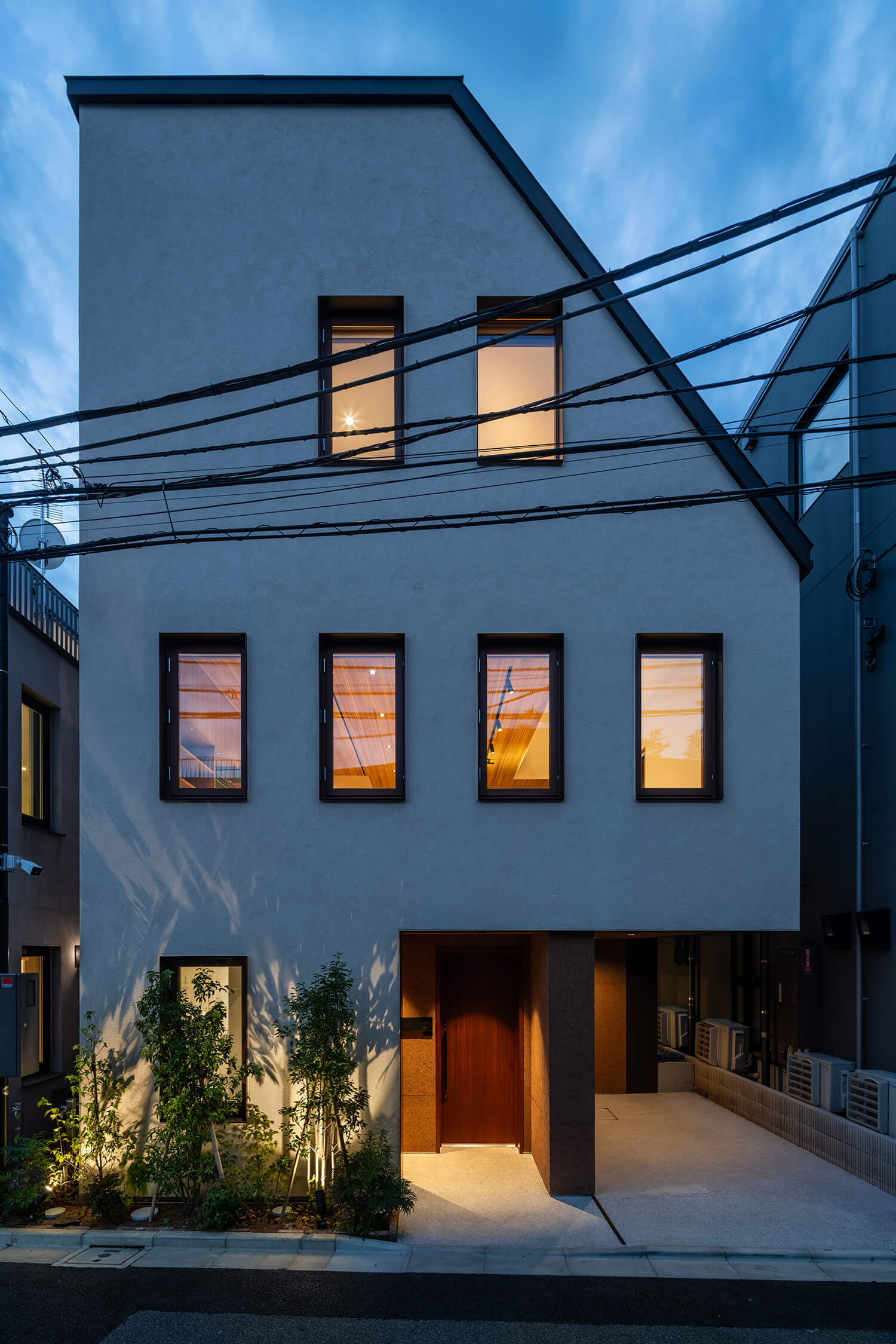
This house stands at the centre of a project in Minami-Azabu where a once unified family plot was divided into three parcels through inheritance, with relatives building their respective homes. Of the three houses, the one at the front was designed by a different architect, while the house at the rear is Azabu Perforated Facade House, previously designed by our practice. Positioned between them, Azabu Slanting Light House was conceived to engage in architectural and compositional dialogue with its neighbours on both sides.
A Void Shaped by Slanting Light
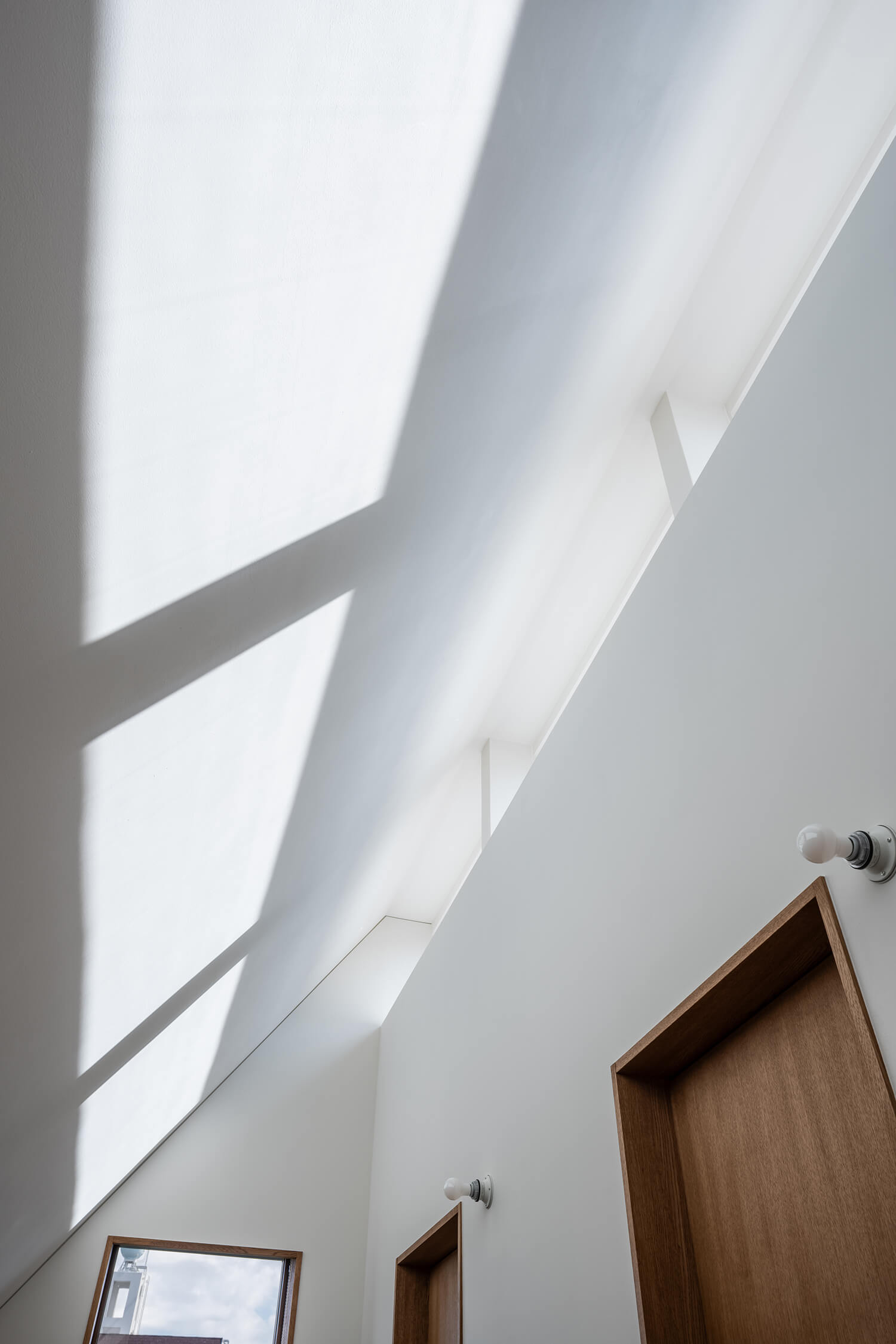
Subject to the slant-line restrictions of the height control district, the building naturally assumes a sectional form with an inclined roof. Rather than treating this as a limitation, the design actively transforms the sloping geometry into the spatial and environmental core of the house.
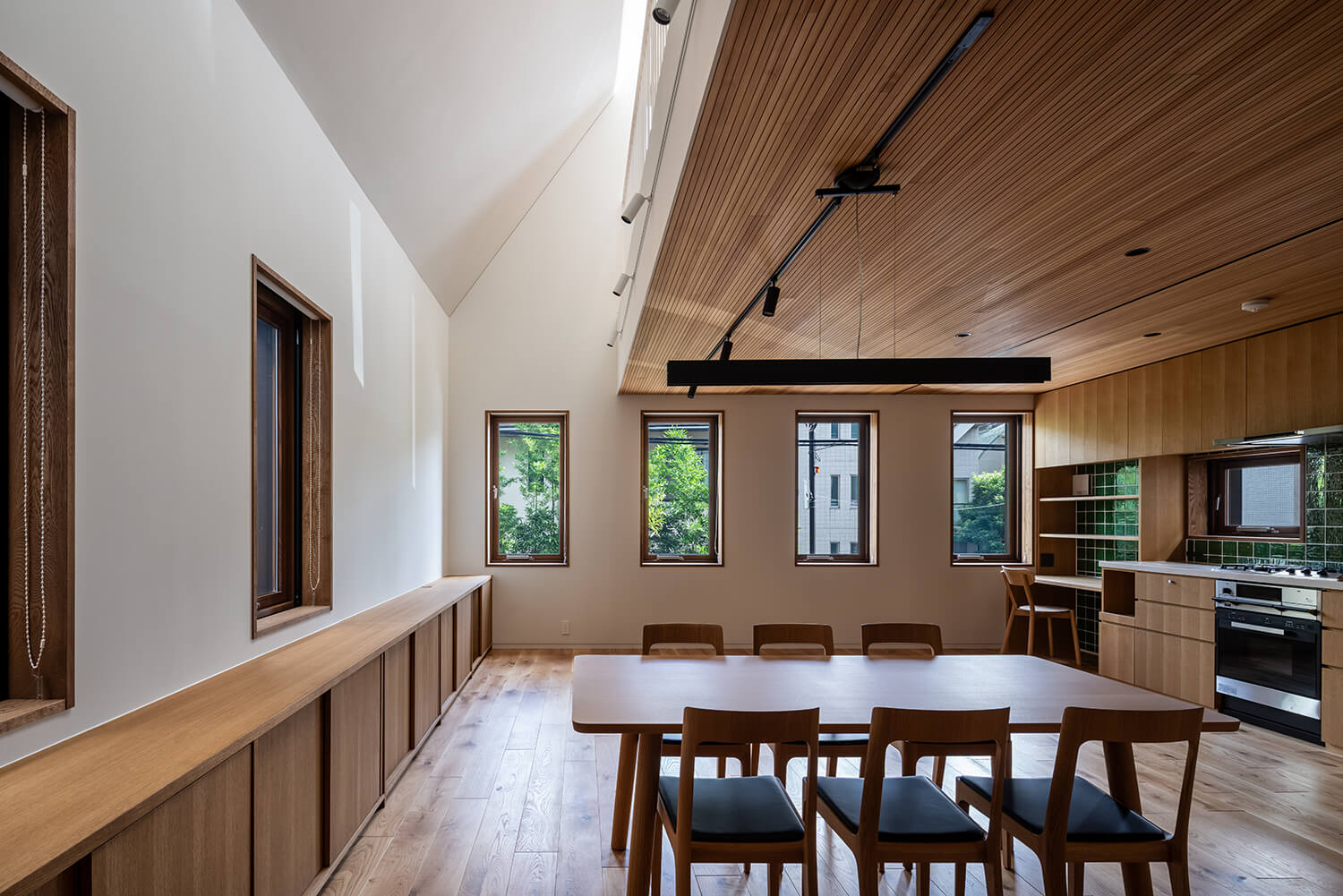
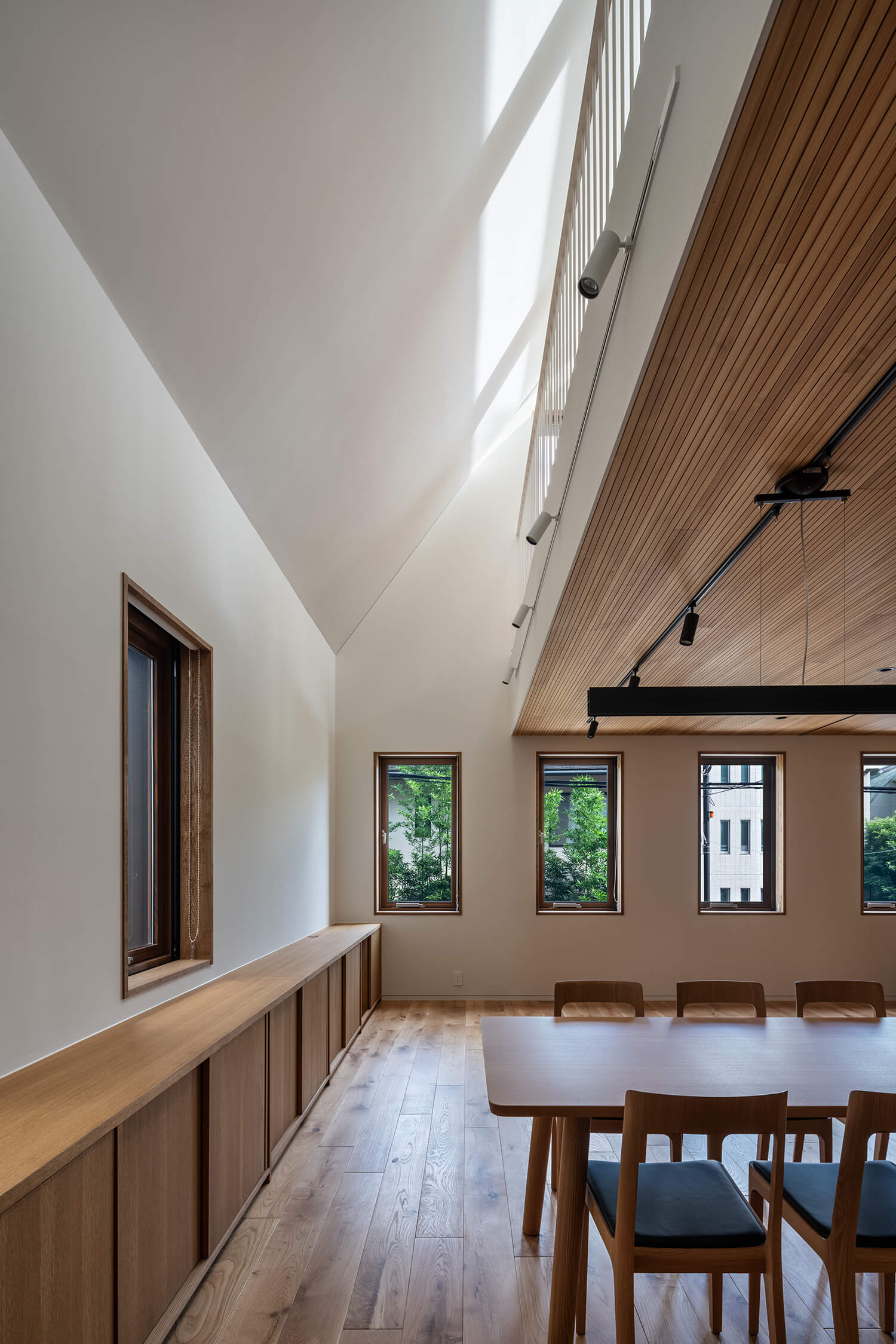
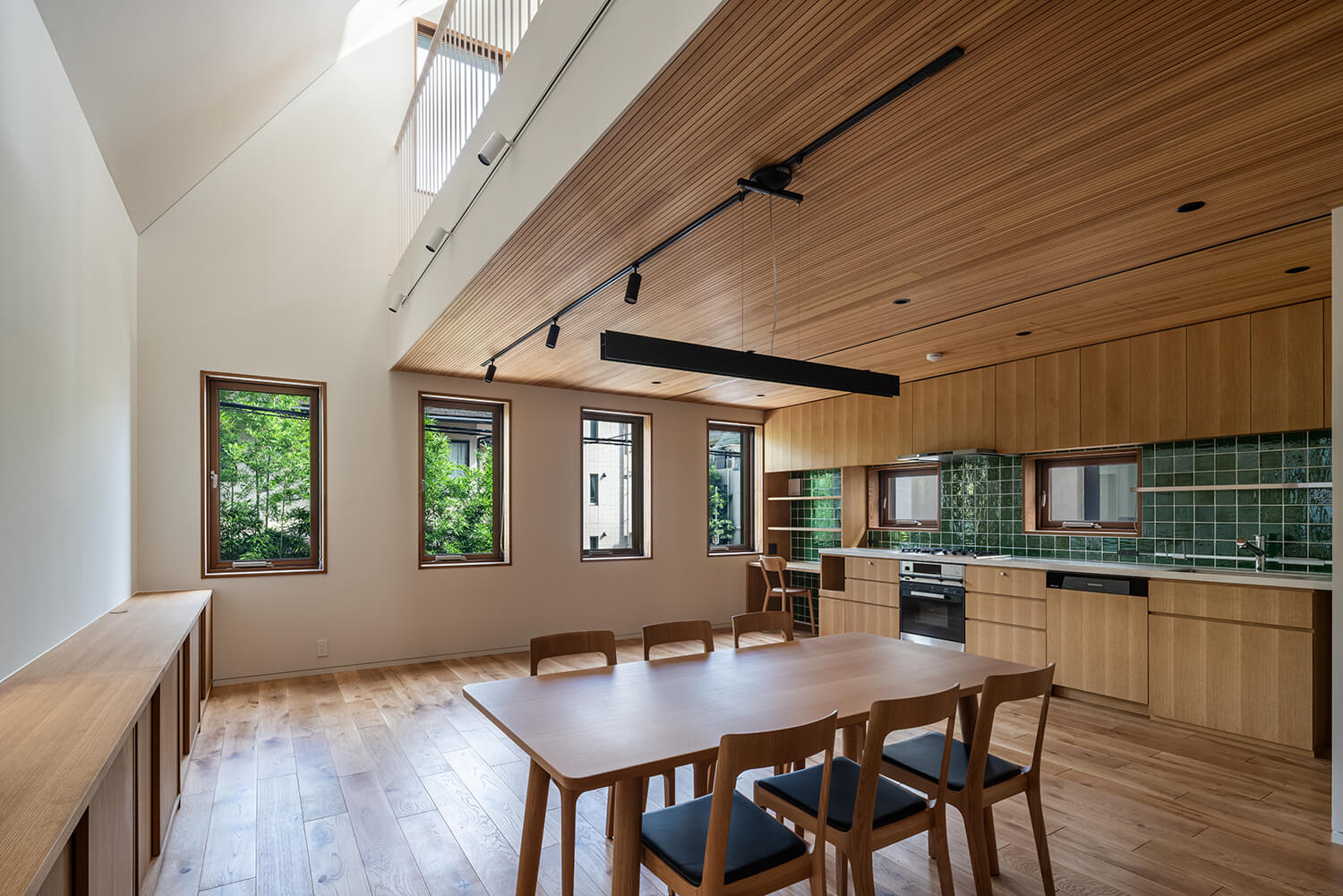
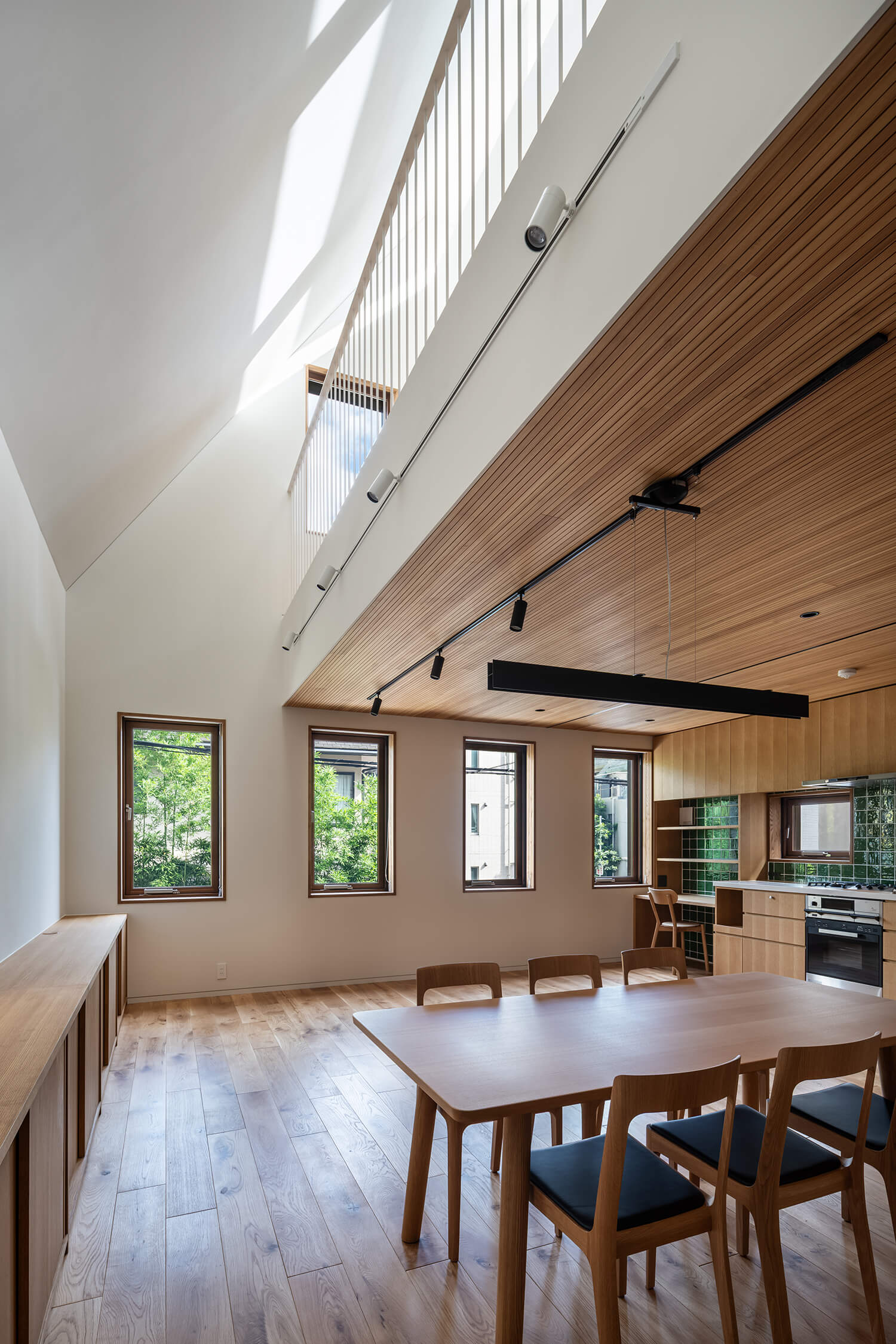
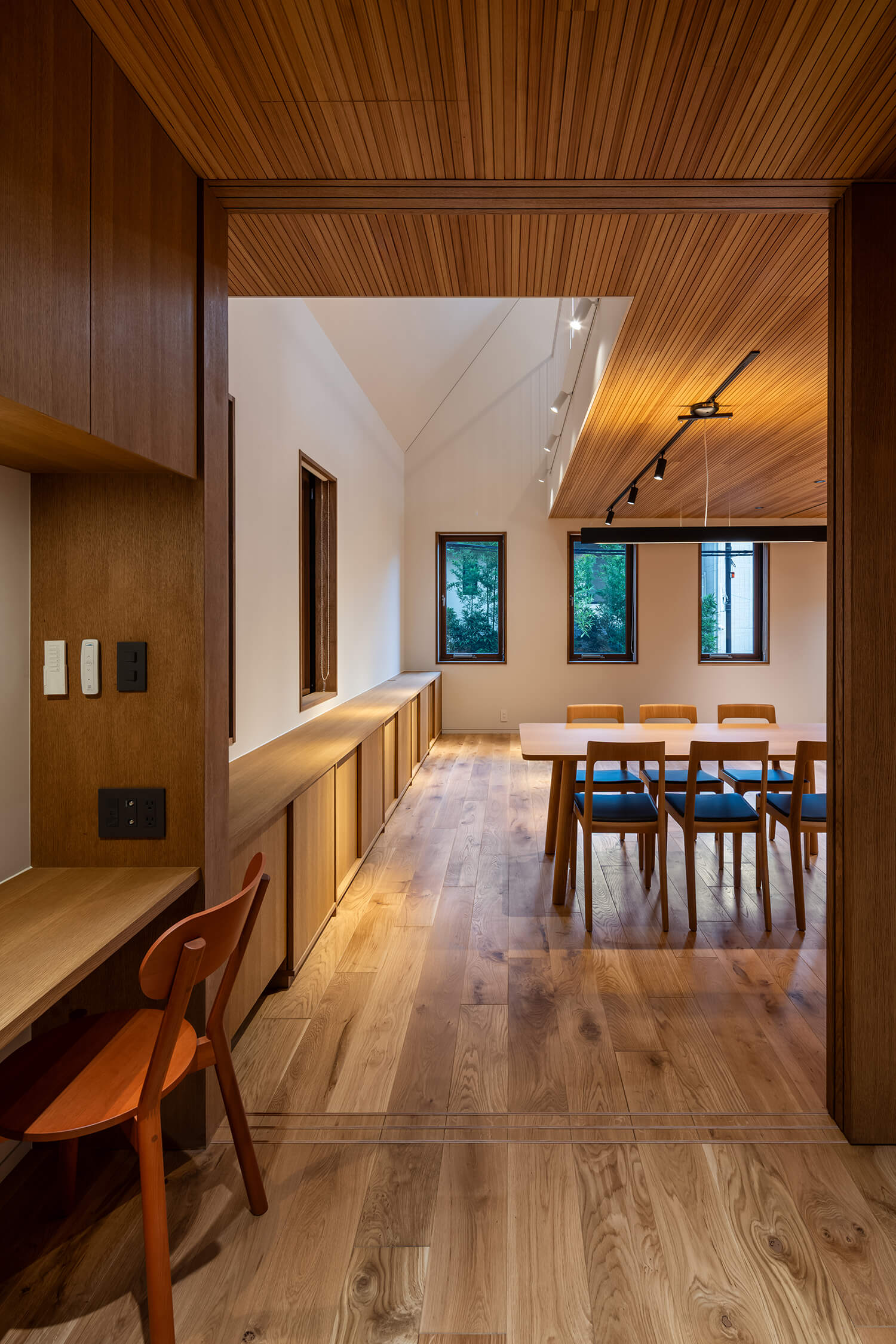
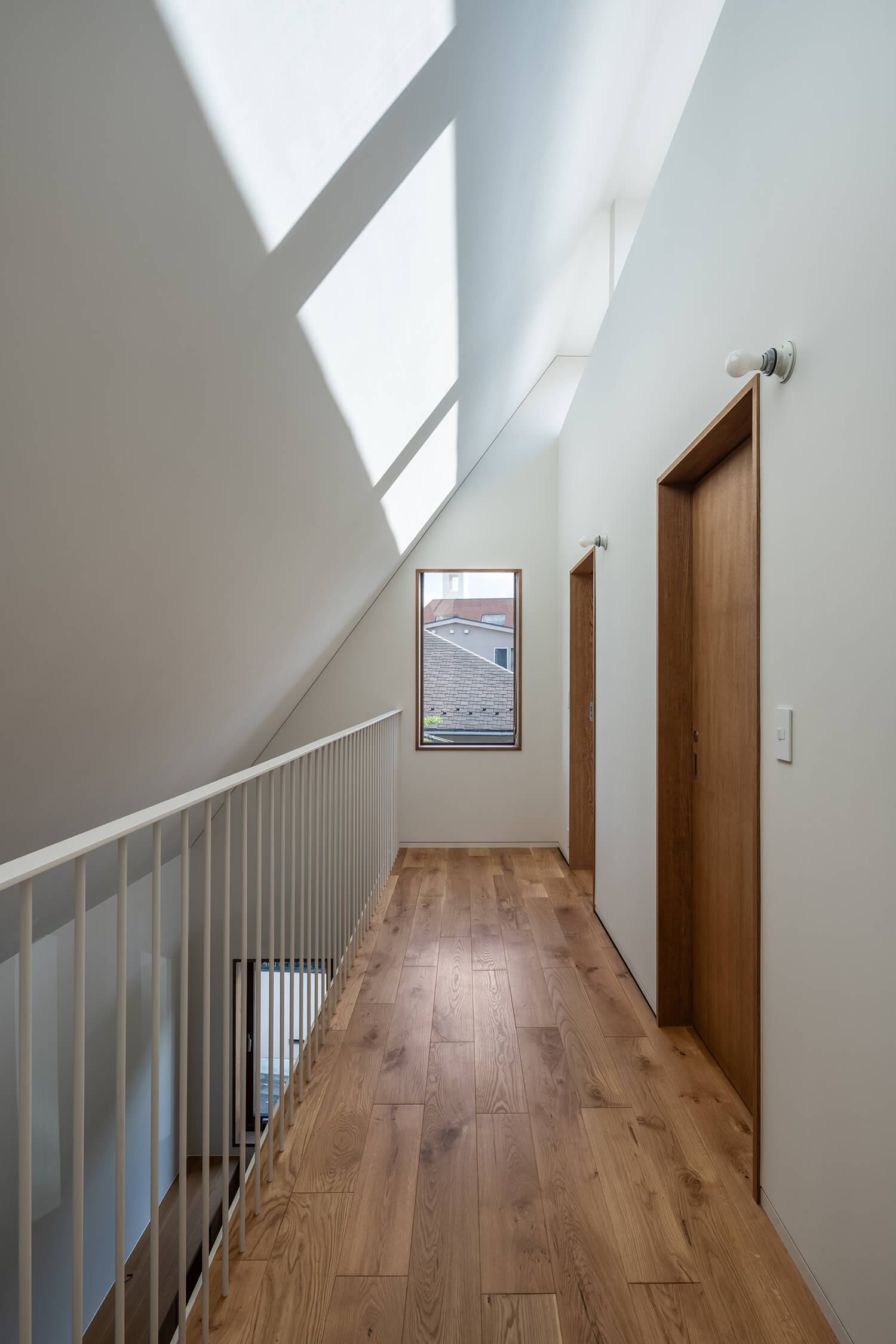
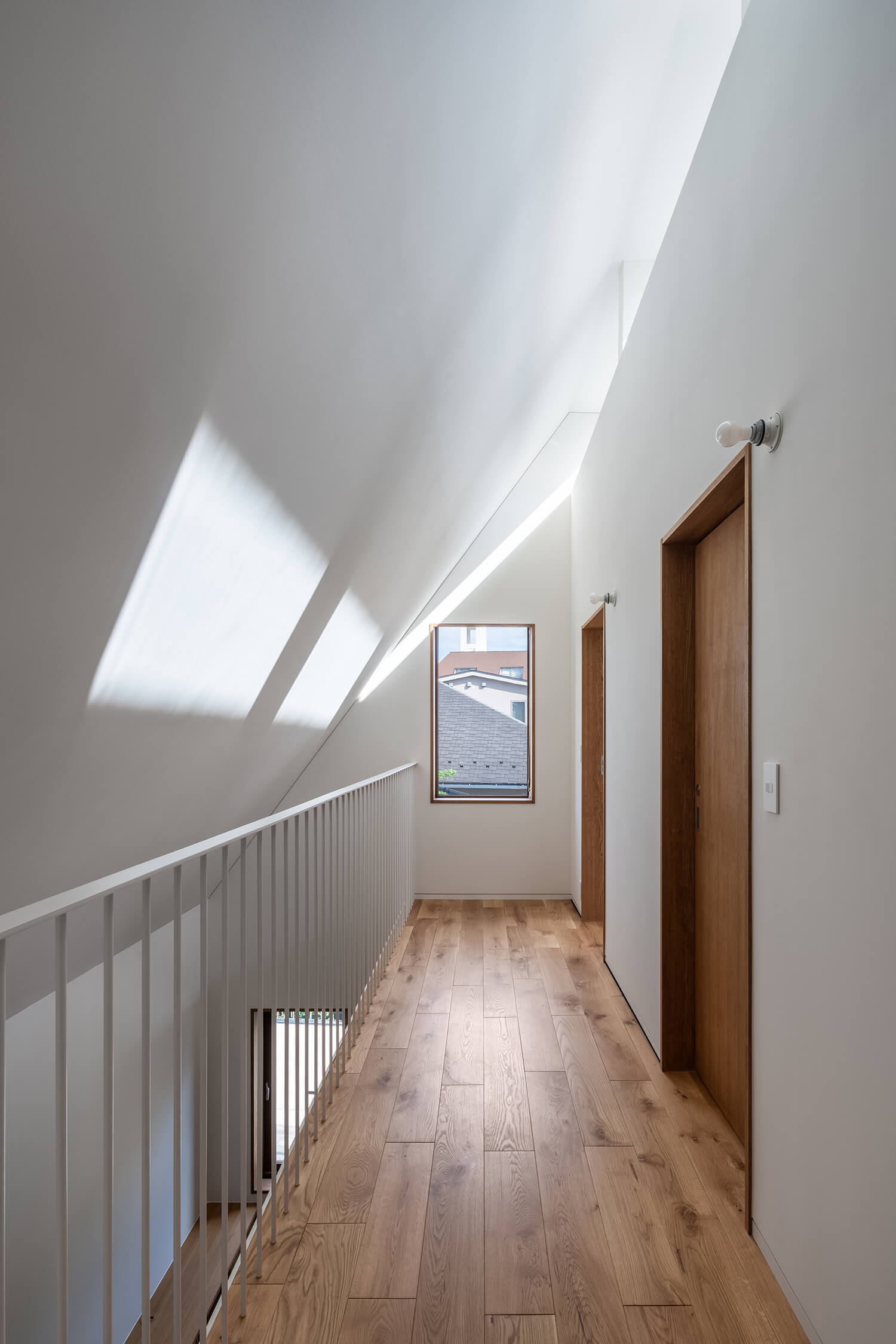
Unlike Azabu Perforated Facade House, where the living room occupies the third floor and the slant-affected portion becomes a terrace, this project places the principal living space on the second floor. Part of the third floor is opened into a void, allowing the inclined ceiling to function as a reflective plane that draws light down into the interior.
Daylight enters from a high-side window at the uppermost level, striking the slanted ceiling before being reflected and diffused throughout the space. The result is a soft, even illumination that gently fills the living area. As the sun moves, shadows shift across the floor, walls and timber ceiling, allowing the inhabitants to register the passage of time through subtle changes in light.
The high-side window is operable and forms part of a passive ventilation strategy. Warm air accumulated indoors escapes through the upper opening, while opening windows on the lower floors creates a temperature differential between levels. This generates gentle air movement without reliance on wind, supporting a stable and comfortable indoor climate.
Windows that Mediate Privacy and Openness
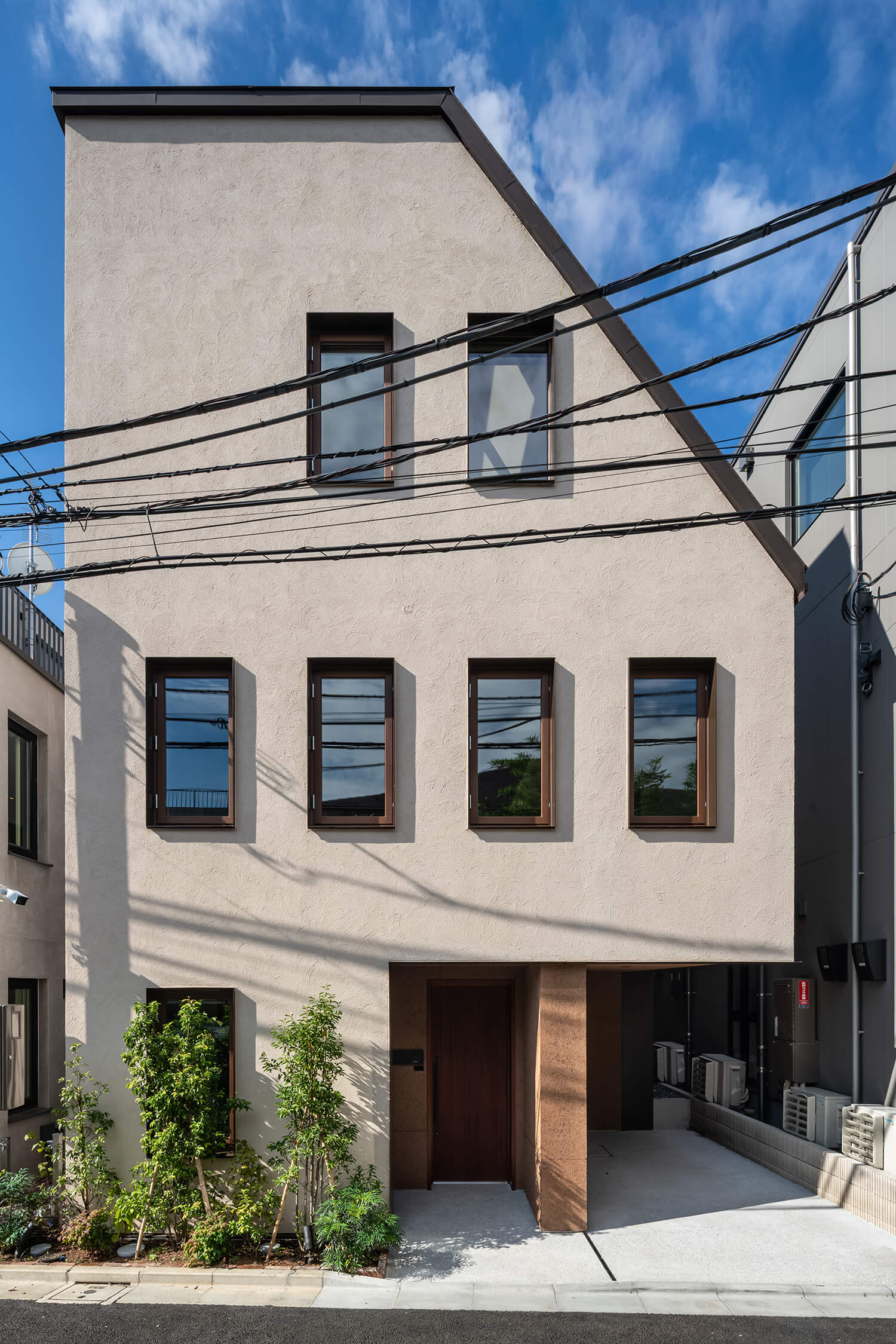
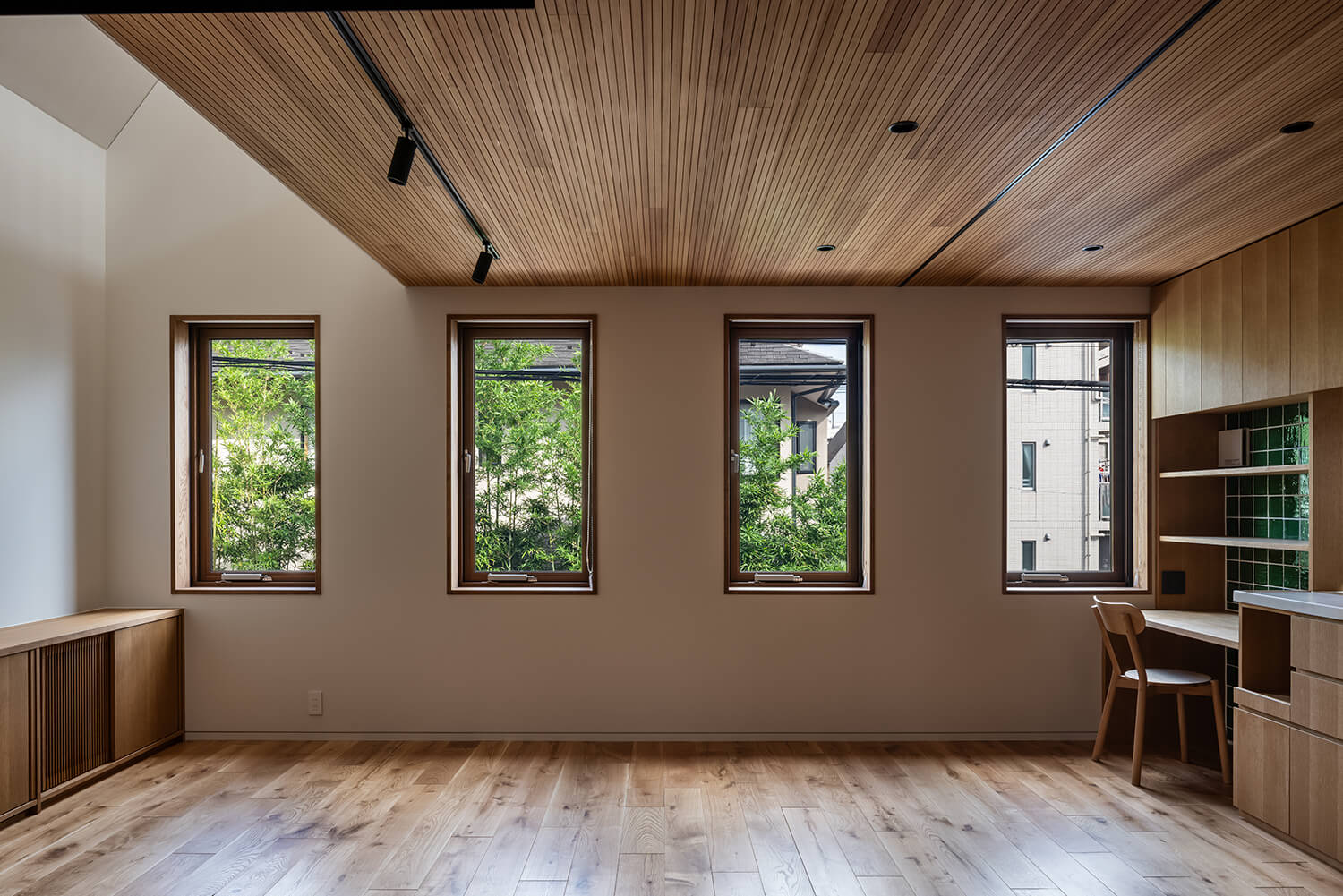
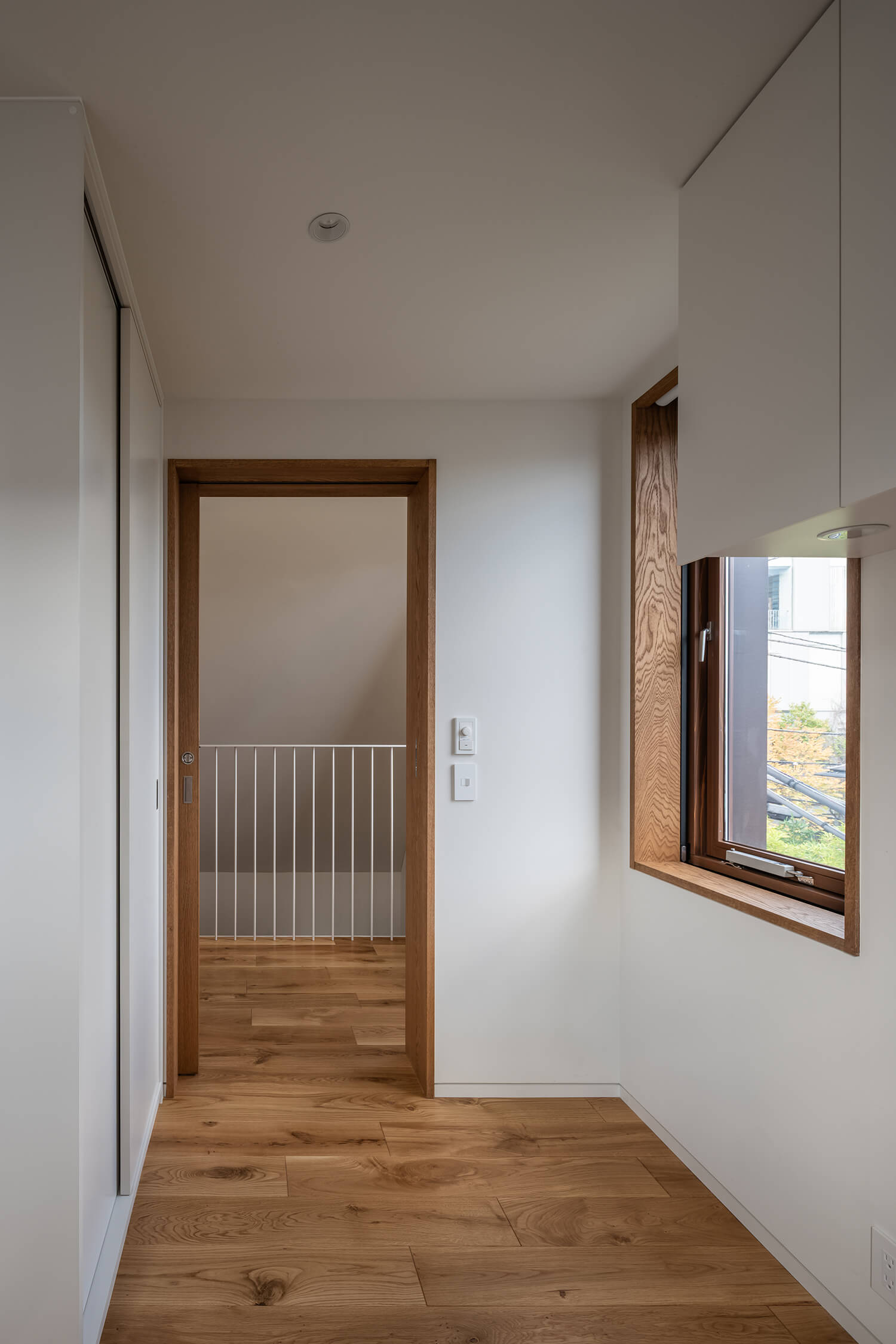
Each window, measuring 730 mm in width and 1,450 mm in height, is carefully proportioned to mediate between privacy and openness. From outside, the interior is not easily visible unless one approaches closely. From within, however, the windows provide generous views outward.
The sense of openness afforded by a window depends largely on one’s proximity to it. Indoors, where occupants stand close to the opening, sufficient width and height allow the space to feel expansive. From the street, the more restrained dimensions prevent excessive exposure.
The repetition of uniformly sized windows creates a continuous rhythm across the façade. When viewed from inside, the mind perceptually completes the unseen portions between openings, allowing one to experience the broader landscape beyond the wall as a continuous whole.
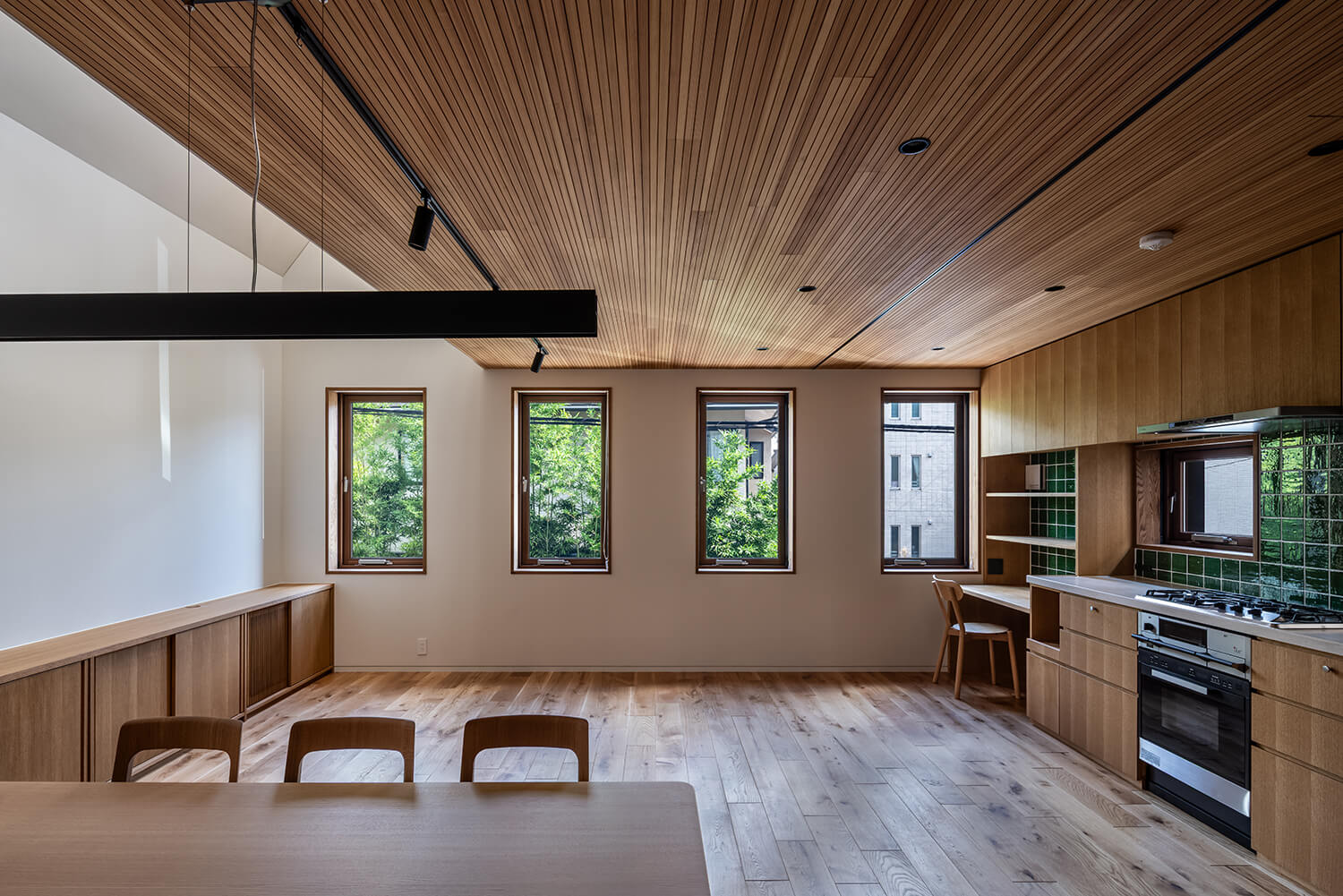
From the four windows of the second-floor living room facing the street, soft daylight enters while the bamboo grove of the house opposite unfolds as borrowed scenery. Ordinarily, the contrast between a bright exterior and interior shadow might make the room feel comparatively dark. Here, light from the high-side window supplements the frontal openings, producing an evenly lit interior in which the gaze extends naturally outward, enhancing the feeling of openness.
A Void of Light Connecting the Family
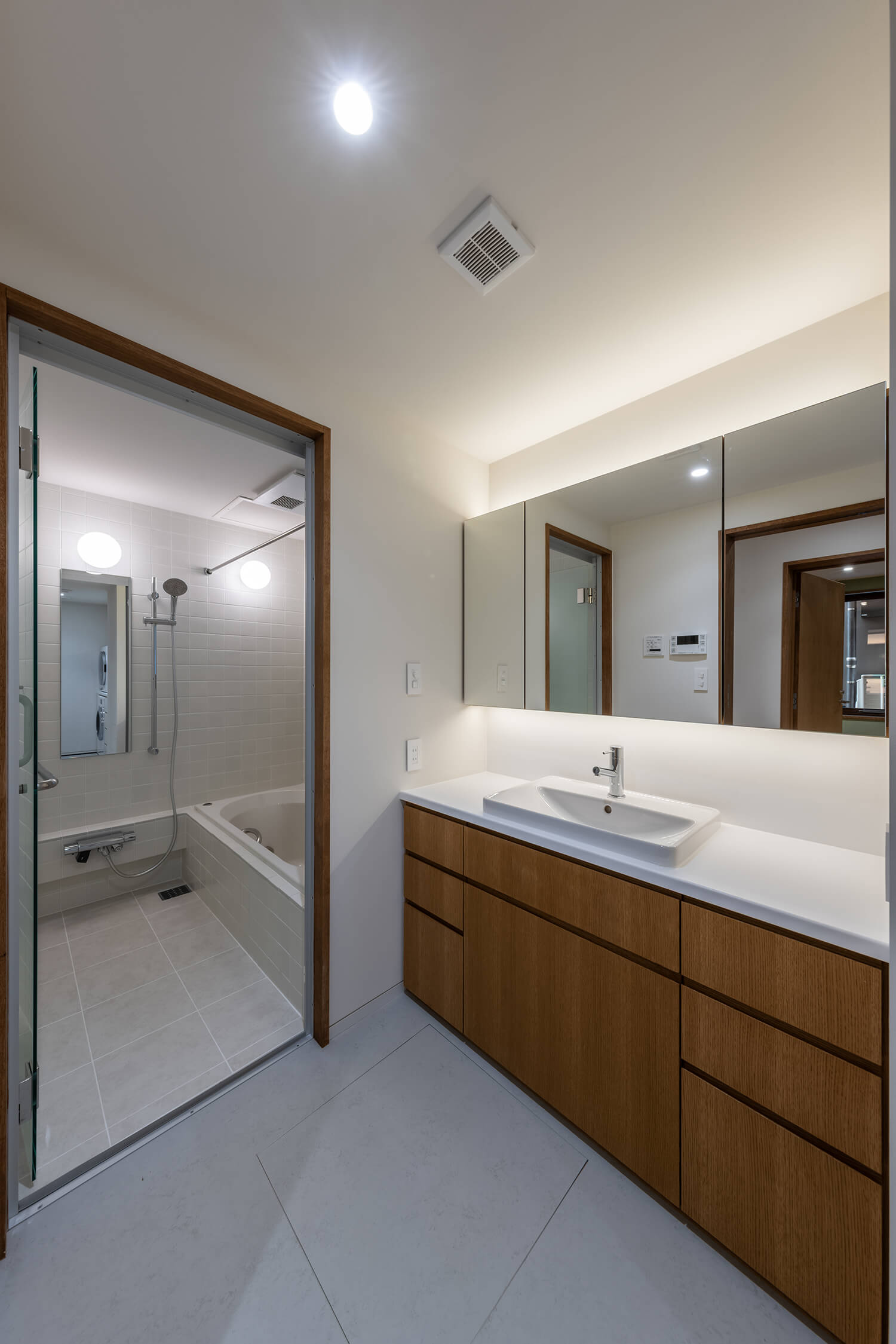
The living and dining space on the second floor forms the heart of the house, gently connected to the third-floor bedrooms through the central void. On the ground floor, the entrance hall, reception room and service areas are arranged efficiently, organising public and private circulation.
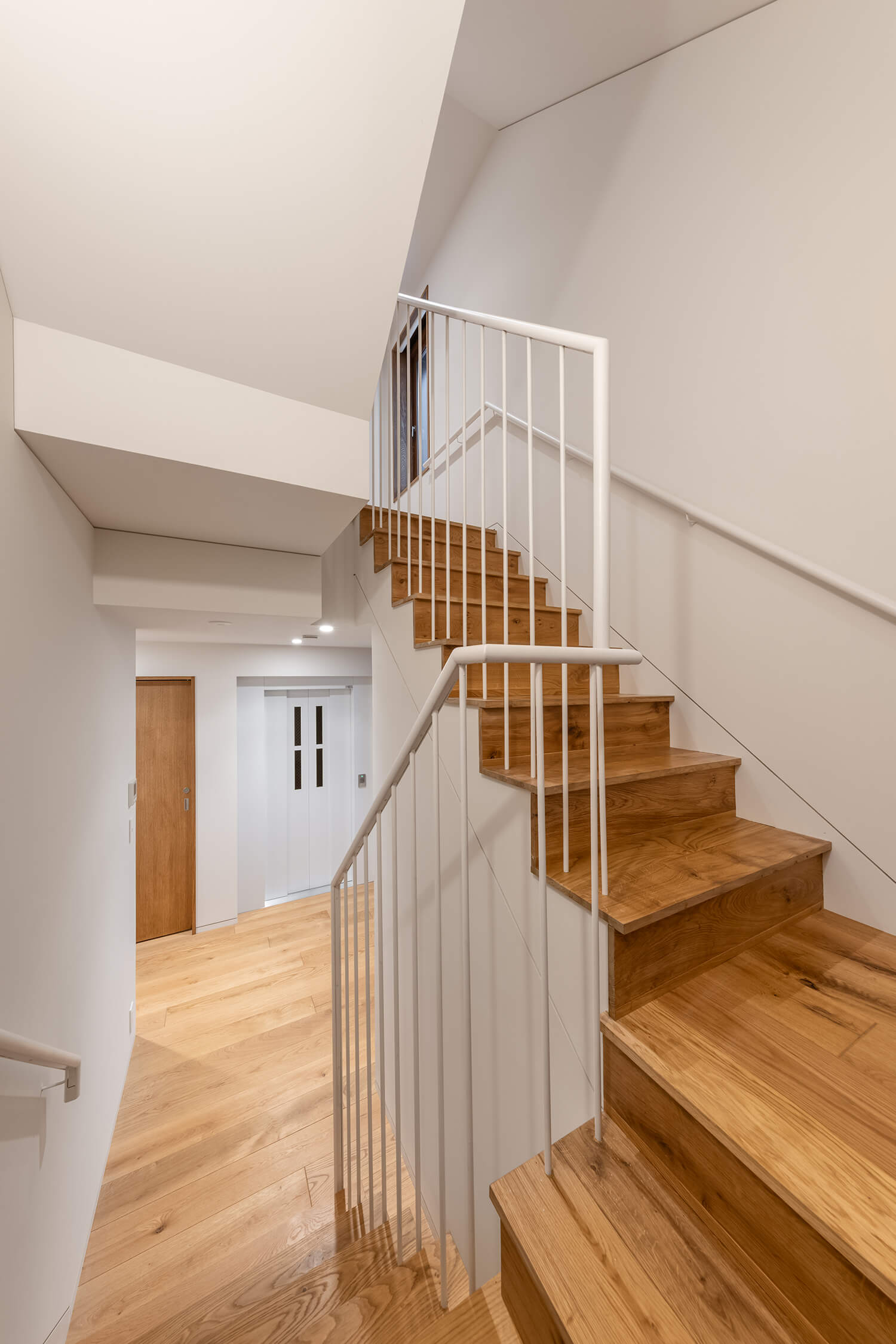
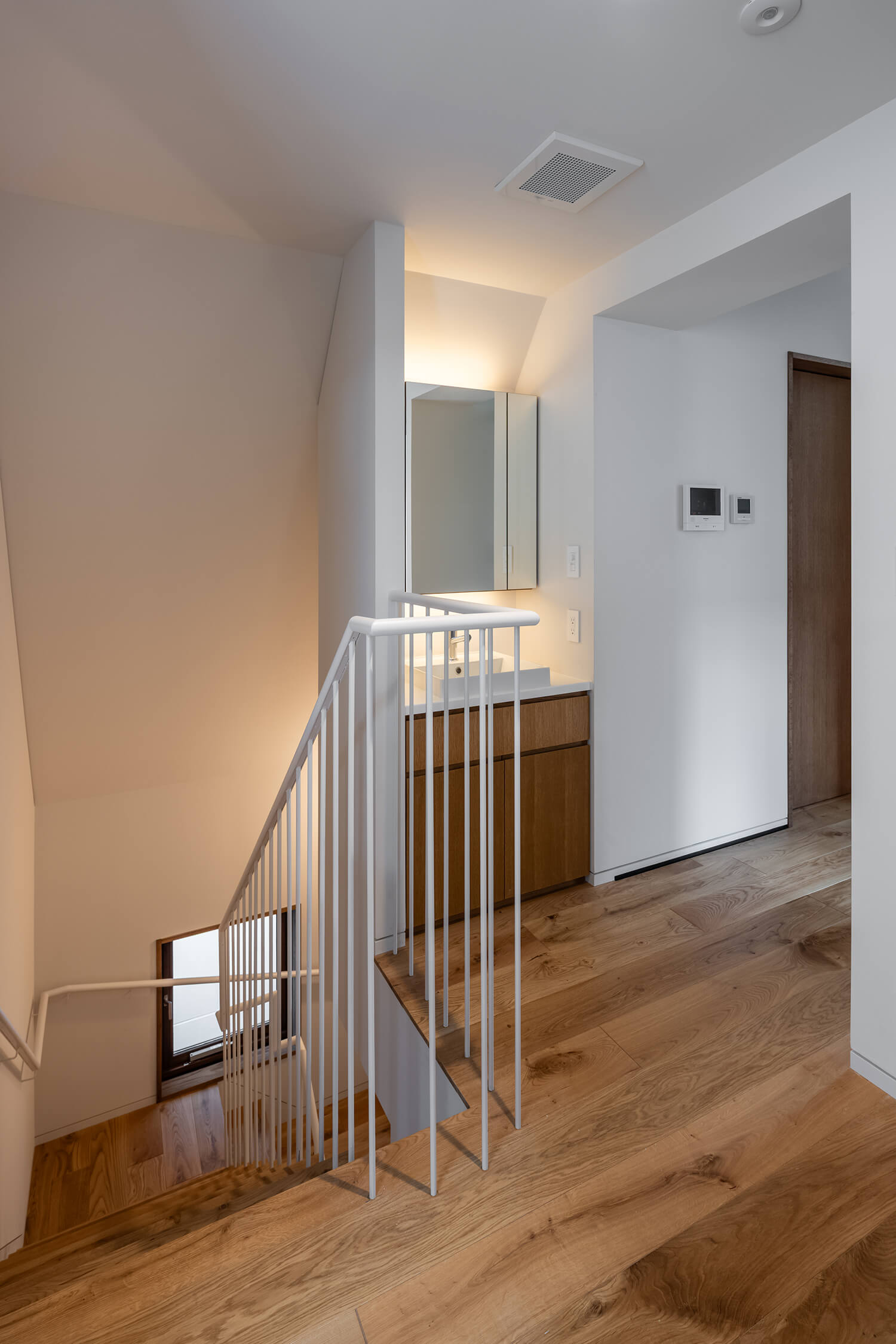
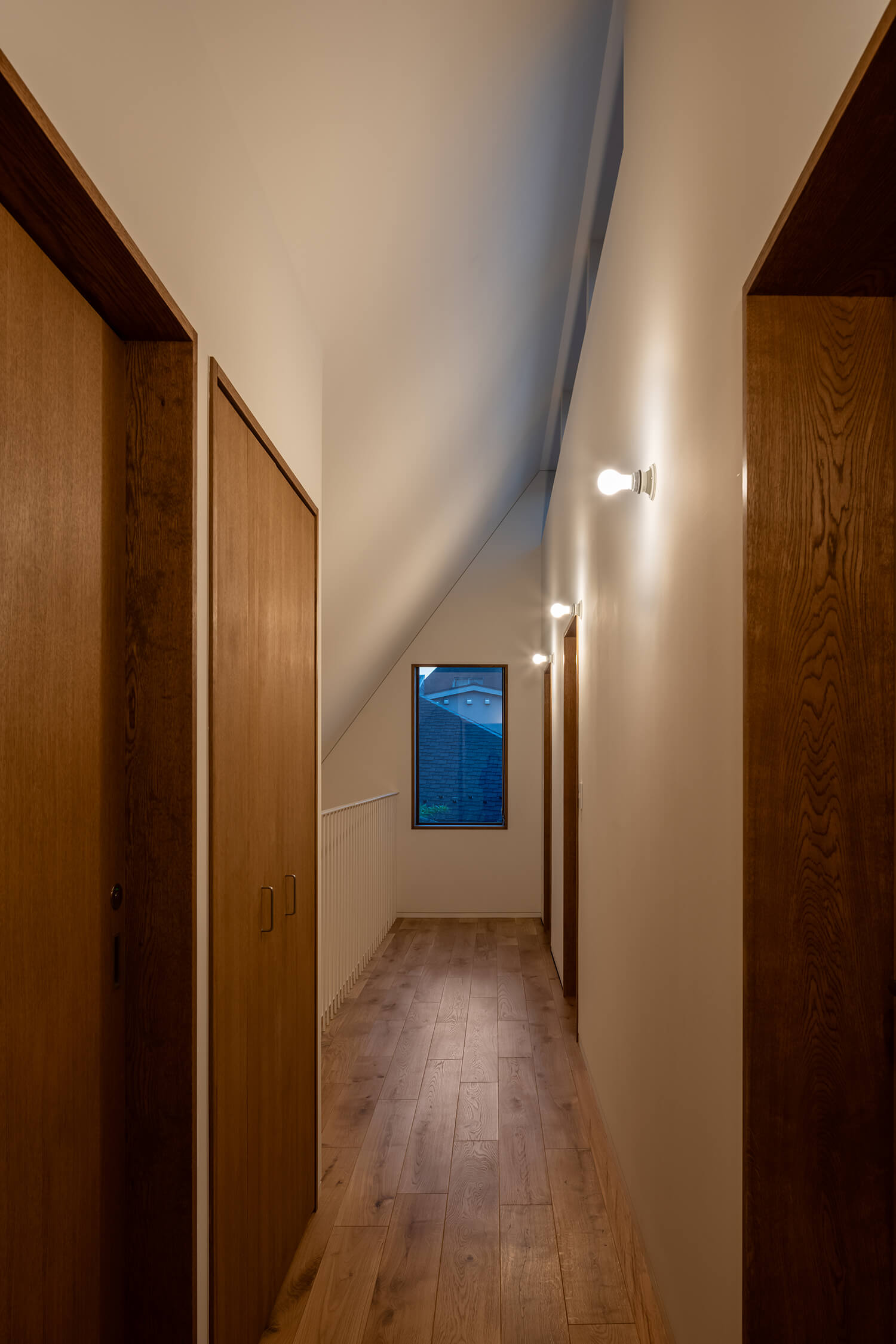
A corridor on the third floor wraps around the void, enabling the presence of family members to intersect vertically. Through the stairs and open volume, a sense of connection is maintained between levels, allowing inhabitants to remain aware of one another across floors.
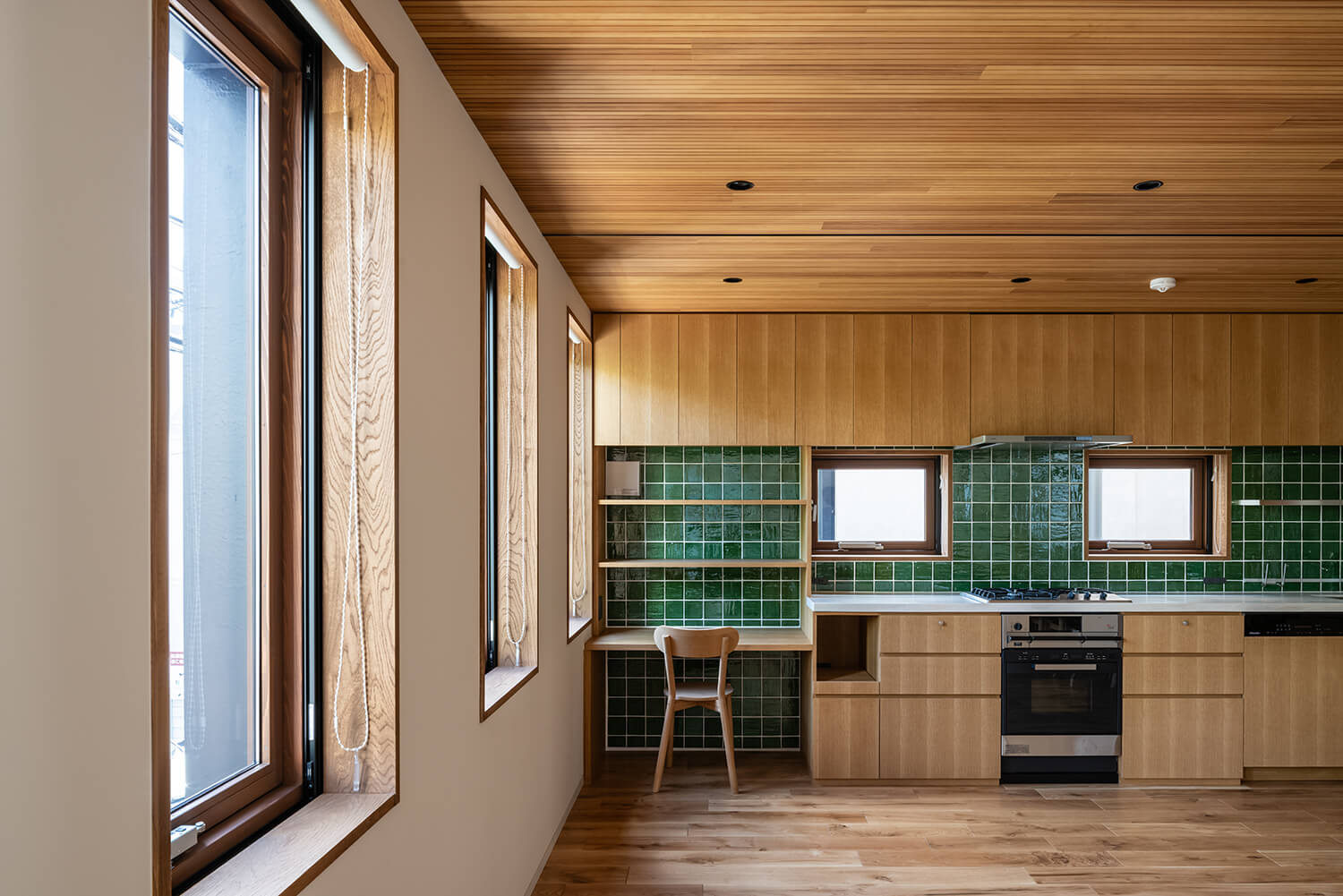
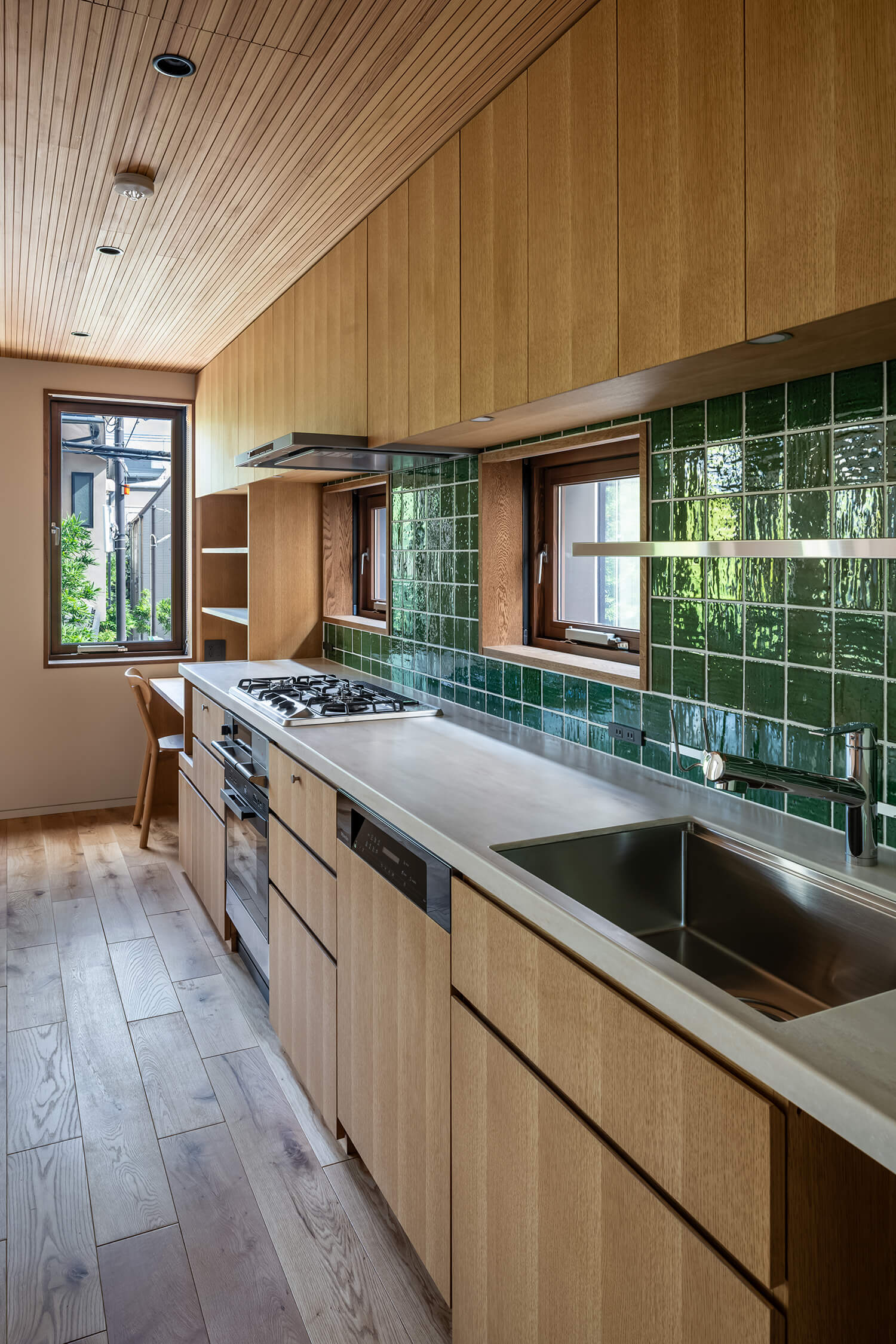
Interior materials include oak veneer furniture and joinery, timber window frames, a narrow-strip timber ceiling in the second-floor living room, and deep green tiles behind the kitchen. These materials acquire greater depth and character over time. Beyond their visual qualities, they provide tactile warmth and acoustic softness. Natural light animates their surfaces with shadow, enabling the family to experience the passage of time and develop a lasting attachment to the home.
Mediating Between Three Houses
Of the three houses, the one closest to the street was designed by a different architect, while the house further back on the site is Azabu Perforated Facade House, previously designed by us. Positioned between these two neighbours, this house mediates their relationship both compositionally and materially.
Externally, the arrangement of windows continues the rhythm established by Azabu Perforated Facade House. At the same time, the façade colour was selected to harmonise with the warm-toned exterior of the house closer to the street. In this way, the building inherits qualities from both neighbours and assumes a mediating role within the trio, creating a sense of balance among the three family homes.
Around the entrance, dark brown wood-wool cement boards introduce a textural contrast with the warm exterior walls. The subdued tones lend calmness and familiarity to the building’s interface with the city. Planting accompanies the approach from the street, establishing a soft green margin along the site boundary — a feature shared by all three houses. Just as the bamboo grove on the neighbouring plot appears as borrowed scenery from the living room, the greenery of each house was conceived to become part of a shared landscape among them.
Sustainable Performance and Comfort
Environmental performance was carefully considered. An external insulation system applied to the reinforced concrete structure achieves a U-value of 0.44 W/㎡K, ensuring high thermal efficiency. The thermal mass of the concrete is utilised to maintain a stable indoor environment over extended periods.
A full-air underfloor radiant heating and cooling system has been adopted. Air is quietly supplied through ducts beneath the floor, creating a gentle thermal environment without noticeable draughts. This system maintains consistent temperatures across floors, including the void space, enhancing the overall quality of daily life.
Contributing to a Shared Streetscape
Within the context of a family subdivision, Azabu Slanting Light House seeks to balance collective harmony with individual identity. By combining a façade that resonates with its neighbours and a sectional composition shaped by slanting light, the house contributes to a cohesive familial streetscape while establishing a distinct architectural presence of its own.
- Location:Minato-ku, Tokyo
- Category:Private residence
- Completion:2025.08
- Structure:Delta Structural Consultants
- Facilities:Comodo Facility Planning
- Contractor:TH-1
- Photo:Tololo studio Mayu Nakamura
- Site area:100.75㎡
- Building area:65.32㎡
- Total floor area:189.34㎡