Commercial Building in Shinjuku 3-chome “TRES SHINJUKU”
- COMMERCIAL
2026.01
Shinjuku-ku, Tokyo
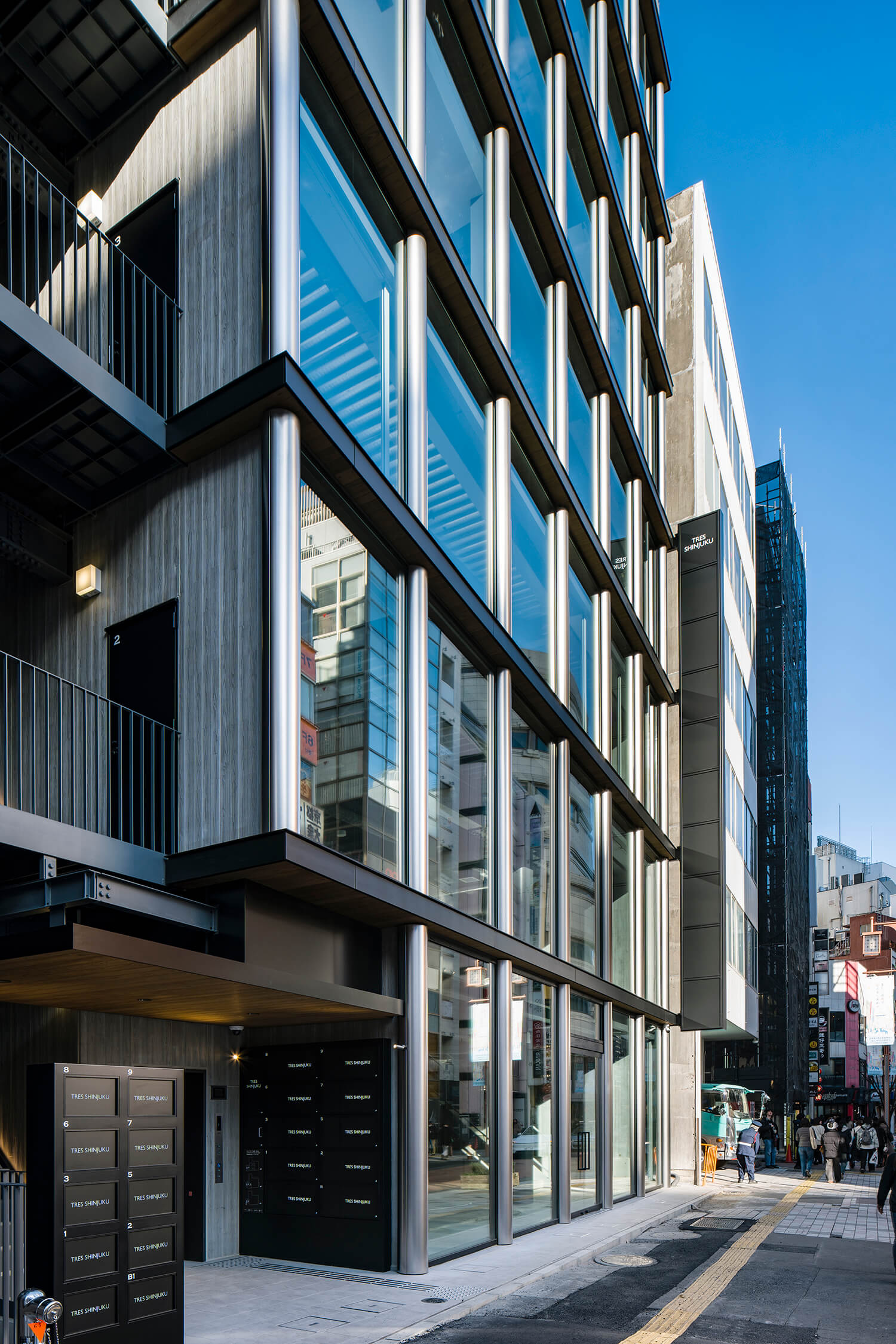
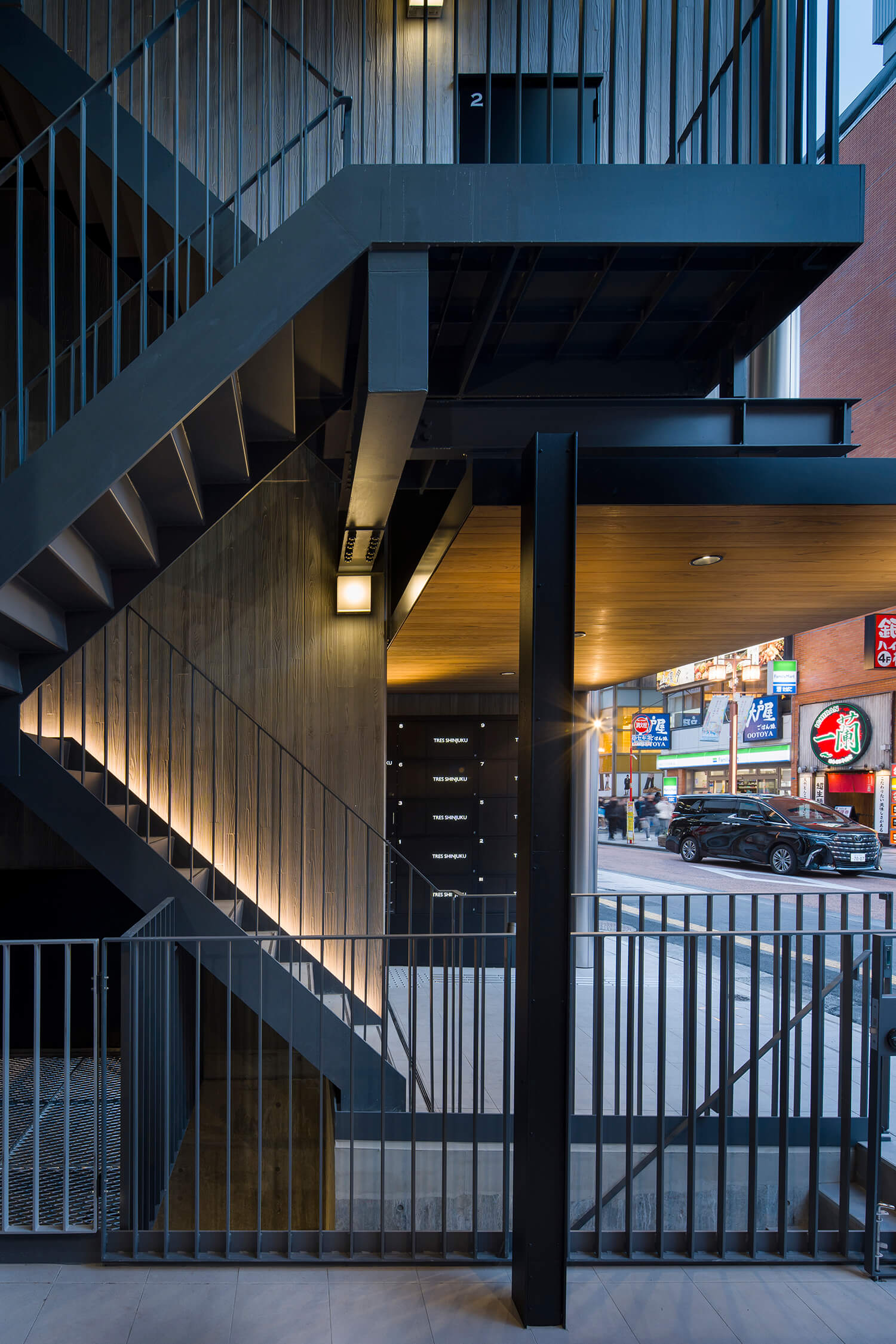
A commercial building comprising one basement level and nine storeys above ground, situated in Shinjuku 3-chome, one of Tokyo’s leading commercial hubs. The site boasts a generous frontage and, owing to its proximity to station exits and major pedestrian routes, enjoys high visibility from the street. At the same time, Shinjuku 3-chome is an urban environment where signage, lighting, pedestrian flow and building uses overlap at high density; it is a place where, if a building asserts itself too strongly, it risks being swallowed up by the city’s sheer diversity. In this project, the aim was not for the building to stand out as a singular entity, but rather for it to absorb and organise the city’s information.
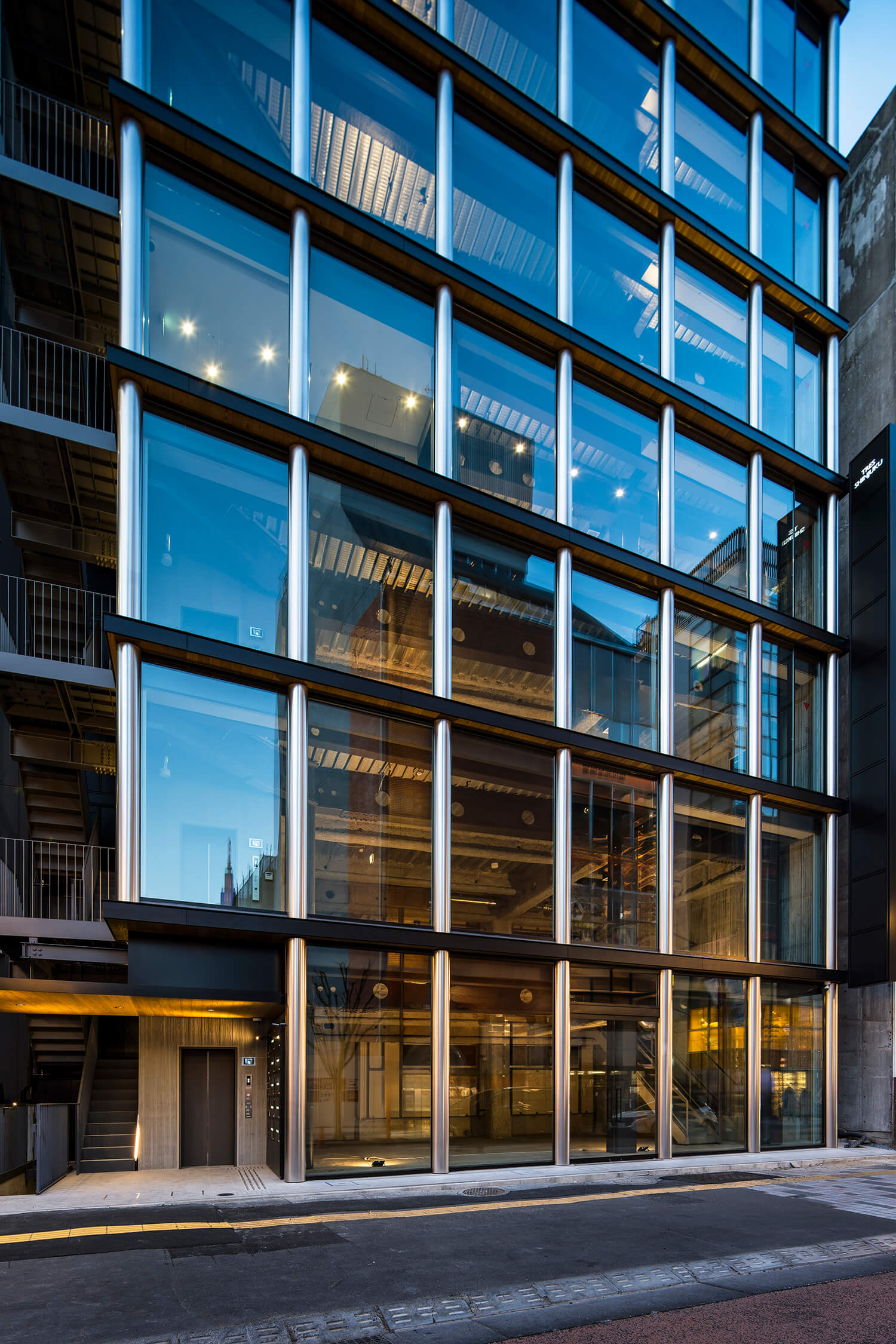
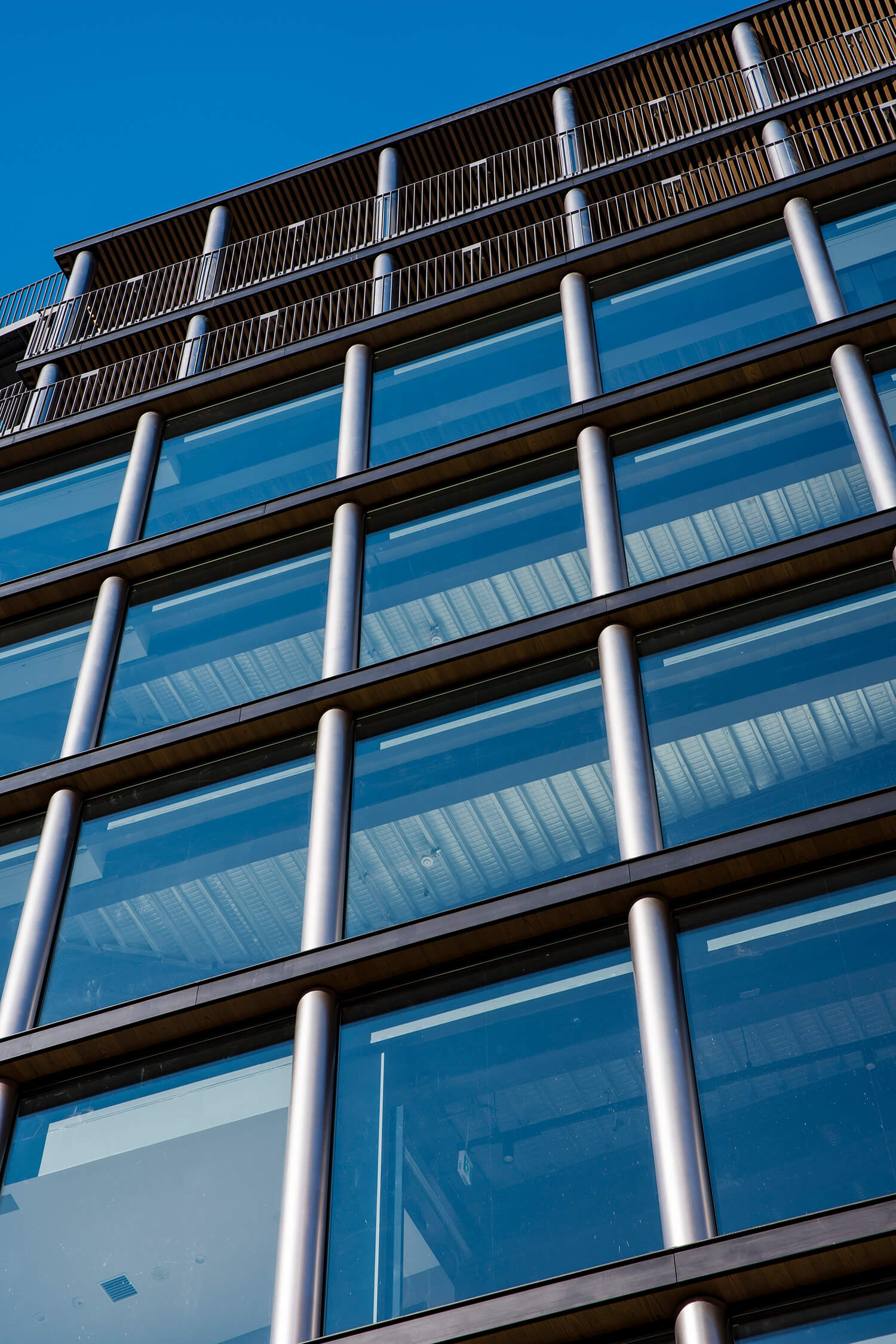
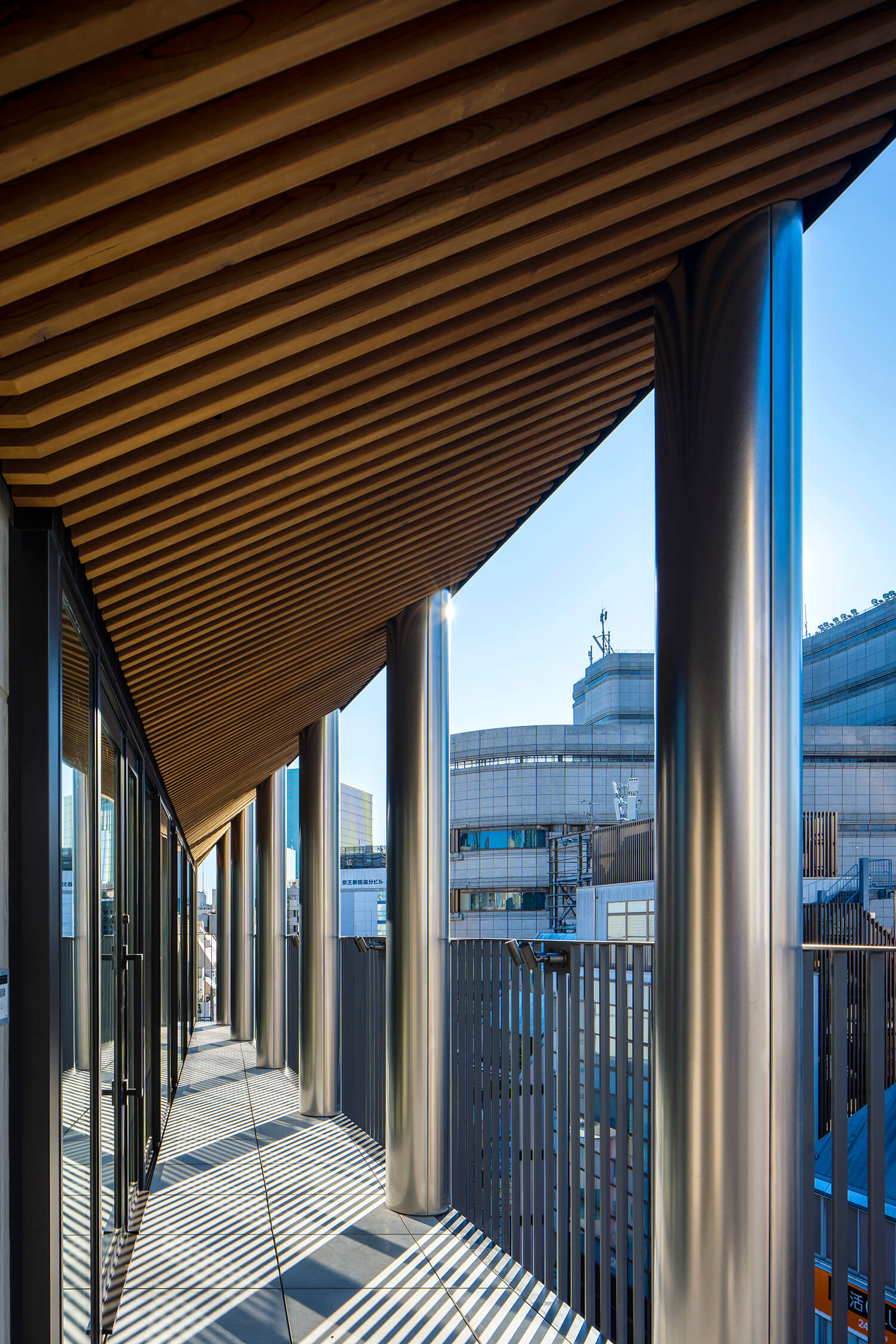
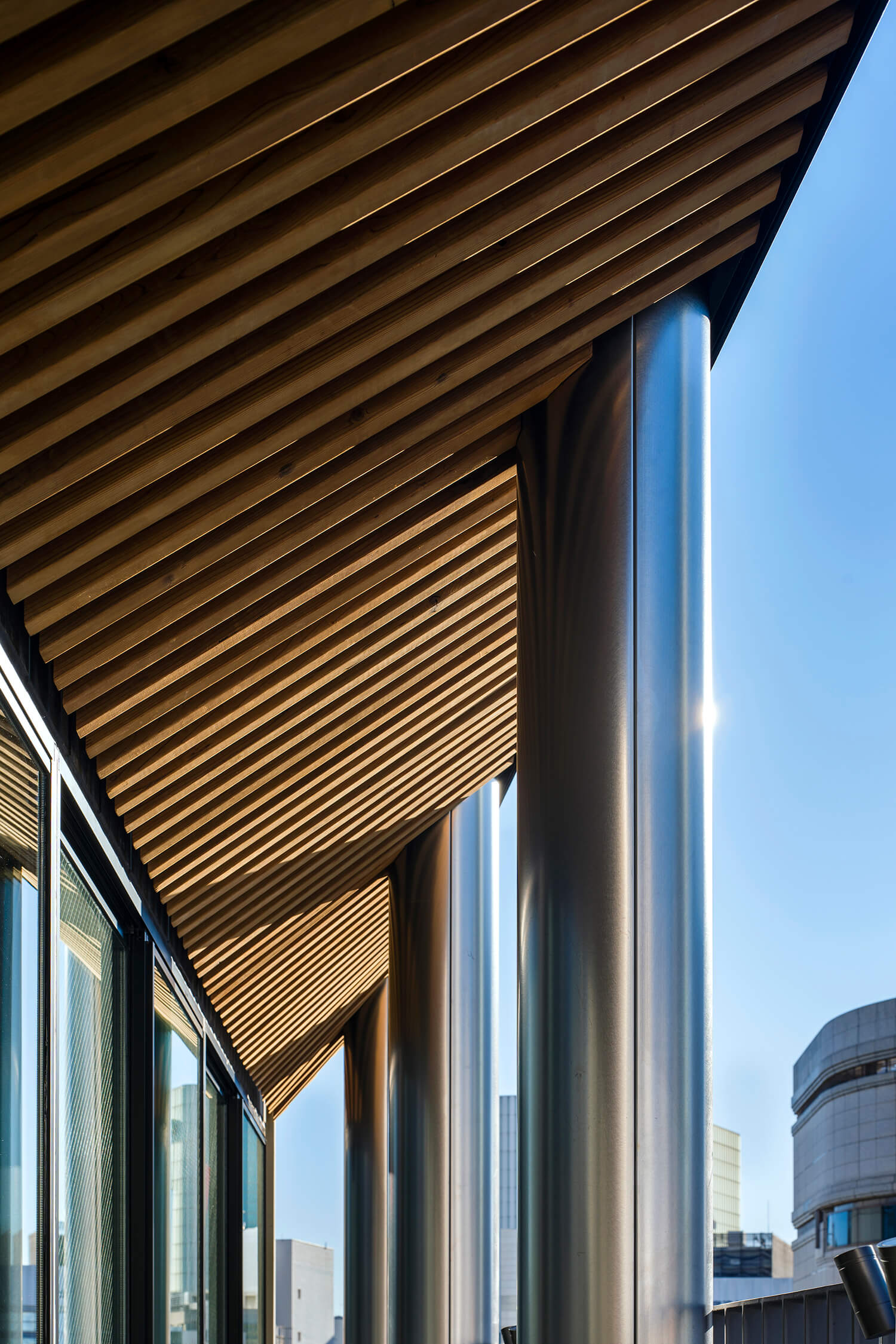
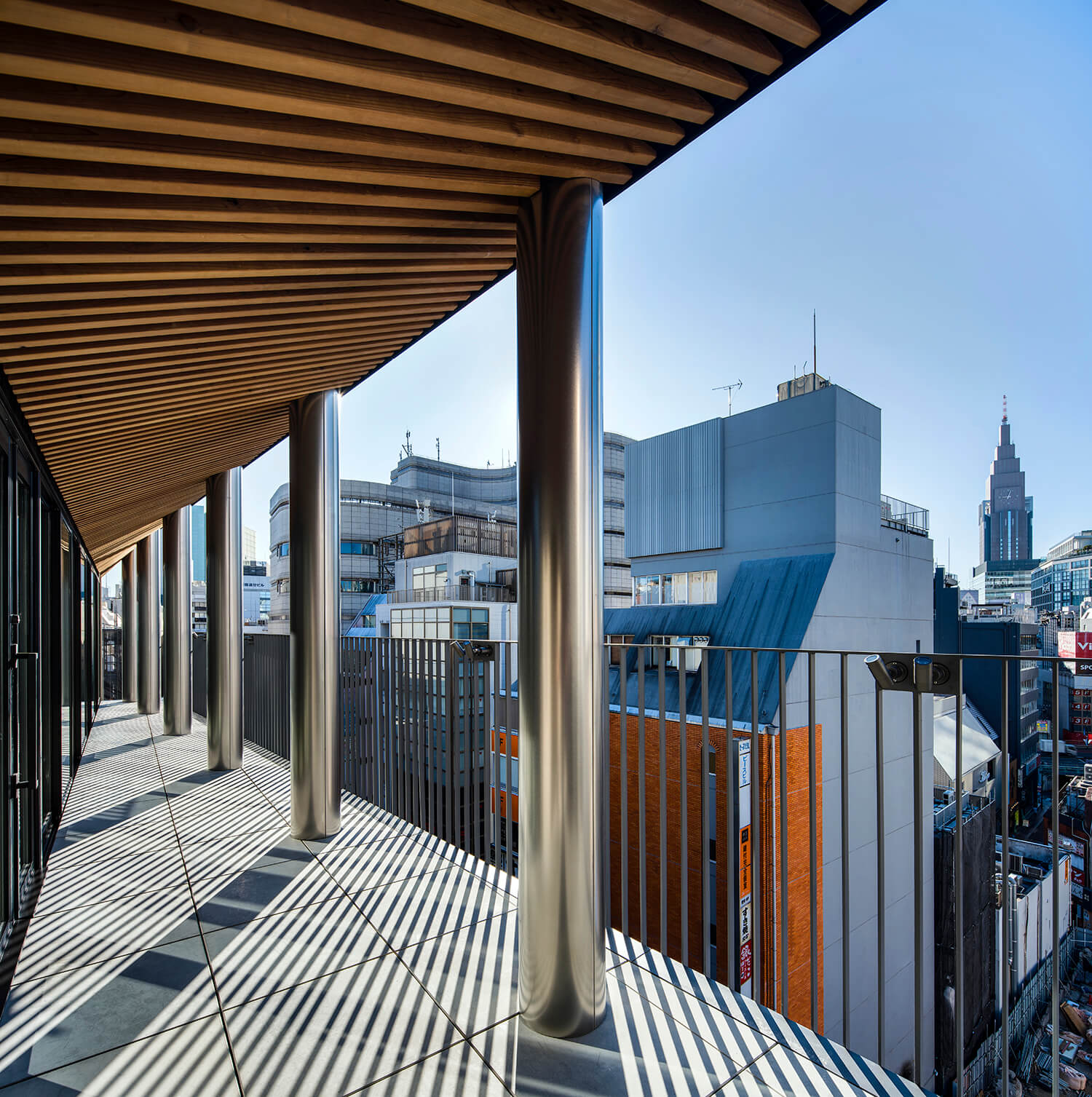
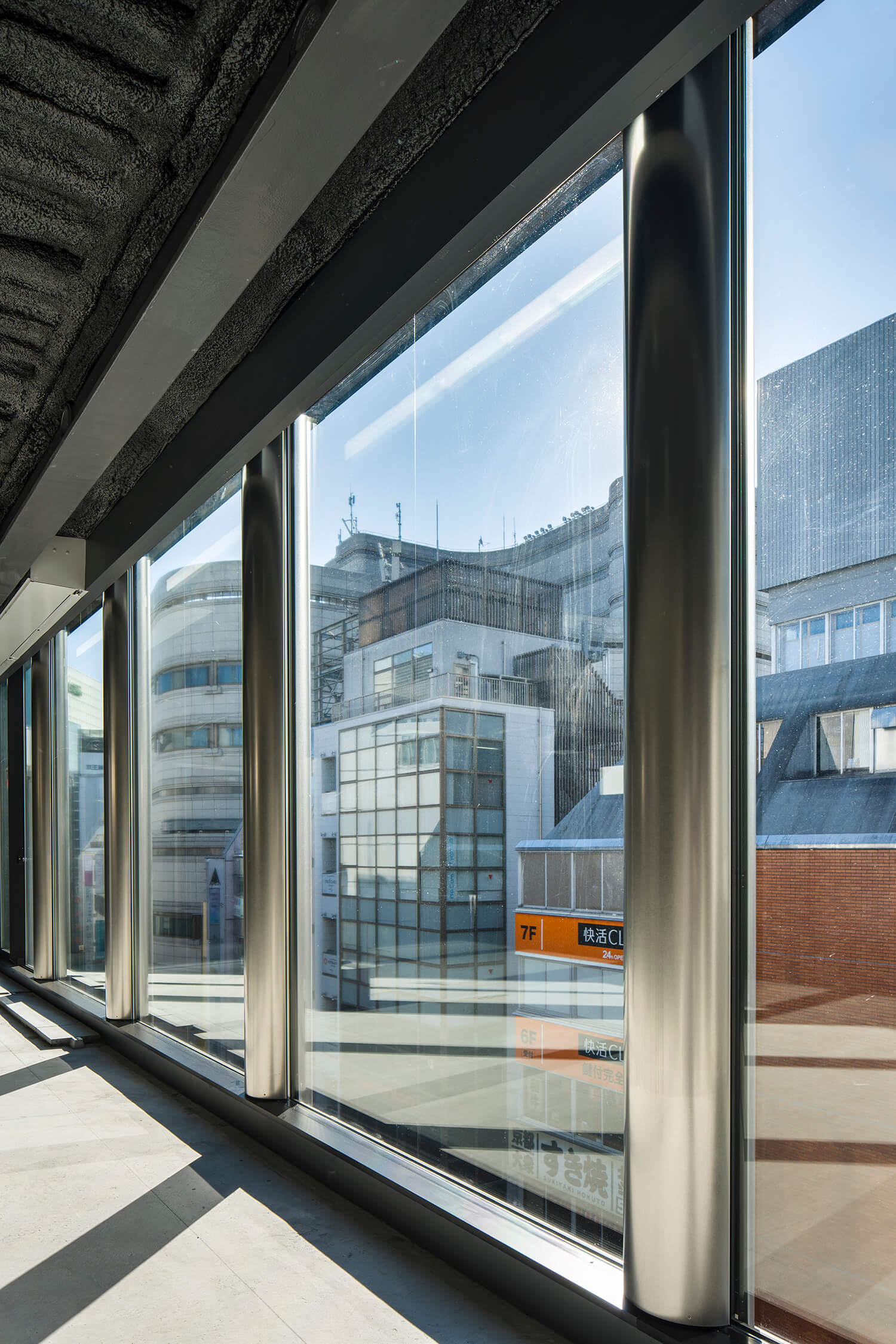
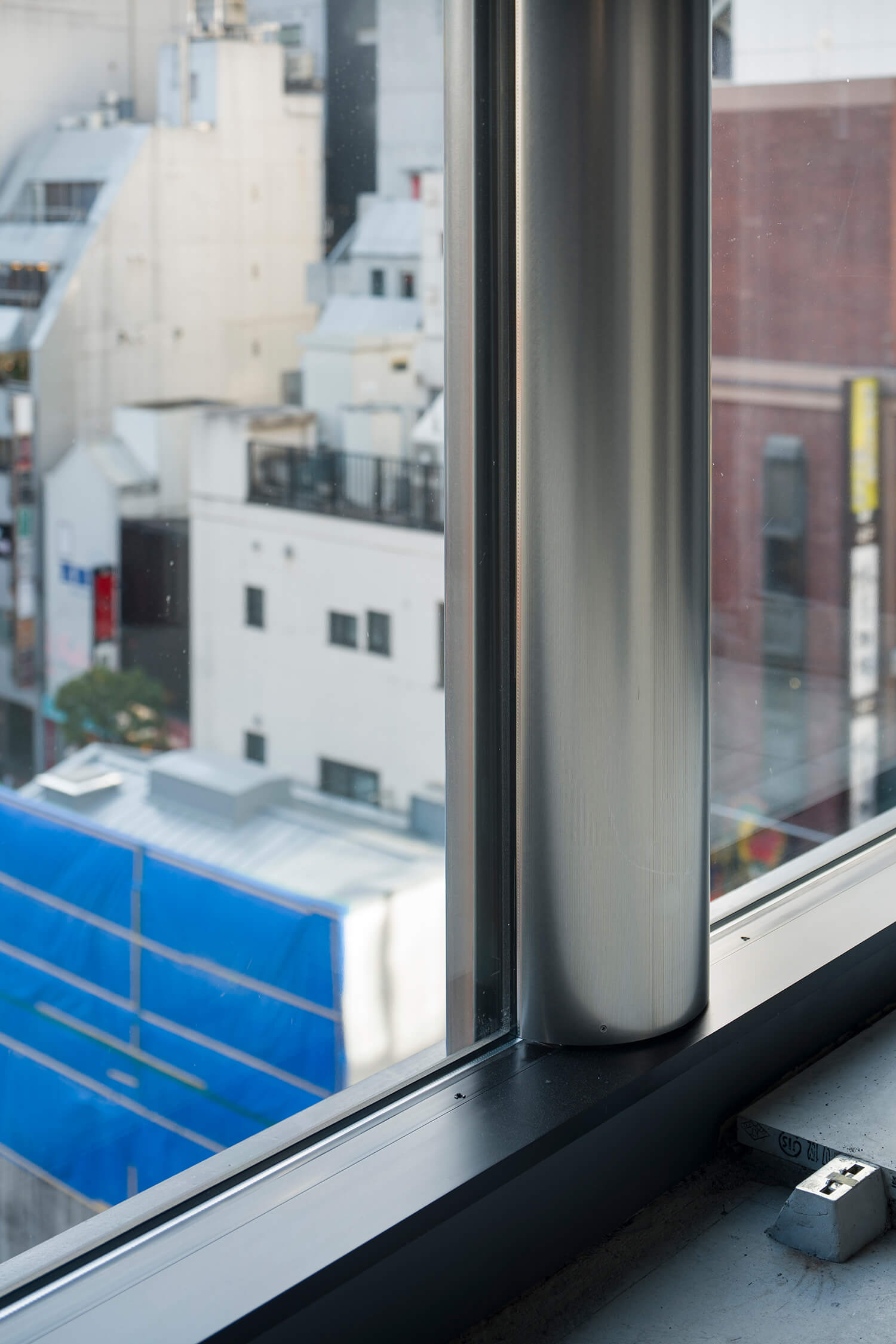
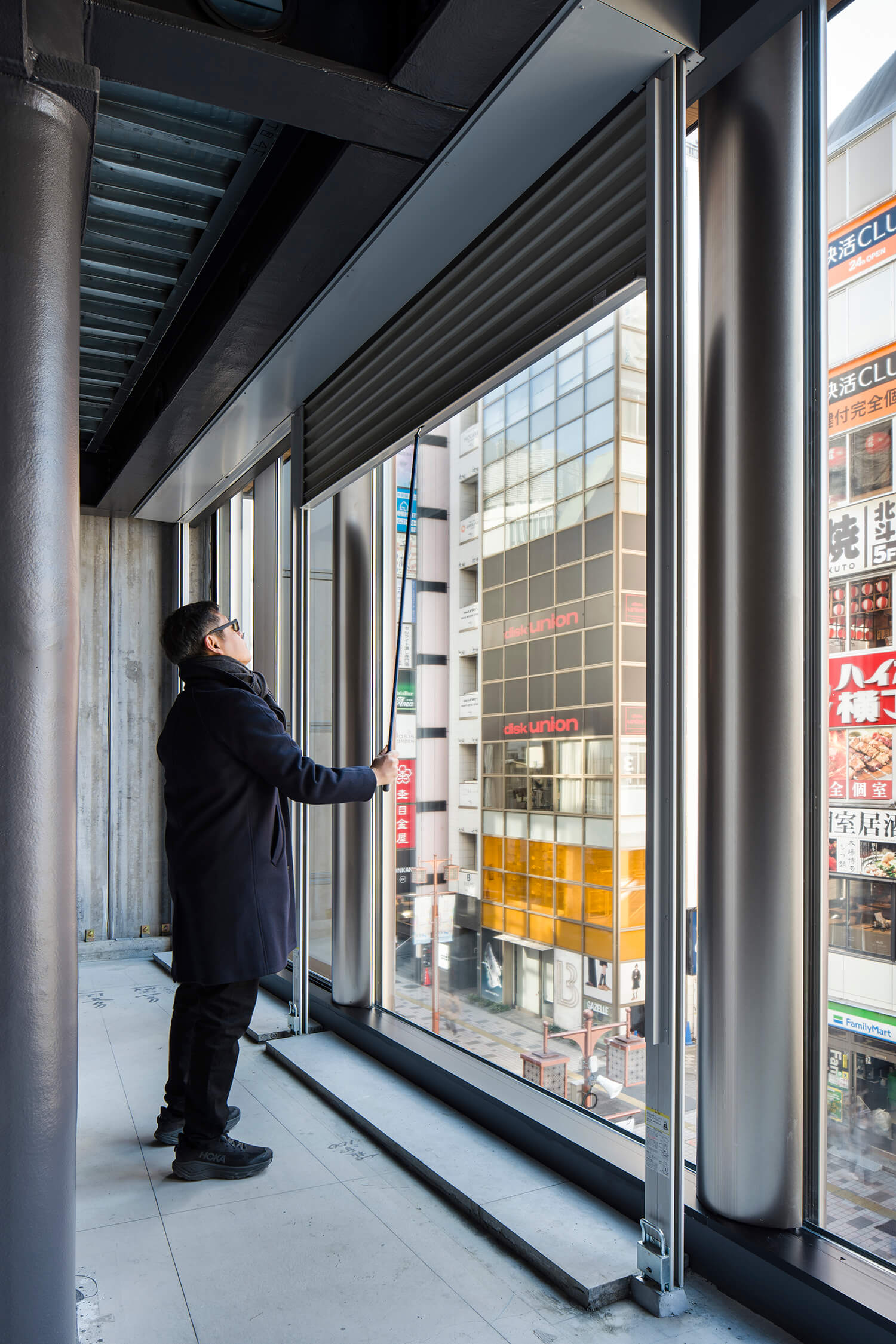
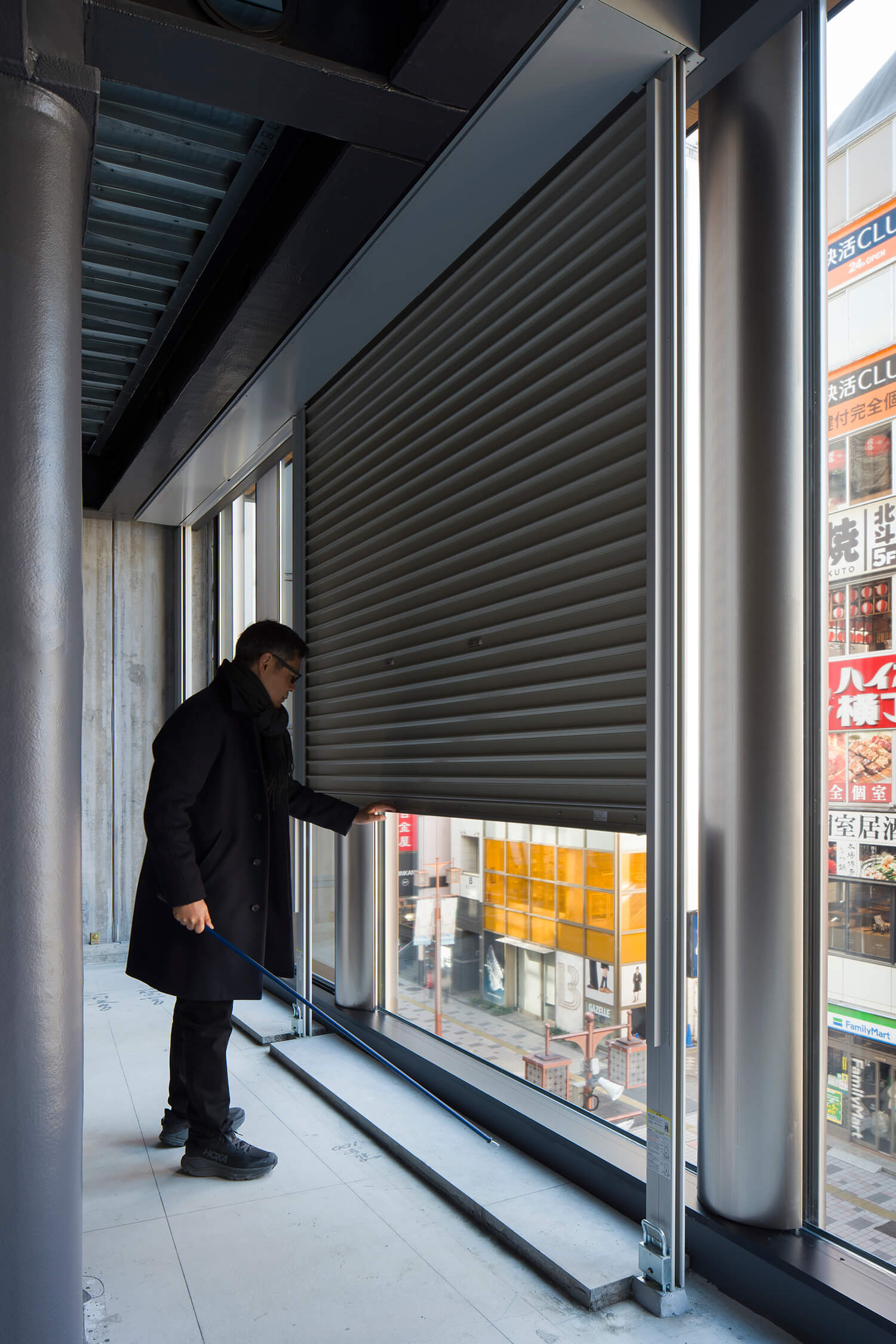
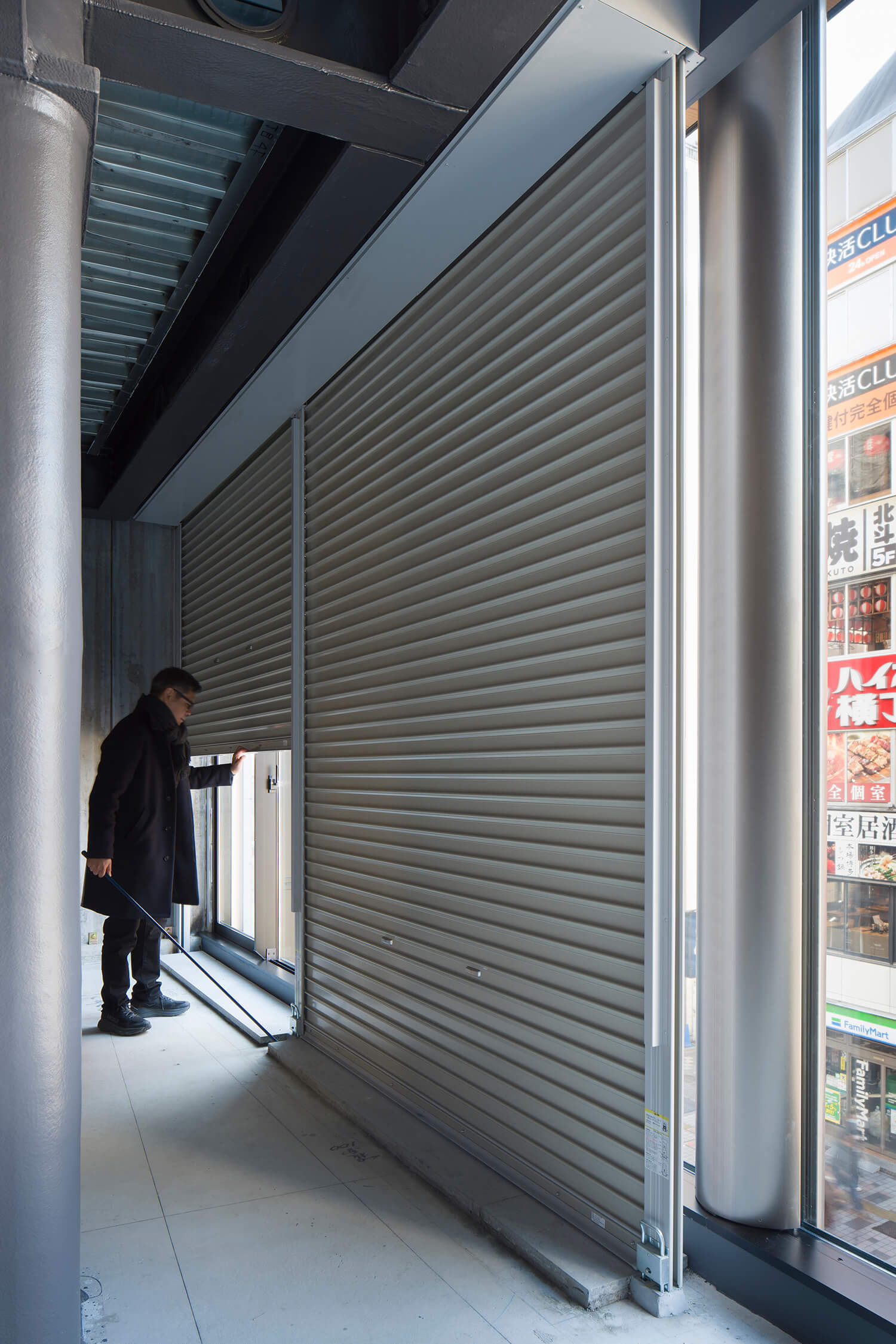
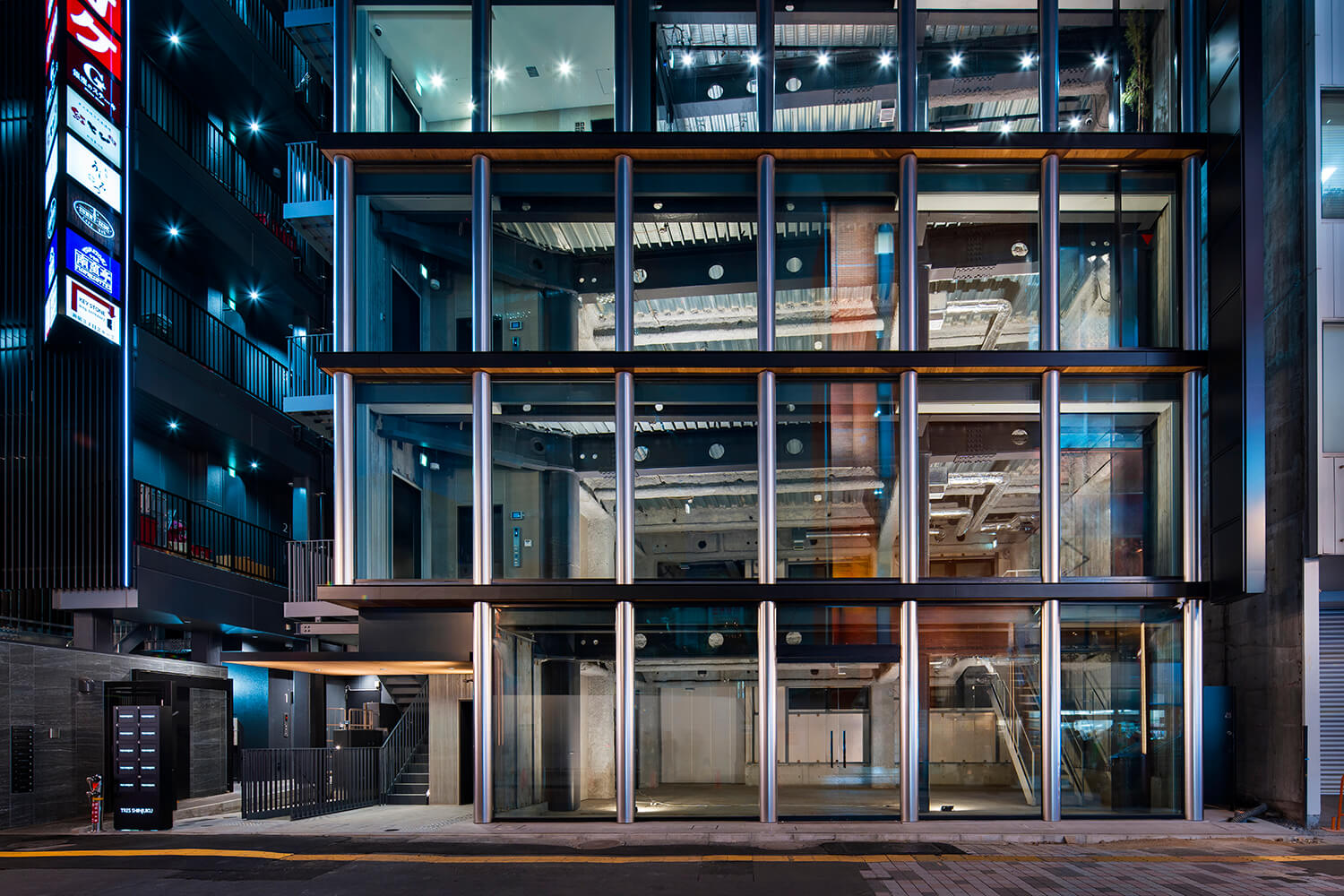
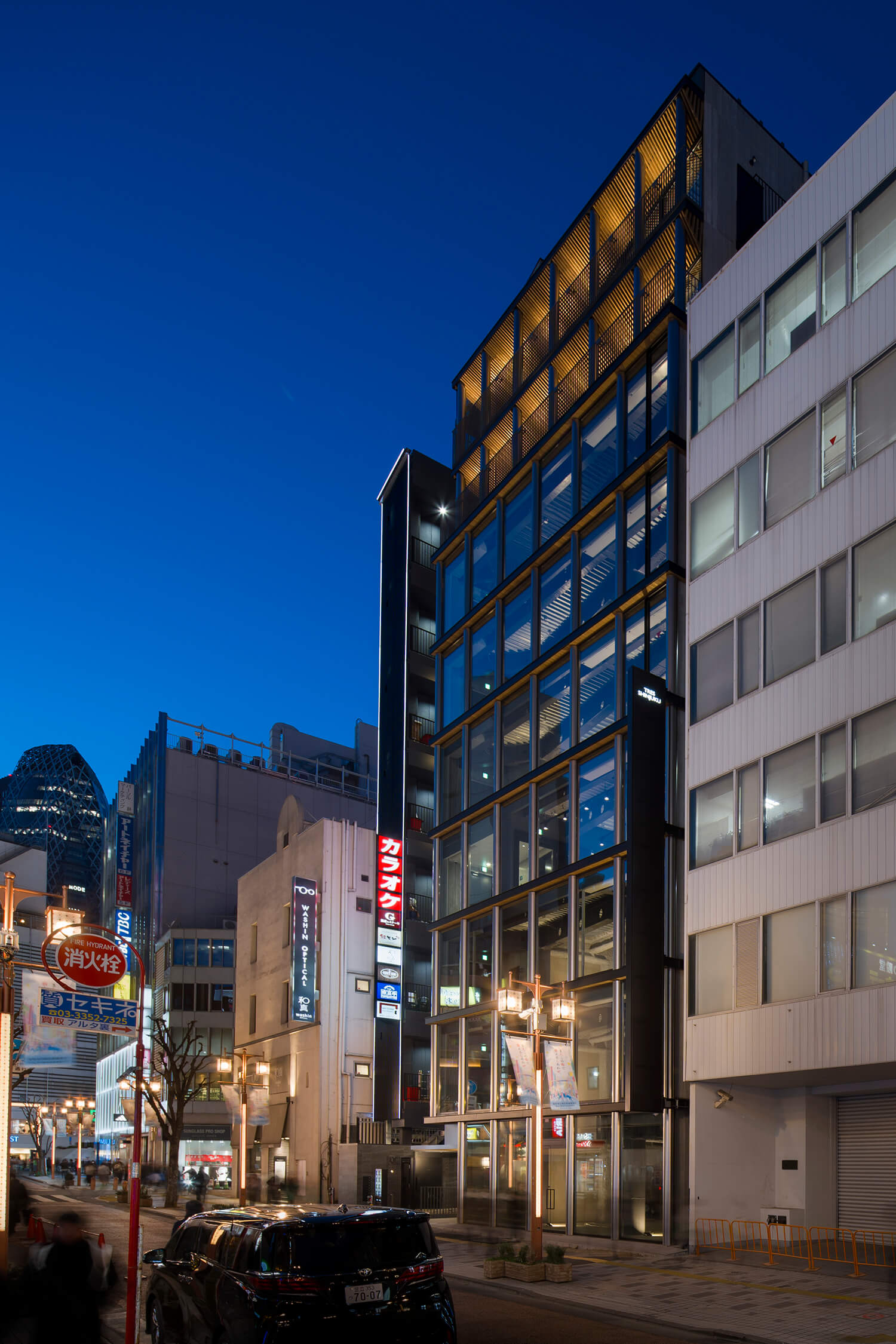
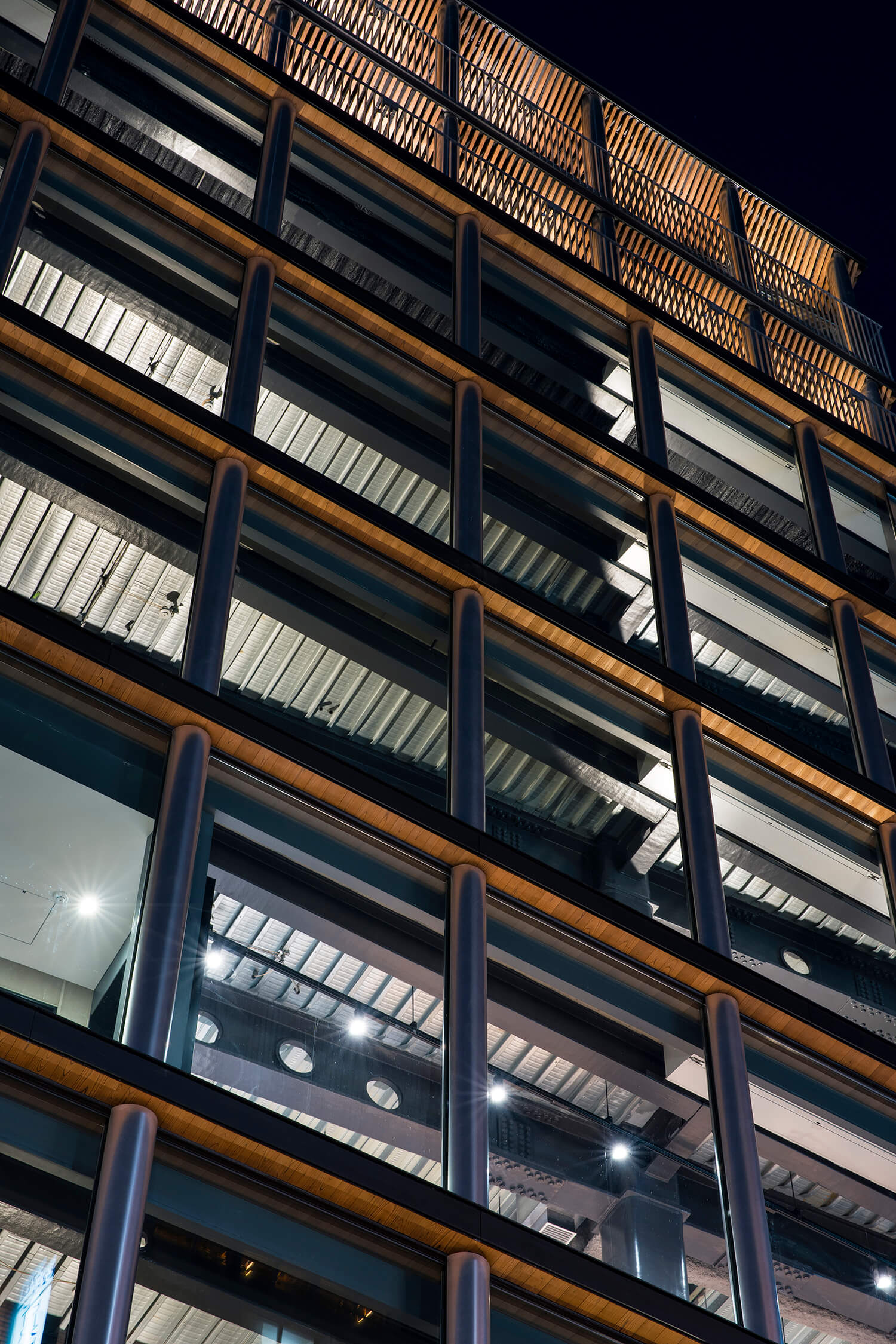
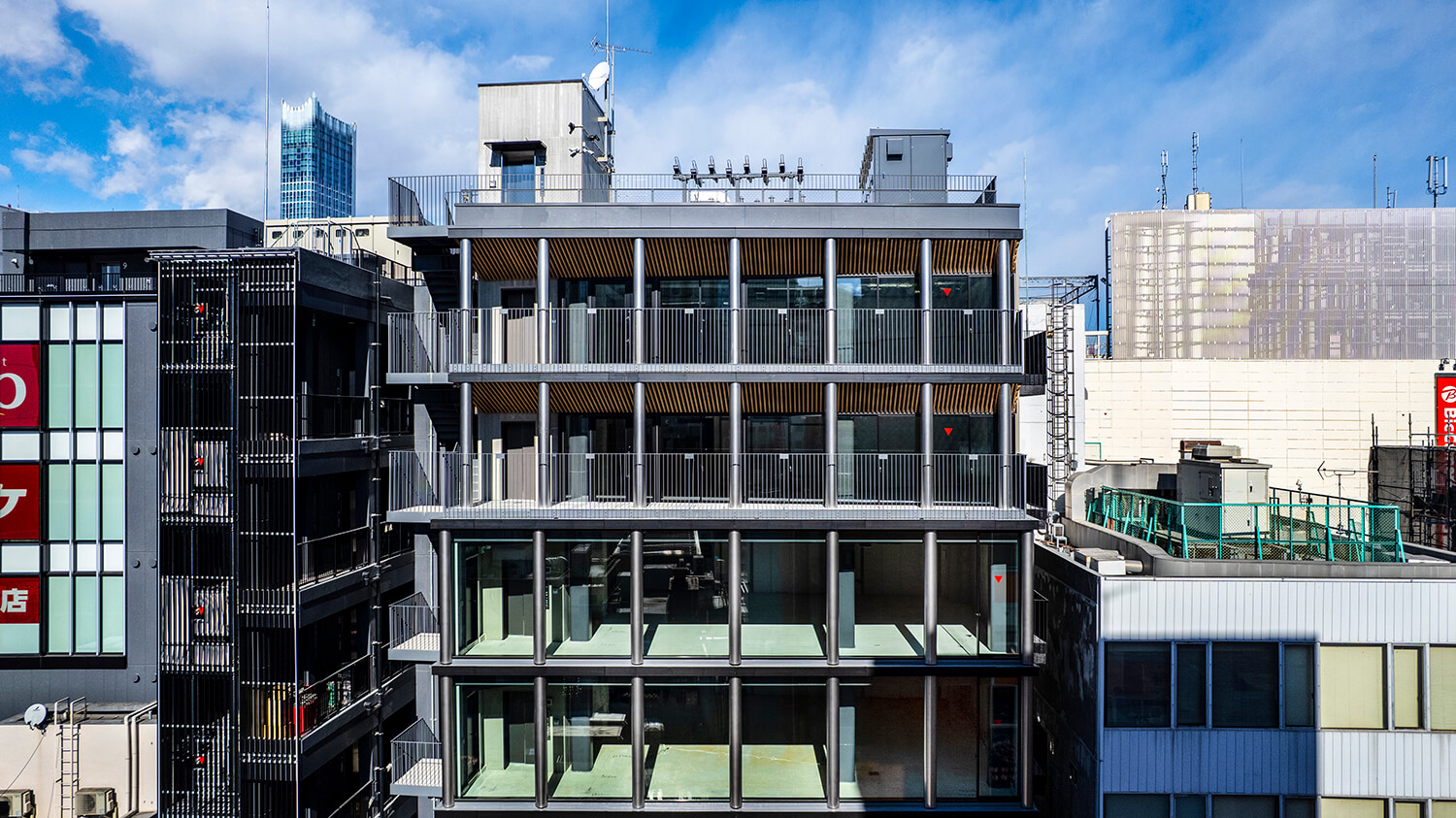
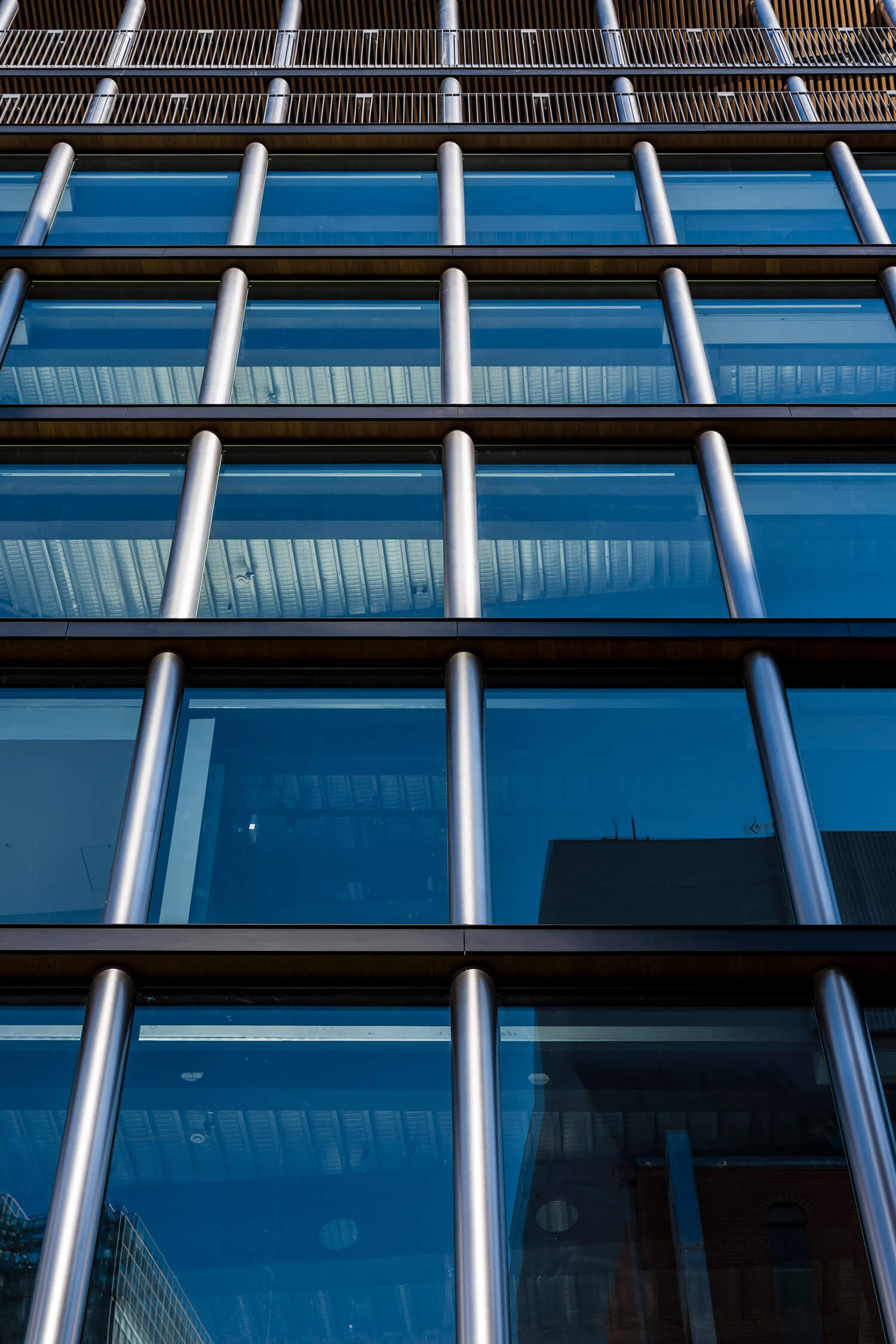
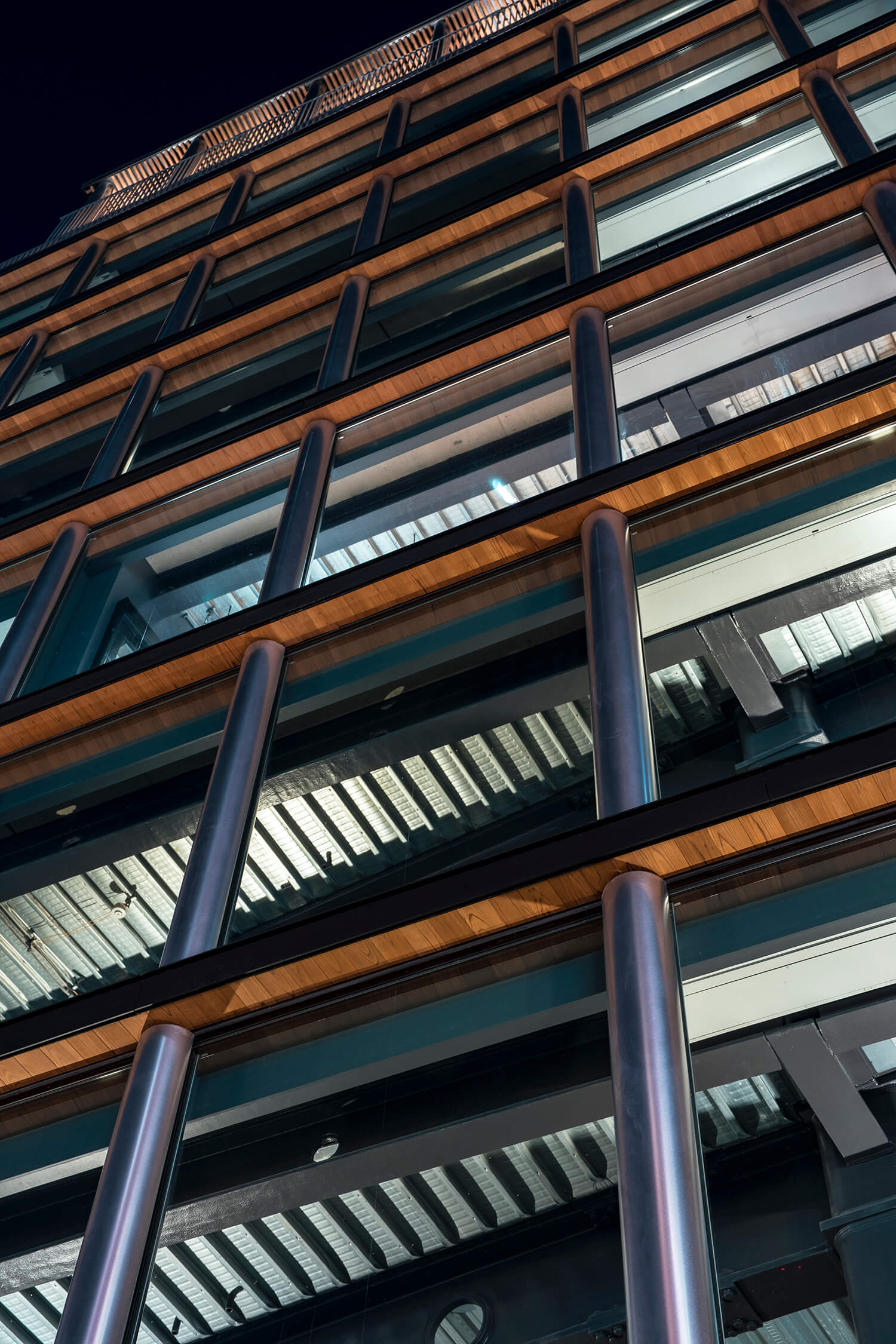
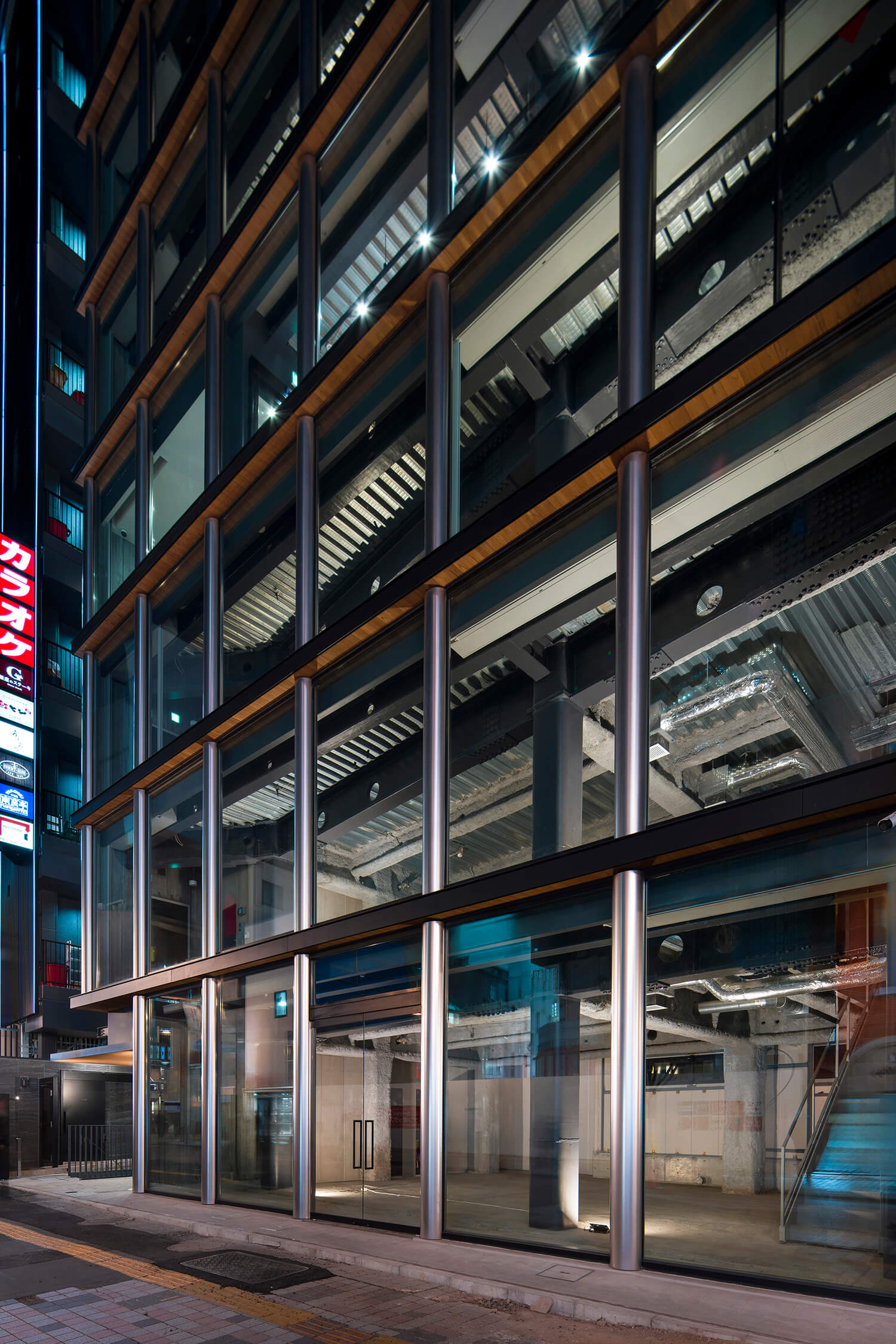
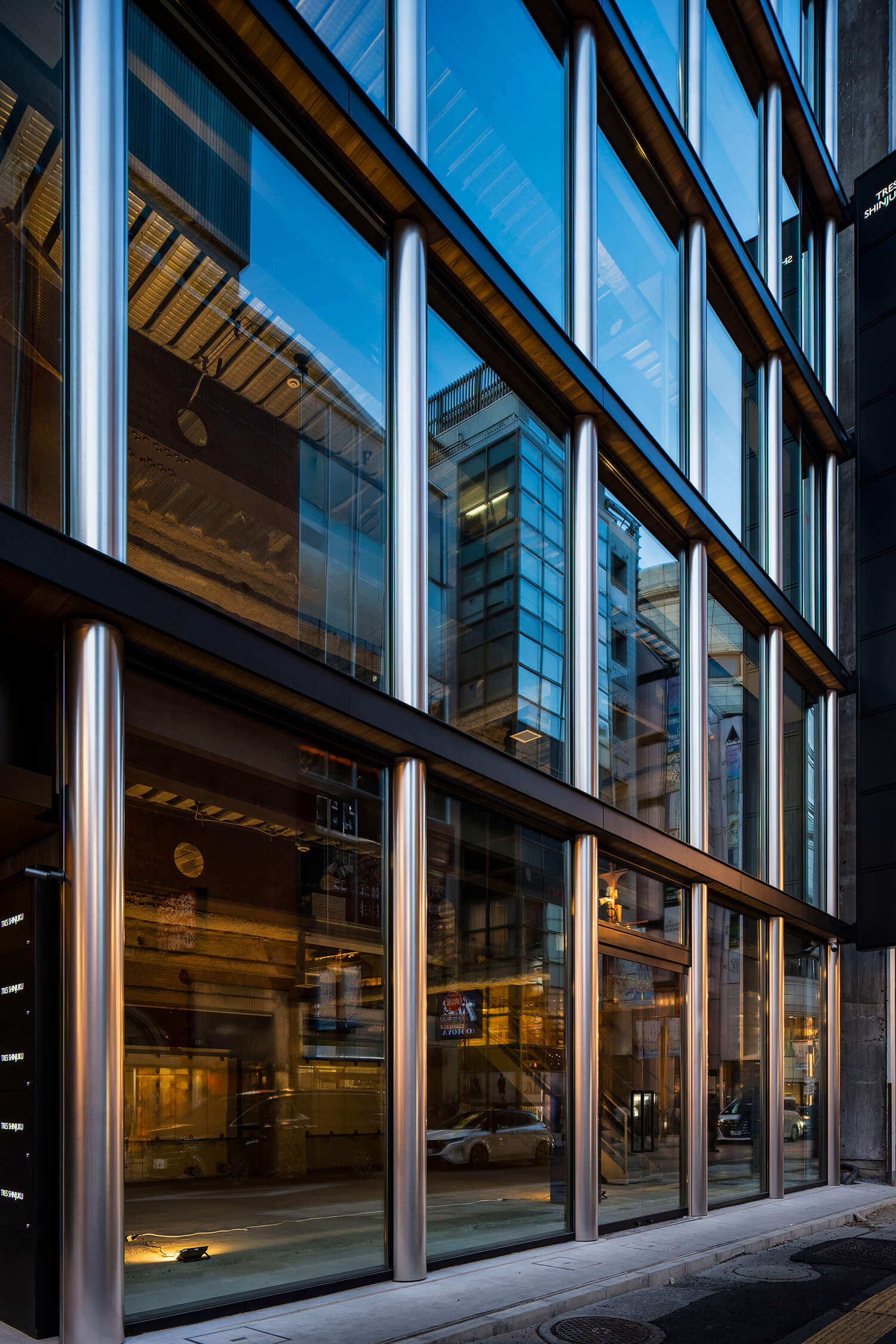
The façade is composed of a repetition of columns rising along the perimeter. These columns are not structural elements but are formed by semi-circular panels that cover standard aluminium window frames from the outside. Inside the columns are terraces created by the building’s setback and vertical downpipes to drain rainwater from the edges of each floor’s slab. The semi-circular panels forming the columns are designed to be removable, allowing for equipment maintenance and future upgrades. Both ends of the building fall within the range where there is a risk of fire spreading from adjacent properties. Normally, the window frames themselves would need to serve as fire-resistant equipment; with aluminium frames, this would require the insertion of solid panels midway up the floor height, whilst steel frames would necessitate the use of wire-reinforced glass. In this building, by installing fire shutters on the inside of the openings within the fire spread risk zone, the design avoids the need to treat the sashes as fire-resistant equipment. This allows compliance with regulations to be achieved without manifesting it as a segmented element on the façade, thereby preserving the transparency of the façade formed by the columns.
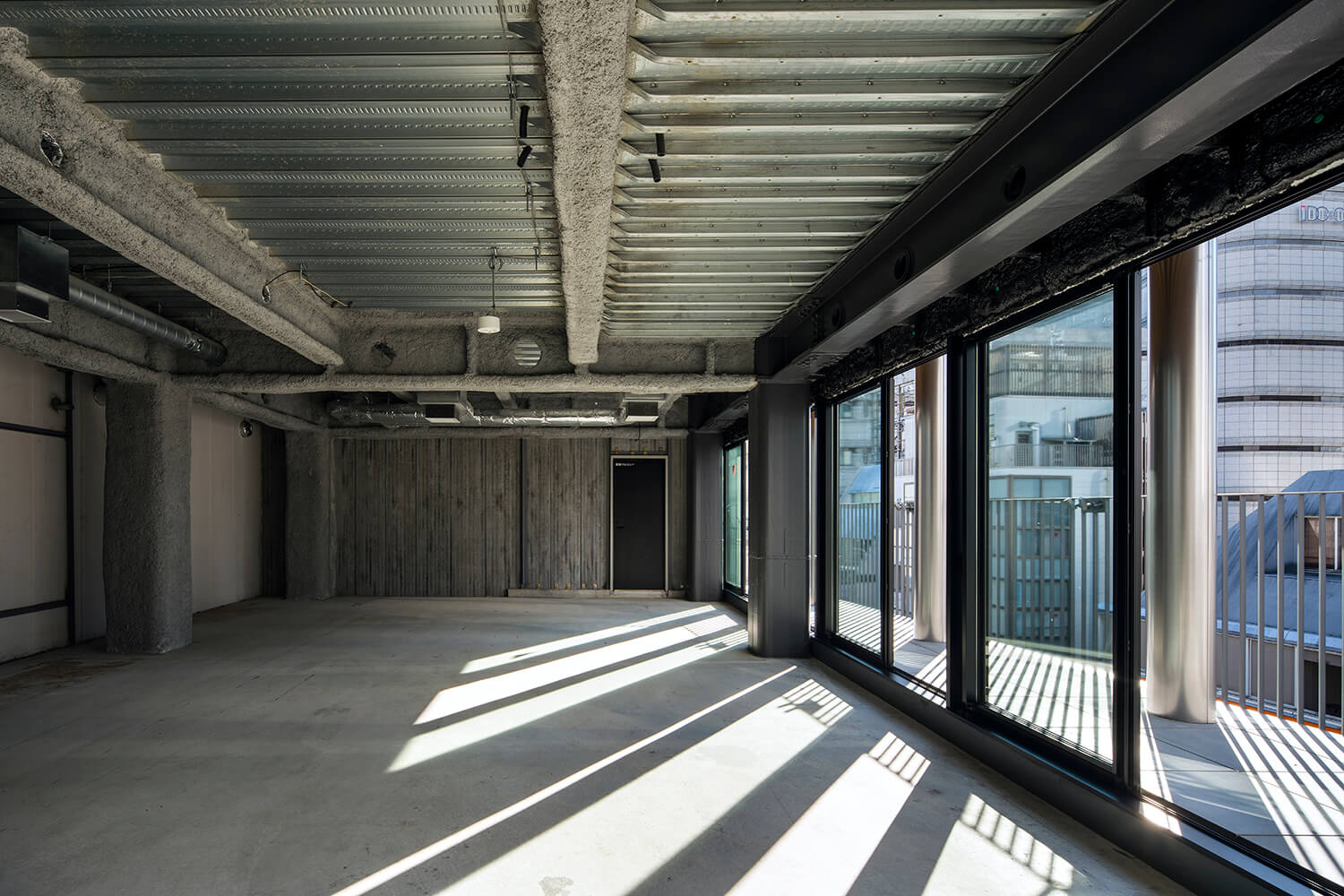
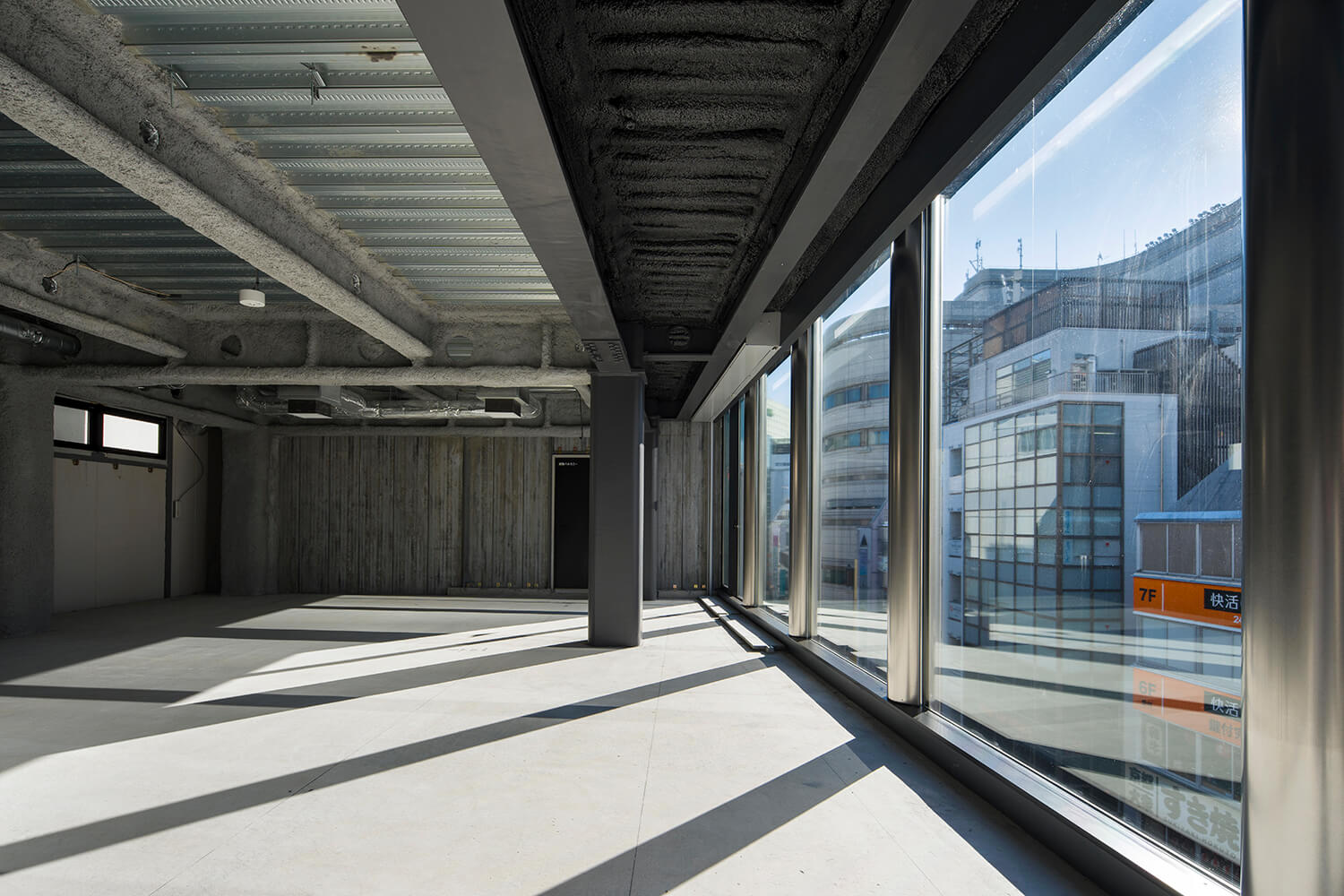
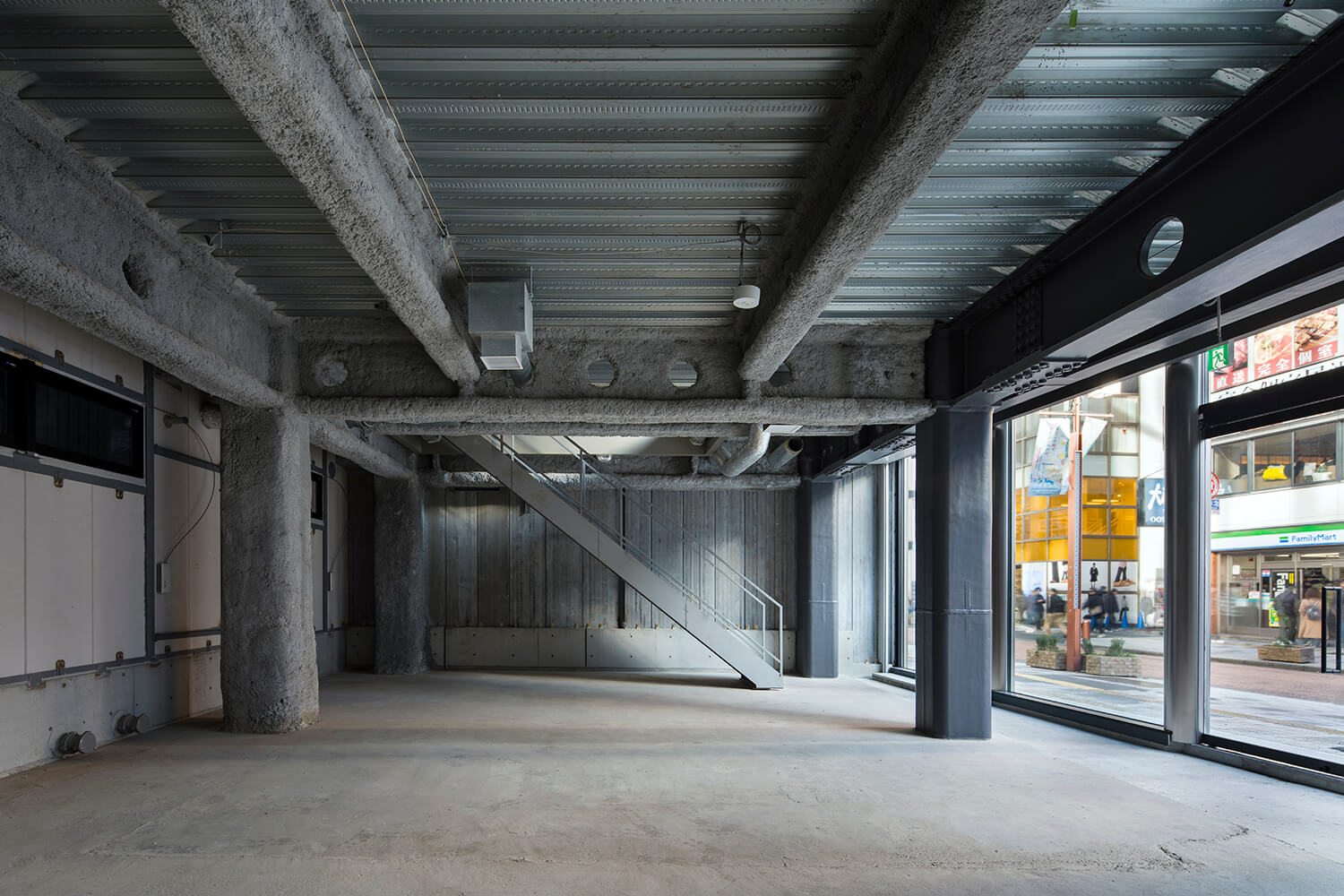
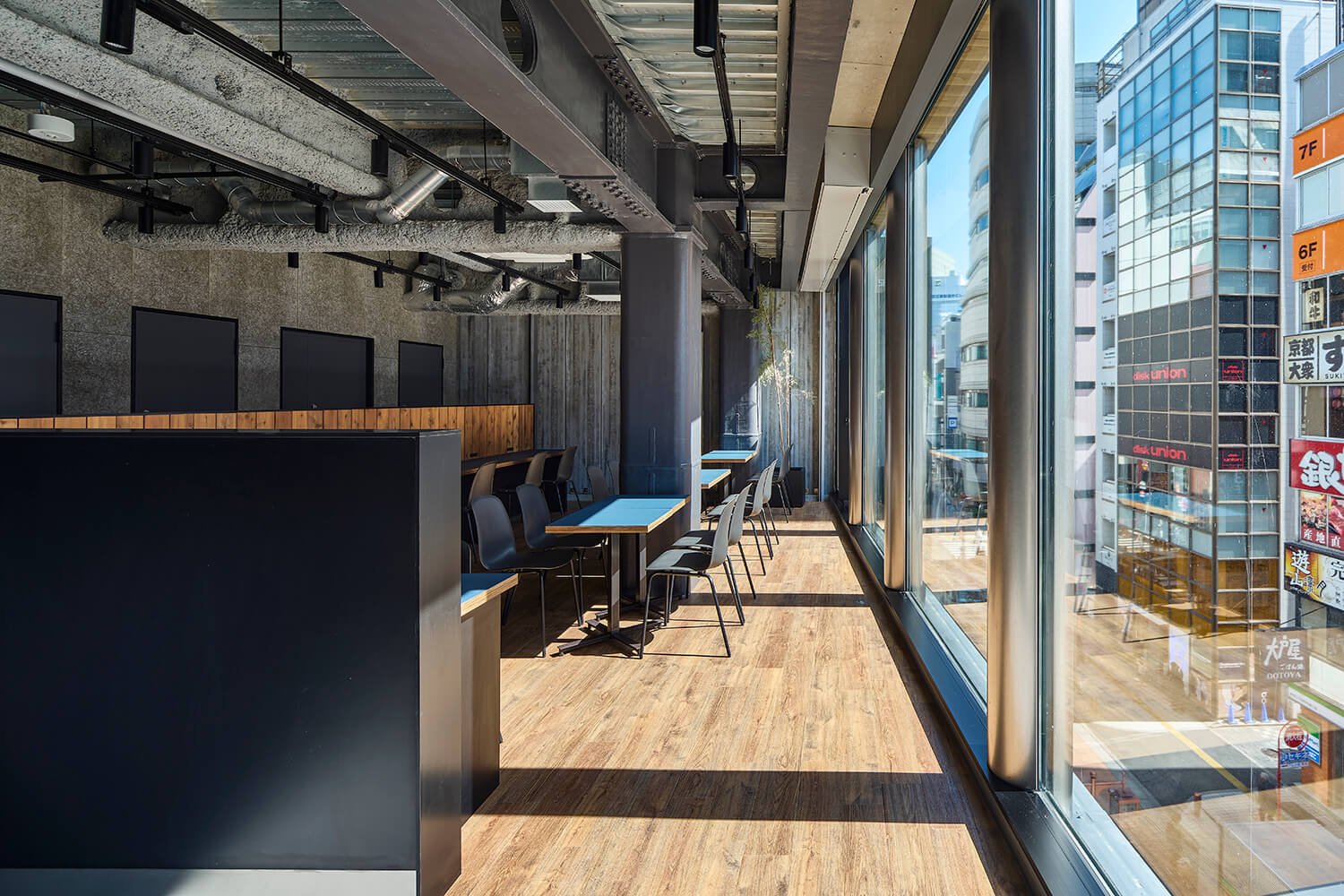
The columns comprising the façade have been finished as part of the owner’s works, extending not only to the areas visible from the exterior but also to the interior. This is an approach first attempted in Fukazawa’s commercial buildings, representing an endeavour to treat the very thickness of the façade as an architectural expression. By unifying the range visible from the street through the owner’s works, the aim is to foster a shared aesthetic that is natural for the tenants as well. No clear boundary is established between the columns and the window frames. A zone exists within the façade’s thickness that cannot be definitively categorised as either a column or an opening, nor as exterior or interior. Through this ambiguity of boundaries, the façade is established not as a pattern or a surface, but as a structure with depth.
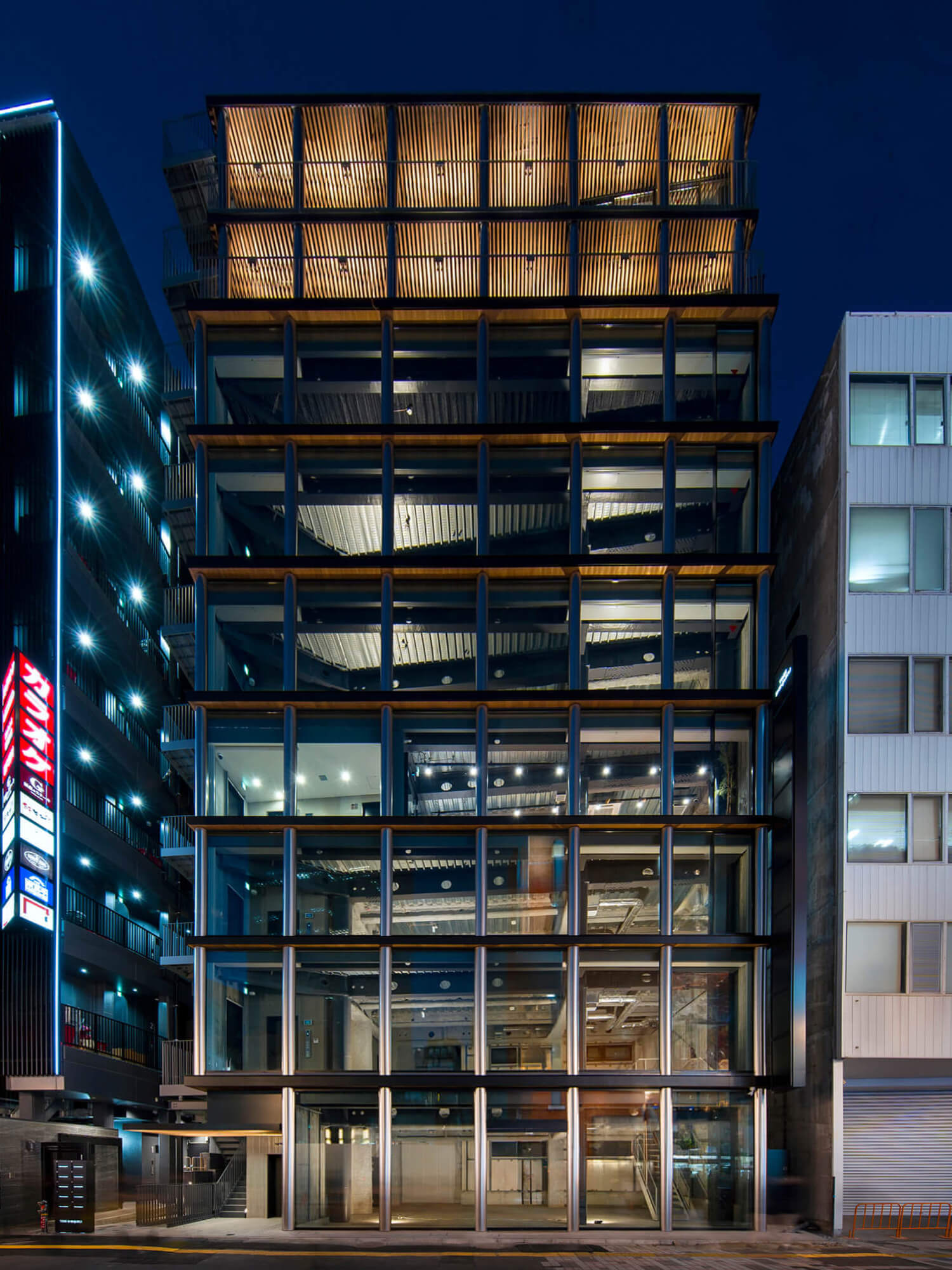
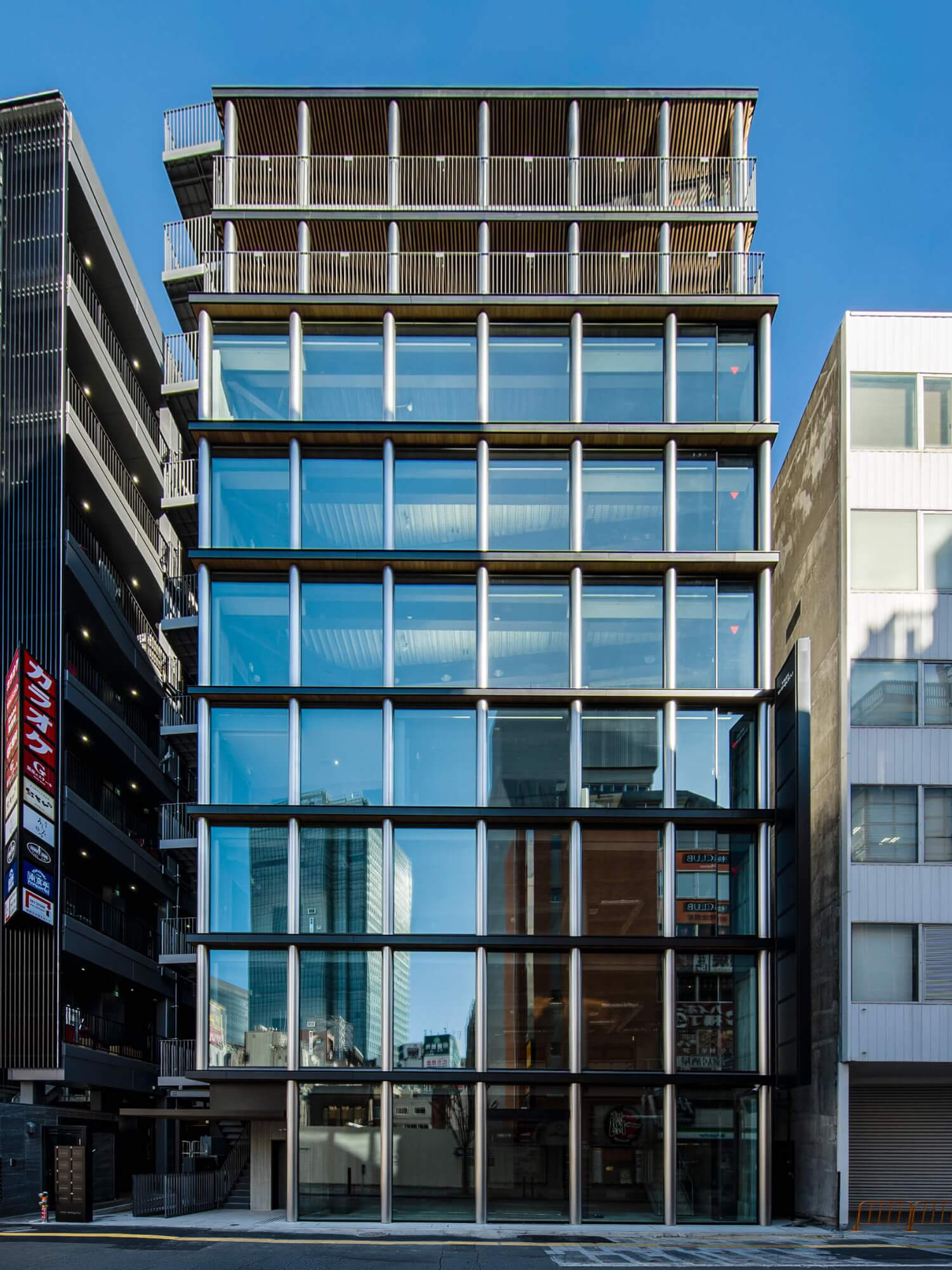
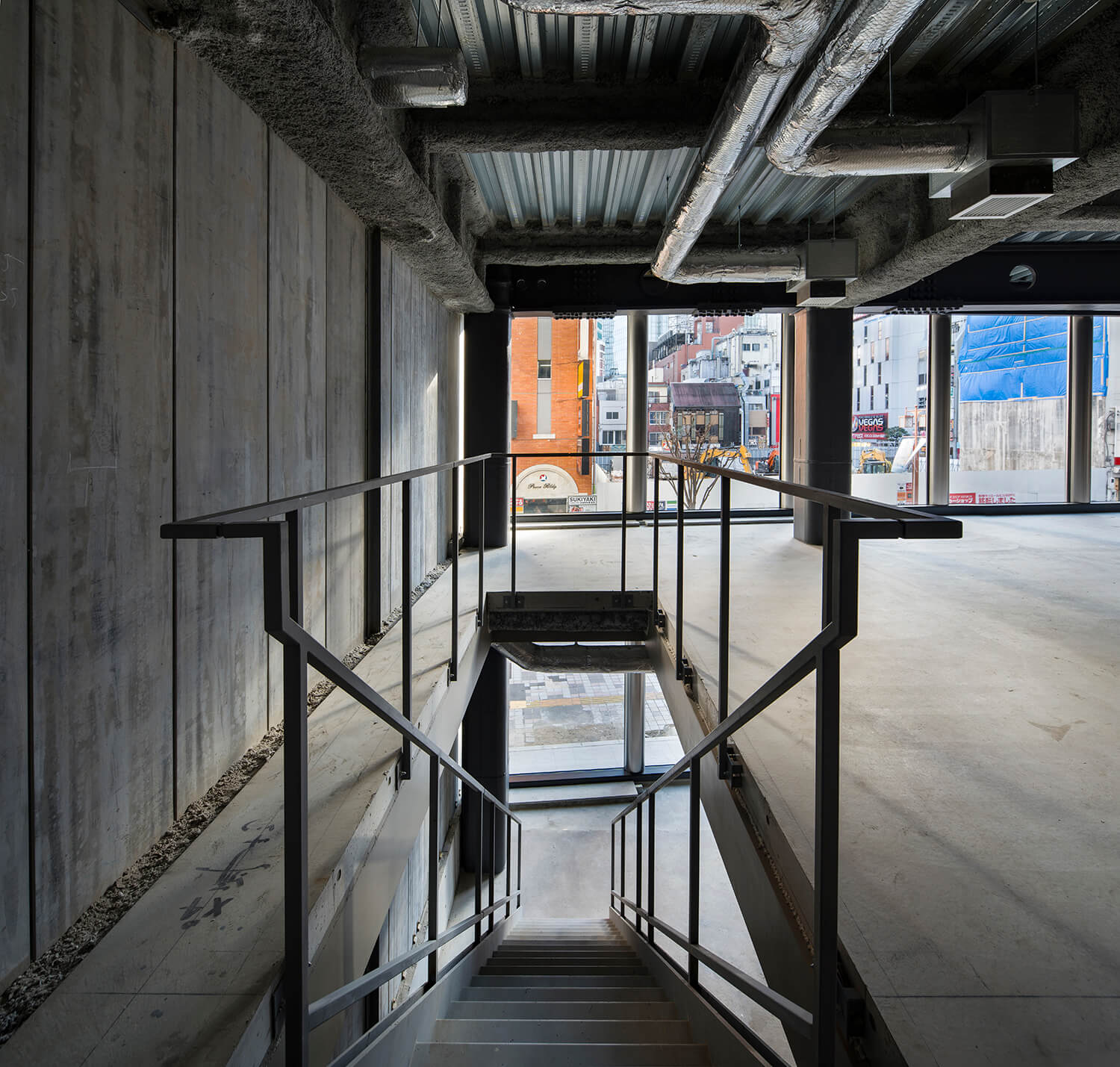
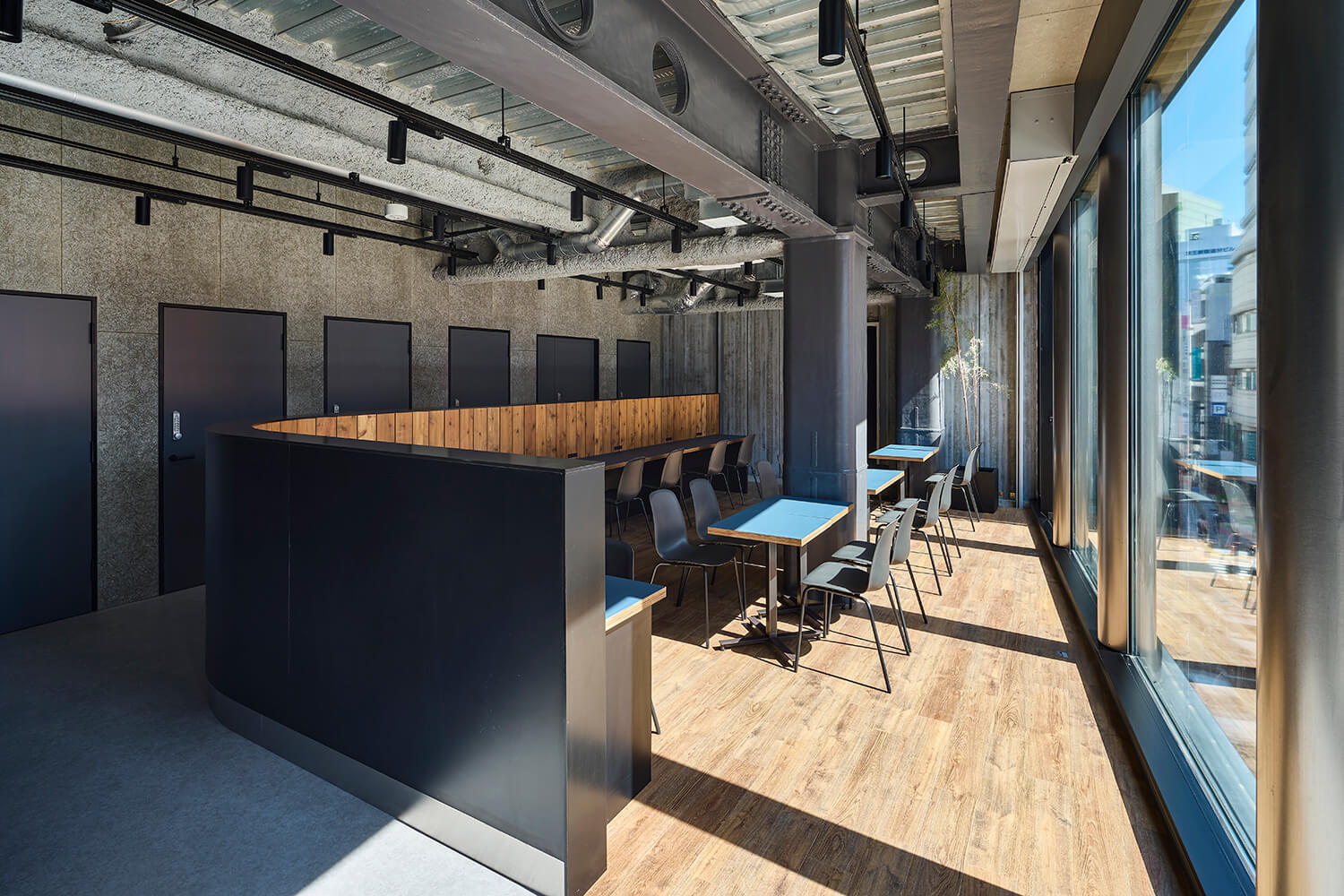
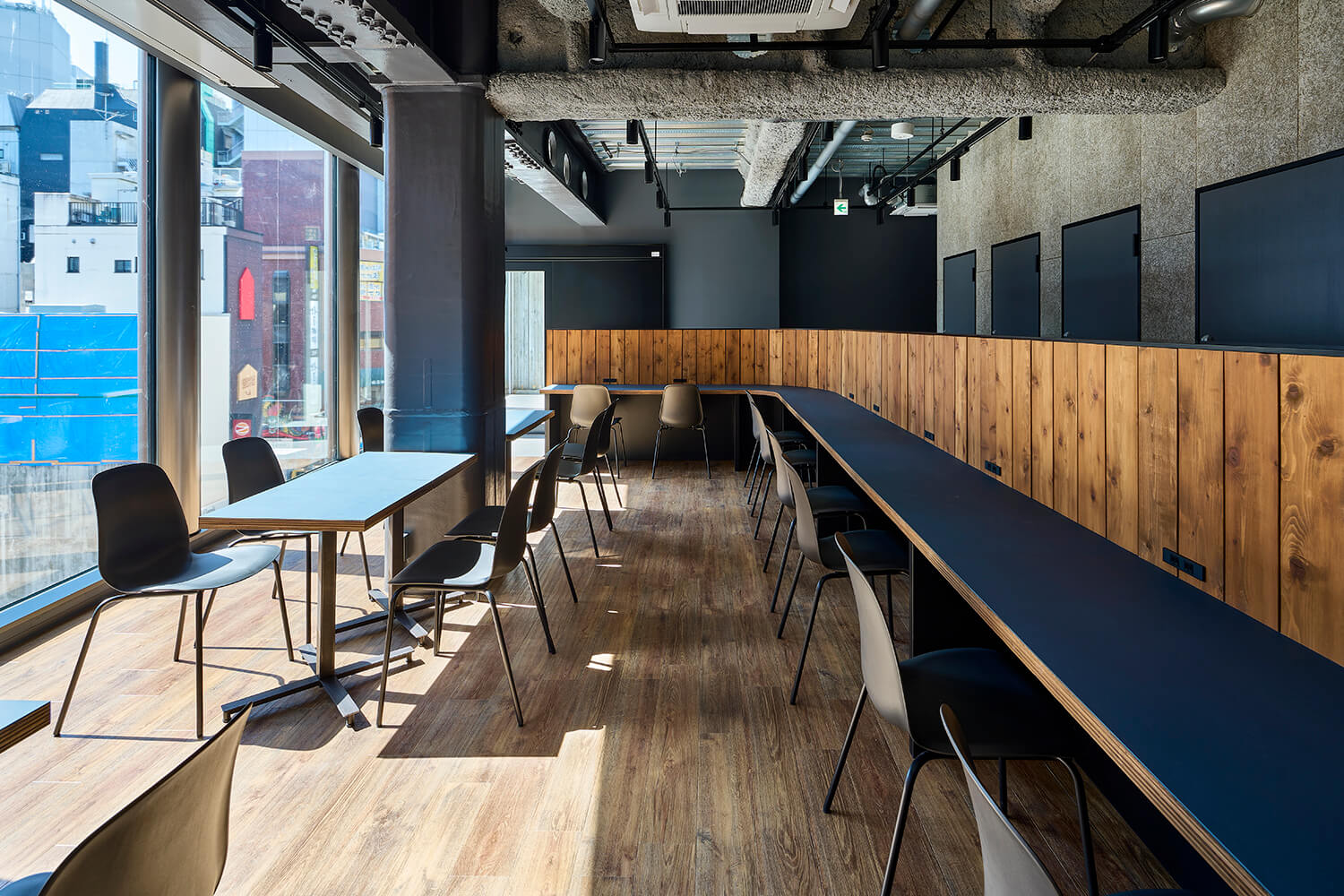
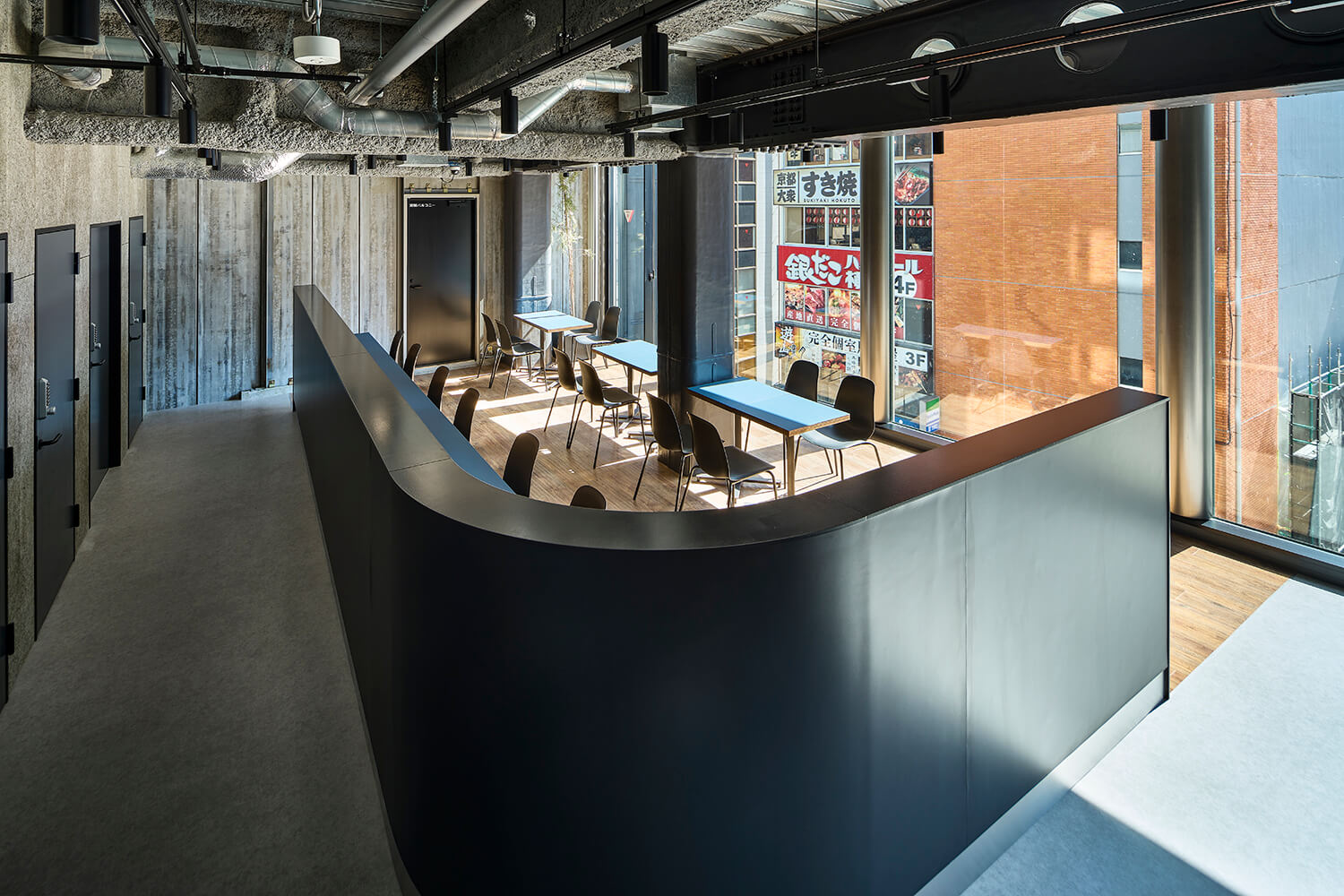
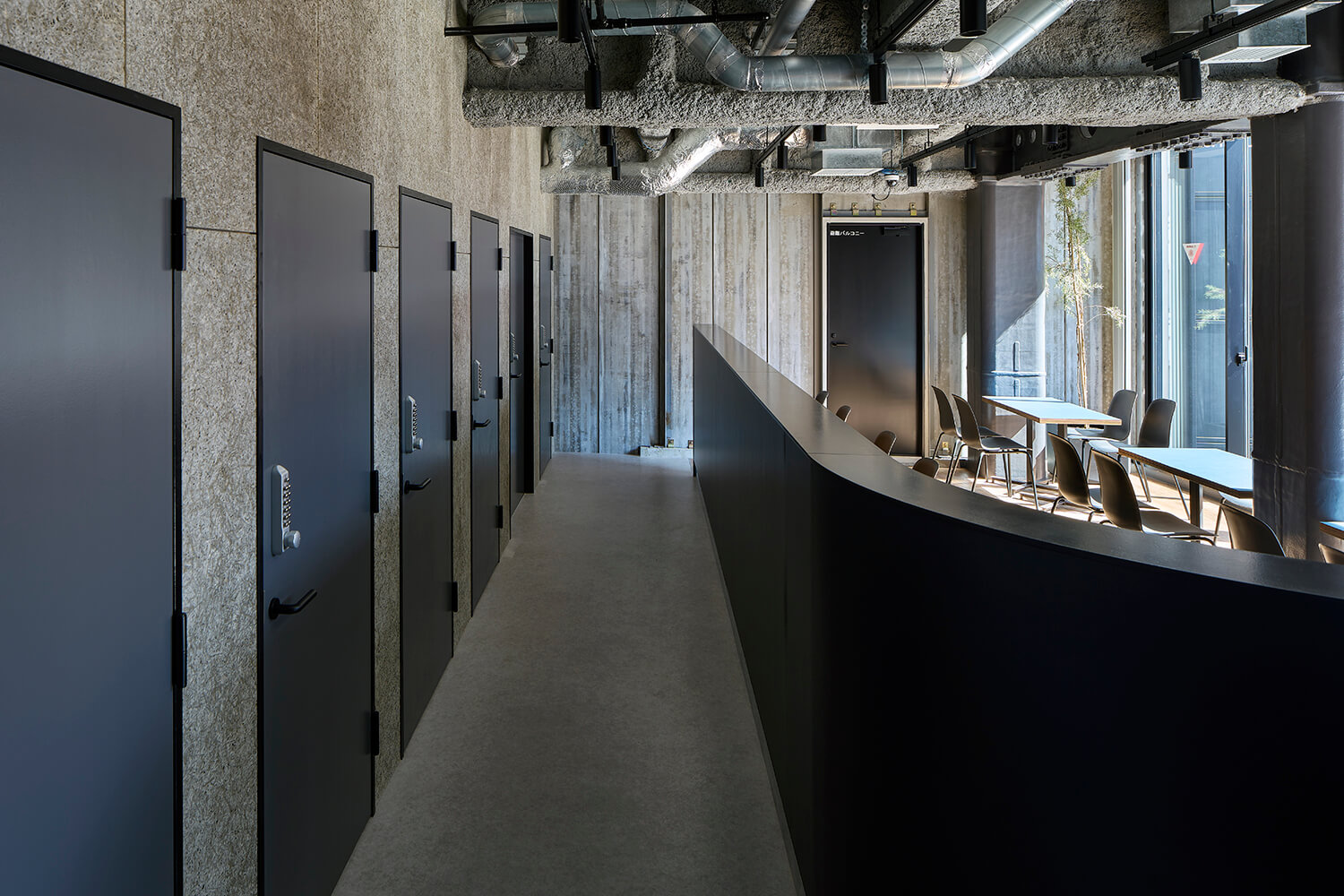
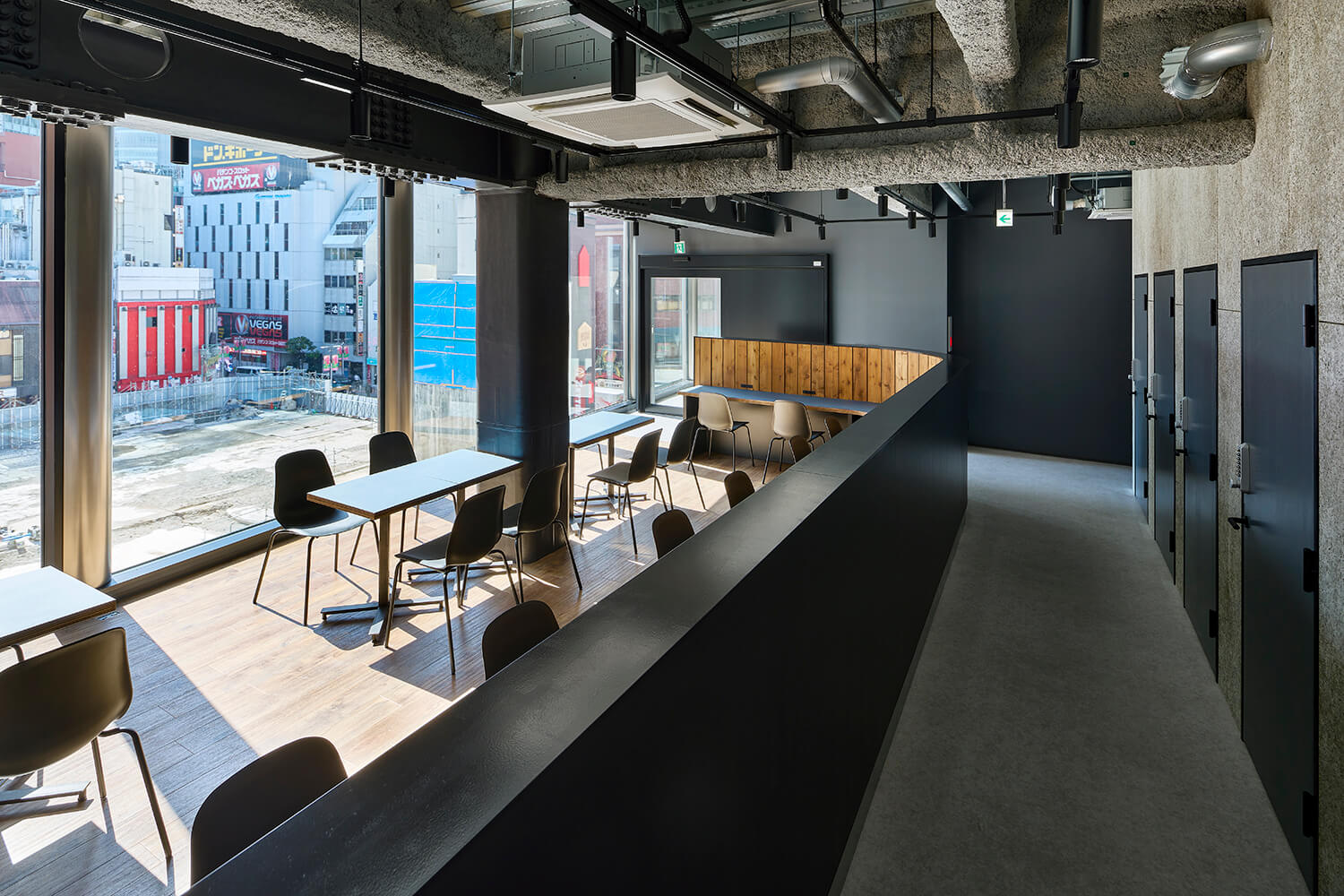
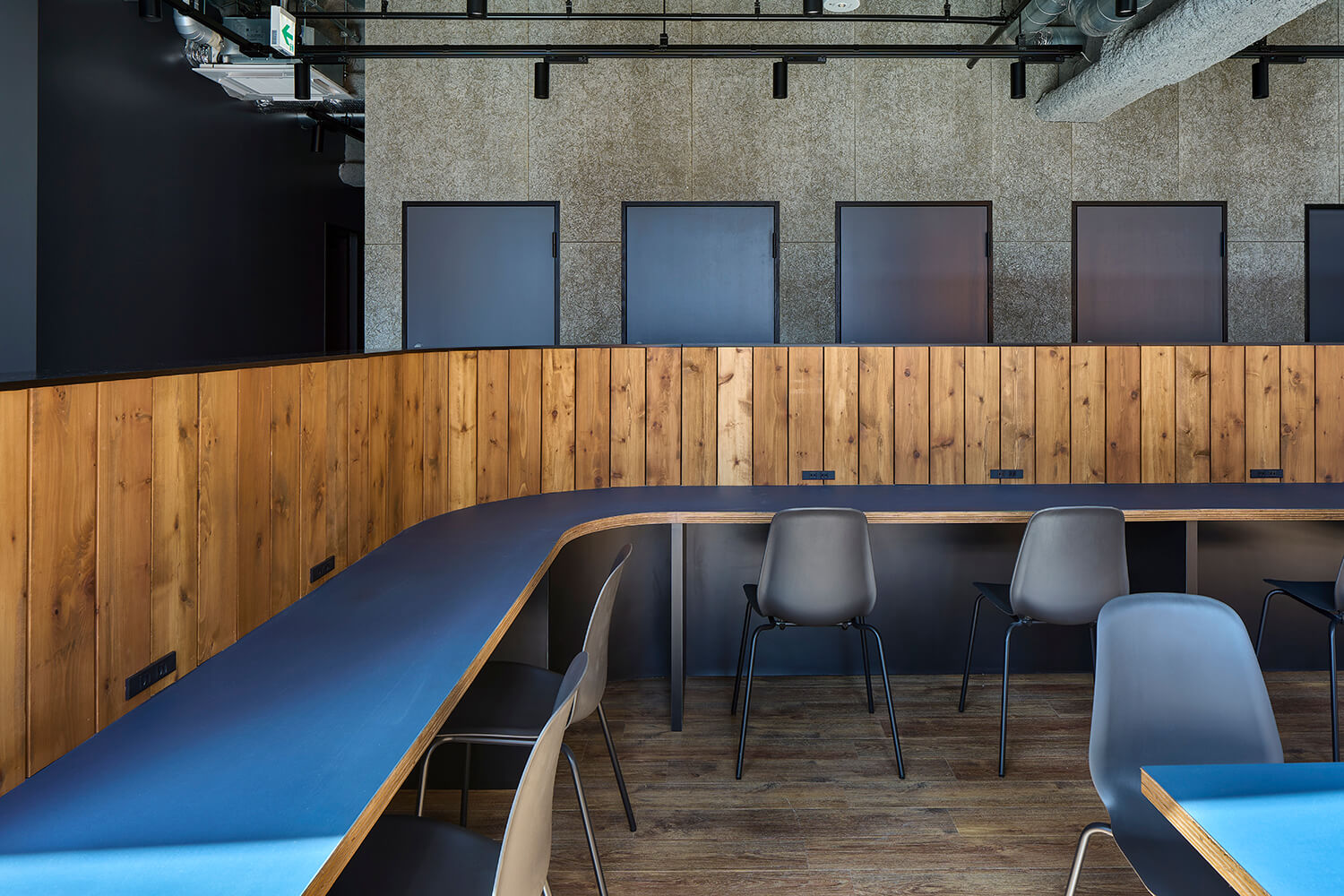
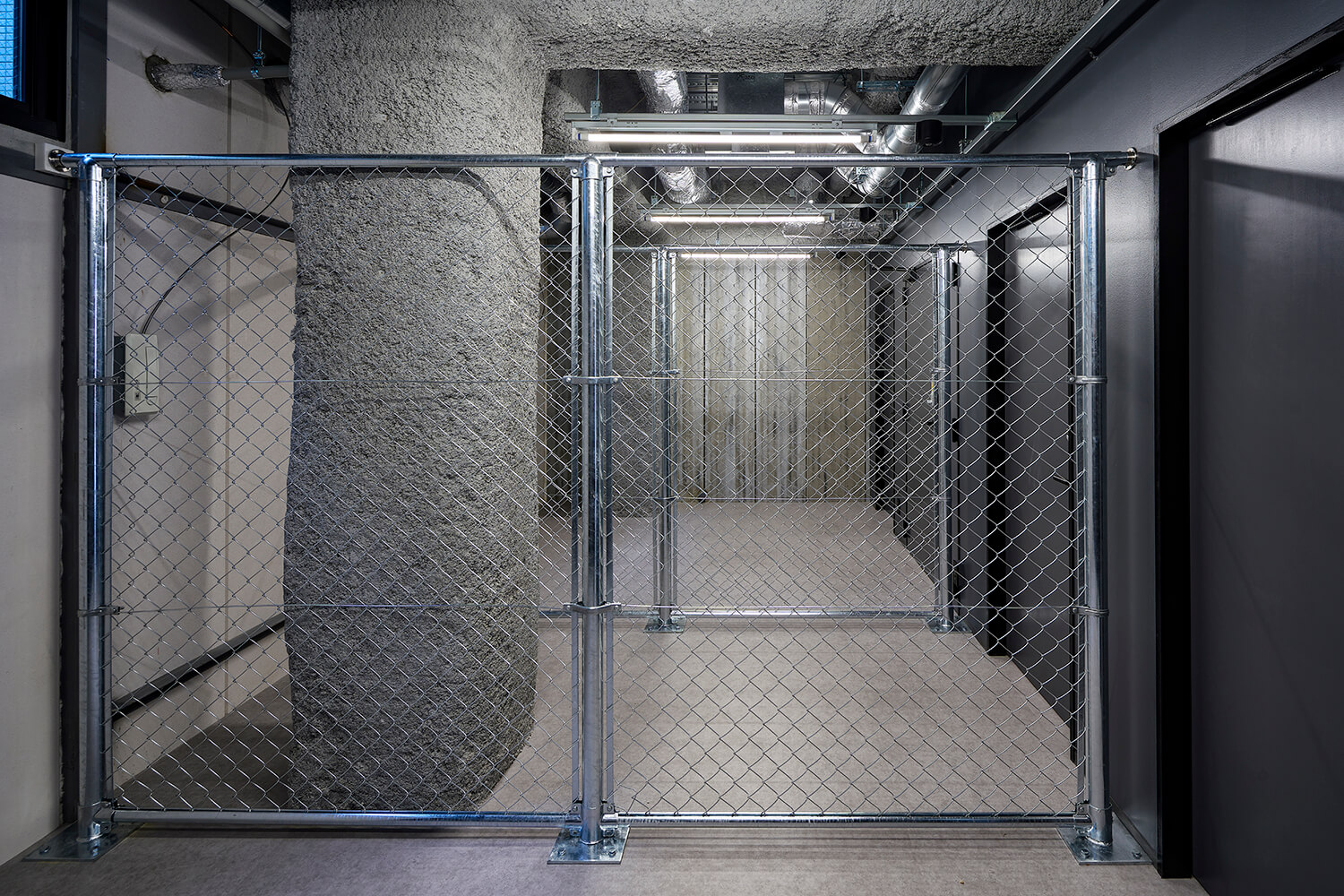
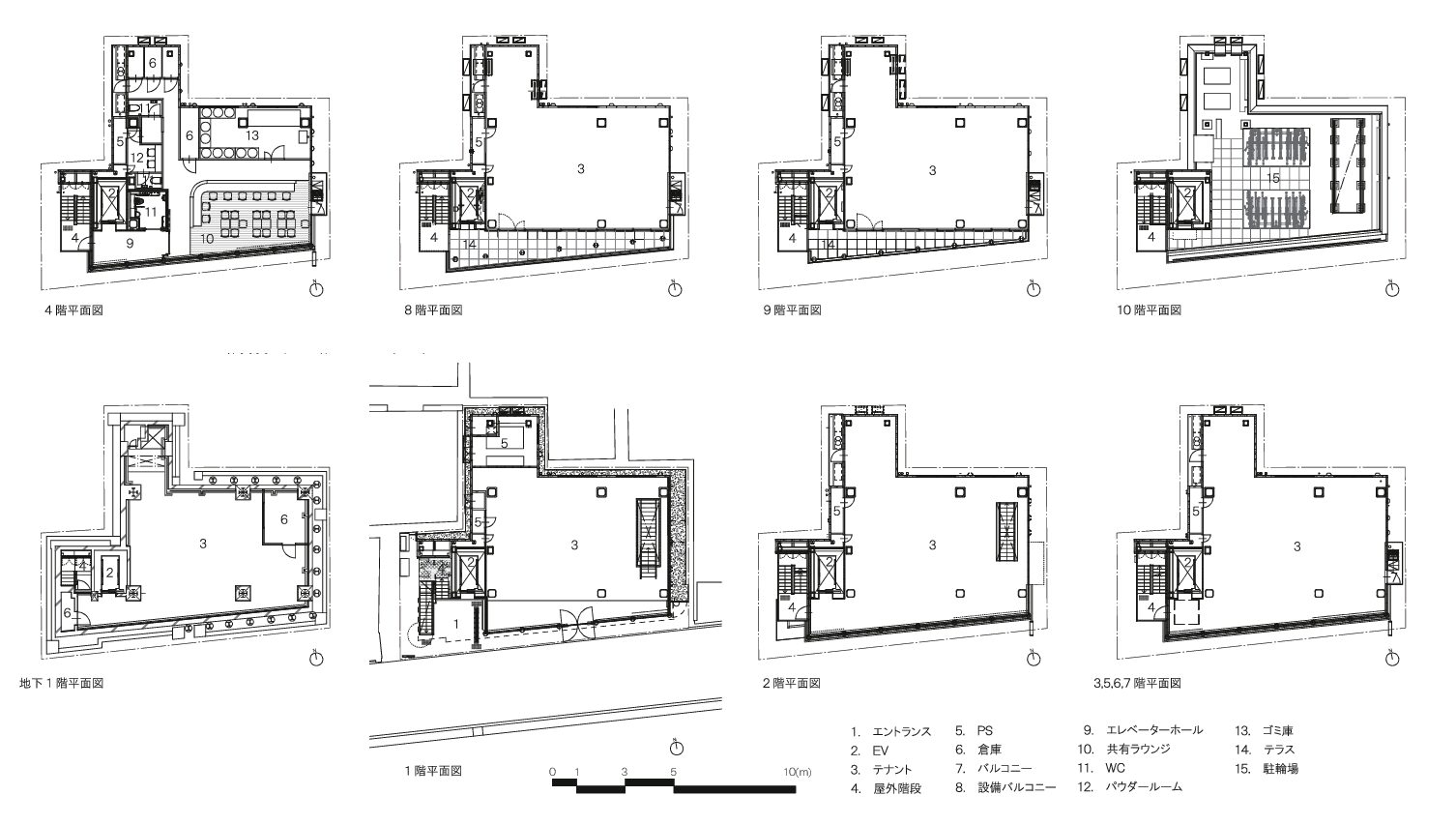
To ensure the building functions effectively as a retail complex, functions that do not generate direct revenue as sales areas have been deliberately repositioned within the overall structure. The roof concentrates service equipment and the bicycle parking required by regulations, creating a layout that prevents visual clutter from reaching the street or the façade. Meanwhile, the fourth floor—typically a less desirable level for leasing—houses external storage for each shop and a staff lounge, positioning it as shared infrastructure that supports the building’s overall operations. Furthermore, the ground and first floors of the lower section are designed to be used as a unified space via an internal staircase, creating a three-dimensional commercial environment within the constraints of the limited floor plan.
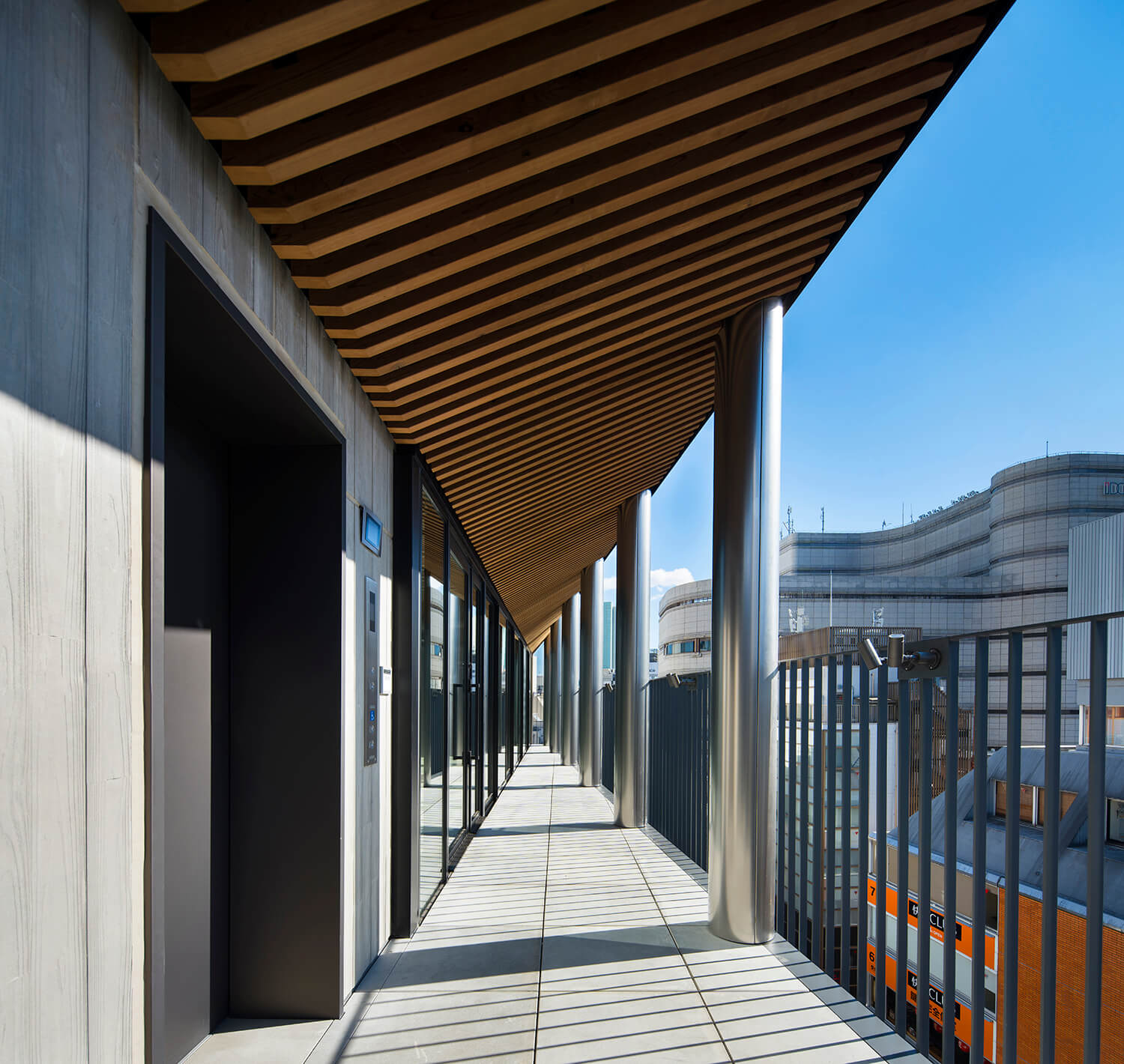
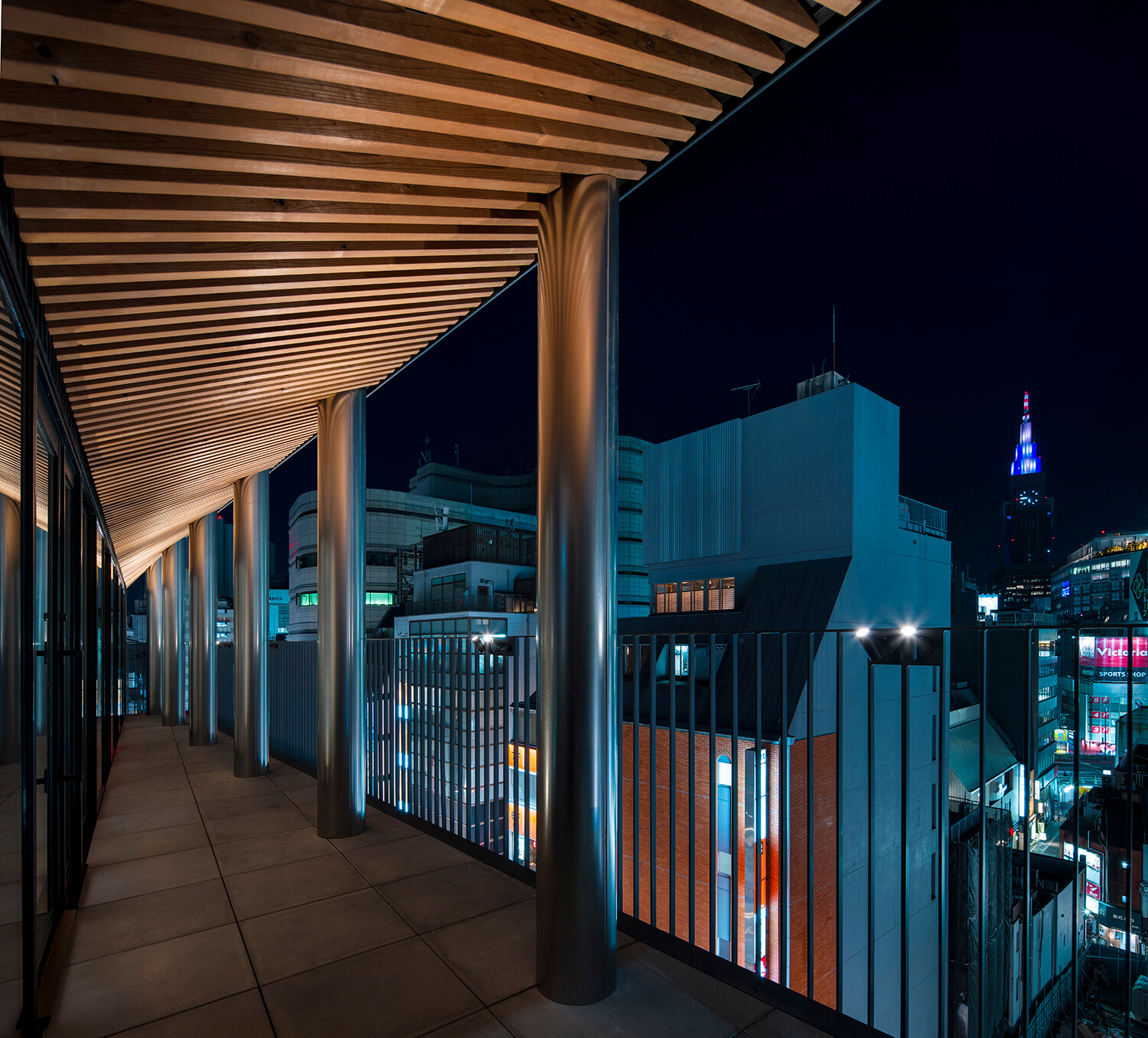
In this building, a composition has been adopted across all floors in which the columns form the foreground facing the city, with spaces and activities set back behind them. Up to the seventh floor, glass is fitted within the columns, with interior spaces unfolding behind them. Conversely, from the 8th floor upwards, the glass façade is set back to create terraces, and the interior of the columns emerges as an external space. This composition, which transcends the distinction between interior and exterior to create a layered depth between the city and the building, evokes the Stoas of Greek architecture in that it forms a façade using columns that are not structurally necessary.
Whilst a stoa is traditionally a single-storey spatial form defined by a colonnade, here that spatial principle is repeated on each floor, resulting in the building as a whole rising up as a multi-layered Stoa. The relationship in which the colonnade serves as the ‘face’ towards the city, with activities and spaces lying beyond, is reinterpreted under contemporary conditions: visible through the glass on the lower floors and manifesting as an external space on the upper floors.
This stoa-like composition, formed by the colonnade, serves to impart a certain order to the building as a whole, whilst allowing for the expression and renewal of individual tenants. Even amidst a situation where diverse commercial activities come and go, what appears to the city is a single, abstracted stance defined by the colonnade. Rather than bringing these activities directly to the fore, the design allows them to remain in the background, thereby harmonising the whole whilst accommodating individual differences. This multi-layered store composition serves as a mechanism to prevent the building from being lost in the diversity, demonstrating one possible attitude that commercial architecture can adopt towards the city.
- Location:Shinjuku, Tokyo
- Completion:2026.01
- Category:Retail + Restaurant
- Building Scale:1 basement level, 10 storeys above ground
- Building Scale:Steel structure with partial reinforced concrete, pile foundation
- Site Area:197.50 m²
- Building Area:143.37 m²
- Total Floor Area:1,315.94 m²
- Client:Mitsumine
- Architec:Akira Koyama + KEY OPERATION INC.
- Structural Engineer:Delta Structural Consultants
- MEP Engineer:Comodo Service Planning
- Contractor:Sato Hide Corporation
- Photography:Toshiyuki Yano