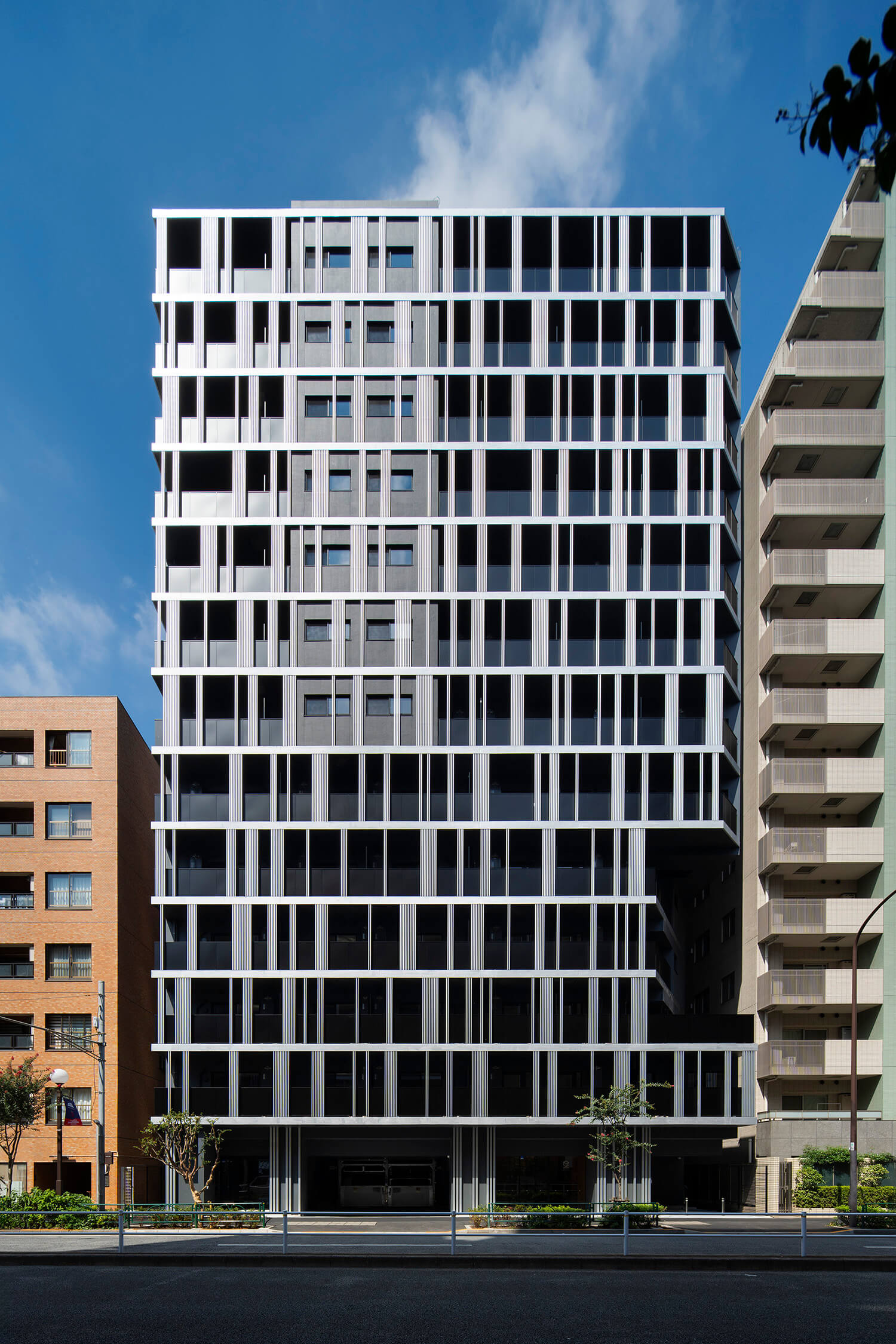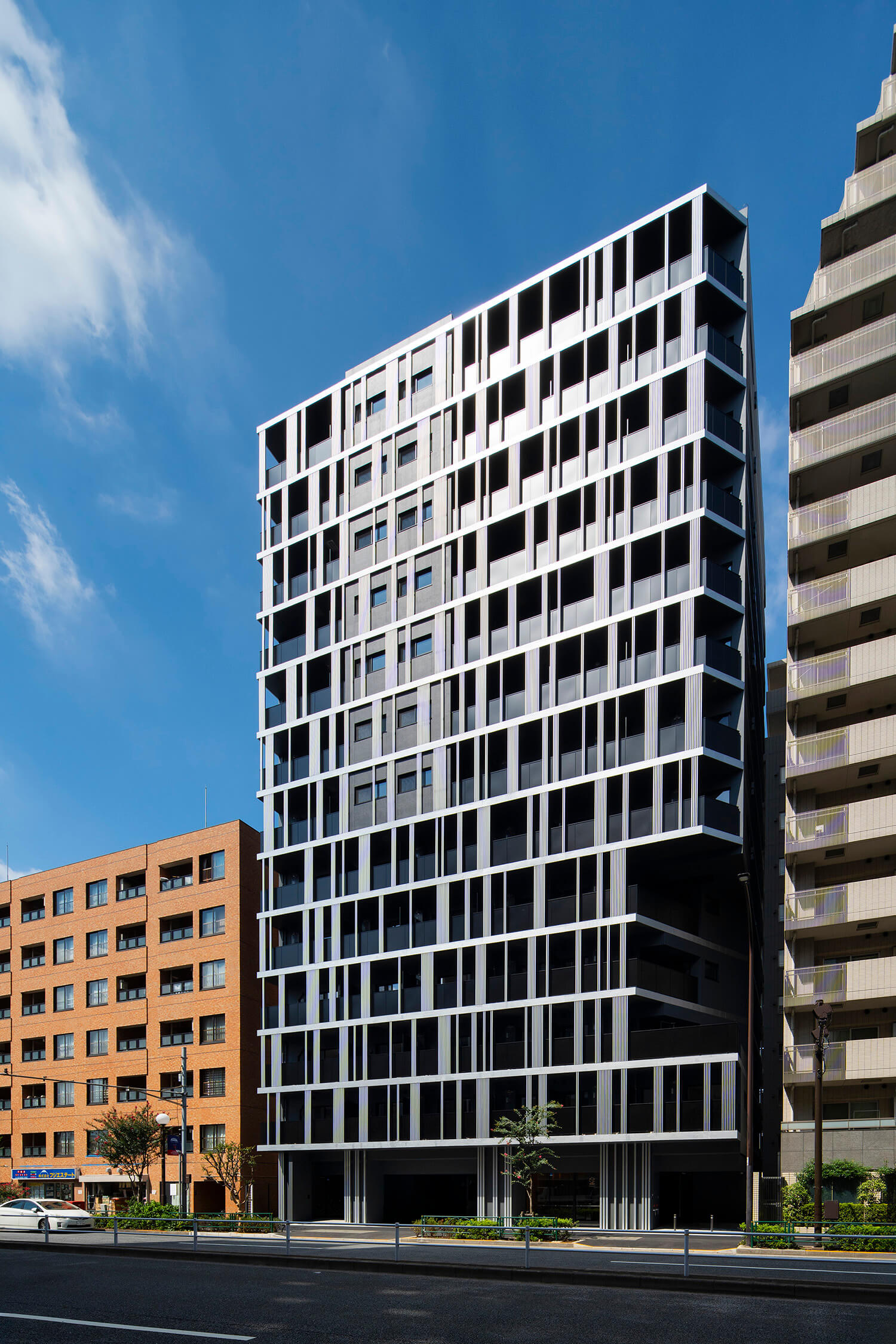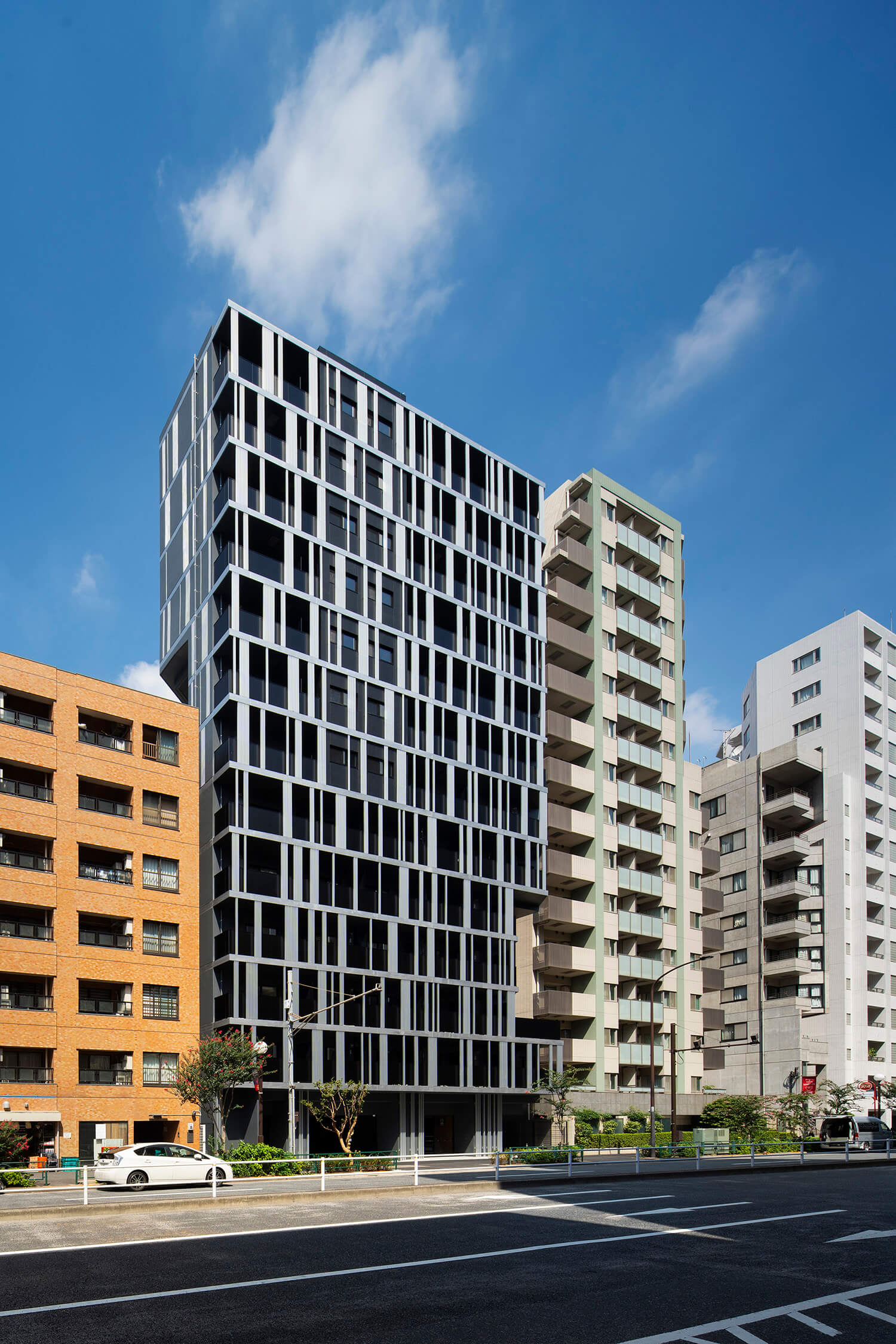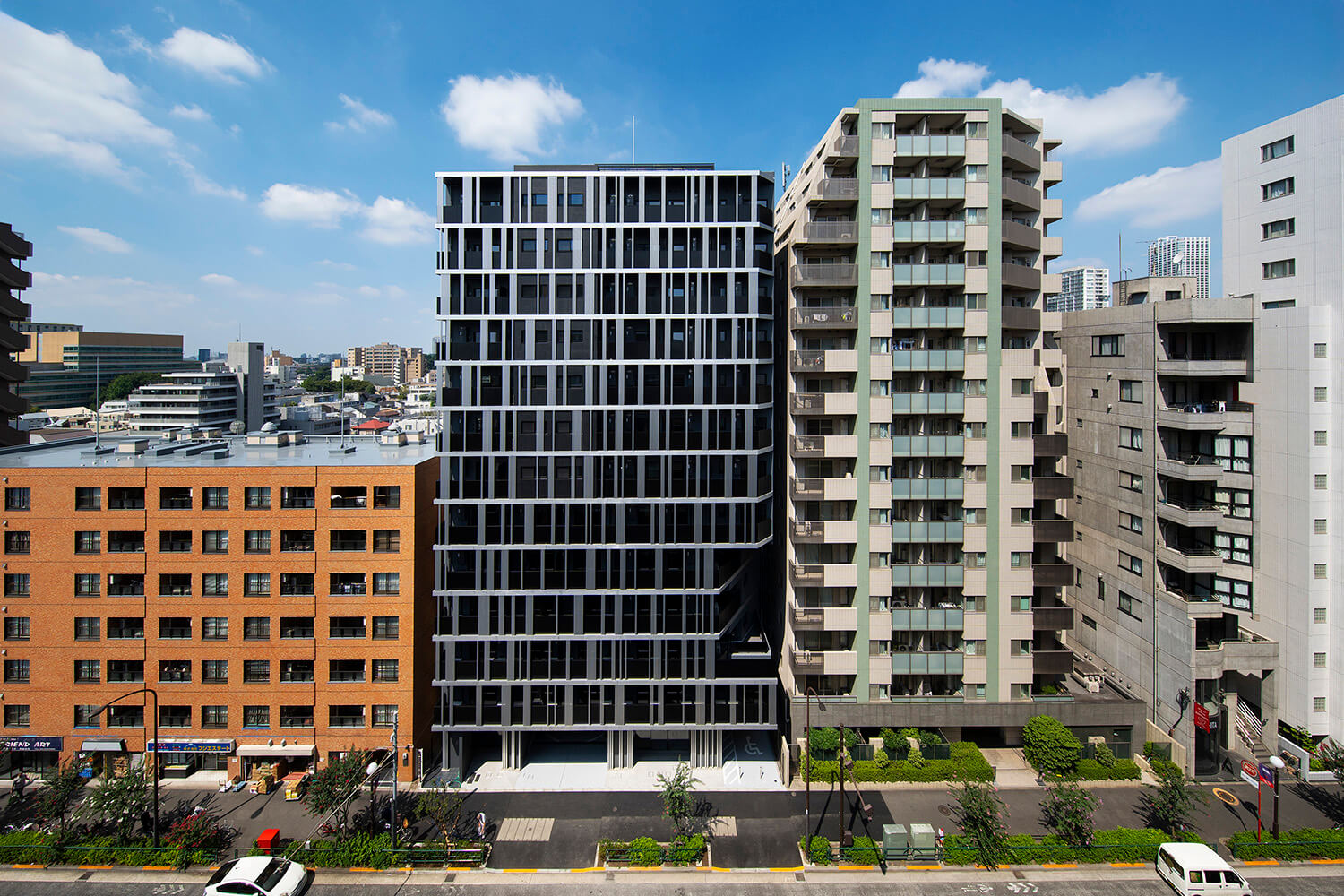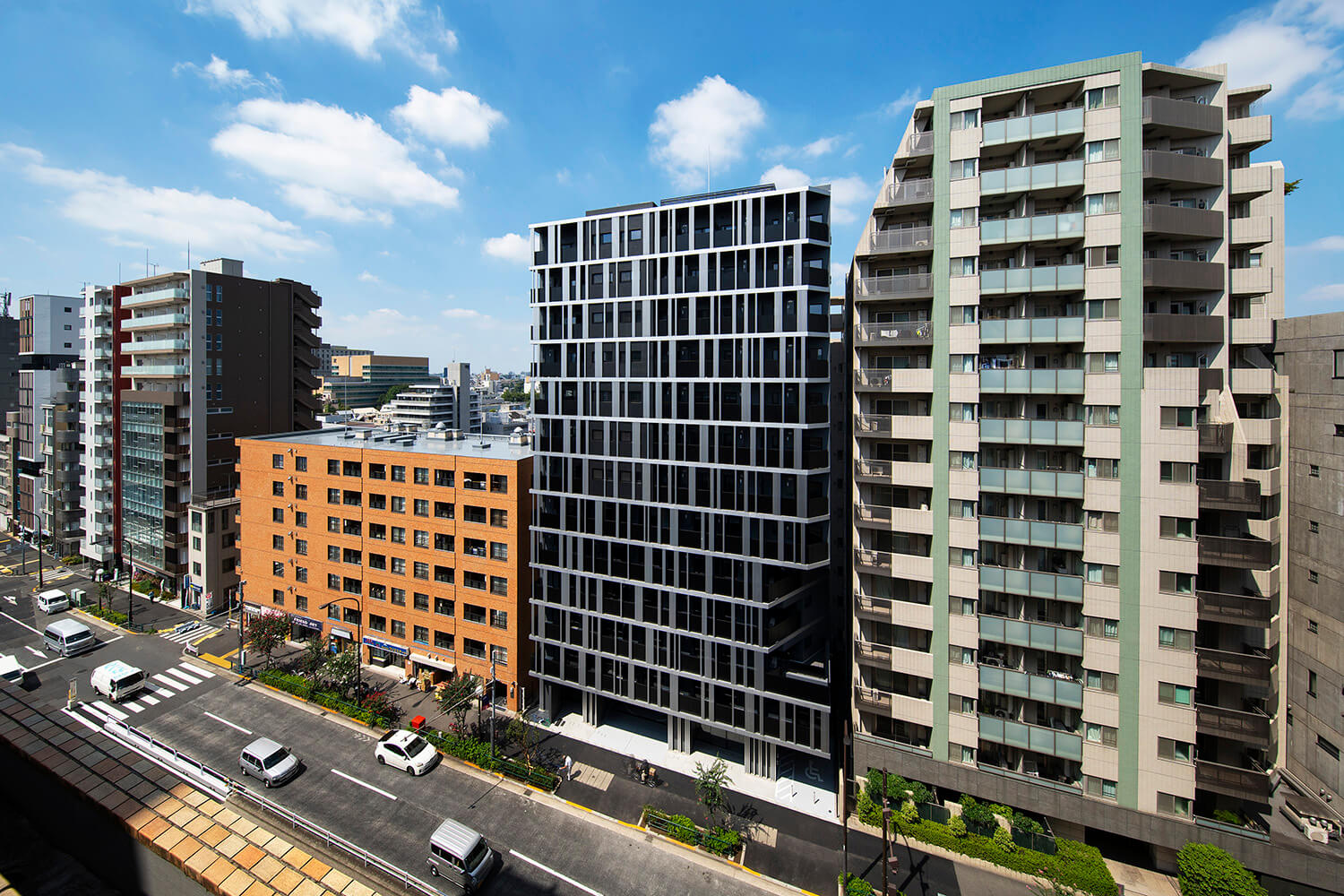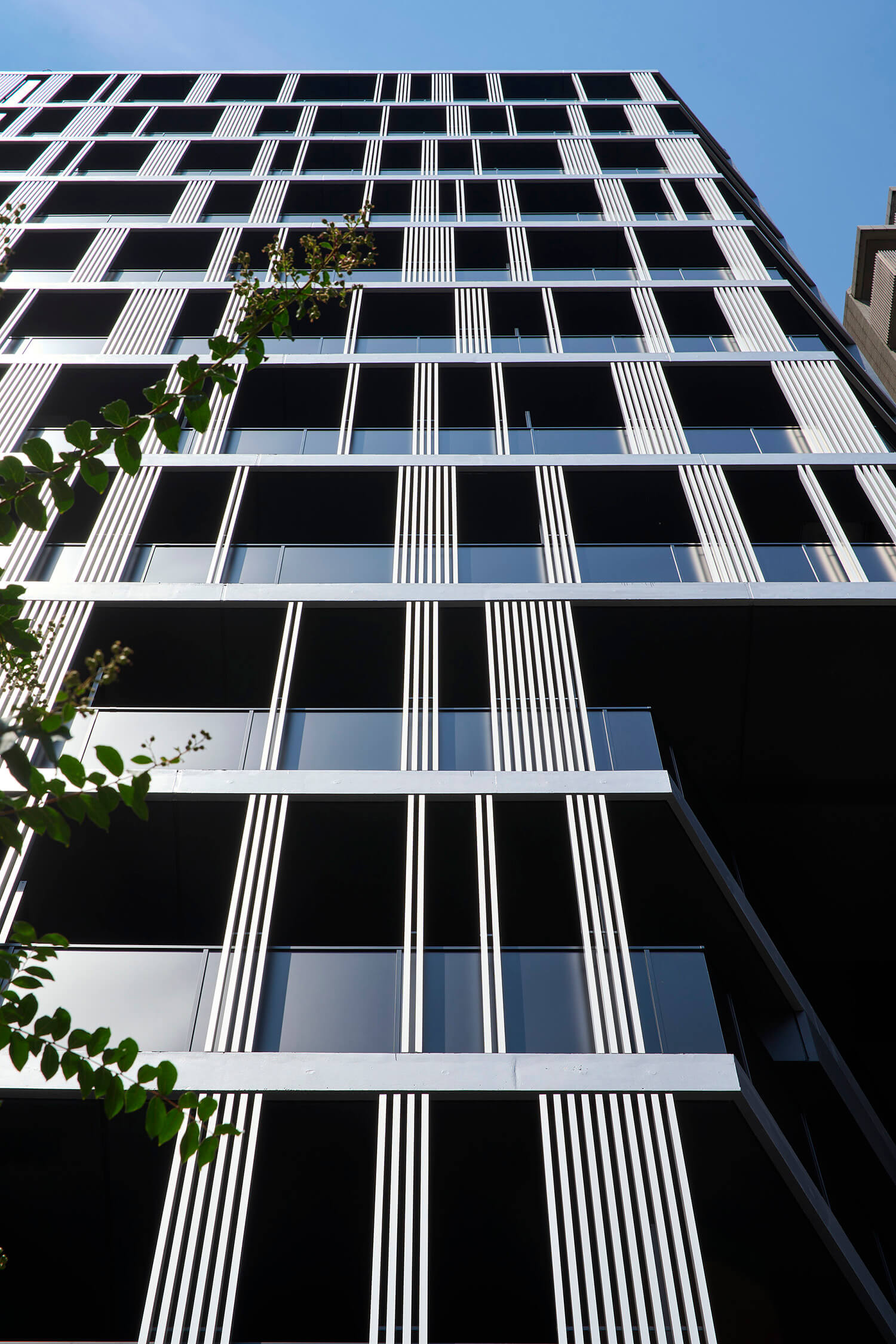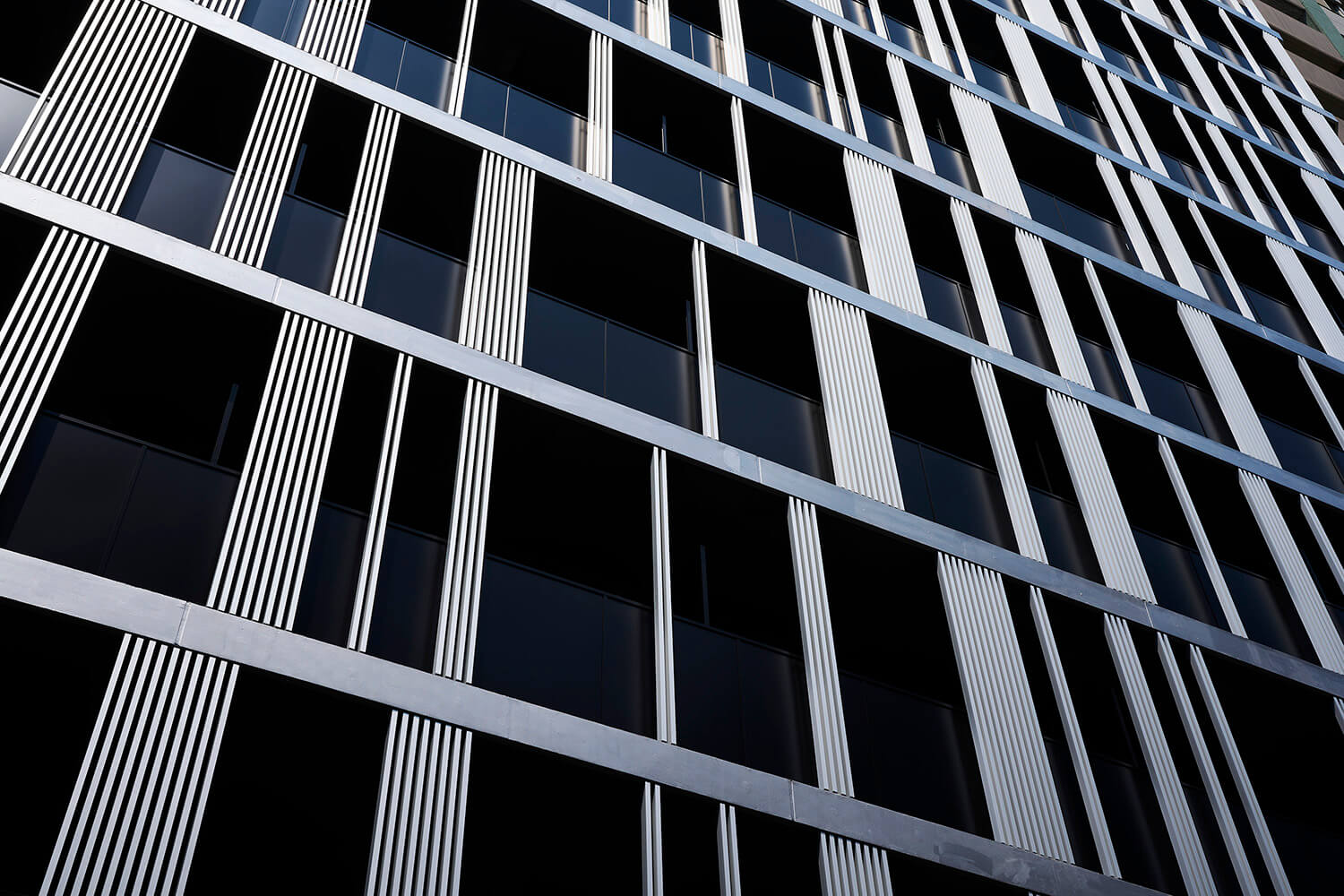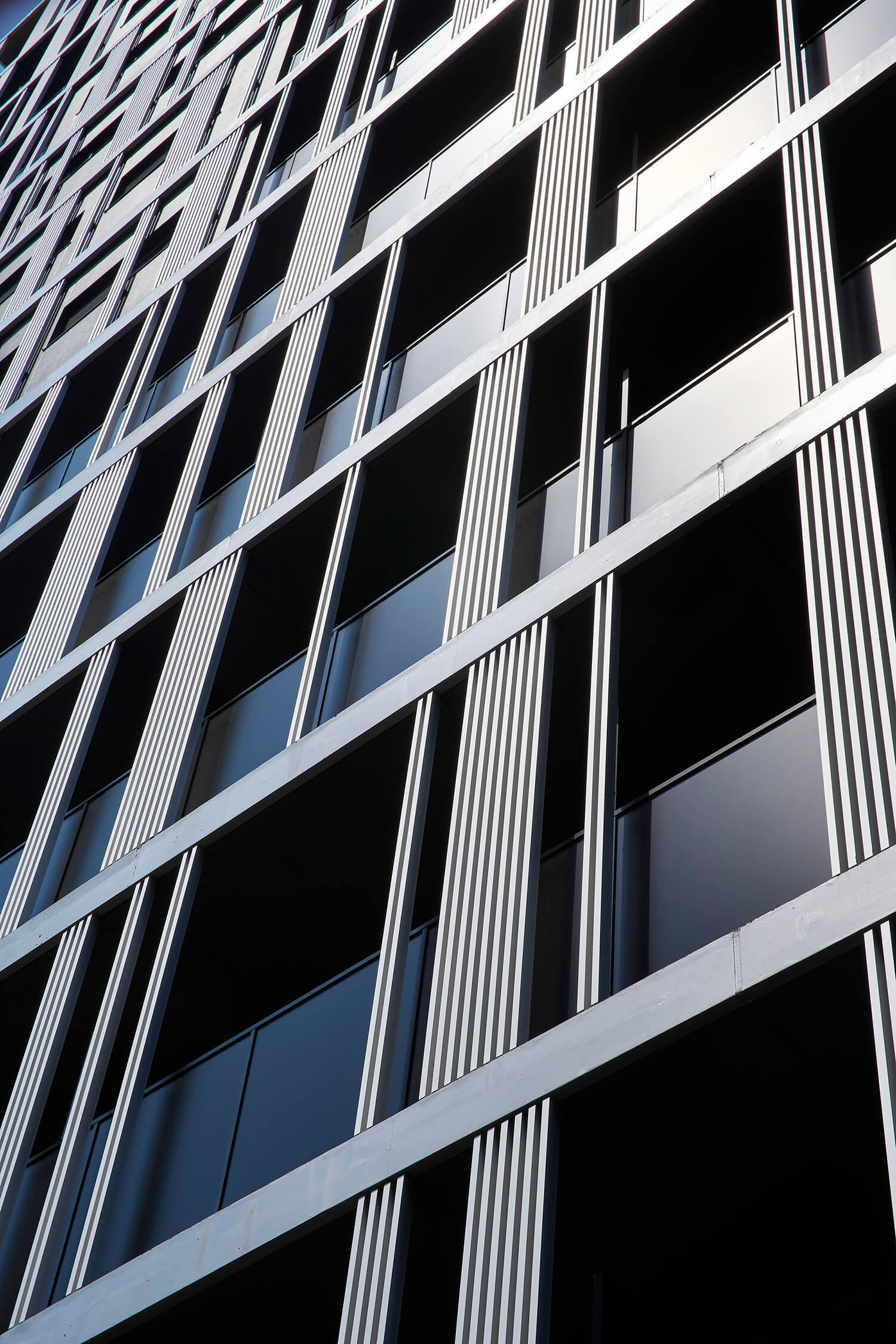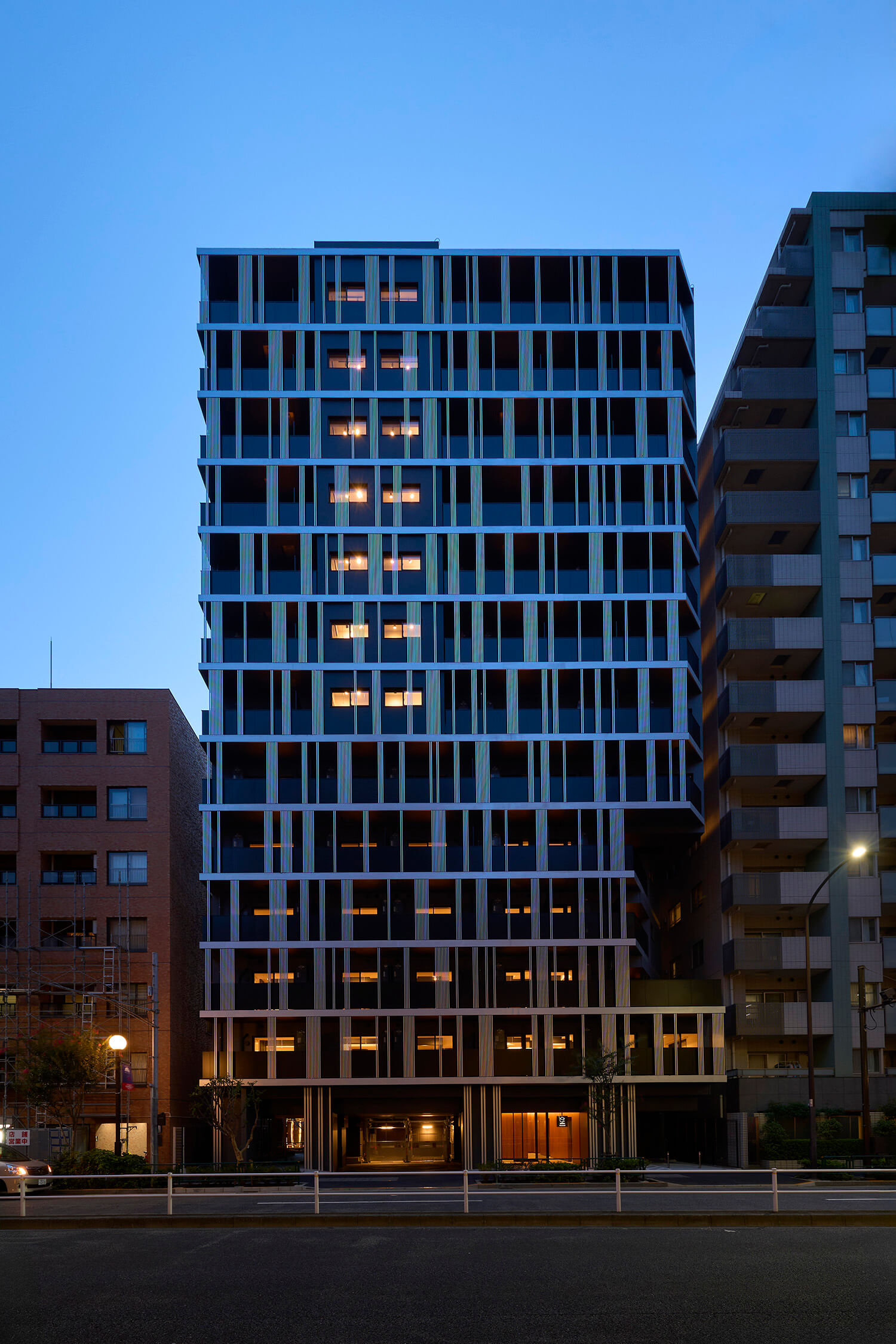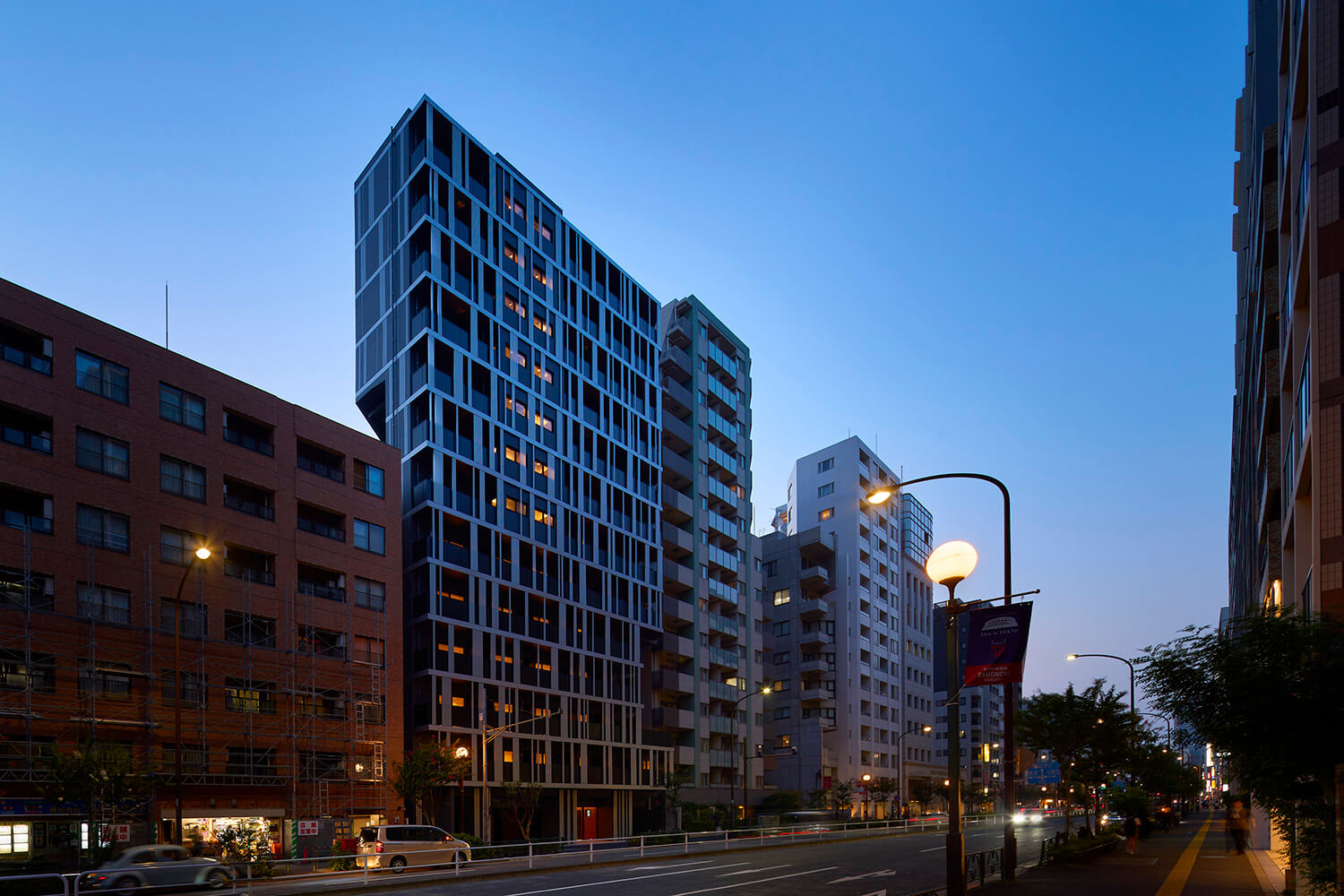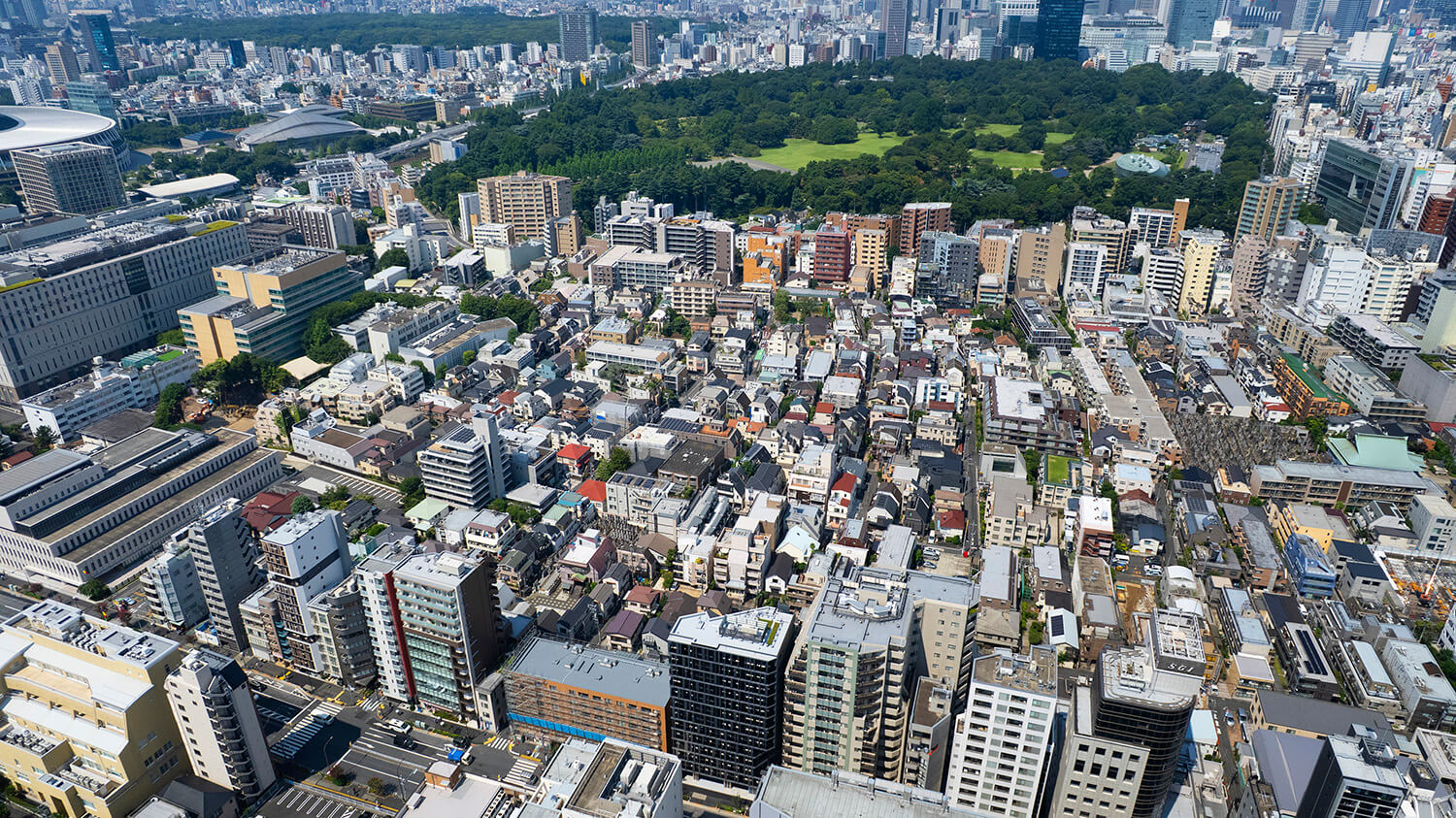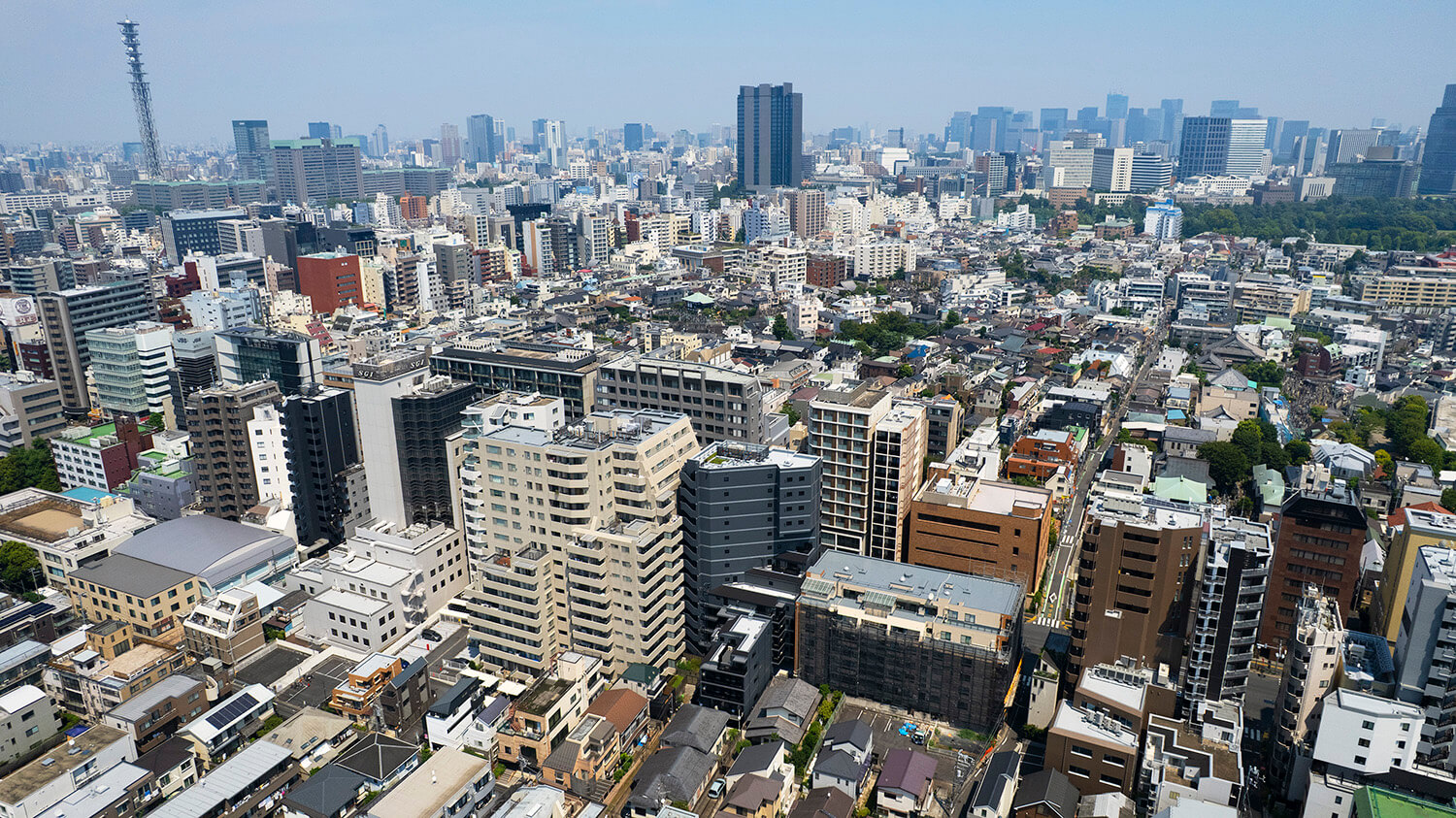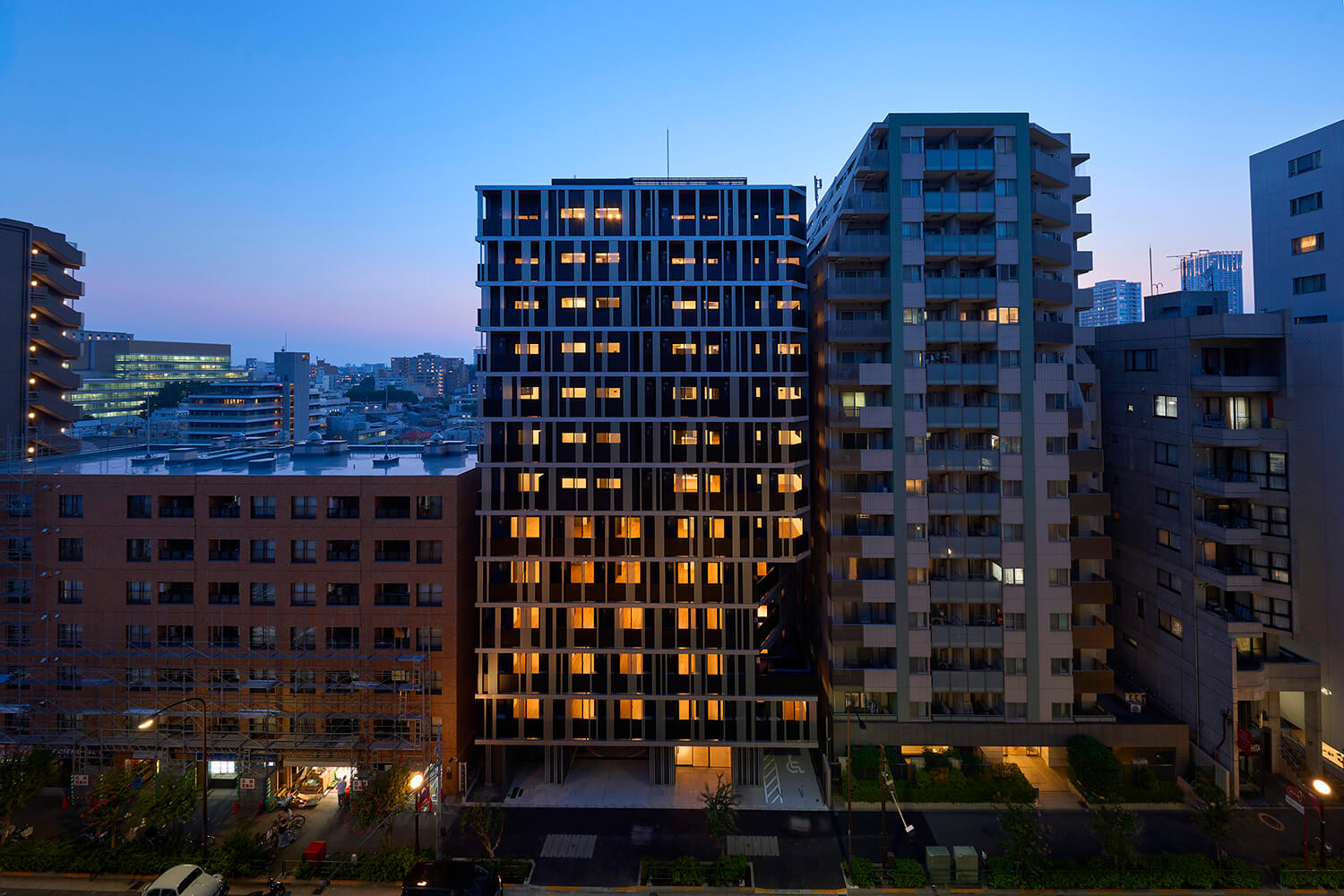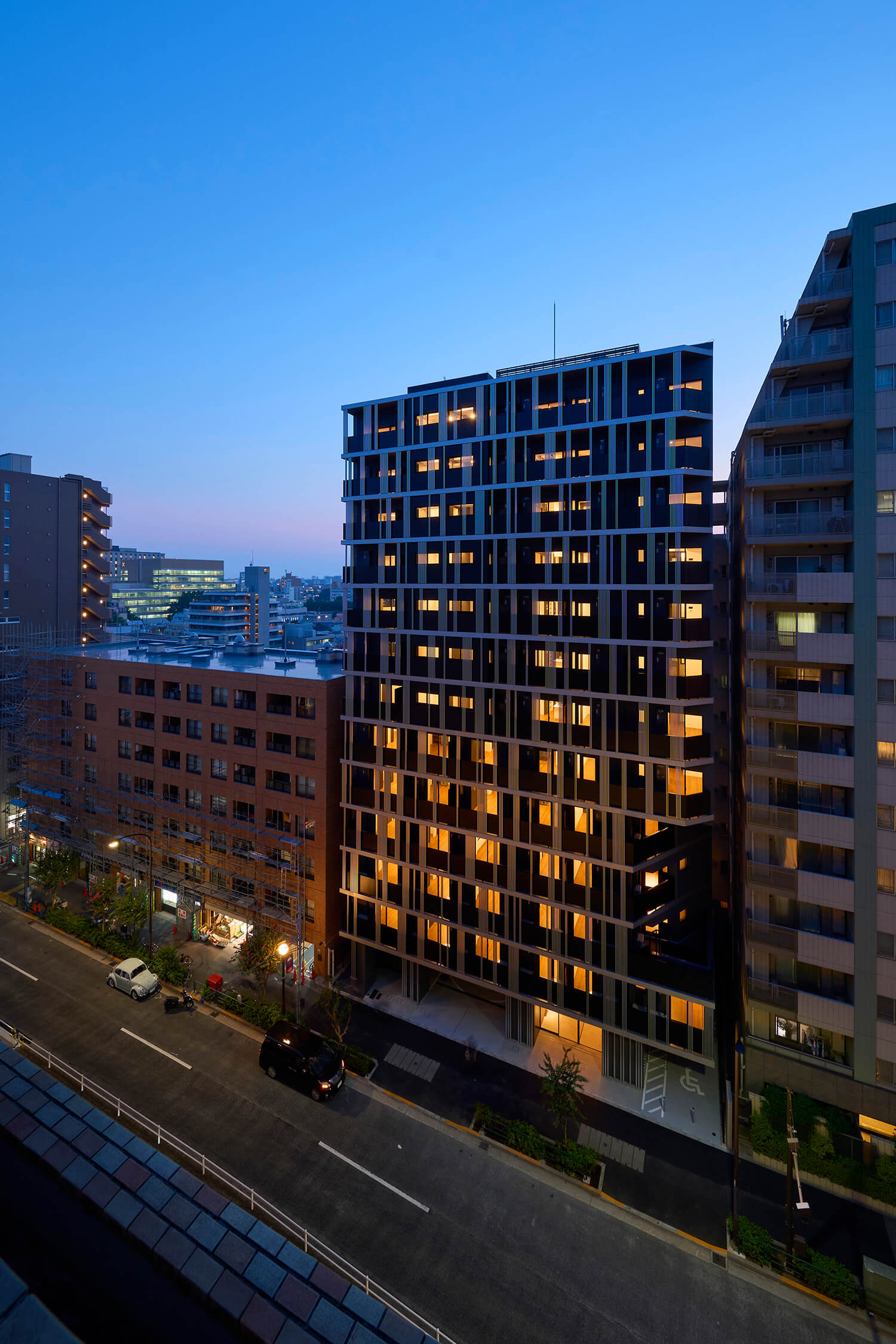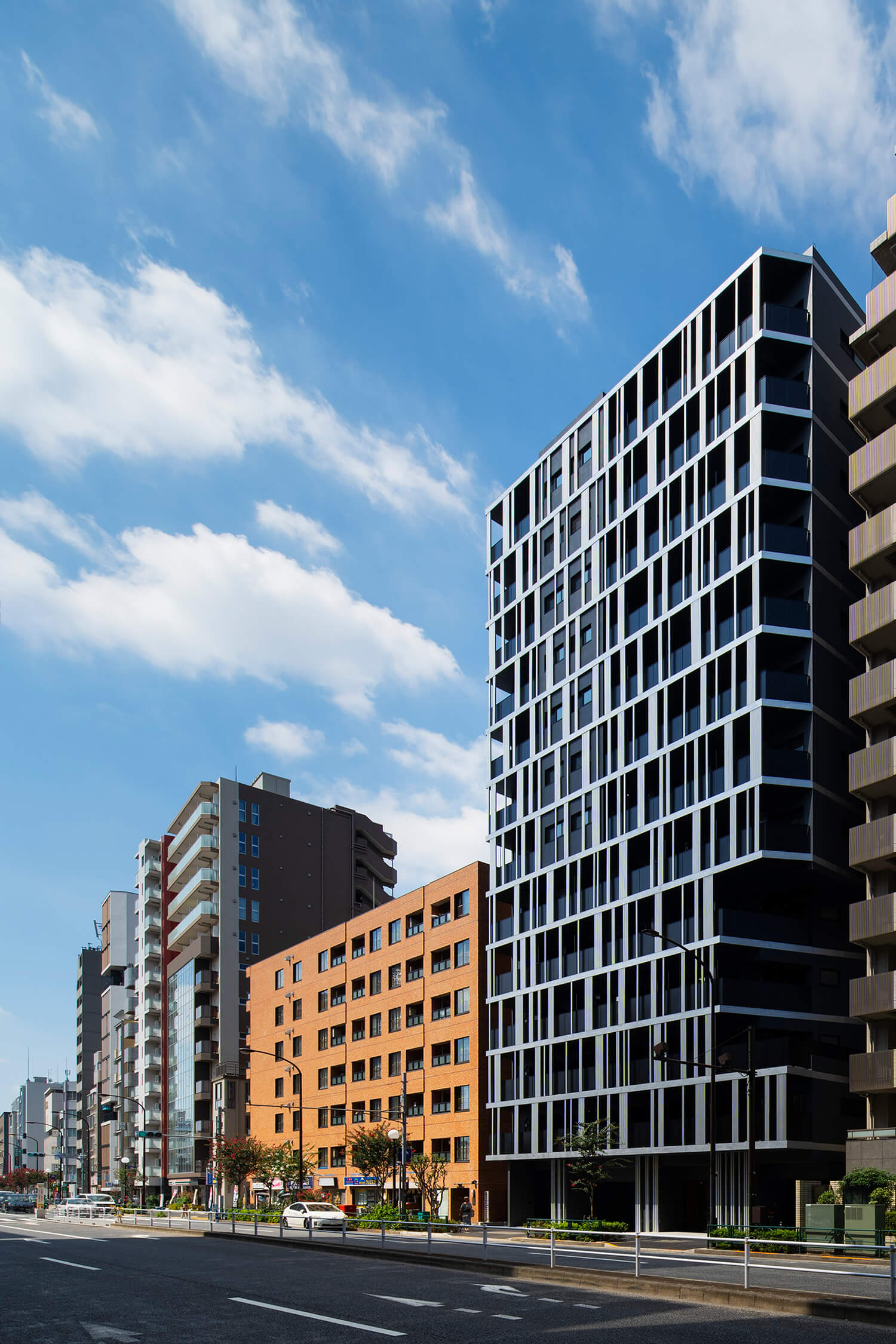
A residential building on the corner of Samoncho, facing Gaien Higashi-dori. The site, located midway between Shinanomachi and Yotsuya-sanchome stations, sits at the boundary of two zoning districts: the eastern side facing the avenue is designated commercial, whilst the western side behind is designated second-category medium-to-high-rise residential. Gaien Higashi-dori forms a continuous urban axis from Jingu Gaien to Yotsuya, with buildings of comparable height facing one another on either side. The site demanded a simultaneous response to conflicting views across the street, the need for privacy, and the control of strong easterly solar gain — making it a particularly demanding location for the design of a residential facade.
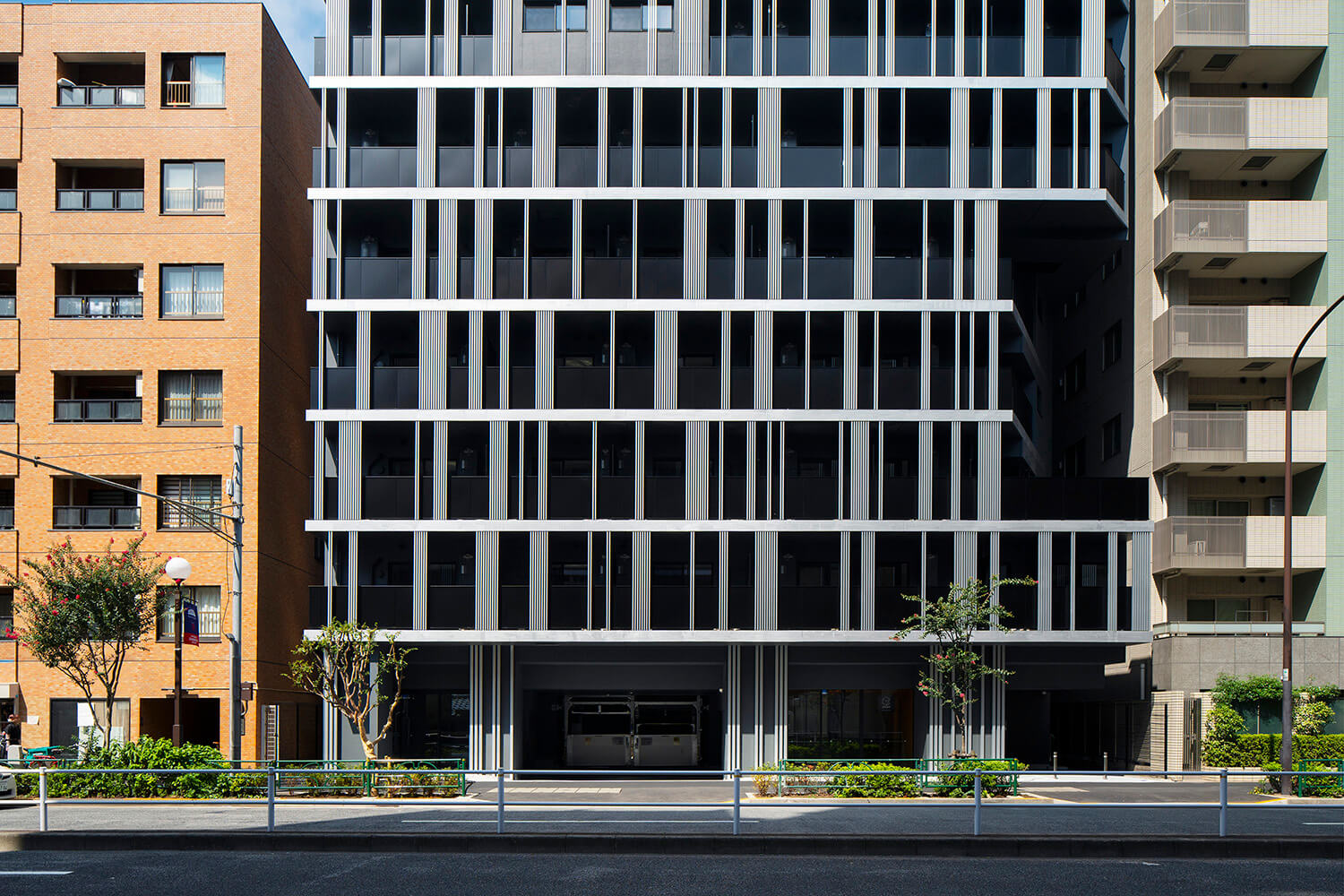
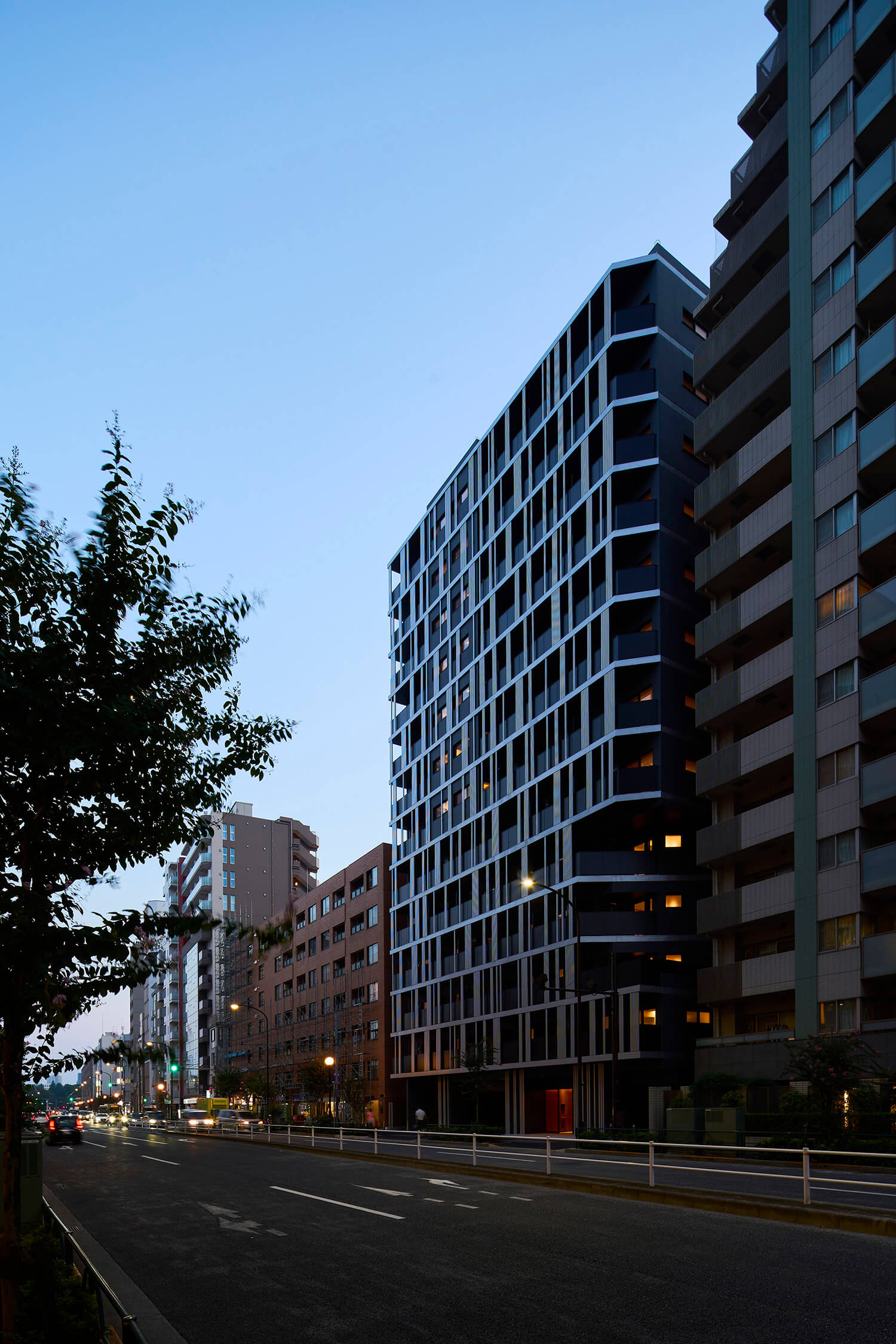
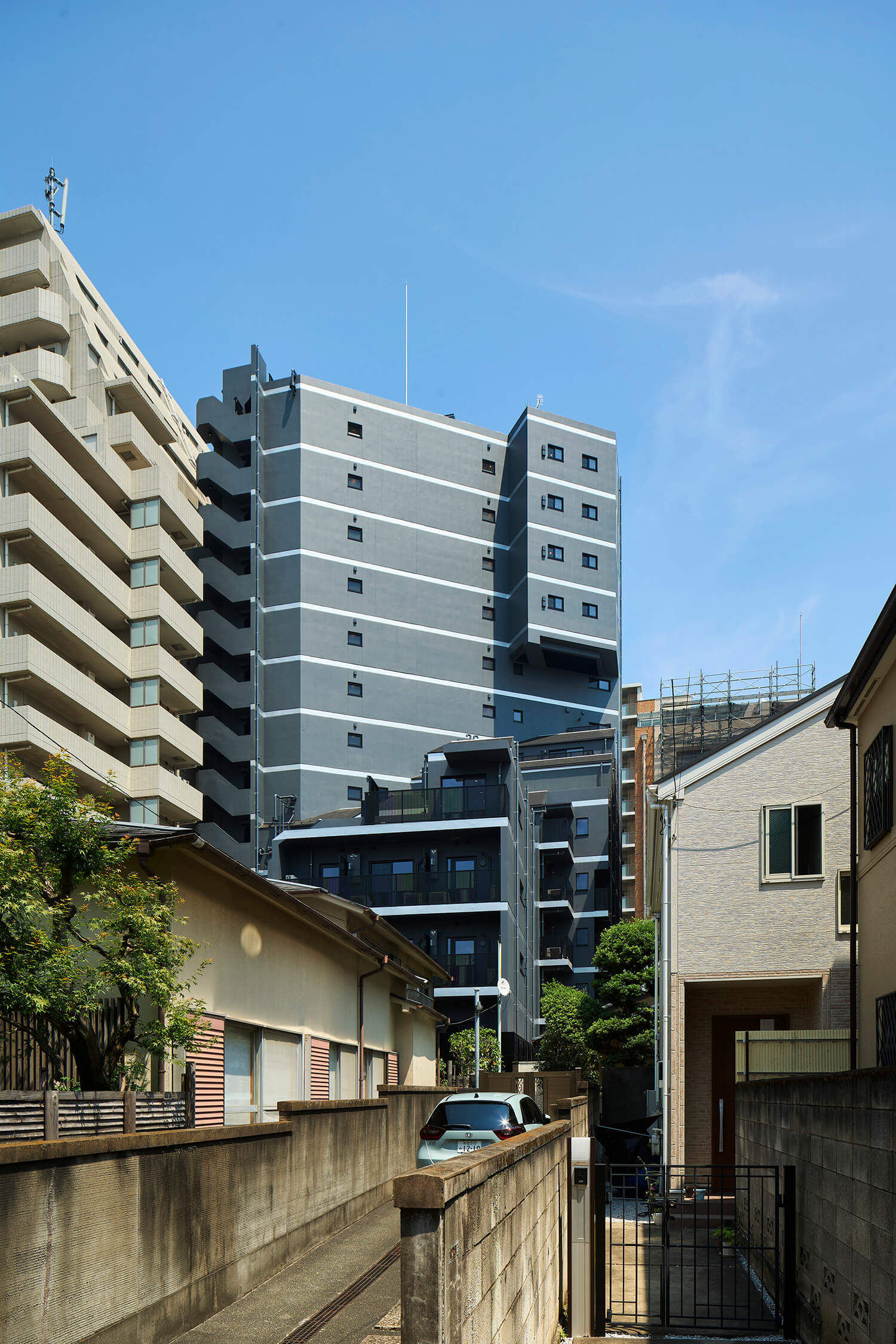
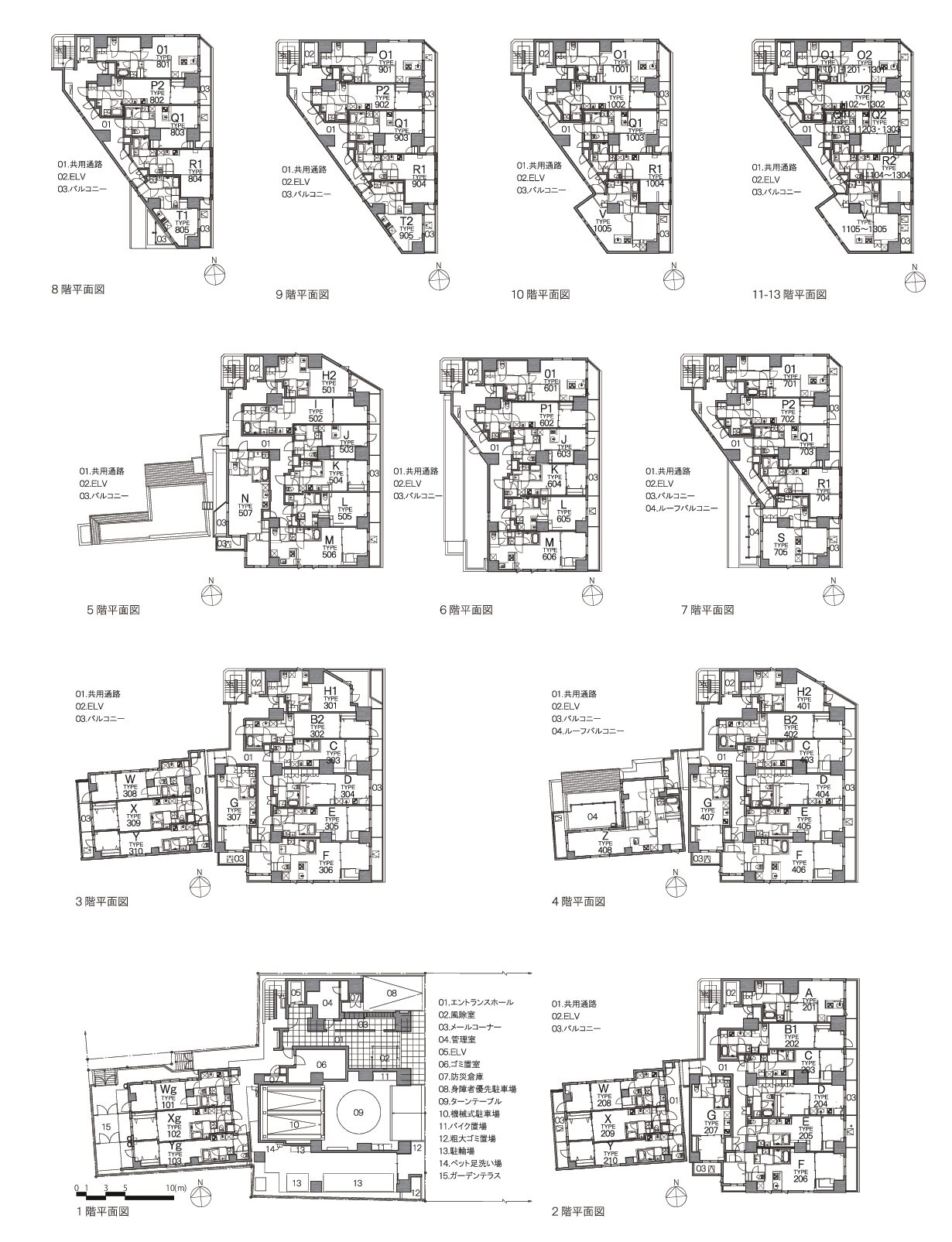
The eastern side rises to a 13-storey tower responding to the scale of the avenue, whilst stepping down gradually to the west to connect the two contrasting urban scales of Gaien Higashi-dori and the residential neighbourhood behind. The western side comprises a 4-storey low-rise block, structurally separated from the tower to clarify the overall frame. The structure adopts a pure moment-frame RC construction without load-bearing walls, making extensive use of cantilevers to accommodate the stepped change in height, and stacking 79 units across more than 26 floor-plan types over 13 storeys.
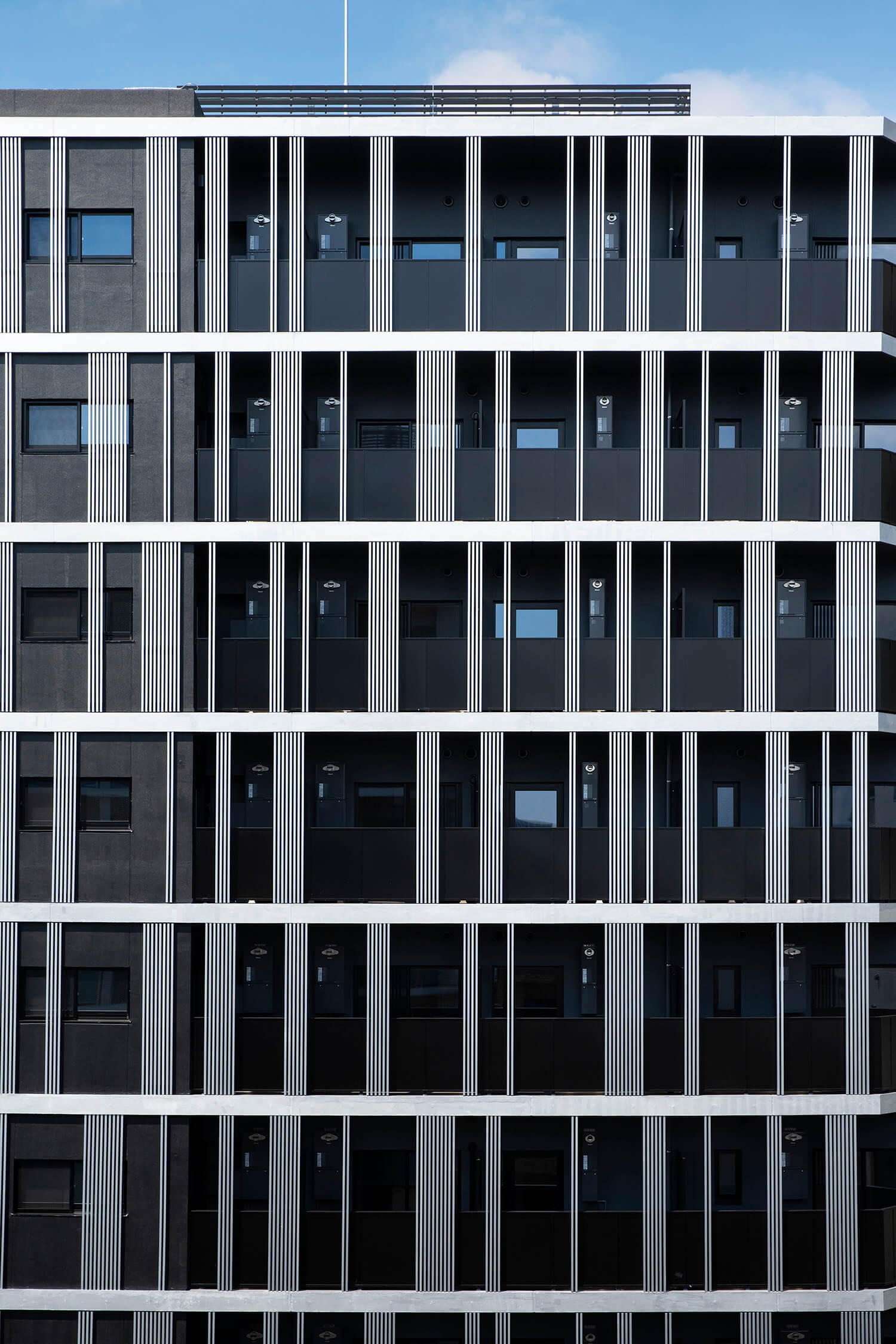
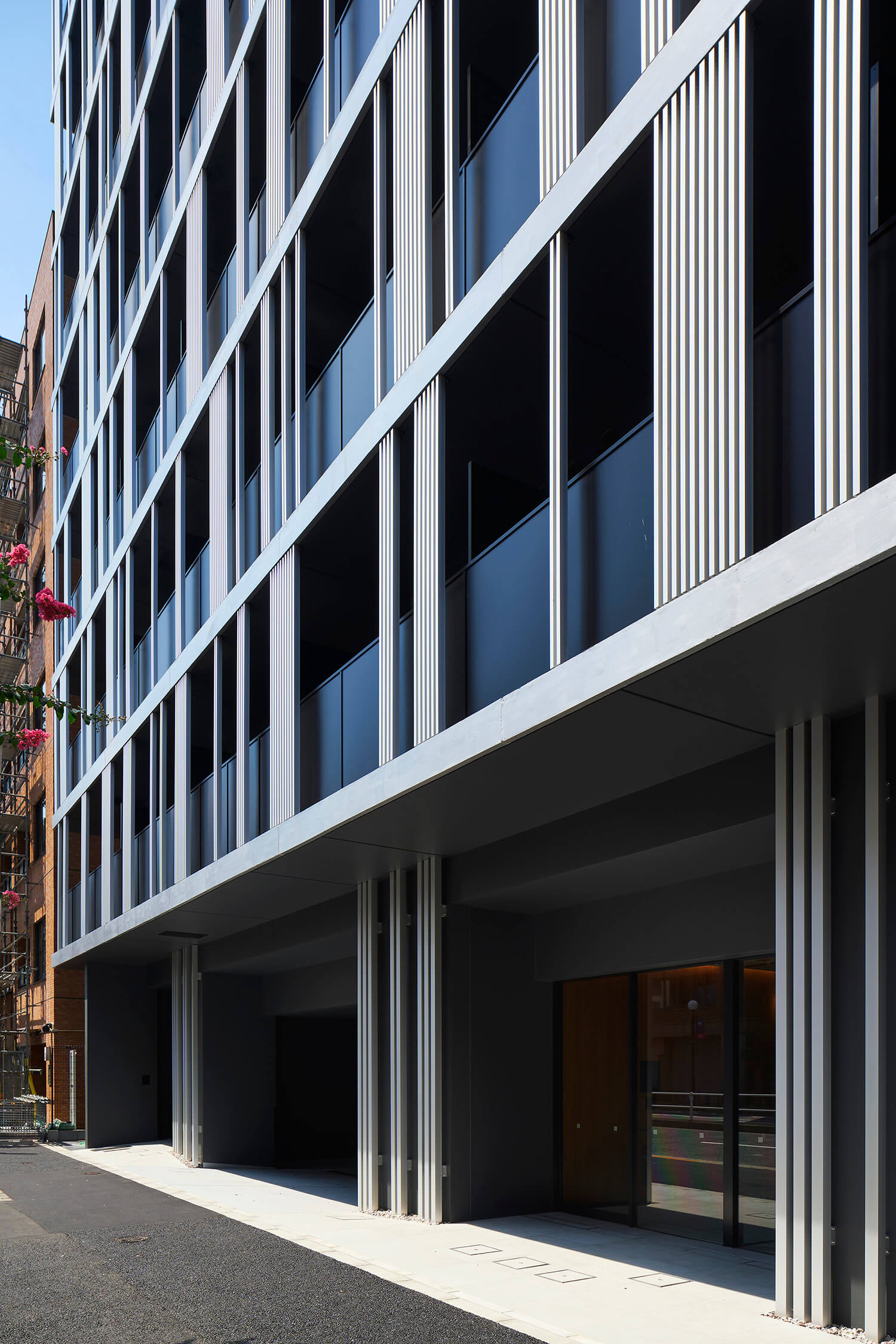
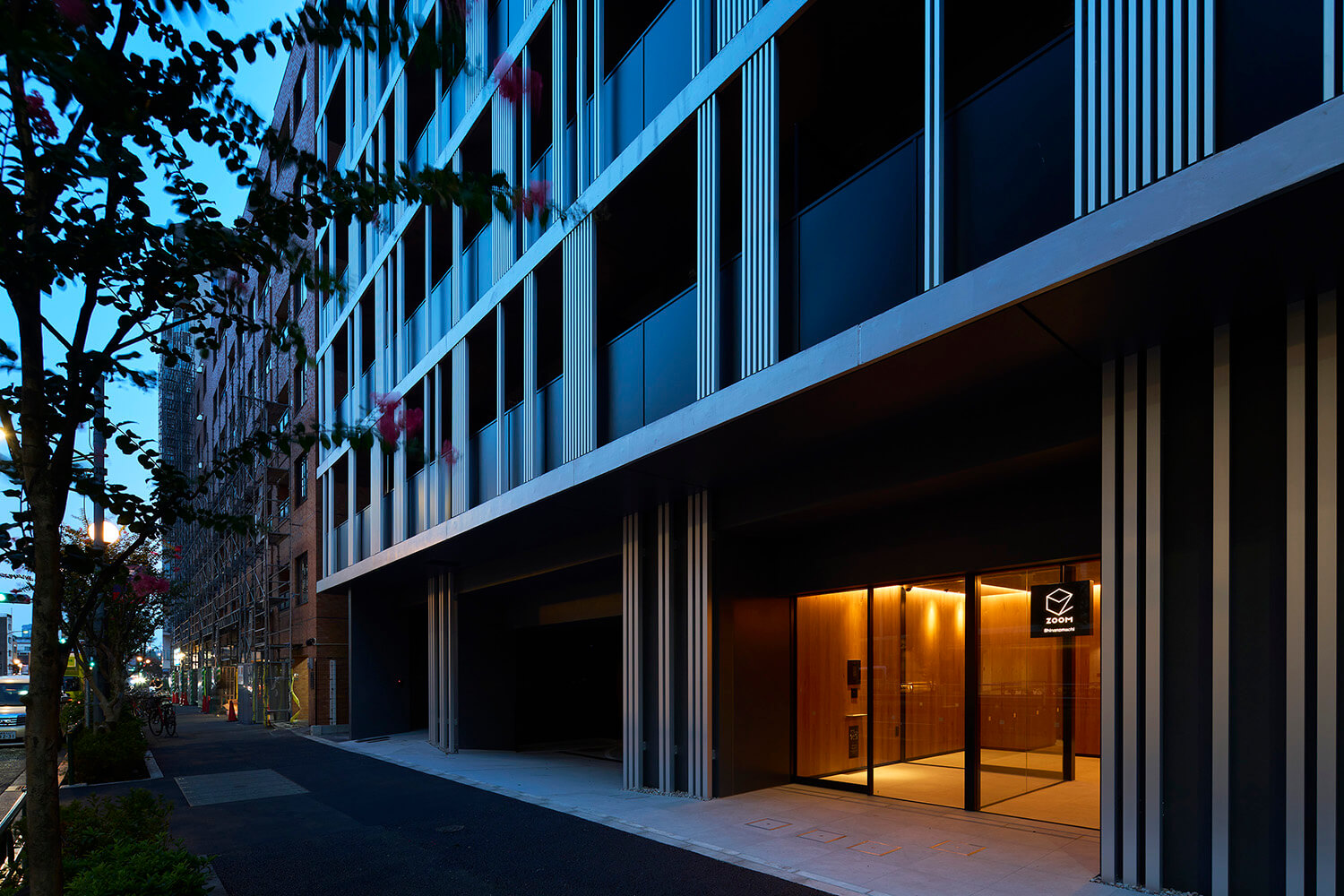
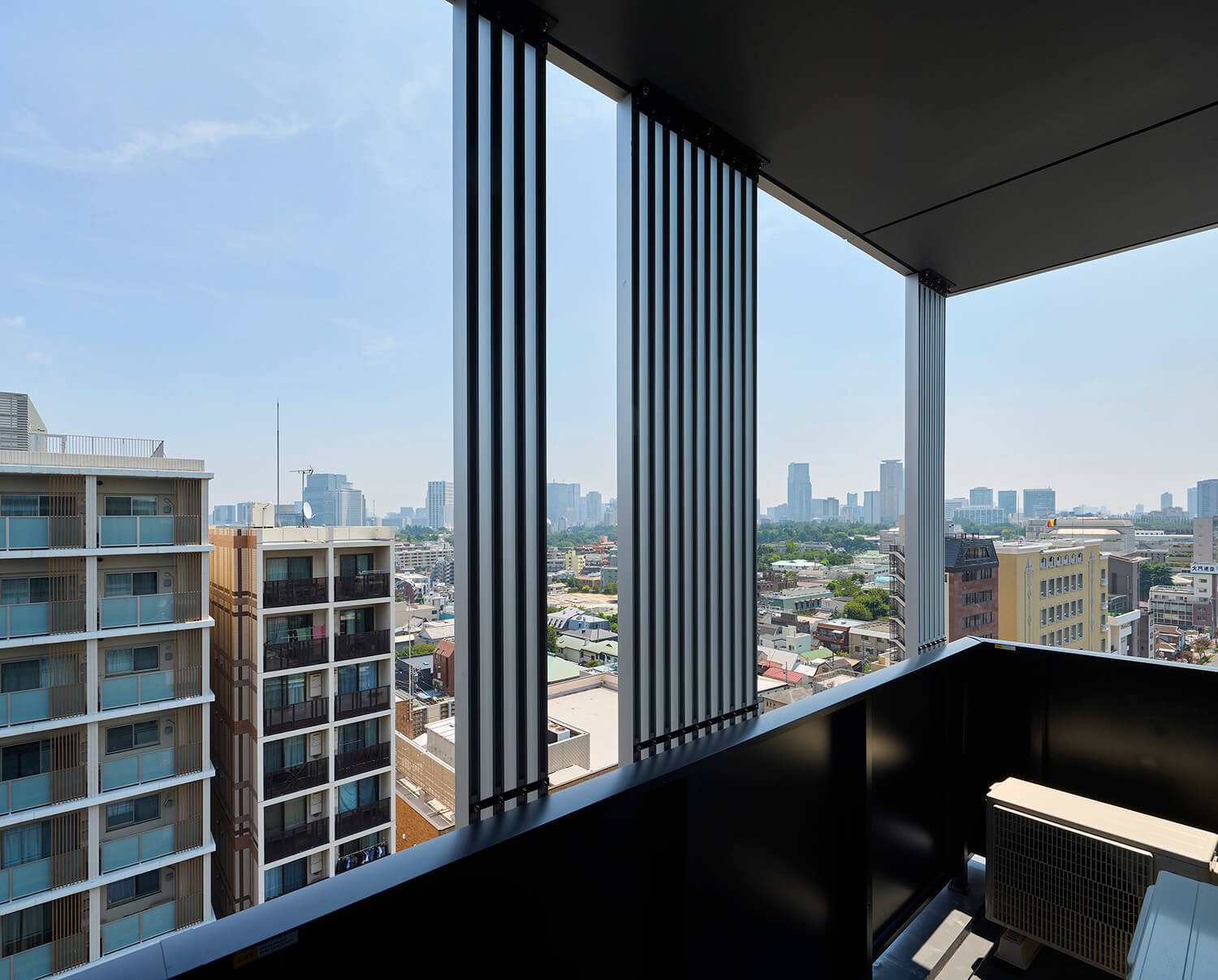
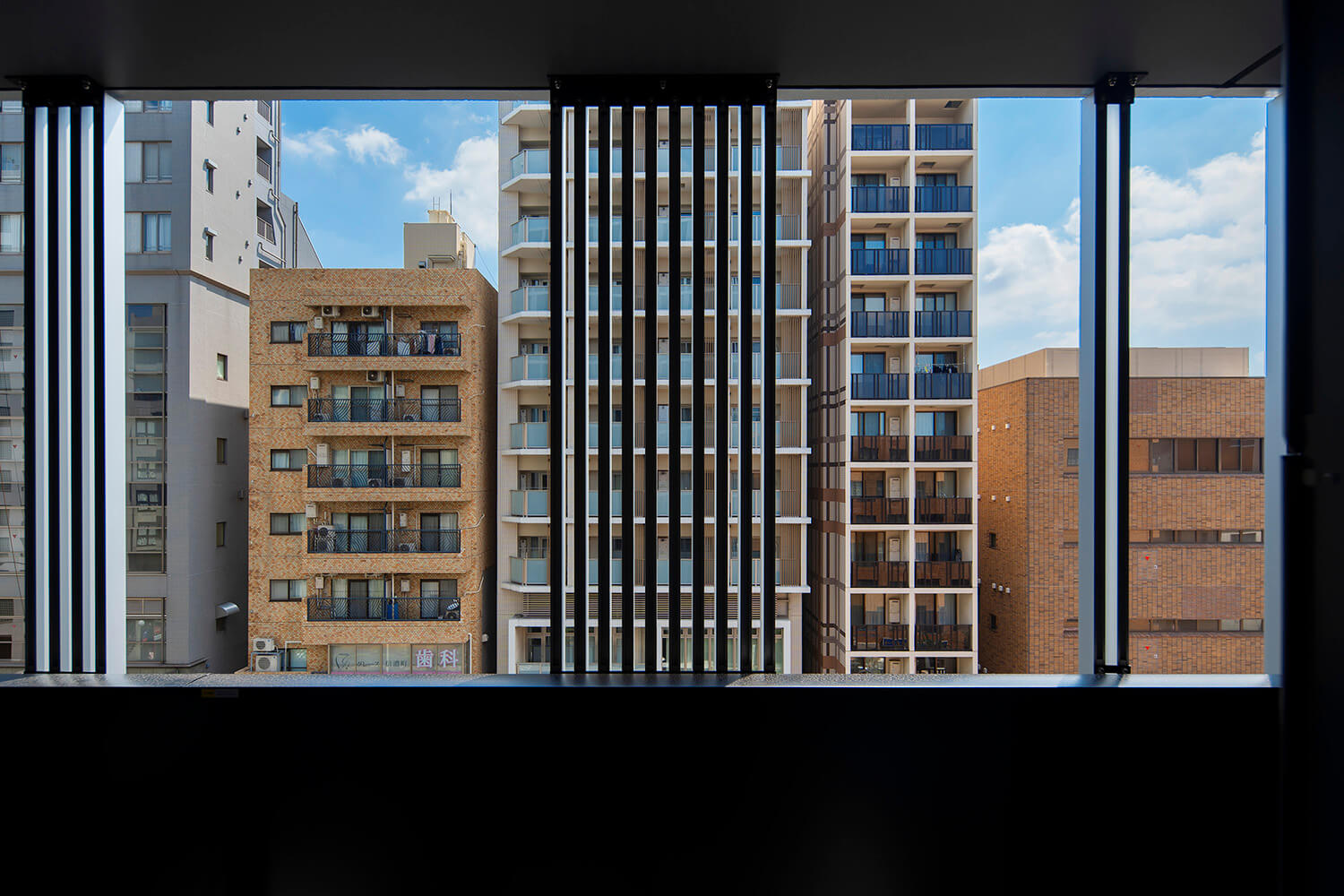
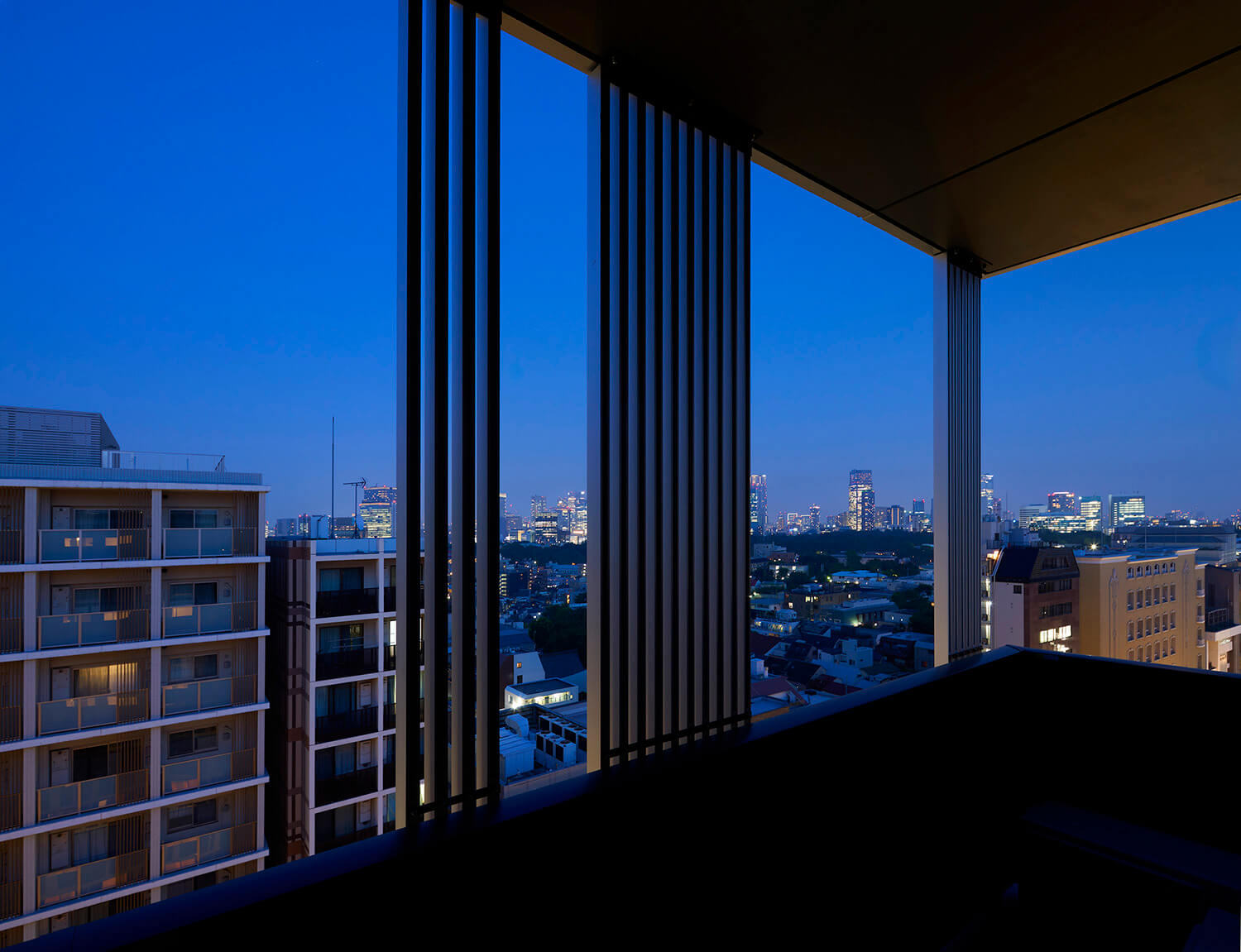
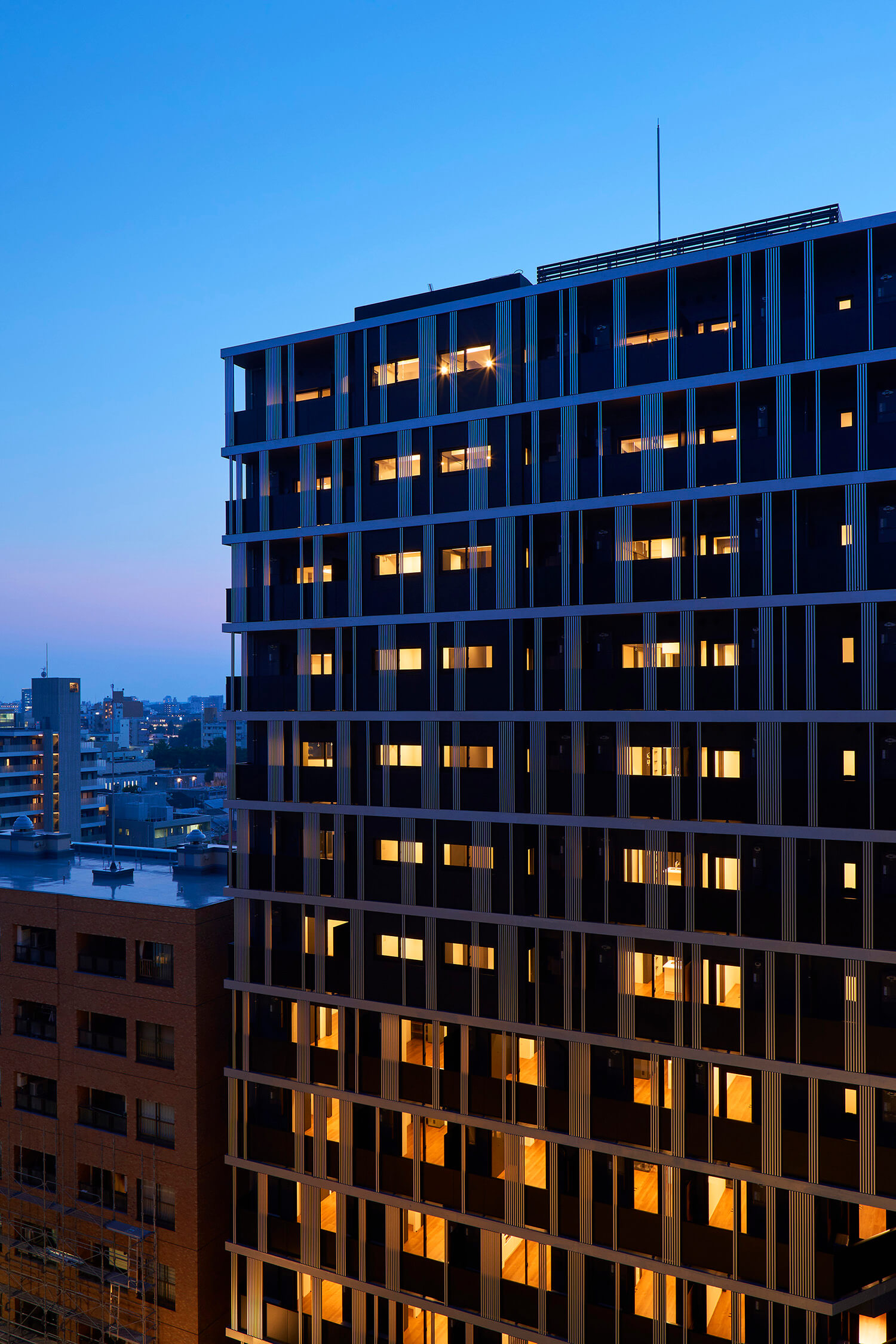
The facades of large residential buildings are frequently dominated by balconies and mechanical equipment, contributing to visual noise in the urban streetscape. In this project, balconies were treated as an inner layer — a zone concentrated with services and domestic activity. Outdoor units and laundry were screened behind aluminium panel balustrades, whilst water heaters and exhaust vents were unified in dark grey, suppressing the visual fragmentation caused by disparate elements. To read the facade as a single composed surface rather than an accumulation of individual units, bundled vertical louvers were introduced as an outer shell — denser than conventional linear louvre systems, yet not fully closed like solid cladding, allowing privacy and openness to coexist. On the east-facing facade, they also function as an environmental device, screening direct summer sun whilst admitting diffused winter light into the interior. Louvre fixings were finished in a matching baked coating to minimise visual interference, and intermediate supports were aligned with the handrail level to reduce their presence further. The slab edges at each floor were finished in silver to integrate with the louvers. At street level, vertical bundles in the same vocabulary conceal the rainwater pipes whilst establishing a rhythm that runs the full height of the elevation, composing the building’s presence on the street.
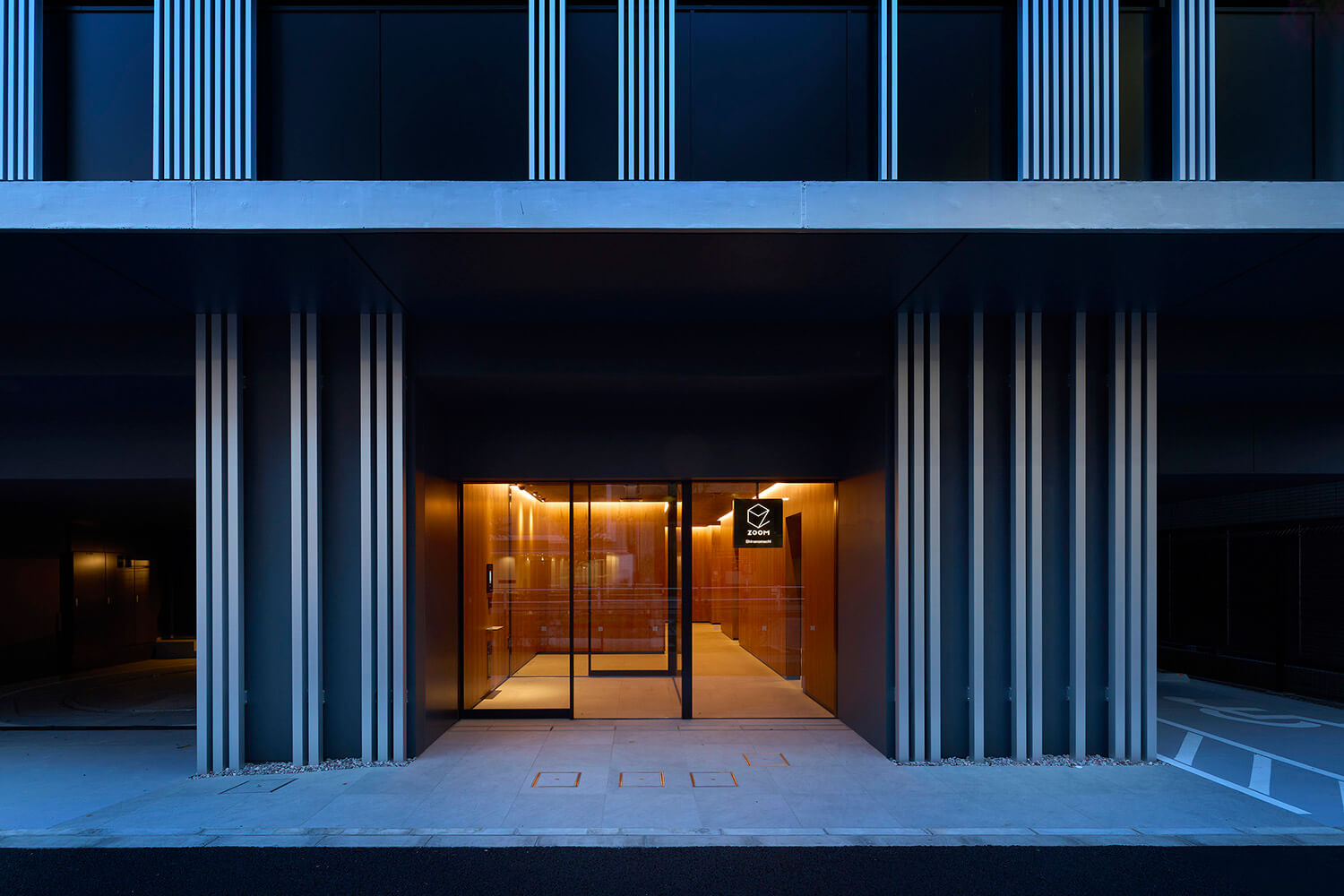
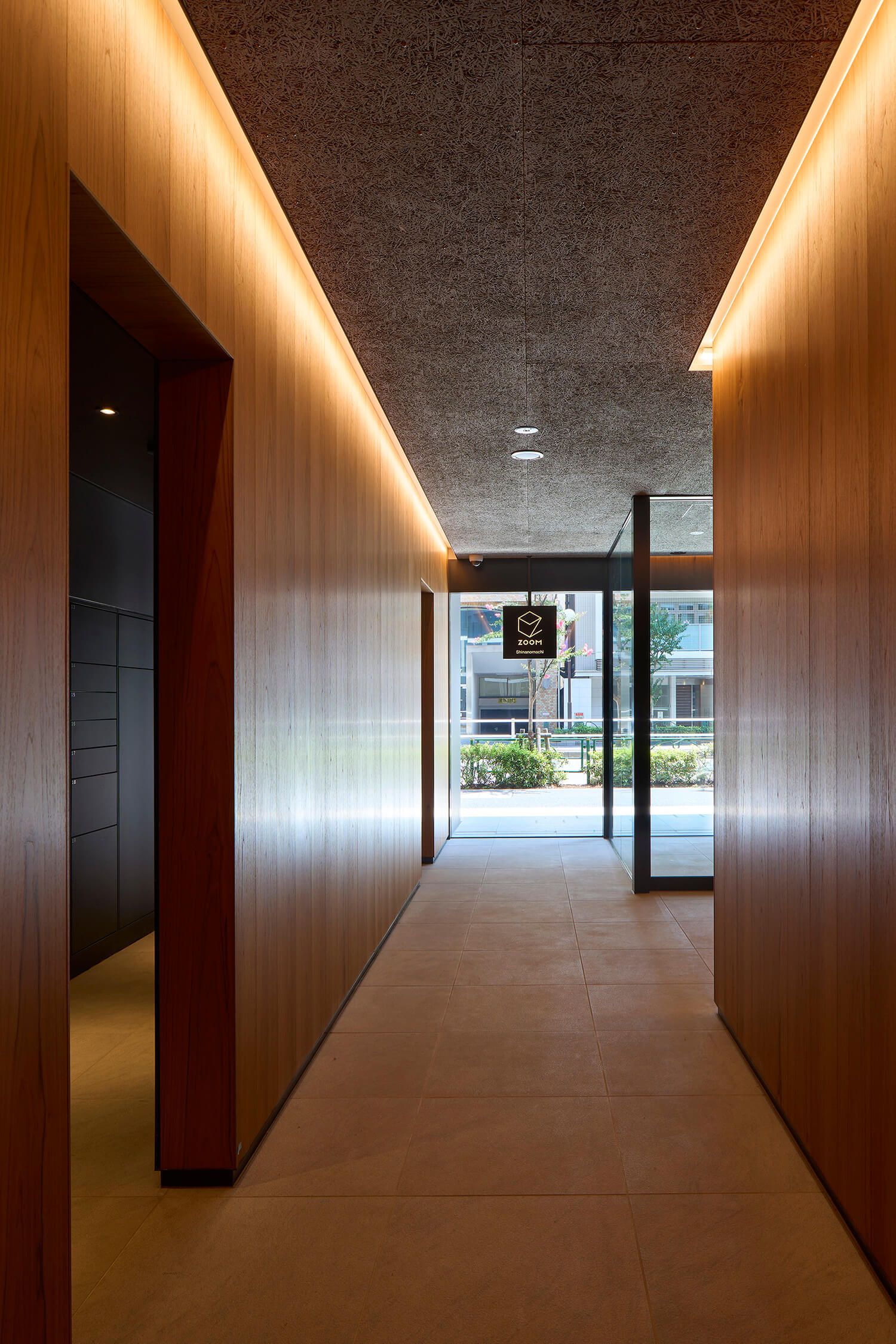
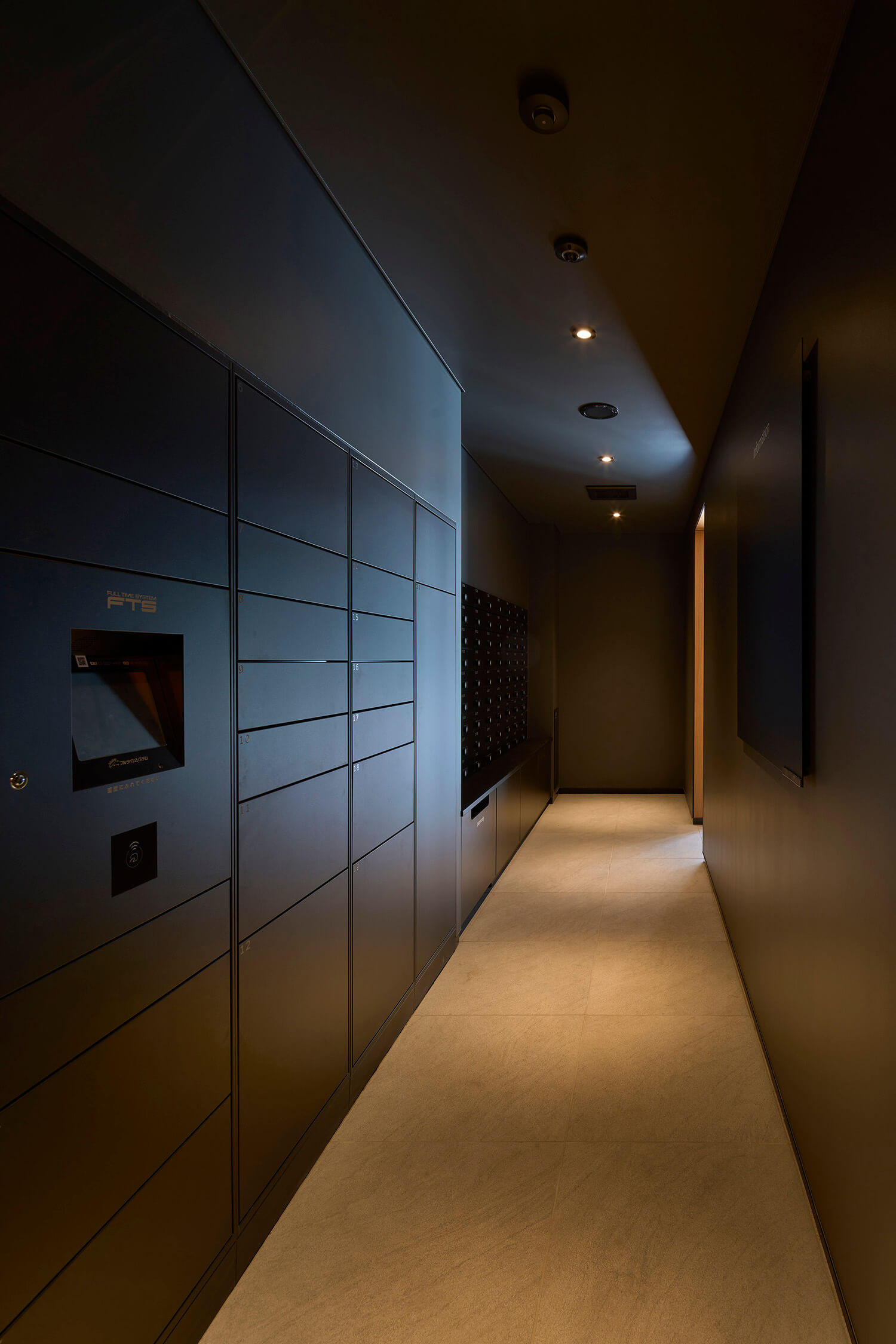
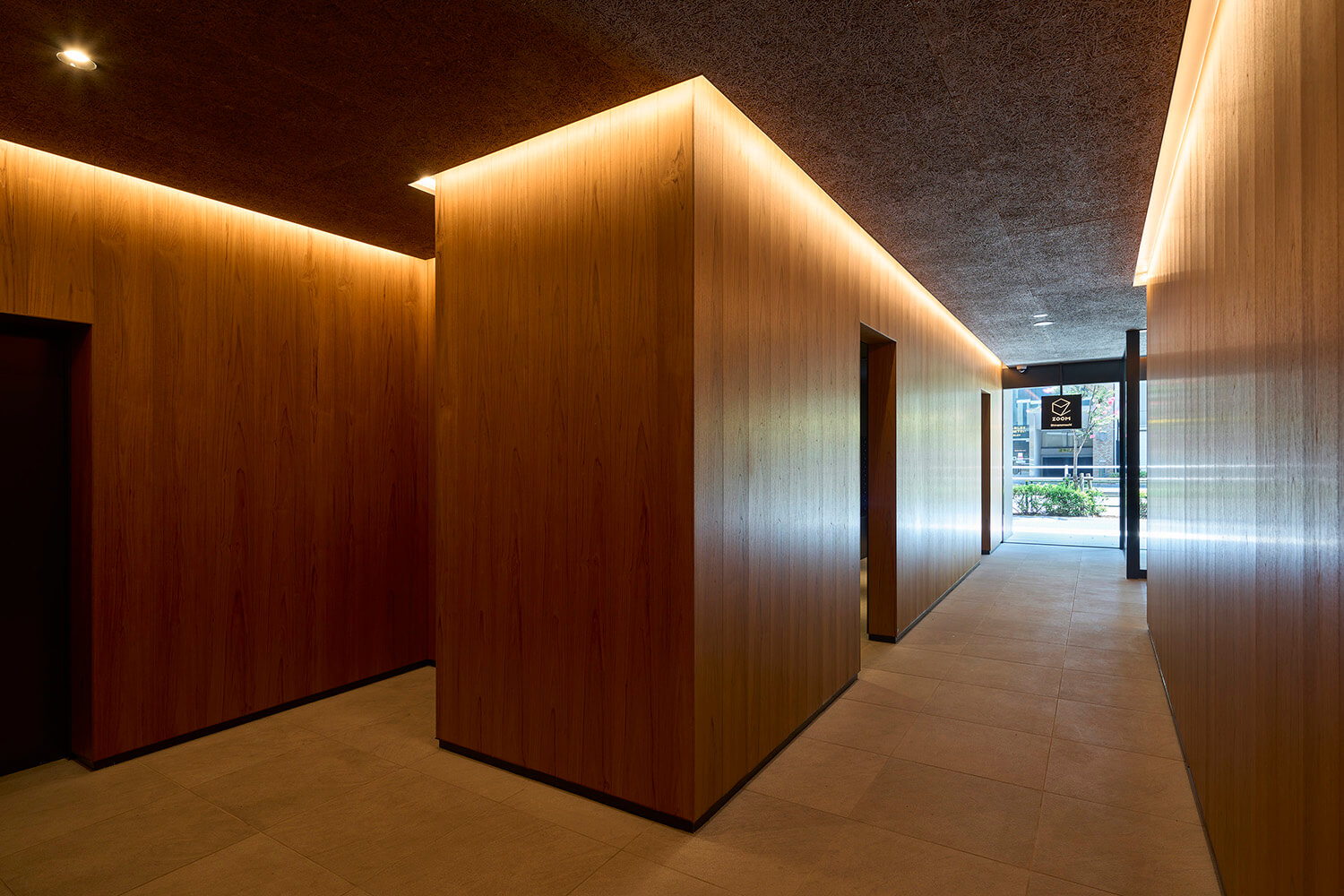
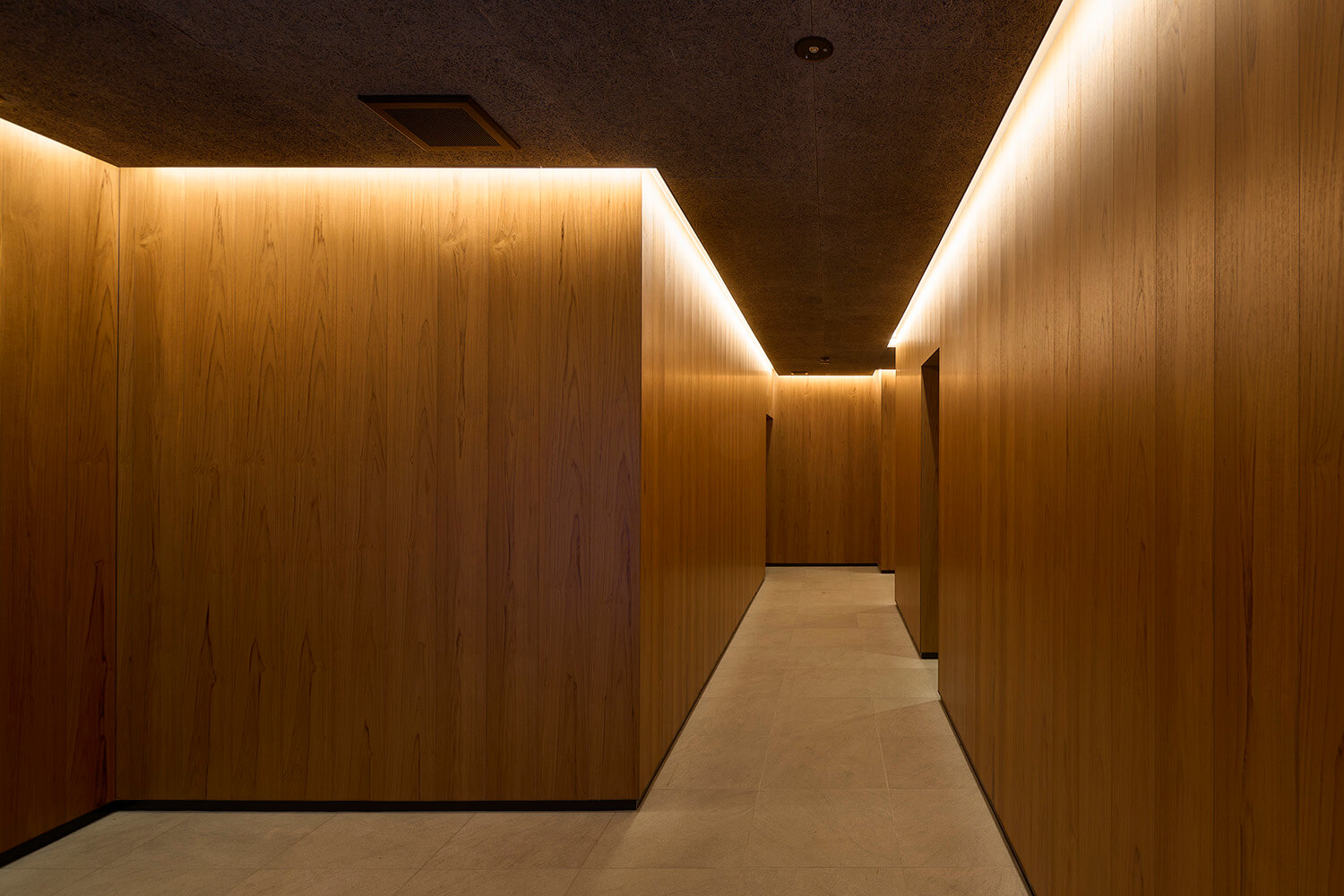
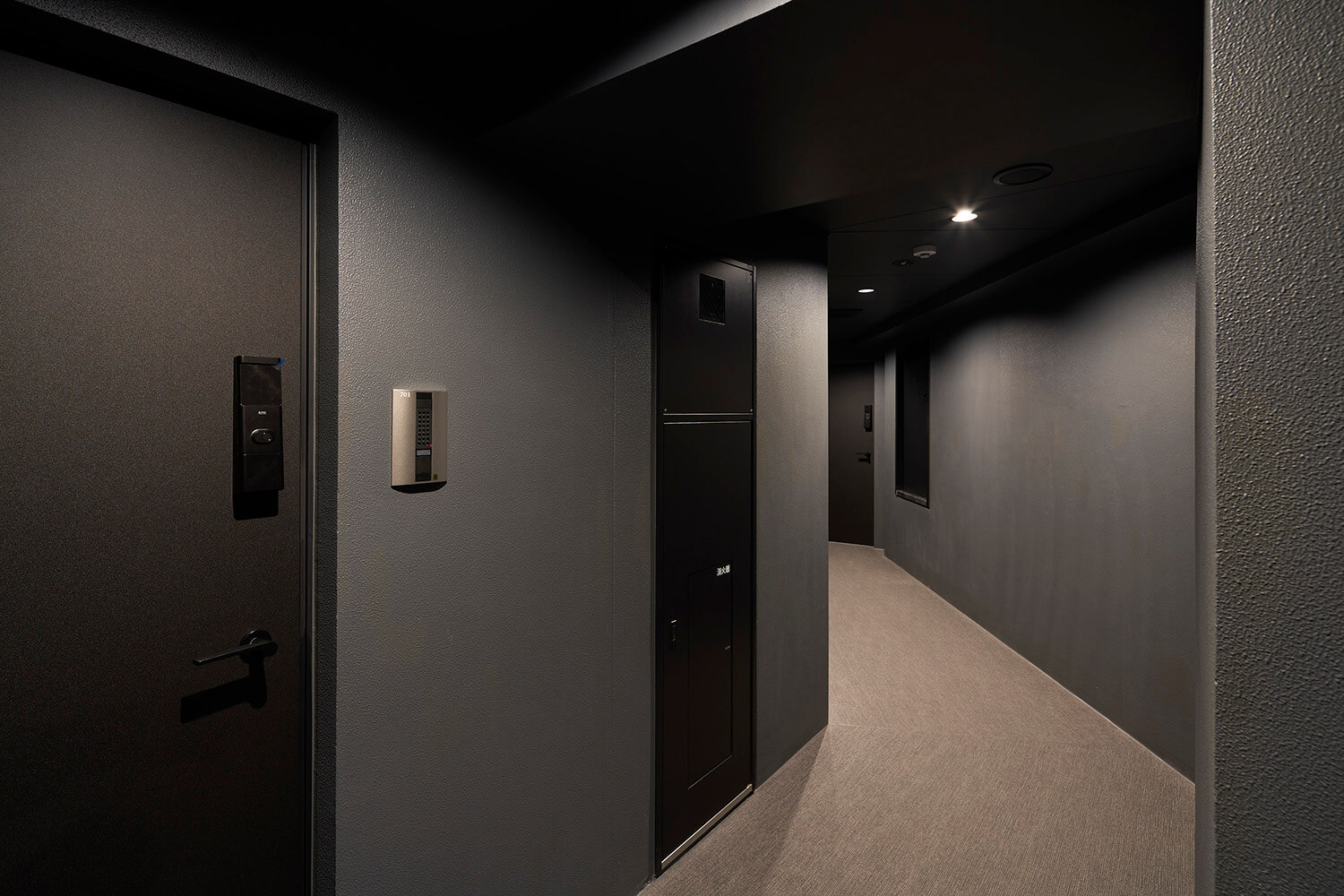
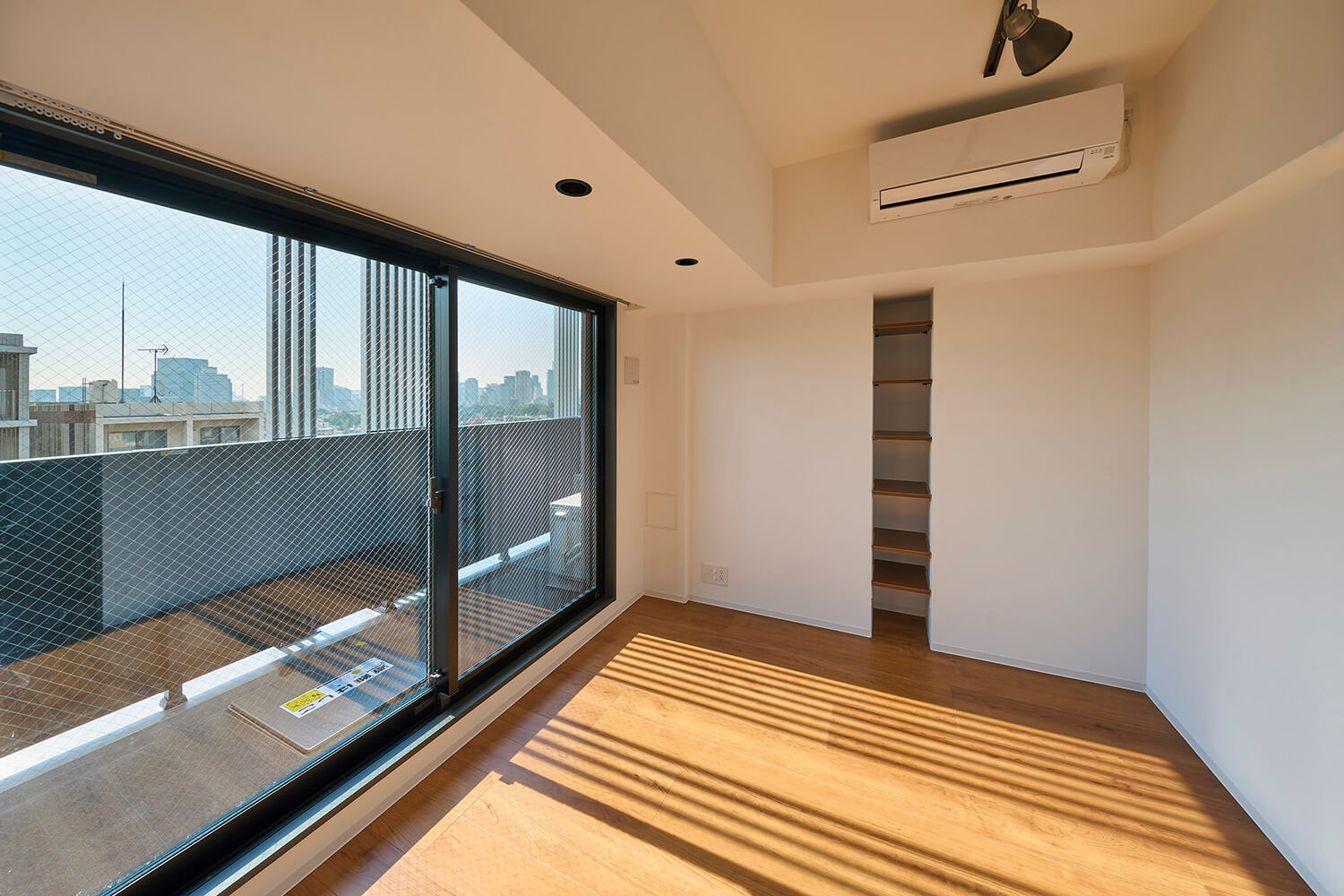
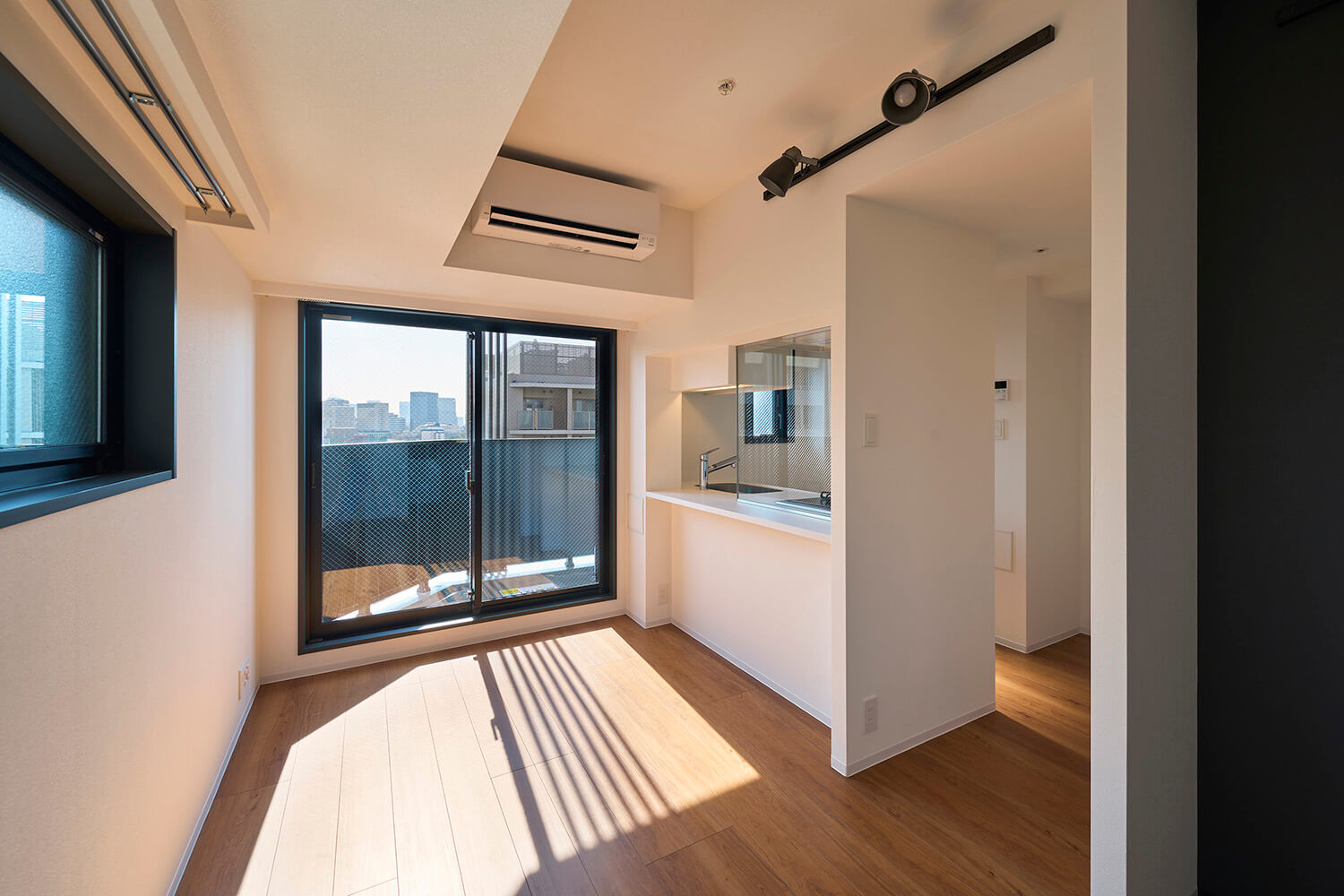
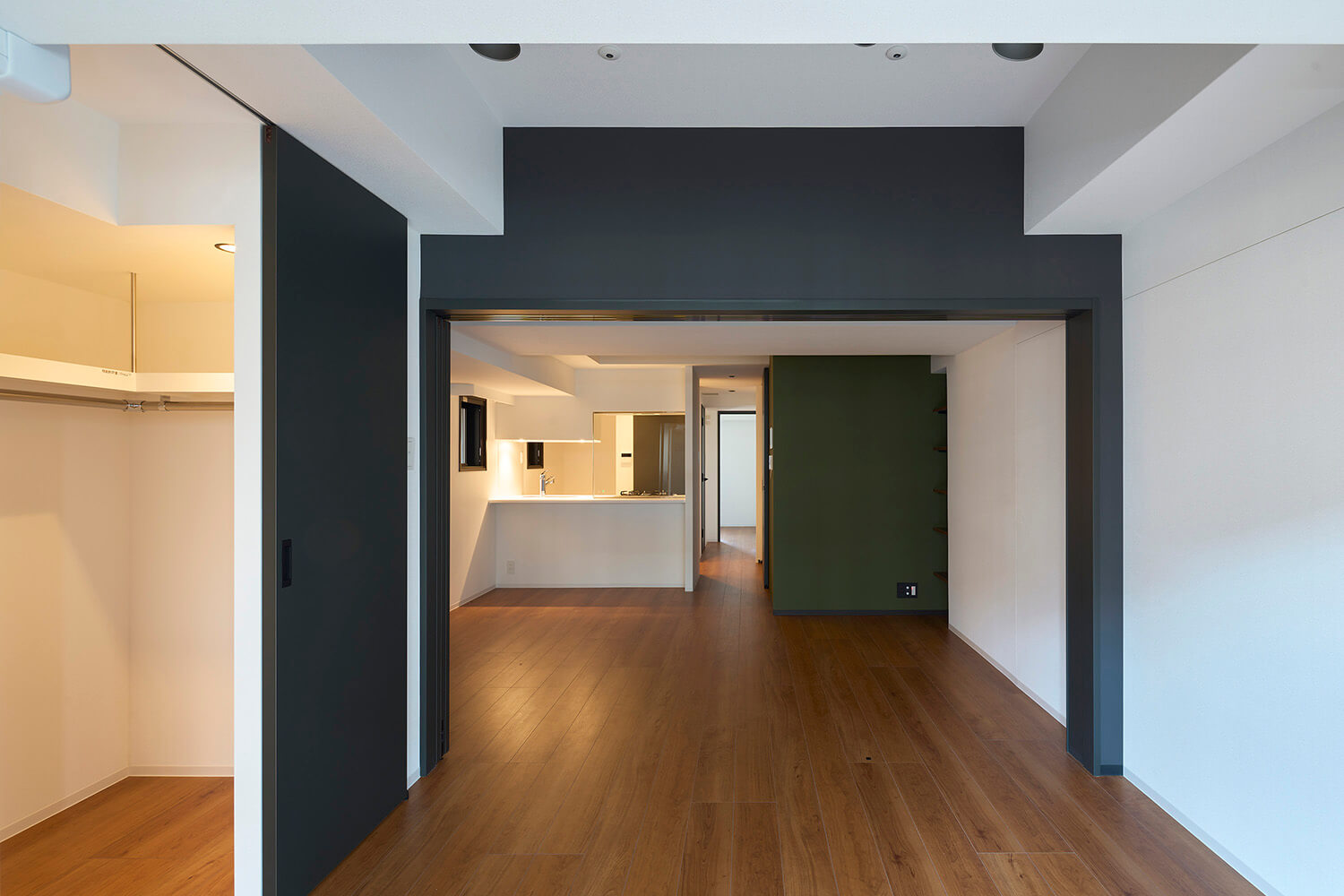
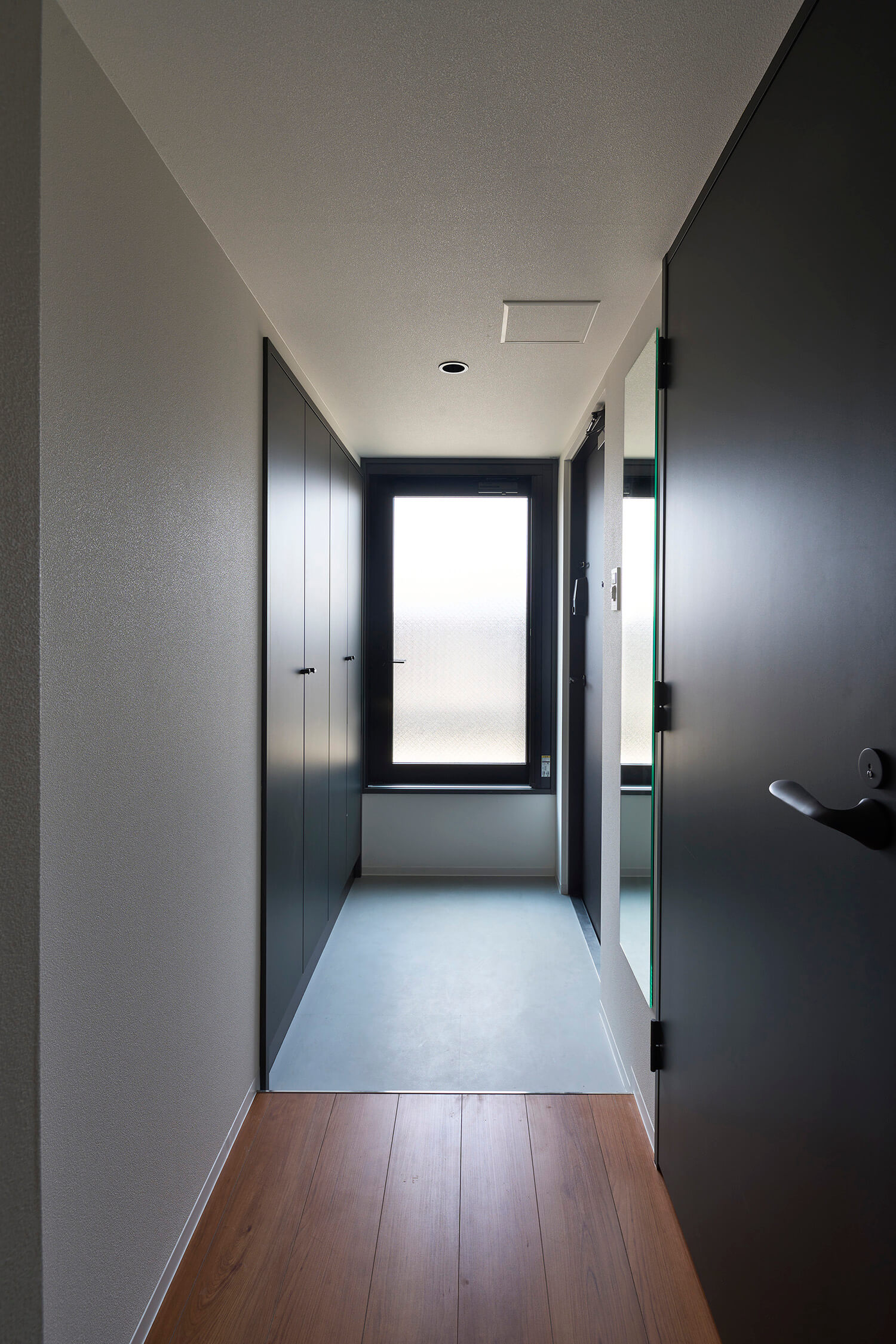
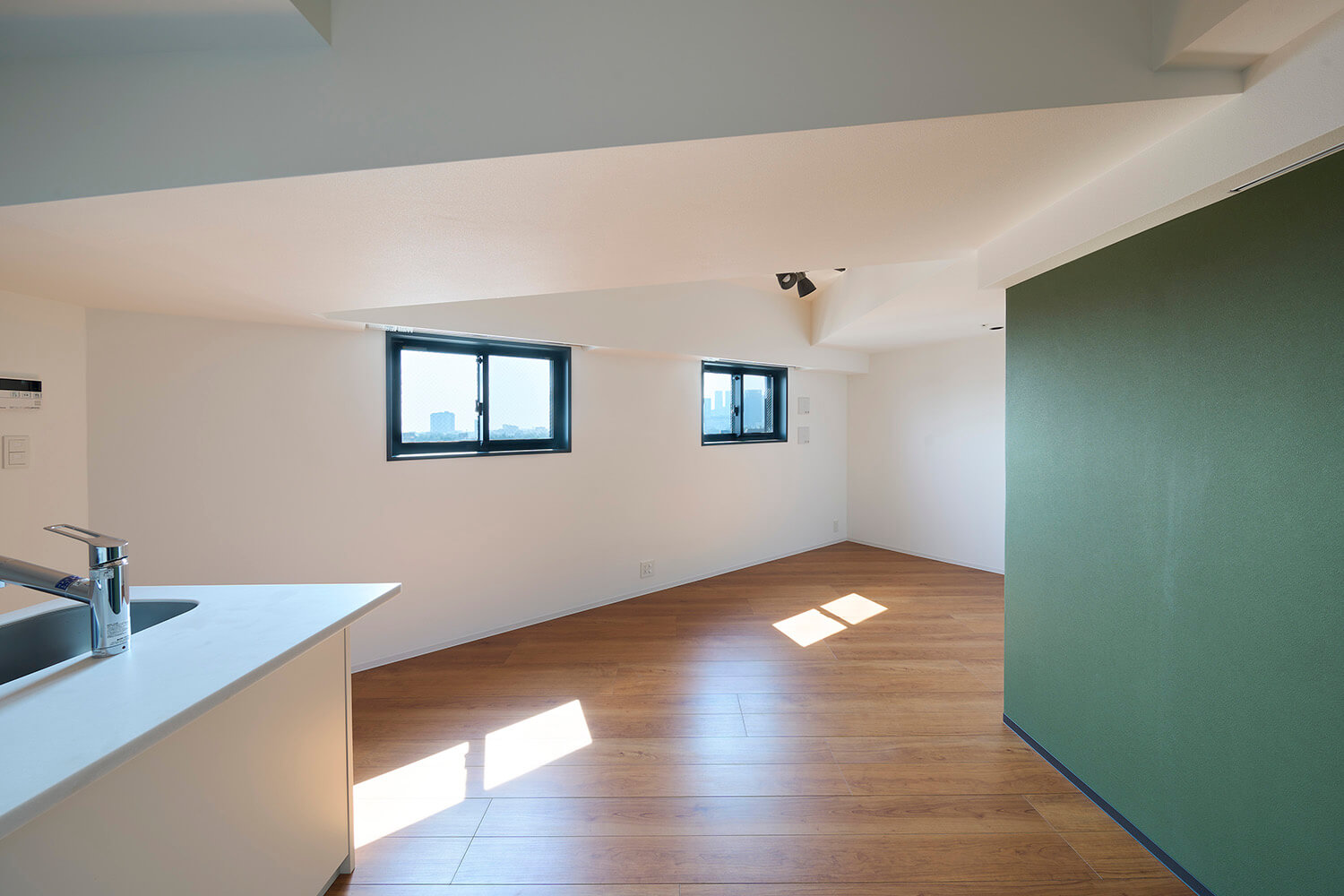
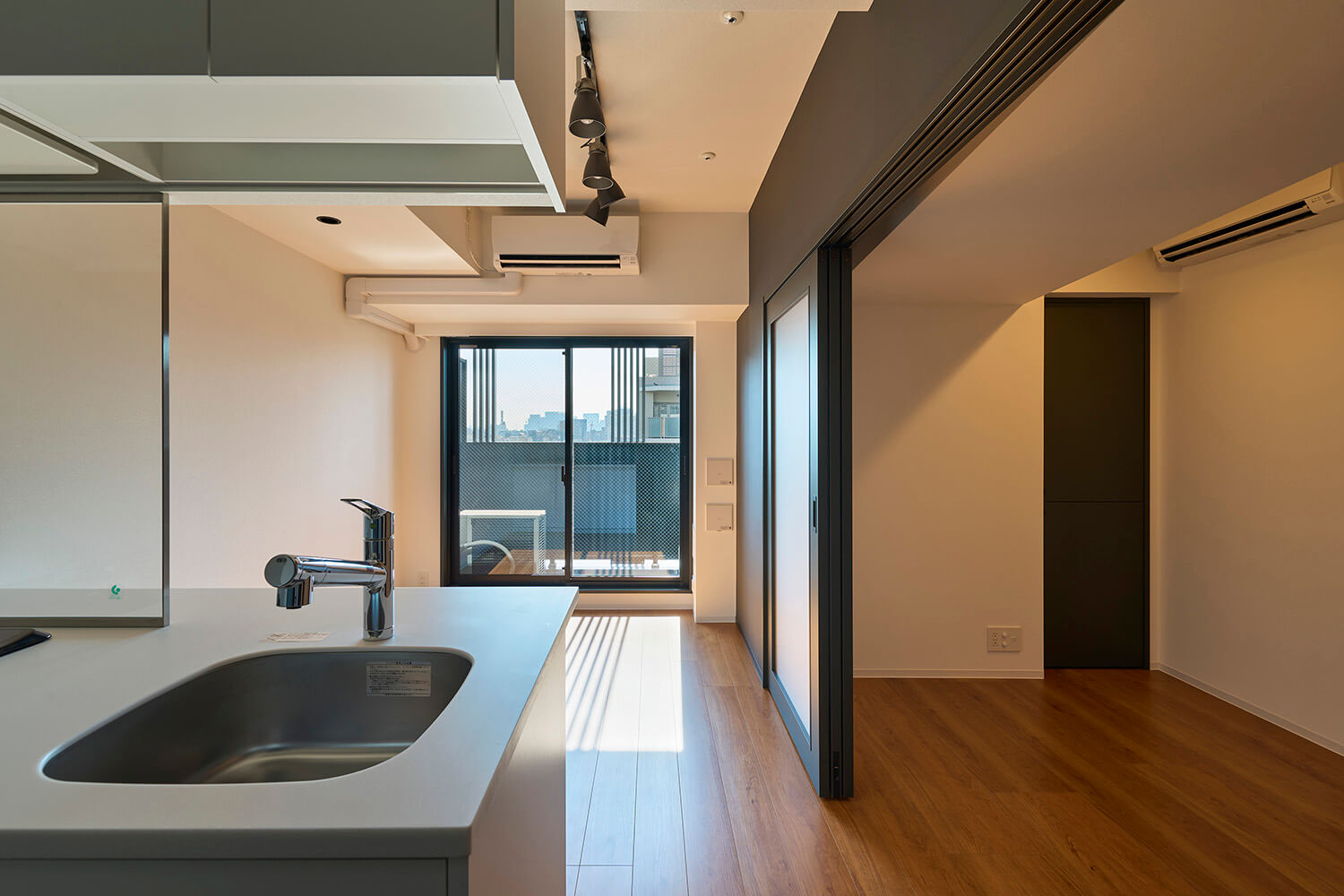
The entrance hall, facing the avenue, is finished in stone-effect tile, timber panel, and wood-wool cement board — materials that generate a quietness in contrast to the noise outside. The internal corridor of the tower is designed to deepen that sense of calm as one moves inward, with lighting and material texture creating spatial depth. Within the dwellings, the bundled louvers moderate views from the directly opposing building across the street, whilst diffusing morning light to cast shadow across white walls, allowing those shadows to move slowly across the floor through the day, and lending a subtle warmth to the interior in the low evening light as the louvers catch the backlit sun. The building’s outer shell and interior space work as one, generating a quality of time and light within each compact dwelling.
The project is realised through the layering of refined decisions over the pragmatic conditions of regulation, structure, services, and economy. The bundled louvers envelop the building’s internal logic and offer the city a composed, restrained presence. By day they catch the colour of the sky in delicate shadow; by night, interior light seeps through the gaps. Through a continuous sequence of design operations — from exterior to interior, material to light, function to atmosphere — the building offers its residents a quality of stillness and temporal richness within the density of the city.
- Site:Shinjuku-ku, Tokyo
- Use:Residence
- Completion:2025.07
- Client:TOHSHIN PARTNERS CO.,LTD.
- Design supervision:KEY OPERATION INC./ARCHITECTS
- Design and construction:Fujiki Komuten Co.,Ltd.
- Photo:Toshiyuki Yano
- Site area:609.62 ㎡
- Building area:446.51 ㎡
- Total floor area:3759.37 ㎡